Earth Science
 Call Kai
 Learn
Learn Practice Test
 Spaced Repetition
 Match
Match Flashcards
 Knowt Play
1/27

There's no tags or description
Looks like no tags are added yet.
Name | Mastery | Learn | Test | Matching | Spaced | Call with Kai | Chat |
|---|
No analytics yet
Send a link to your students to track their progress
28 Terms
Geosphere
rocks, minerals, soil, Earth's interior, etc.
Atmosphere
The gases surrounding Earth - Air
Biosphere
Living organisms — plants, animals, microorganisms, and humans.
Hydrosphere
Water on Earth — oceans, rivers, lakes, groundwater, etc.
Cryosphere
Frozen water — glaciers, ice sheets, sea ice, snow, etc.
Lithosphere
rigid outer part of Earth that makes up the tectonic plates
Asthenosphere
weaker, softer layer beneath the lithosphere that allows the plates to move.
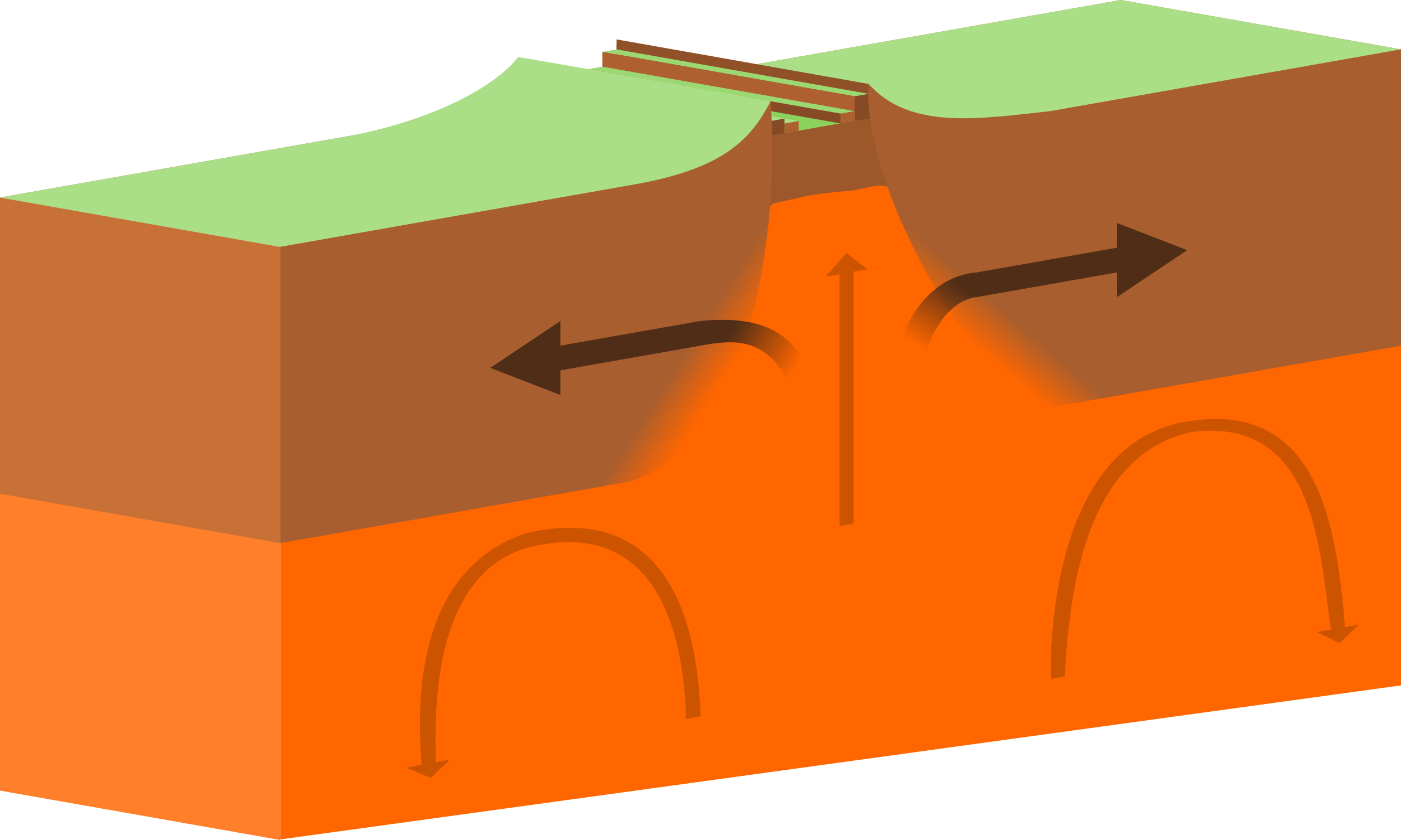
Divergent
MOVE APART
Convergent
MOVE TOGETHER

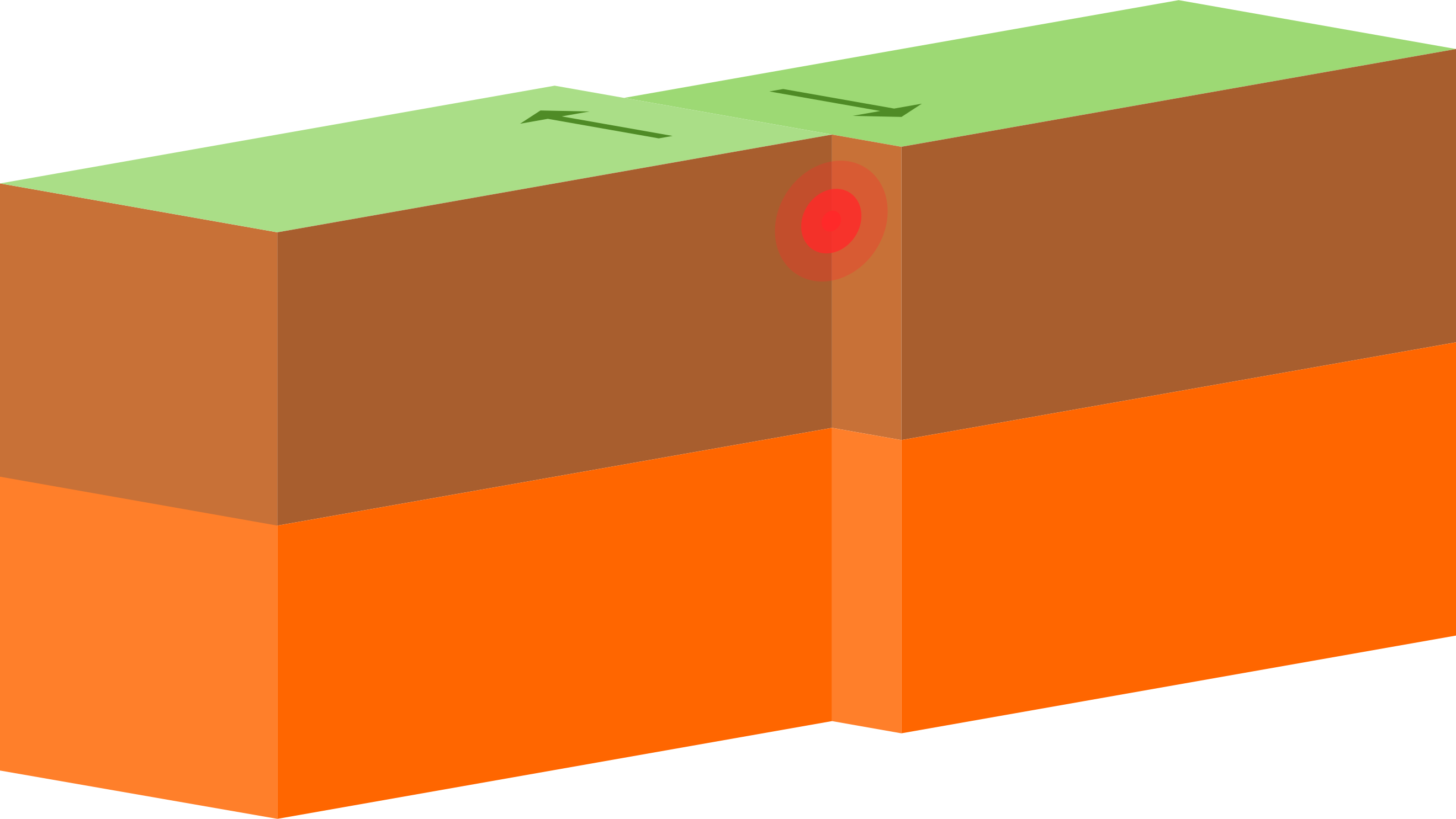
Transform
SLIDE PAST
boundary associated with the most frequent earthquakes and volcanism
Plate boundaries
boundary associated with frequent earthquakes but generally NOT volcanism?
Transform
Magnetic anomalies on the seafloor form patterns because
Magnetic minerals record Earth's magnetic field as new crust forms
Moving plate + stationary hot spot =
Chain of volcanoes
Naturally occurring mineral
forms in nature
Inorganic mineral
isn't produced by living organisms.
crystalline structure
Its atoms are arranged in an organized, repeating pattern.
Definite chemical composition
It has a specific chemical composition.
Igneous
Forms when magma or lava cools and solidifies.
Sedimentary
Forms from sediments or through chemical processes.
Metamorphic
Forms when an existing rock is changed by heat, pressure, or other conditions without completely melting.
Slow cooling =
BIG crystals (Coarse-grained)
Fast cooling =
SMALL crystals (Fine-grained)
What type of formation is - A rock forms from compacted and cemented sand grains.
Physical
What type of formation is - A sedimentary rock forms when dissolved minerals precipitate from water.
Chemical
Existing rock + heat/pressure =
Metamorphic Rocks
Low-grade metamorphism
Lower temperatures/pressures (less change)
High-grade metamorphism
Higher temperatures/pressures (more change)