Respiration (WIP)
 Call Kai
 Learn
Learn Practice Test
 Spaced Repetition
 Match
Match Flashcards
 Knowt Play
1/44

Earn XP
Description and Tags
eduqas alevel biology
Name | Mastery | Learn | Test | Matching | Spaced | Call with Kai | Chat |
|---|
No analytics yet
Send a link to your students to track their progress
45 Terms
ATP structure

Formation of ATP
phosphorylation. ADP becomes ATP by the addition of a phosphate molecule. Endergonic as 30.6KJ/mol is taken in
Hydrolysis
ATP to ADP + Pi. Exergonic as it releases 30.6KJ/mol
ATPase
catalyses the hydrolysis of ATP. This is an advantage as it is the ONLY enzyme needed for the reaction
Why is ATP better than glucose
glucose has many high energy bonds so the uncontrolled release of energy from it would result in an increase in temperature that would destroy cells. Instead living organisms use the gradual release of energy in small steps to produce ATP. ATP can transfer free energy from energy rich compounds as and when it is needed
universal energy currency
ATP acts as an energy carrier in all living cells for nearly all chemical reactions
what type of process is respiration?
catabolic process from a series of enzymes
movement of electrons and H
passed from chemical to an electron or hydrogen carrier
dehydrogenase enzymes remove H from a substance
NAD+

one of the most important electron carriers- nicotinamide adenine dinucleotide
Glycolysis process
“sugar splitting:
occurs in cytosol in cells
no oxygen required- anaerobic
net ATP production of 2ATP
glycolysis step1

The glucose is phosphorylated to make it more reactive
Glycolysis step 2

hexose phospahte is unstable so it splits
glycolysis step 3
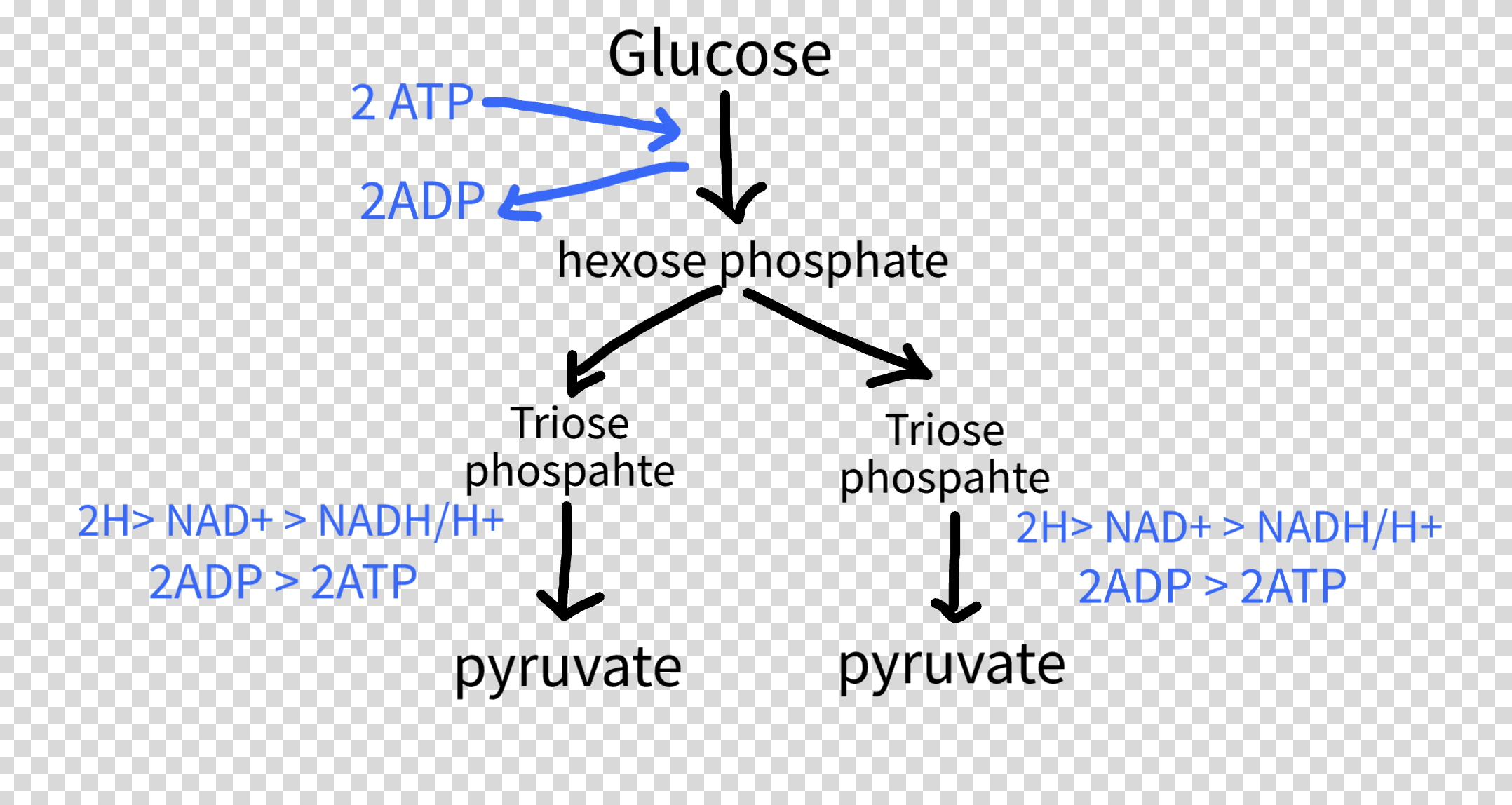
triose phosphate is converted into pyruvate as it loses 2 hydrogens to NAD. Energy released is used to produce 4 ATP (2 are used in the first step to 2 ATPs are produced overall)
why is oxygen is present in glycolysis
the NADH/H+ and pyruvate will diffuse into the mitochondria
link reaction
takes place in the matric of the mitochondria which contains the enzymes needed- happens twice as there are 2 pyruvates from glycolysis)
link reaction step 1

(decarboxylase) converted into acetate with the formation of NADH/H and the loss of CO2 (decarboxylation)
link reaction step 2

acetate combines with coenzyme A
krebs cycle information
release energy from carbon bonds via reduced intermediates
reduced NAD and FAD deliver hydrogen to the electron transport system
Krebs cycle 1
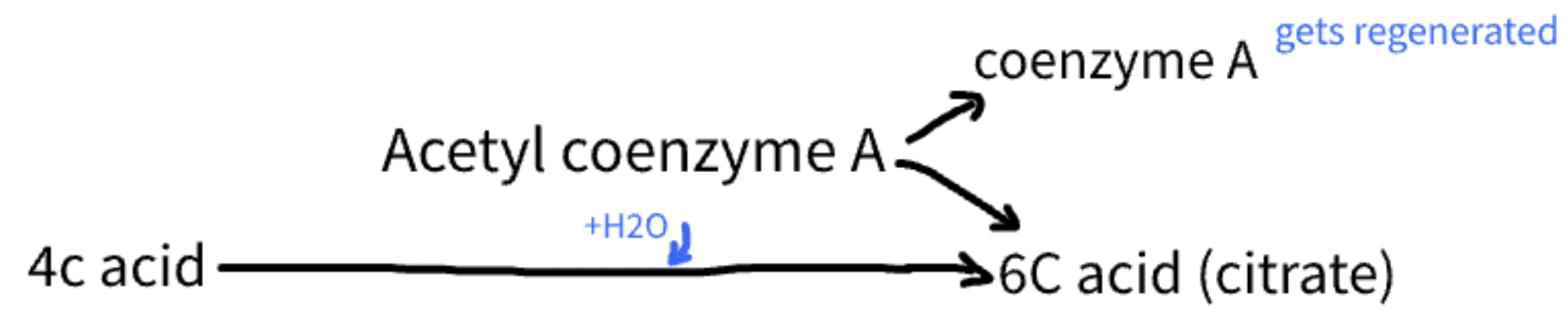
The acetylke CoA combines with a 4C acid to make a 6C acid
Krebs cycle 2

citrate undergoes a series of reactions where CO2 and Water are released. The 4C acids are regenerated via citrate and 5C intermediate
Electron transport chain 1 (happening in mitrocondria inner membrane)
a molecule in a reduced form is oxidised
Electron transport chain 2
the hydrogen atom (proton) passes through a proton pump. As it is passed through, an electron is removed and the remaining proton is pumped to the other side
Electron transport chain 3
the electrons are passed from one electron carrier protein to another. The energy lost/ released when this happens is used by the proton pumps to pump more protons across the membrane
Electron transport chain 4
a higher concentration of protons build up on one side of the membrane. They cannot get back across as the membrane is impermeable to H+. The concentration difference makes a difference in pH and charge. Stalked particles contain ATP synthetase
Electron transport chain 5
the protons can pass down a concentration gradient though a channel in the enzyme
Electron transport chain 6
the H+ have high energy. This is used by ATP synthetase to combine ADP with inorganic phosphate to form ADP
Electron transport chain 7
some H+ are pumped back across the membrane to maintain the concentration gradient
Electron transport chain 8
the e- passed through the electron carrier proteins are picked up by a final electron acceptior. it also picks up some H= and is reduced
how much atp is produced when NAD is oxidised when it is the initial electron acceptor?
3 ATP
how much atp is produced when FAD is oxidised when it is the initial hydrogen carrier?
2
what is oxidative phosphorylation
the addition of phosphate to ADP using energy obtained from the oxidation of glucose and intermediate molecules
oxidative phosphorylation= ETC
the movement of H+ and e- is used to generate ATP but this will only occur with oxygen acting as the final electron acceptor
substrate level phosphorylation
the molecules of ATP generated during Glycolysis are formed directly from phosphate compounds and ADP
Animal tissue -anaerobic respiration
glucose——> lactic acid
anaerobic respiration- fungi/plants
glucose———> ethanol + carbon dioxide
why is glycolysis the only stage that can happen aerobically
it is substrate level phosphorylation. Reduced NAD cannot be reoxidised and made available to pick up more oxygen
Fermentation

Pyruvate gets decarboxylated into ethanal. The reduced NAD passes the hydrogen to ethanal whcih is reduced to ethanol
lactic acid formation

efficiency of only 2%
oxygen debt
-build up of lactic acid in muscle causing cramps
-when oxygen is available again lactic acid is broken down in the liver
-most of it is converted into glycogen to be stored
what is the role of oxygen in the electron transport chain?
It is the final electron acceptor and maintains the flow of electrons
why is it important to convert pyruvate into lactate?
oxidises the reduced NAD meaning it gets replaced and glycolysis can continue and produce ATP
Alternative respiratory substrates: lipids
provide energy store and can be used when carbohydrate levels are low. Fat is split into glycerol and fatty avuds before being used in the Krebs cycle and ETC
Alternative respiratory substrates: proteins
only when an individual is starving. Tissue protein is mobilised to supply energy. If energy supplies in died aren’t enough protein in food is diverted to respiration. Protein is split into keto acids and ammonia whcih is fed into respiration. Ammonia> urea> kidney
gAlternative respiratory substrates: glycogen and starch
hydrolysed to release glucose. Sucrose can be broken down into glucose and fructose, Fructose can be convereted into hexose biphosphate and enter glycolysis
acetyl coenzyme A- importance
most metabolic pathways lead here. Formed during oxidation of carbohydrates, fats, proteins. Represent a common pathway by which the products are fed into the krebs cycle