mktg exam 2 material
 Call Kai
 Learn
 Practice Test
 Spaced Repetition
 Match
 Flashcards
 Knowt Play
1/116

There's no tags or description
Looks like no tags are added yet.
117 Terms
types of strategic planning
internal and external
internal strategic planning
organization’s goals and capabilities
external strategic planning
marketing opportunities
strategy is a BLANK process
matching
4 steps in strategic planning
defining company mission, setting company objectives and goals, designing the business portfolio, product/market expansion grid
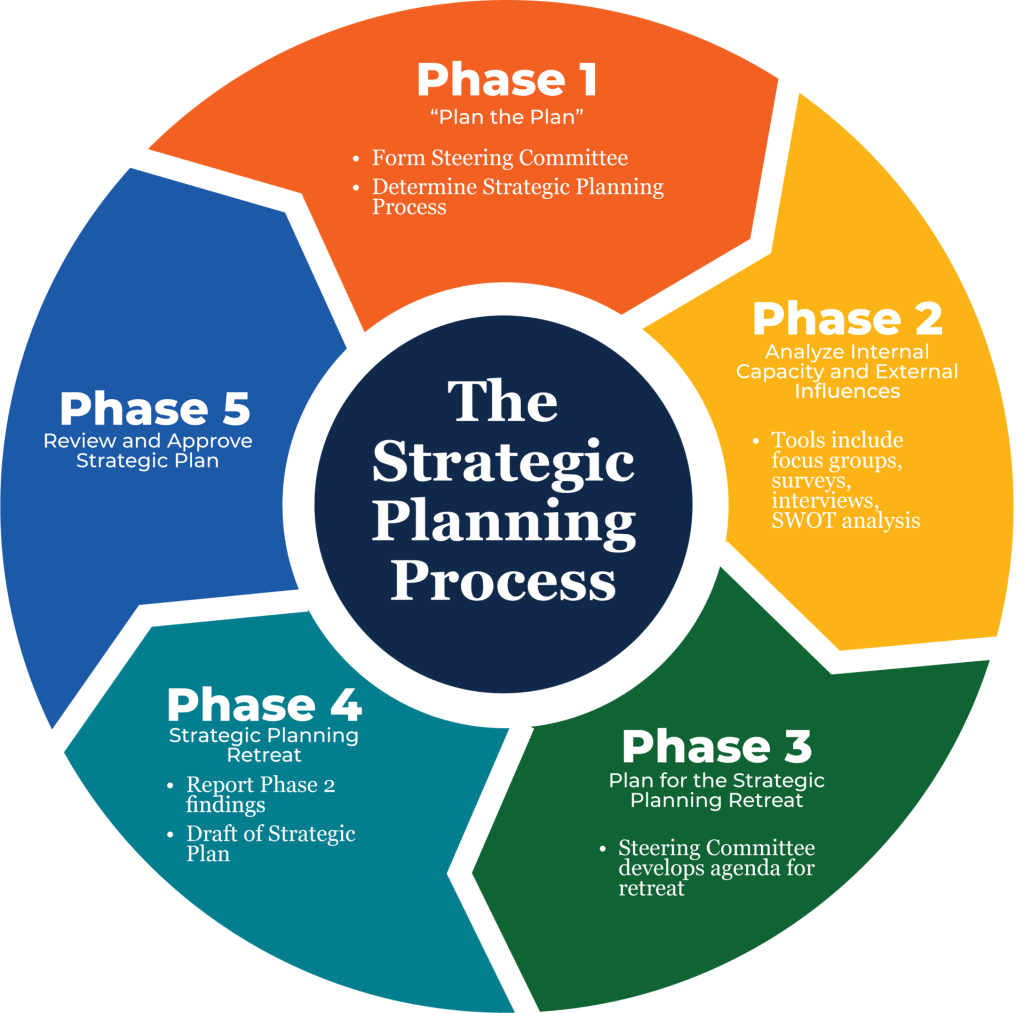
defining company mission
mission statement, take into account what is our business, who is customer, what do they value, what are our core competencies, what should our business be
mission statement
a statement of the organization’s purpose
examples of mission statements
nike and under armour. “make all athletes better through passion, design, and relentless pursuit of innovation”w
good mission statements have:
market oriented, realistic, specific, motivation, illustrative of distinctive competencies
what should you take into account when defining company mission?
what is our business, who is the customer, what do they value, what are our core competencies, what should our business be
setting company objectives and goals: what does mission statements lead to?
detailed supporting objectives for each level of management, must be measurable
designing the business portfolio
a combination of businesses that has the potential of reaching objectives: Which businesses to enter? which to exit? how much to invest?
businesses may be called strategic business units (SBUs), divisions, markets, product lines, etc.
BCG growth share matrix
BCG growth share matrix
market attractiveness= market growth rate. company strength= relative market share. question mark —> MONEY. want to turn question mark to grow into star. with time a star will become a cash cow. if its a dog —> exit market.
cash cow (dasani, coca-cold). star (fairlife shake, zero coke). question mark (bodyarmour, powerade). dog (coke orange, honest tea).

some criticisms of the BCG matrix
limited number of variables used. ignored interrelationships between businesses (ex. some disney movies are dogs). the placement of a business in the matrix is highly dependent on definition of market.
product/market expansion grid
used to identify growth opportunities.
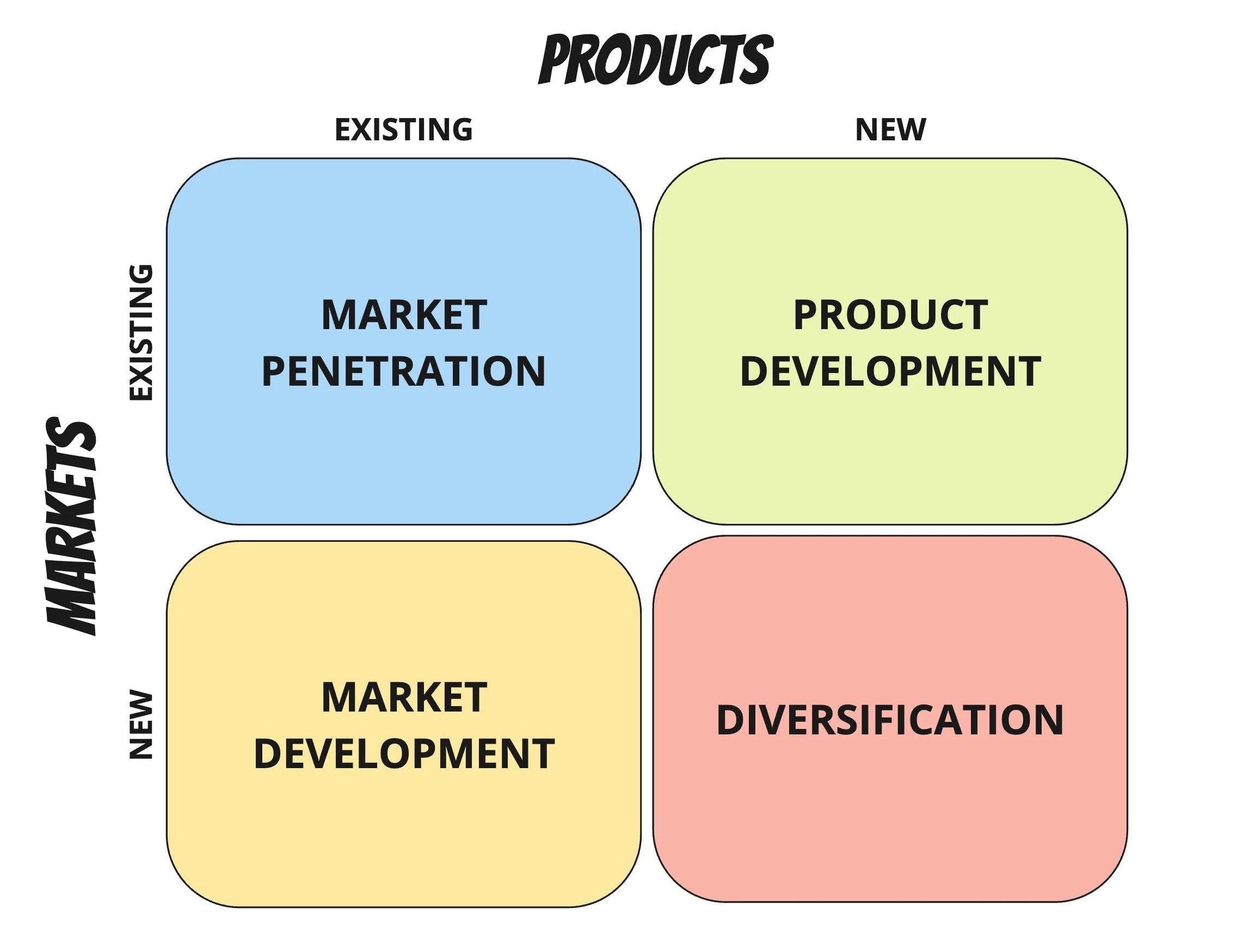
market penetration
strategy: to increase sales to current customers without changing products being sold. achieved by: price, place, promotion. ex: starbucks.
market development
strategy: identify and develop new markets (geographic or demographic for current products). which city has the most starbucks locations? Shanghai, China
product development
strategy: offering modified or new products to current markets.
diversification
strategy: start up or buy businesses outside of current products and markets.
marketing management
planning and implementation and organization, and control
planning
marketing info, microenv, macroenv, consumer behavior
implementation and organization
who what where how
Marketing Plan
executive summary, current marketing situation, SWOT analysis, objectives, marketing strategy, action programs, budgets, controls
marketing strategy
segmentation, targeting, and position (STP). the 4ps of the marketing mix
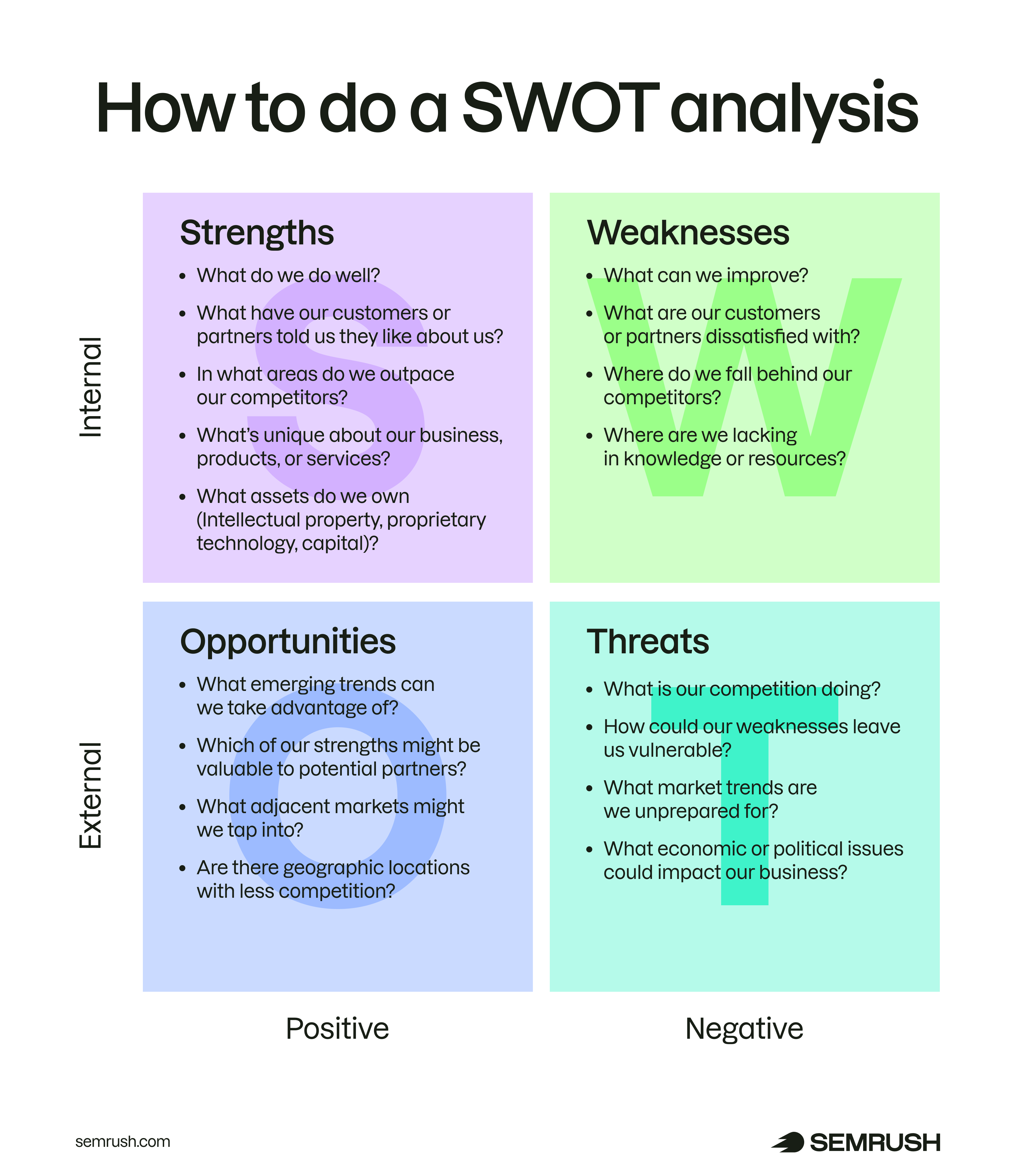
SWOT analysis
strengths, weaknesses, opportunities, threats
four ps of marketing
-product (variety, quality, design)
-price (list price, discounts)
-promotion (advertisting, sales promotion)
-place (supply chains, channel coverage, transportation)
ALWAYS do this with the target customer IN MIND
Marketing implementation
the execution of a plan is usually the hardest part. who when where how
implementation often ends up being more about personal relationships and/or luck than plans took into account.
successful marketing implementation depends upon:
company culture
employees’ shared beliefs and values
organizational structure
reward systems
marketing control
evaluate the results of marketing strategies and plans
set marketing goals
measure actual vs. expected performance on goals
take corrective action to close gaps between goals and performance.
marketing audit
segmentation, targeting, and positioning I
design a store that will appeal to PART of the population
steps in STP: to create value for targeted customers
segmentation
targeting
differentiation
positioning
segmentation
divide the total market into smaller groups that:
have distinct needs, characteristics, or behaviors
respond similarly to marketing efforts, and therefore,
might require their own products and marketing (4Ps)
targeting
select the segment or segments to enter
differentiation
differentiate the market offering to create superior customer value
positioning
position the market offering in the minds of target customers
geographic segmentation
dividing a market into different geographic units (ex: country, country region, city size)
ex: mcdonalds in germany has beer, canada fries poutine, india chicken
demographic segmentation
dividing a market based on demographic variables (ex: age, gender, family size, family life cycle, race, generation)
easier to measure than most other types of variables
gender segmentation: rise in gender-neutral clothing apparel to remove gender labels
ex: cruise lines
psychographic segmentation
dividing a market based on: social class, lifestyle, personality
behavioral segmentation
based on behaviors such as:
benefits sought
usage occasion
user status
usage rate
loyalty status
intermarket segmentation
segments of consumers who have similar needs and buying behavior even though they are located in different countries.
requirements for effective segmentation
measurable
can be identified and measured
accessible
can be reached and served
substantial
large and profitable enough
differentiable
separate from other segments
actionable
can be marketed to by our company
targeting
choosing the segment that is most attractive to your organization
ex: target market for Wii is based on behavioral segmentation. (family)
evaluating market segments
internal and external
internal market segments
does the segment fit with our objectives and resources?
external market segments
how big is the segment? what is its growth potential?
what is the competitive climate like? are there lots of substitute products?
how much power do suppliers and customers hold?
target marketing strategies
undifferentiated (mass) marketing
differentiated (segmented) marketing
concentrated (niche) marketing
micromarketing (local or individual marketing)
differentiated (segmented) marketing
targets several market segments and design separate offers for each.
concentrated (niche) marketing
targets a large share of one or a few small segments or niches.
micromarketing (local or individual marketing)
tailoring products and marking programs to suit the tastes of specific locales and/or individuals.
local marketing
individual marketing
aka. markets-of-one marketing or one-to-one marketing
main tool: mass customization
Positioning (step in stp)
the key concept to be communicated to the target consumer
the place the product occupies in the consumer’s mind relative to competing products.
“the battle for the mind” —> products are created in a factory, but brands are created in the mind.
competitive advantage
differentiate your brand based on:
product (whole foods/trader joes)
services (four seasons)
channels (amazon)
people (disney)
image (nike, under armour)
two types of differentiation
vertical and horizontal
vertical differentiation
one product is clearly better (think of a ladder) (ex:iphone, kindle)
horizontal differentiation
better is a matter of opinion (nike, under armour) (north face, patagonia)
positioning statement
to (target segment) who (need), (brand) is (concept) that (point-of-difference)
ex: “to busy, mobile professionals who need to always be in the loop, Blackberry is a wireless connectivity solution that gives you an easier, more reliable way to stay connected to data, people, etc. on the go.”
STP is translated into teh 4ps
-product (quality, features)
-price (discounts, allowances)
-promotion (advertising)
-place (supply chain, channel, logistics
three levels of product: decisions driven by
customer behavior
marketing info
micro environment
macro environment
strategy
maslows hierarchy of needs (most important —>least)
physiological needs (hunger, thirst)
safety needs (security, protection)
social needs (sense of belonging, love)
esteem needs (self-esteem, recognition)
self-actualization needs (self-development)
types of consumer products
convenience (everyday)
shopping
specialty
unsought
marekting considerations
customer buying ehavior
price
distribution
promotion
convenience
frequency purchases
little planning
low comparison/effort
low customer involvement
low price
widespread/intensive distriubiton
frequent advertising and sales promotion
shopping
less frequent purchase
effortful planning/shopping
compare brands on price, quality, and style
higher price
selective distriubiton
advertising
speciality
strong brand preference/loyaltySpecial purchase effort
Little comparison of brands
Low price sensitivity
High price
Exclusive distribution
Carefully targeted promotion
unsought
little product awareness
Price varies
Distribution varies
Aggressive sales promotion
other products
Industrial products
Organizations: for-profit (businesses) and nonprofit (schools, churches)
People: politicians, entertainers, pro athletes, doctors, lawyers
Places: tourism, country-of-origin, immigration
ideas(social marketing): public health campaigns, environmental campaigns, family planning, human rights, etc.
individual product decisions
product attributes
branding
packaging (selling)
labeling and logos
product support services
ex: volvo commerical illustrates
product attributes
quality
features, style, and design
performance
conformance
labeling and logos
labeling
identifies the product or brand
supports the brand’s positioning
adds personality to the brand
product line decisions
product line length
the number of items in a product line
and adjust length by
stretching downwards upwards, or both directions
filling
product mix
all of the product lines and items that a particular seller offers
product mix dimesnions
width=the number of different product lines carried
length=the number of items in a line
depth=the number of versions offered of a product in a line
consistency= how closely related various lines are
what is a brand?
A marker of identification for a product
A promise to the customer
Brand identity and brand consistency lead to feelings of trust
brand equity
The positive effect that knowing the brand name has on customer response to the product.
Ex: Cheerios, ketchup, soda
what does high brand equity provide?
Greater awareness and loyalty
Basis for strong, profitable customer relationships
willingness to buy over competitors and/or willingness to pay a premium for the brand
brand positioning
based on:
product attributes
benefits
beliefs and values
desirable qualities of brand name selection
Suggests product’s benefits and qualities
Easy to pronounce, recognize, and remember
Distinctive
Extendable, not limited to one particular brand
Translates easily into foreign languages
Capable of being registered and legally protected
memorable brand name selection
rhyme ex: fitbit
alliteration ex: vineyard vines
reptition ex:m&ms
protect brand names
Genericization voids trademark’s legal protections
Must include the registered trademark symbol
Some include the word “brand” for added protection
law of shape (ries and ries)
the ideal shape for a logo is horizontal
brand development strategies

line extension
Introduction of additional items within the current product category under the same brand name (ex: new flavors, forms, colors, ingredients, or package sizes)
brand extension
using a successful brand name to launch a product in a new category
Greater credibility
Faster acceptance
Ex: snoopy dog, apple watches
multibranding
Multiple brands by the same company in the same product category.
Ex: pepsi, sierra mist, MUG root beer
new brands
Used when existing brand names are either unsuitable for brand extension or the company doesn’t want to dilute them.
the law of the word (ries and ries)
A brand should strive to own a word in the mind of the consumer.
four service characteristics
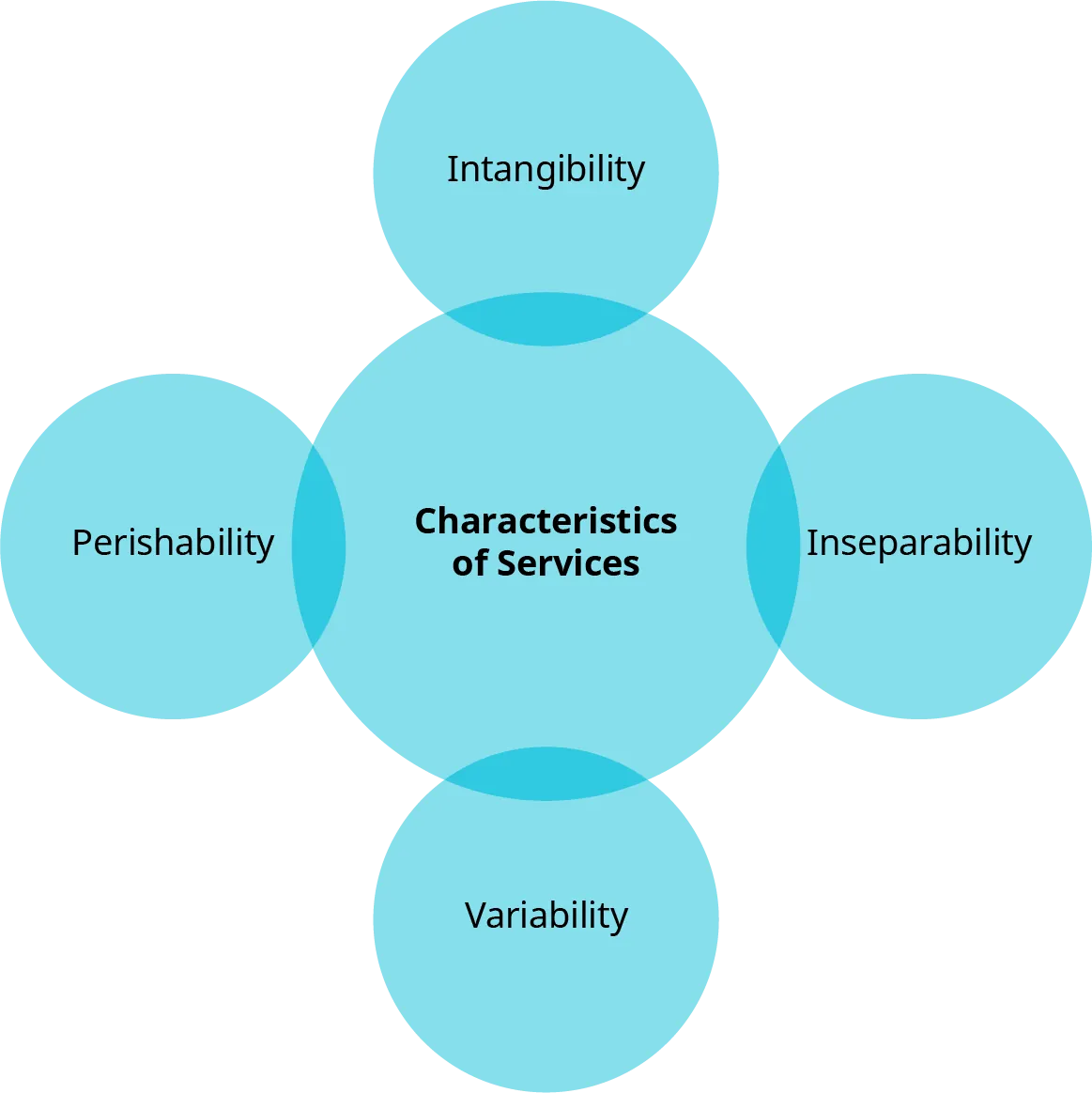
intangibility
services cannot be seen, tasted, felt, heard, or smelled before purchase.
variability
quality of services depends on who provides them and when, where, and how
inseparability
services cannot be separated from their providers
perishability
services cannot be stored for later sale or use
why new products?
New products are crucial for the health of the enterprise
Rejuvenate
Grow
Tied to higher stock values and internal motivation for employees
npd process
Having skill sets for one point in the process does not mean you’re also good at the others.
steps of npd (instagram, sneaky, can’t make bad posts to care)
idea generation
idea screening
concept development and testing
marketing strategy development
business analysis
product development
test marketing
commercialization
idea generation
Systematic search for new product ideas
Internal sources:
Company employees at all levels
External sources:
Customers, competitors, distributors, suppliers, outsourcing partners
What percentage of new product innovation ideas come from employees? 40-50%
Flaming hot cheetos, outsourcing partners: pringles jokes
idea screening
Screening process to reduce # of ideas by spotting good ones and dropping poor ones.
Describe product, target market, and competition.
Estimate market size, product price, development time and costs, manufacturing costs, and rate of return.
Evaluate against a set of company criteria for new products.
concept development
translate your product into a detailed concept stated in meaningful consumer terms (i.e., what will the consumer get out of this product?)
Ex: A <describe product> that provides <benefit> → A convenience restaurant that provides high quality, fresh, made-to-order food. (sheetz)
concept testing
test concepts with a group of target consumers to find out level of appeal.
In doing so, describe the product and elicit responses to the concept
sample questions for concept tesing
Do you understand the concept behind this product?
Is this concept believable?
What are the major benefits of this product?
How does it compare with other similar products?
What improvements might you suggest?
What factors might affect your decision to buy this product?
marketing strategy development
An initial marketing strategy is designed for the new product, consisting of:
Target market and initial objectives
Target market: planned product positioning, and goals for sales, market share, and profit for the first few years.
Launch tactics
Price, distribution, and marketing budget for the first year.
Long-term objectives
Long-run sales and profit goals, marketing mix (4Ps) to be used.
business analysis
Does the idea make business sense?
Involves a review of the sales, costs, and profit projections to assess fit with company objectives.
Assess risk under various scenarios
If results are positive, project moves to the product development stage