Bias and Underrepresentation in Media and Technology Cultural Identity Development
 Call Kai
 Learn
 Practice Test
 Spaced Repetition
 Match
 Flashcards
 Knowt Play
1/73

There's no tags or description
Looks like no tags are added yet.
74 Terms
How are people of color in the media represented?
stereotypical representations
criminalization & model minority stereotype & eroticization
What did Gene Davis Institute 2020 Report on children’s TV shows say about GENDER?
45% of children’s tv episodes have a female lead
female characters 3x more likely to be in revealing clothes or partially nude
male characters more likely to be violent, 2x more likely to be depicted as a criminal
among characters in STEM professions, male characters outnumber female characters 2 to 1
What did Gene Davis Institute 2020 Report on children’s TV shows say about race/ethnicity?
31.9% of leads were POC
characters of color more likely to be shown as violent than white characters
what did Gene Davis institute 2020 report on children’s tv shows say about LGBTQ and disability?
lgbtq: less than 1% of all characters in top children’s tv shows are lgbtq
-0.8% of all characters in top children’s tv shows with disability what
what did gene Davis institute 2020 report on children’s tv shows say about body size?
11.3% of all characters; 5.9% of leading characters w/ large body types
typically depicted in stereotypical ways like clumsy, loser, poorly dressed
Sanoicolo et al (2023)
examined the relationship between media representations and gender stereotypes, objectification, and sexualization
How has attention to gender grow in media?
Sanoicolo et al (2023)
public interest in gender issues have increased over the past decade
social and political movements have pushed for more equal and accurate representation
academic research on gender (especially in media) has rapidly expanded
social media platforms have transformed how people consume and engage with gender portrayals
what are the 3 types of gender stereotypes?
descriptive, prescriptive, and proscriptive
Descriptive
beliefs about how genders are
prescriptive
beliefs about how genders should bepr
proscriptive
beliefs about how genders should not be
objectification
objectification occurs when a person is treated as an object rather than a full human being.
reduces individuals to their physical appearance/usefulness.
Key features of objectification
key features include:
been seen as a tool for others’ purposes
lack of autonomy or independence
ignoring thoughts, feelings, or experiences
most commonly directed toward women in media
sexualization
sexualization occurs when a person’s value is primarily based on their sexual appeal or behavior.
hyper focused on aperance/sexual identity, equating their worth to their attractiveness
media representations of gender
media frequently overrpresents men and underrepresents women
in media, women are less likely to appear as what?
women are less likely to appear as experts or authority figures
women are often portrayed as
focused on beauty and physical appearance
passive, nurturing, dependent on others
men are often portrayed as:
active, dominant, goal oriented
skilled, rational, independent
effects of stereotyping, objectification, and sexualization
reinforces traditional gender roles and expectations across society
encourages internalization of unrealistic body & appearance
increases self objectification and constant monitoring of one’s appearance
linked to negative mental health outcomes: depression, anxiety, lower self esteem & confidence, body shame
stronger endorsement of sexist beliefs
greater tolerance of sexual harassment and violence
increases ED
increases risky or coercive behaviors (especially in men)
Saleem et al (2026)
meta analysis review of 60 studies on media depictions and outgroup evaluations
looked at various social groups, how they’re portrayed, how people are impacted, and how their attitudes are influenced by the types of portrayal
Salem et al (2026) Hypotheses
Hypothesis 1: negative portayals = unfavorable evaluations
hypothesis 2: positive portrayals=favorable evaluations
salem et al (2026) wondered if effects of people’s attitudes towards groups vary by what?
wanted to know if effects vary by
outgroup
outcome type
media type
genre
study design
method quality
Salem et al (2026) found what with black americans in media?
black americans had improvements in representation sa
salen et al (2026) found what with native americans/middle eastern groups in media?
underrepresented or negatively portrayed
salem et al 2026— what creates worse attitudes towards groups from media?
low visibility (in media) + negative (portrayal in media)=worse attitudes (towards that group)
what types of outcomes did salem et al 2026 look for?
cognitive (beliefs stereotypes)
affective (emotions)
behavioral (actions)
policy (support for laws)
what medium types did Salem et al (2026) use?
tv, text, gameswha
what genre did salem et al (2026) use?
entertainment: immersive, emotional
news: often negative, strong impact
salem 2026 (entertainment impact)
immersive, emotional
salem et al (news impact)
often negative, strong impact
results of salem et al
negative portrayals—> negative evaluations
positive portrayals—> positive evaluations
no significant moderators
What did 2021 common sense cents find?
that tweens spend about 5 hours a day on social media
that teens spend about 8 hours a day on social media
how underrepresentation or biased representation affects children?
1) internalized societal expectations and values
2) development of stereotypes
3) negative intergroup relations
how can underrepresentation or negative depictions of your own group affect you?
it can have negative impact on your identity, self concept, and aspirations
why do biases exist in technology?
because they’re created by humans?
resume scanning algorithm (bias in technology)
resume scanning algorithms prefer resumes with English sounding names 40% more often than identical resumes w/ chinese, Indian, or Pakistani names
bias in technology (facial recognition systems)
greater inaccuracy recognizing dark skinned faces in facial recognition systems
biases in technology (automatic soap dispensers)
automatic soap dispensers having greater difficulty reading darker skins due to light sensors’ settings
what were the “glitches” in search engines around 2019-2020? (biases in tech)
first results for searches of asian girls, Latinas, black girls were porn sites
Tripartite Model of Personal Identity
Understanding that our self-perceptions are made up of:
unique, individual aspects
aspects of groups to which we belong
universal aspects of human beings
Tripartite Model of personal identity: individual level
Individual level: uniqueness
our town genetics and experiences
own identity, personality
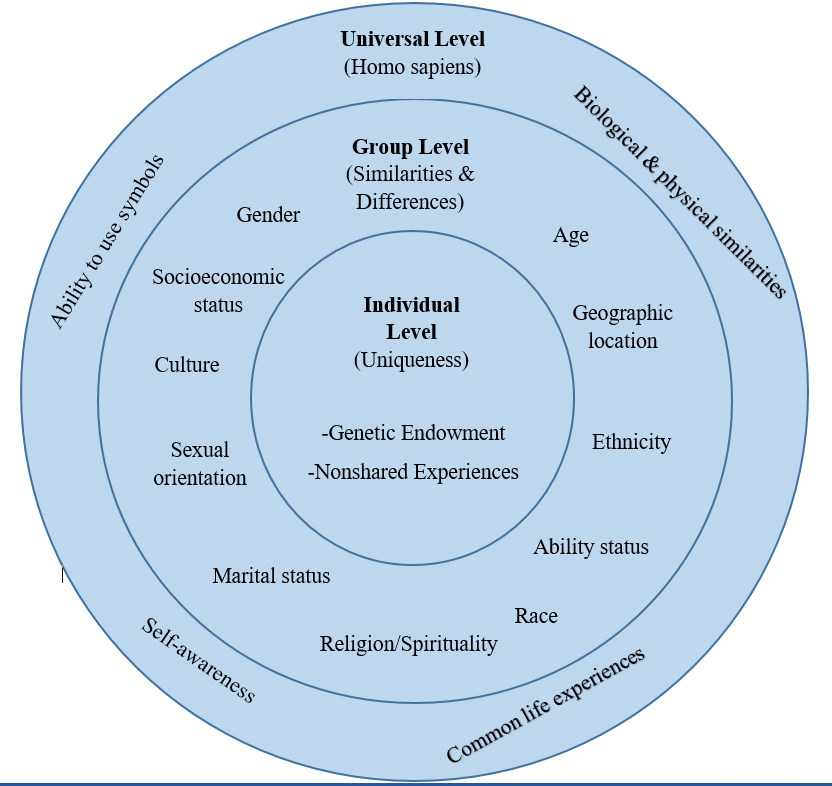
tripartite model of personal identity: Group Level
Group Level: similarities and differences
share traits with some people but differ from others
ex) race, gender, age, etc.
African American Identity Development
Psychological process of becoming black
what model does the African american identity development use
it uses the cross’ model
What are the stages of the Cross’ model
1) pre encounter stage
2) encounter stage
3) immersion/emersion stage
4) internalization stage
Pre encounter stage (cross’ model)
Lack of understanding about race beyond basic skin color
see only skin color, don’t know culture or history
Devaluing “blackness” and idealizing “whiteness”
negative stereotypes about their own racial group; believe white is the standard/most desirable
encounter stage (cross’ model)
significant event that cause individuals to reevaluate their attitude about race
realization of racism/discrimination against their own racial group
emotions of anger and guilt may be experienced
ex) assassination of Martin Luther king
immersion emersion stage (cross’ model)
reversed attitudes
ex: idealizing blackness
immersion stage: withdrawal from the dominant group/culture (aware of racism makes them uncomfy w/ dominant group)
as individuals move closer to the EMERSION stage, they realize they may be good and bad in any race. intense anger and avoidance start to fade.
internalization stage (cross’ model)
feeling positive and secure about their African american black identity, allow them to accept other cultures
European american identity development uses what model?
Helm’s model
what are the stages in Helm’s model?
1) contact
2) diintegration
3)reintegration
4) pseudo independence
5) immersion/emersion
6) autonomy
contact (helms’ model)
timid and uncertain about race
unaware of racism, predjuice, privilege
lack of experience with people from other backgrounds
may profess to being color blind (I don’t see color)
disintegration (helm’s model)
increased contact w/ people from diverse backgrounds
realize that their experiences and those of people of color may be different; may be first time realizing racism exist
may experience guilty, anxiety, helplessness; feel uncomfortable
reintegration (helm’s model)
retreating to their comfort zone to resolve conflicts
ex) passively/actively supporting white superiority
blaming the disadvantaged for their status/challenges
pseudo-independence (helm’s model)
first phase of non racist European american identity
distance themselves from their racial group
acknowledge racism; however, may believe that is’ the people of color who should change
immersion/ emersion (helm’s model)
learn more about their own culture; form more positive white identity while assuming personal responsibility for racism
begin to feel comfortable being white and non racist
autonomy (helm’s model)
positive white identity accomplished
acknowledge their privilege and work to combat discrimination
most models are influenced by what?
most models are influenced by cross’ model
Multiracial identity development (personal identity stage)
identify based on personal factors not on group membership
multiracial identity development (choice of group categorization stage)
pressure to choose 1 identity
Davenport (2016) found what?
found for women, they are more likely to identify as bi-racial
men are more likely to identify with the racial minority group
biracial women more perceived as ‘exotic, mysterious’ ; people more likely to perceive biracial men as the minority
multiracial identity development (enmeshment/denial stage)
feeling guilty for choose 1 group over another
multiracial identity development (appreciation stage)
exploring the racial identity that was initially ignoring
multirracial identity development (integration stage)
realization that embracing both races/ethnicities is beneficial
what are some critiques of the stage models?
most models assume linear progression through each stage
Not all individuals being with idealization of European americans while denigrating their racial minority identity/culture
Accept stage as the final stage
Assumes the final stage (achieving pride in their group while integrating into the dominant group) to be the ''healthiest’
how should one think of the identity process?
better to think of identity as a dynamic, non linear, and continuous process
Cass (1979) model
identify model for people who fall along the LGBTQ continuum
socioeconomic status/ social class identity development model?
no identity model currently
Paradox of upward mobility
Higher SES usually predicts better psychological and physical health
But upward mobility can be costly for low SES racial/ethnic minority students
status based identity uncertainty
conflicting beliefs about social standing
conflict between past and future status
negative outcomes with status based identity uncertainty
lower self esteem, lower life satisfaction, reduce academic motivation and performance
factors that can moderate status based identity
strong social support
predictors of status uncertainty
discrimination: racial/ethnic/SES based
Cultural mismatch in college:
interdependent norms (collective) norms vs college’s independent norms