Digestive System Anatomy and Physiology CUIZ LAB
 Note
 Call Kai
 Learn
 Practice Test
 Spaced Repetition
 Match
 Flashcards
 Knowt Play
1/58

Earn XP
Description and Tags
Comprehensive vocabulary flashcards covering anatomical terminology, physiological definitions, and cadaver identification for the human digestive system.
59 Terms
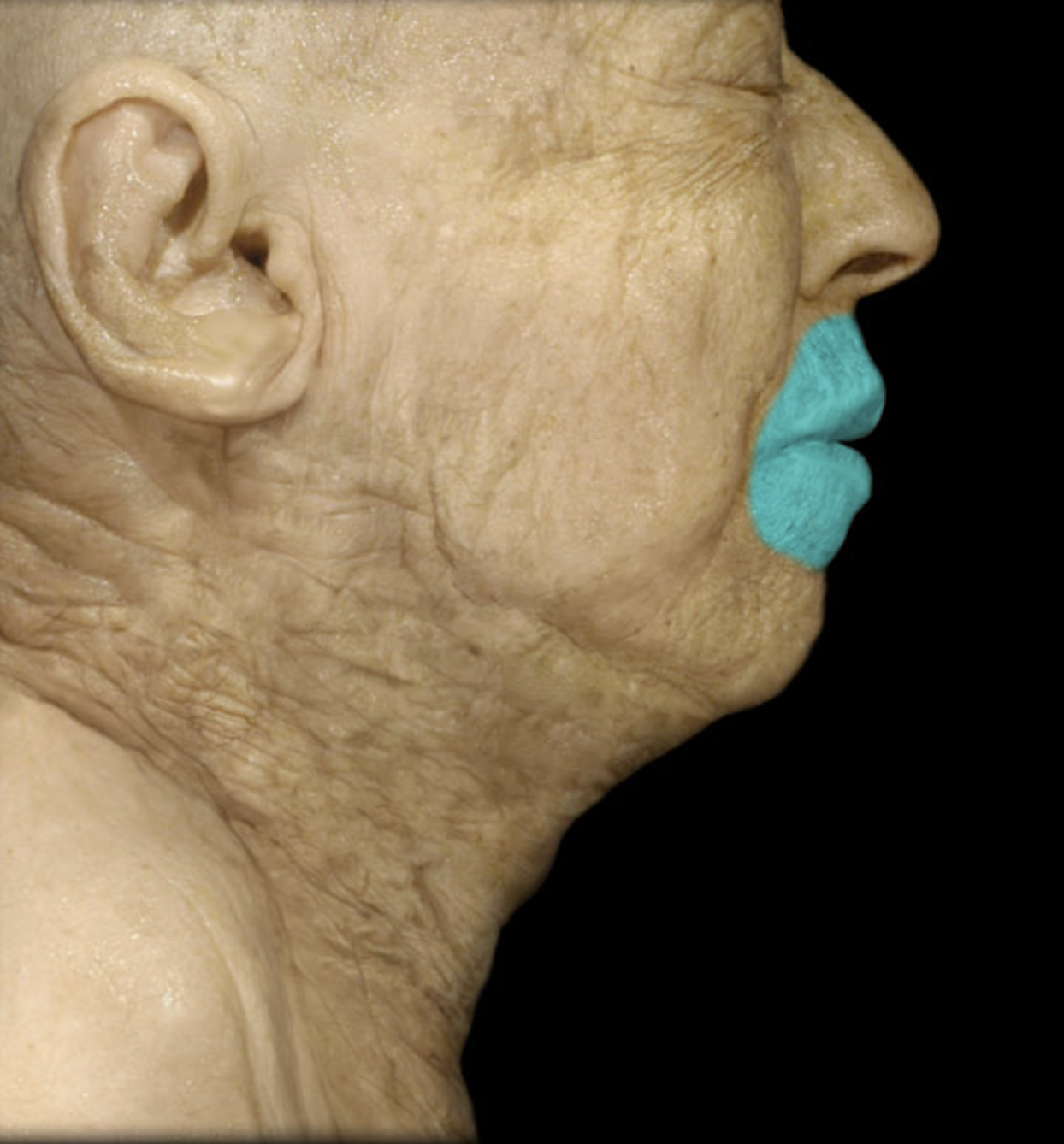
Lips

Tongue

Oral Cavity


Teeth
are hard structures in the mouth that aid in the mechanical digestion of food by breaking it down into smaller pieces.


Hard Palate
The anterior, bony portion forming the roof of the oral cavity.

Soft Palate
The posterior, muscular portion forming the roof of the oral cavity.

Uvula
The conical posterior projection of the soft palate that functions to close off the nasal cavity during swallowing.

Crown
is the visible part of a tooth above the gum line, covered by enamel, and is responsible for chewing food.

Root
that anchors a tooth in the jawbone, containing nerves and blood vessels.
Primary Teeth
The first set of 20 deciduous teeth that erupt in sockets of the alveolar processes and are eventually shed.
Secondary Teeth
The permanent set of 32 teeth that replace primary teeth.

Incisors
Chisel-shaped teeth adapted specifically for biting off pieces of food.

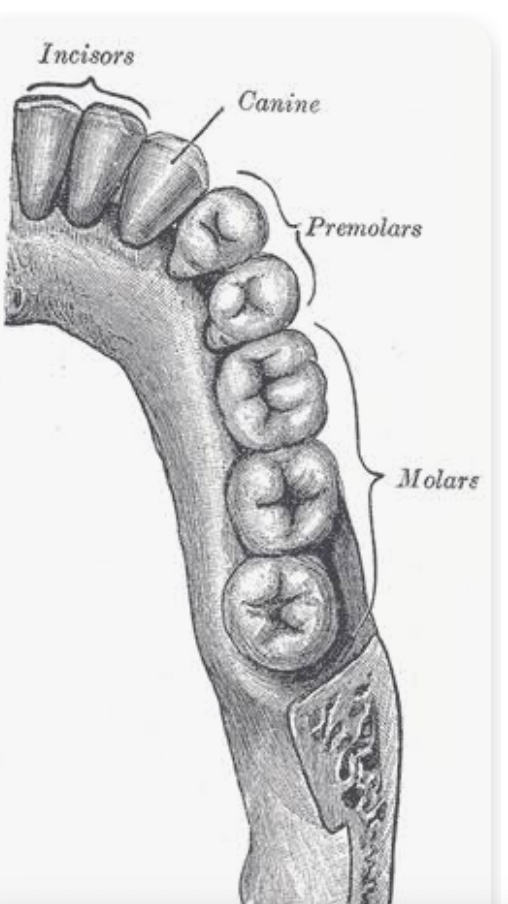
Canines (Cuspids)
Cone-shaped teeth adapted specifically for grasping and tearing food.
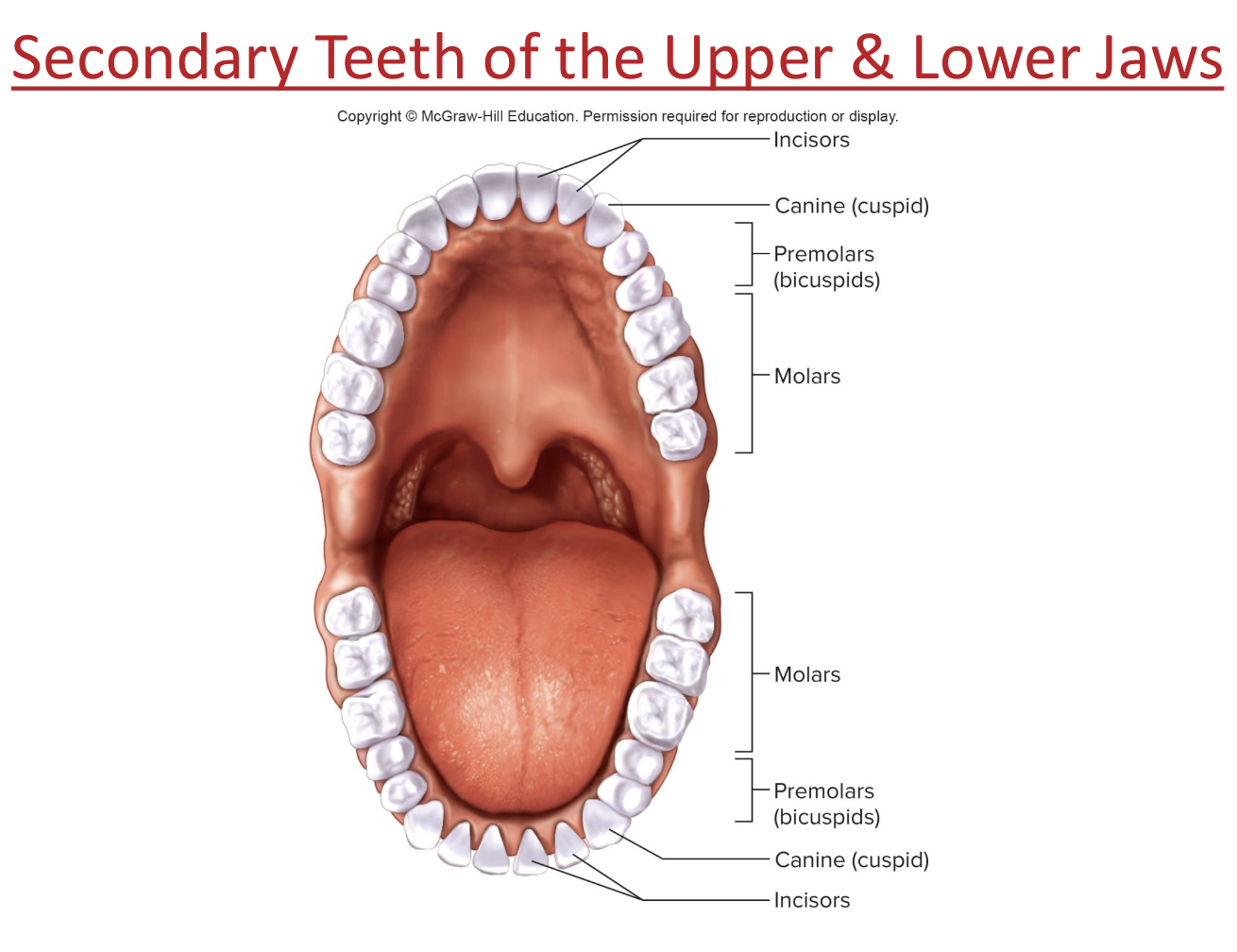

Premolars (Bicuspids)
Teeth with broad surfaces that function in grinding food particles; absent in primary dentition.
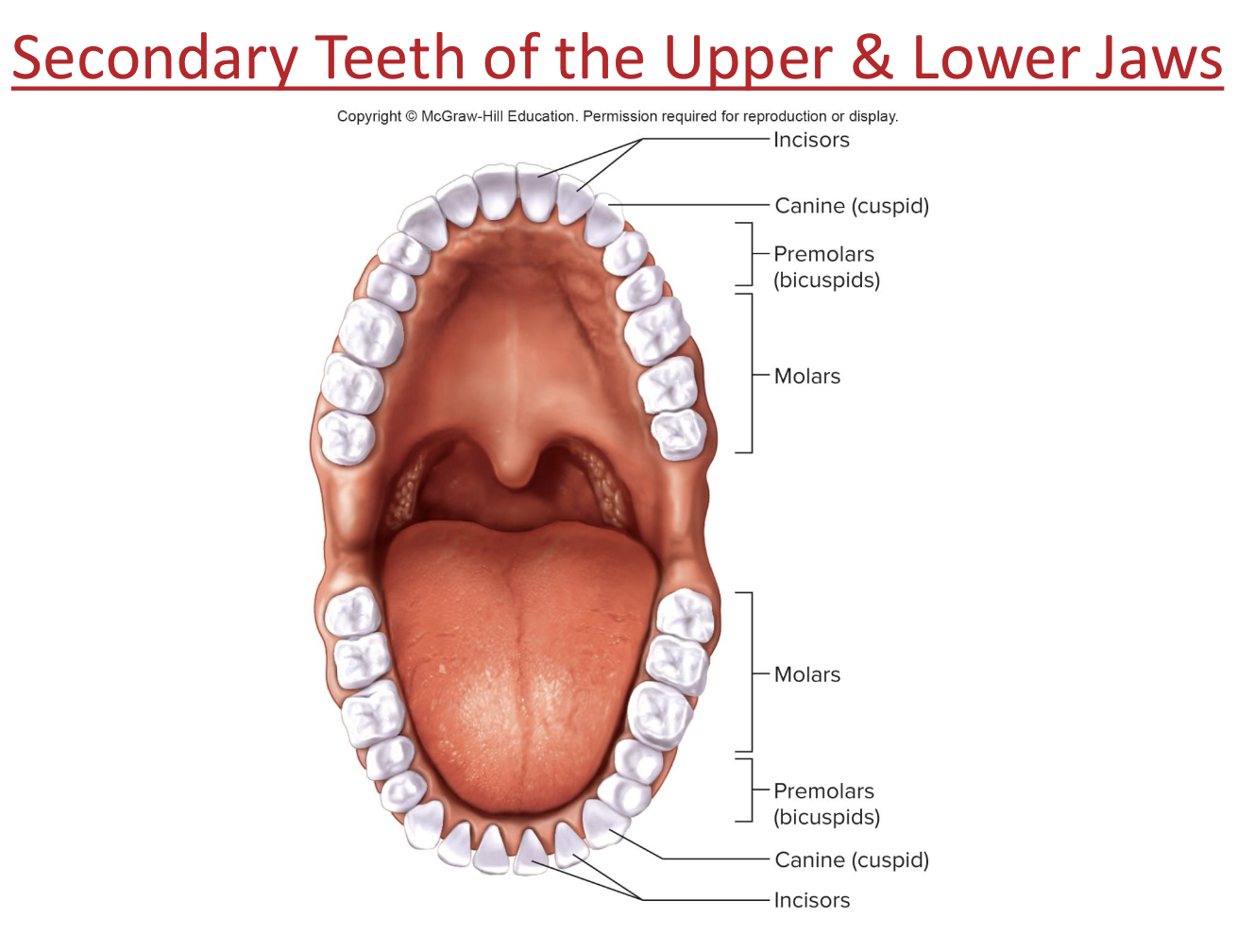

Molars
Posterior teeth with flattened crowns adapted to grind food particles.


Pharynx
a muscular tube connecting the mouth and nasal passages to the esophagus and larynx, playing a key role in breathing and swallowing.

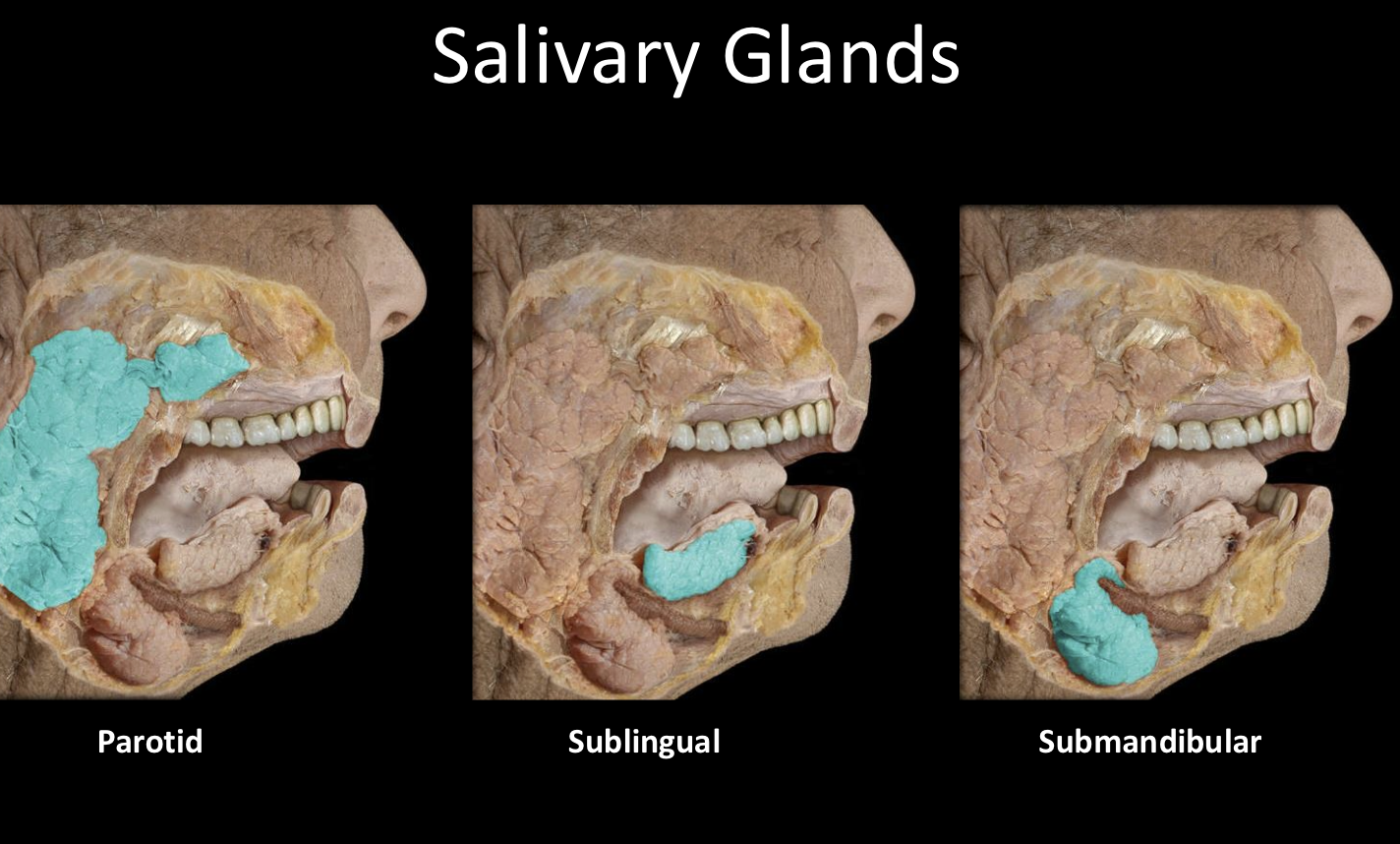
3 salivary Glands

Enamel
The calcium salt-rich, highly calcified outer layer covering the tooth crown; the hardest substance in the human body.


Dentin
The living, bone-like substance underlying the enamel that surrounds the central pulp cavity and is harder than bone.


Pulp Cavity contains blood vessels, nerves, and connective tissue that support the tooth.
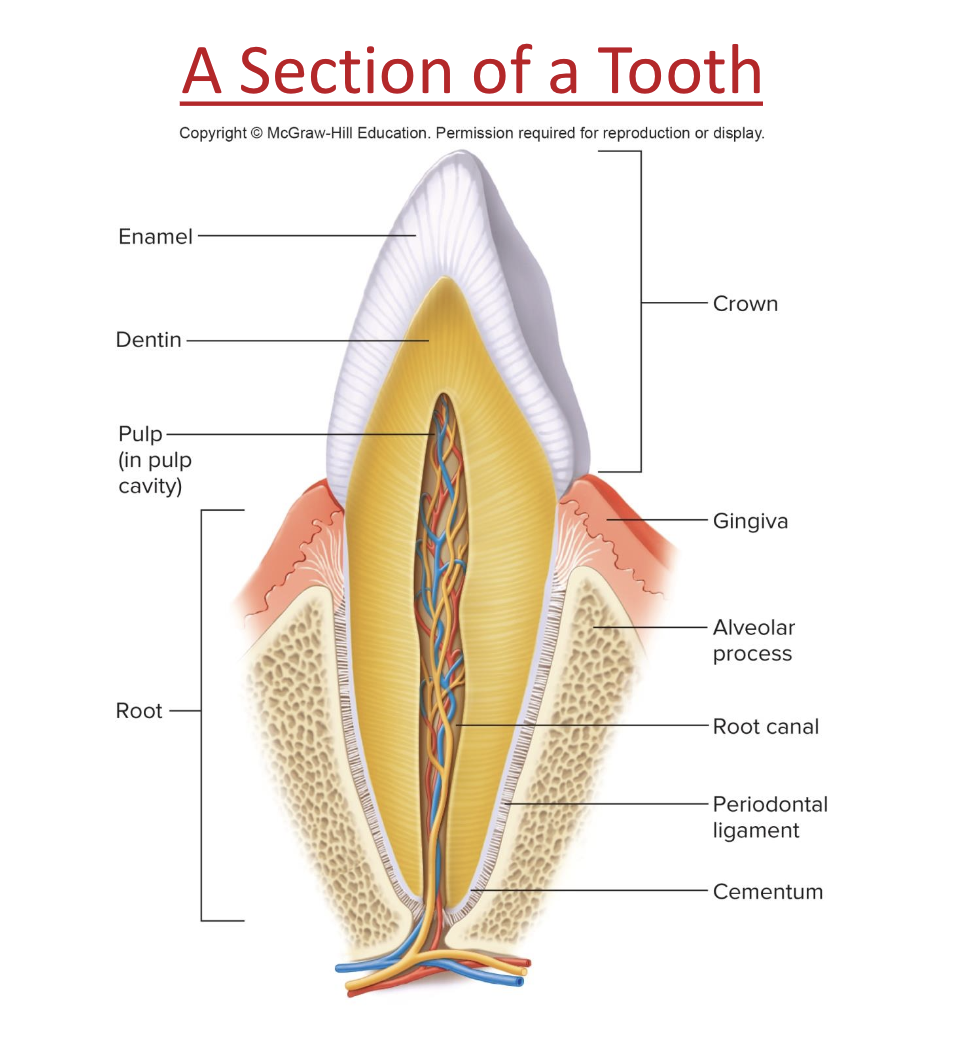

Gingiva
The gums lining the alveolar processes around the necks of the teeth.

Anus
is the opening at the end of the digestive tract through which waste is expelled from the body.


Parotid Gland
The largest major salivary gland, located anterior to the ear, which secretes a clear, watery serous fluid rich in amylase.

Submandibular Gland
A major salivary gland located in the floor of the mouth that secretes a viscous combination of serous fluid and mucus.

Sublingual Gland
The smallest major salivary gland, located inferior to the tongue, which produces a thick, stringy mucus secretion.
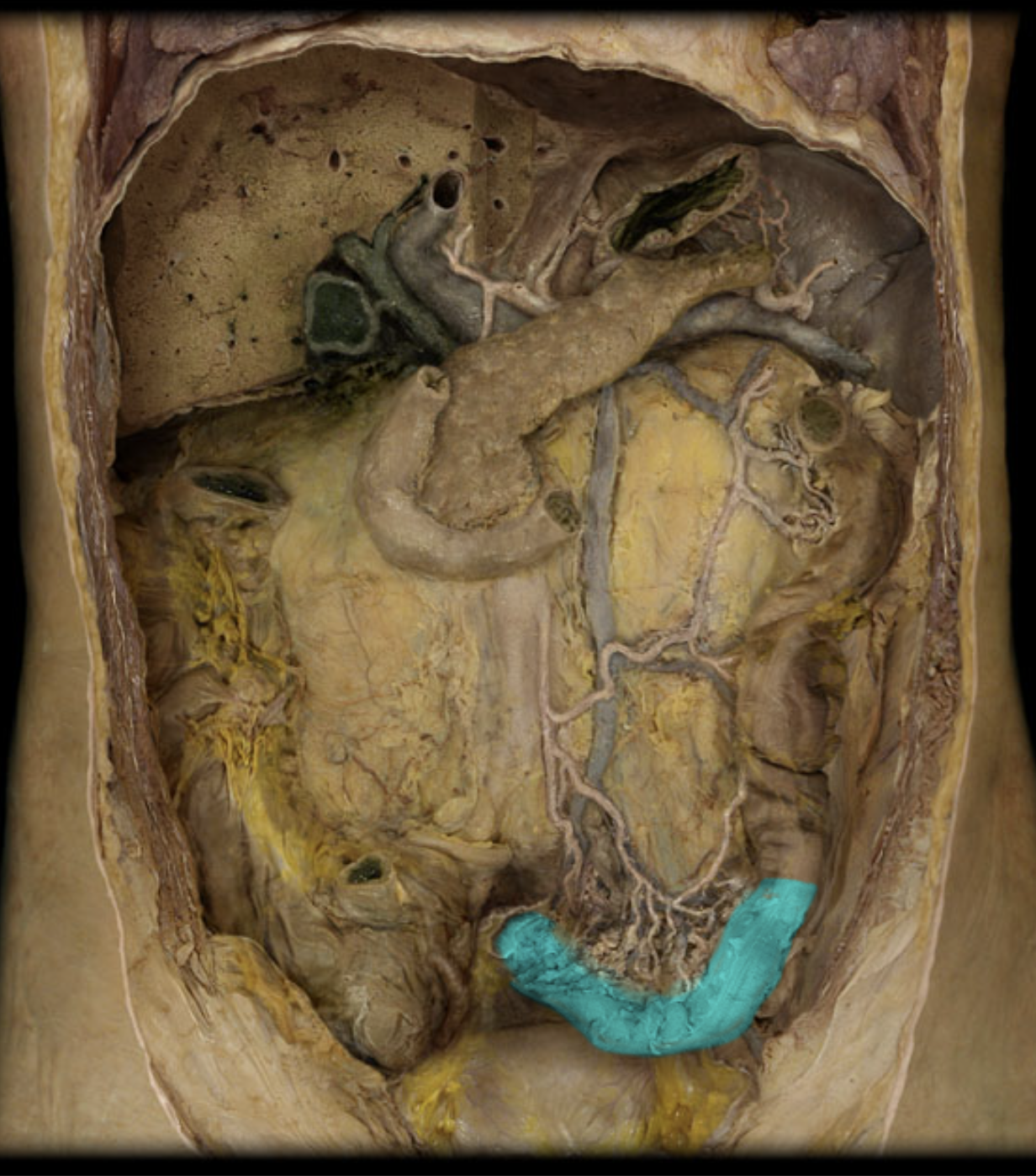
Sigmoid Colon
The sigmoid colon is the S-shaped segment of the large intestine that connects the descending colon to the rectum. It is responsible for storing fecal waste until it is ready to be expelled from the body.


Cystic Ductis the duct that carries bile from the gallbladder to the common bile duct, facilitating the flow of bile into the duodenum.
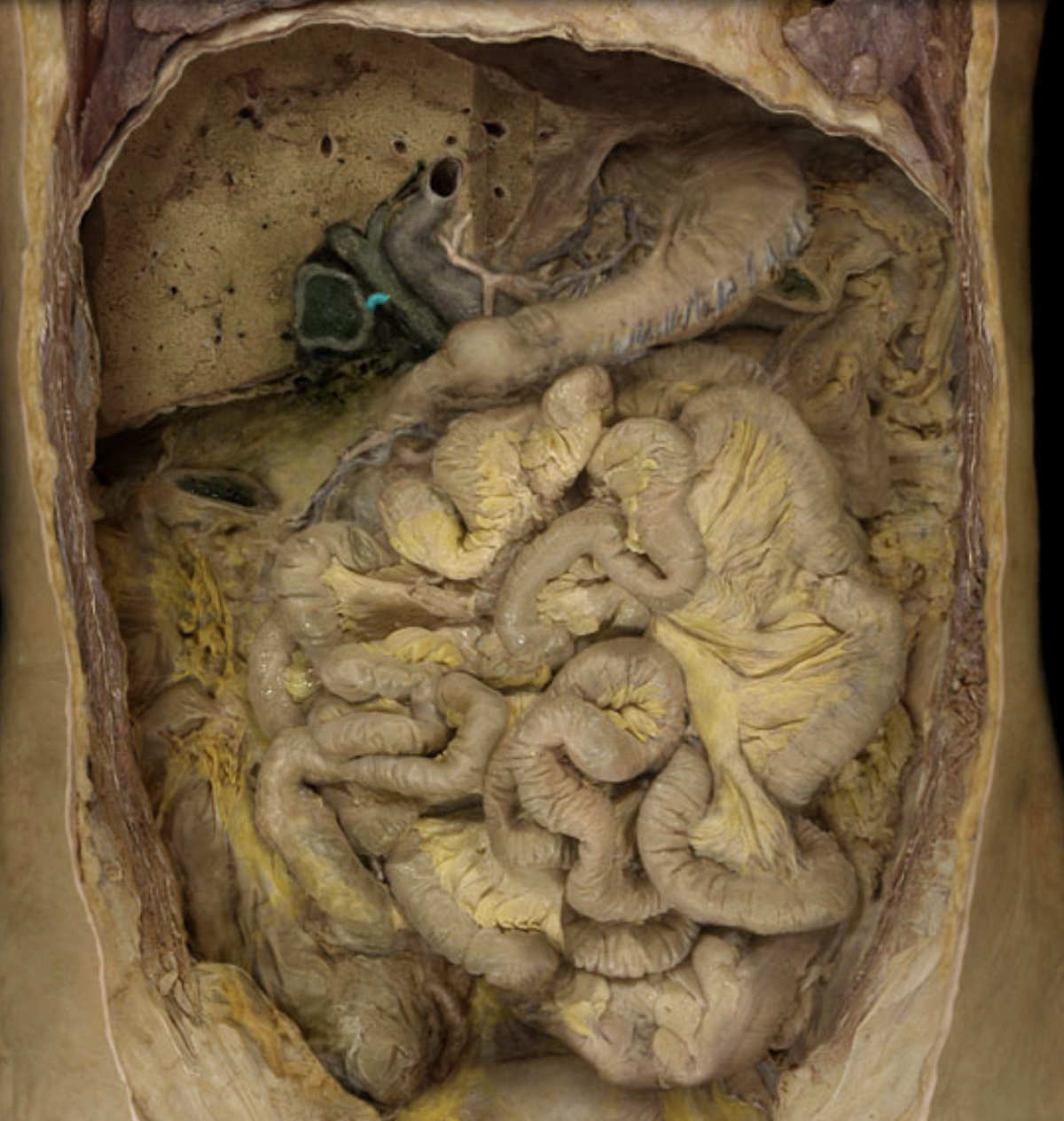

Pancreas

Esophagus
A collapsible, straight muscular passageway leading food from the pharynx down to the stomach.

Lower Esophageal (Cardiac) Sphincter
A ring of circular smooth muscle that prevents regurgitation of acidic gastric contents back into the esophagus.

Stomach
A J-shaped muscular organ in the upper left abdominal quadrant that receives food, initiates protein digestion, and propels chyme to the small intestine.

Rugae (Gastric Folds)
Mucosal and submucosal folds that allow for distention of the stomach when food enters.

Fundus
The small, dome-shaped superior region of the stomach that balloons higher than the cardia.

Body of the Stomach
The main, central portion of the stomach situated between the fundus and the pylorus.
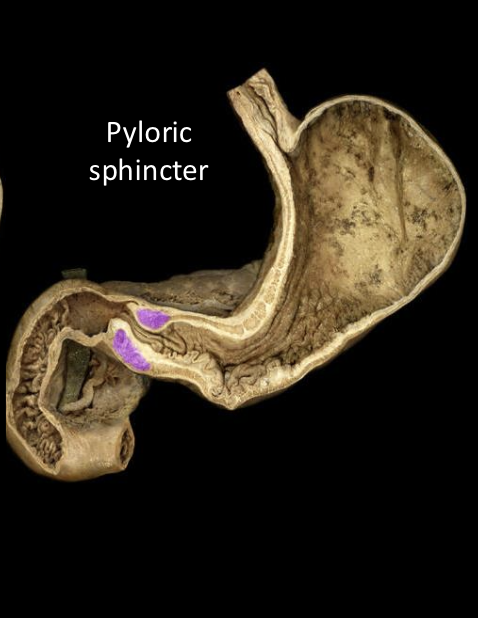
Pyloric Sphincter
is the region of the stomach that connects to the duodenum. It helps regulate the passage of partially digested food into the small intestine.

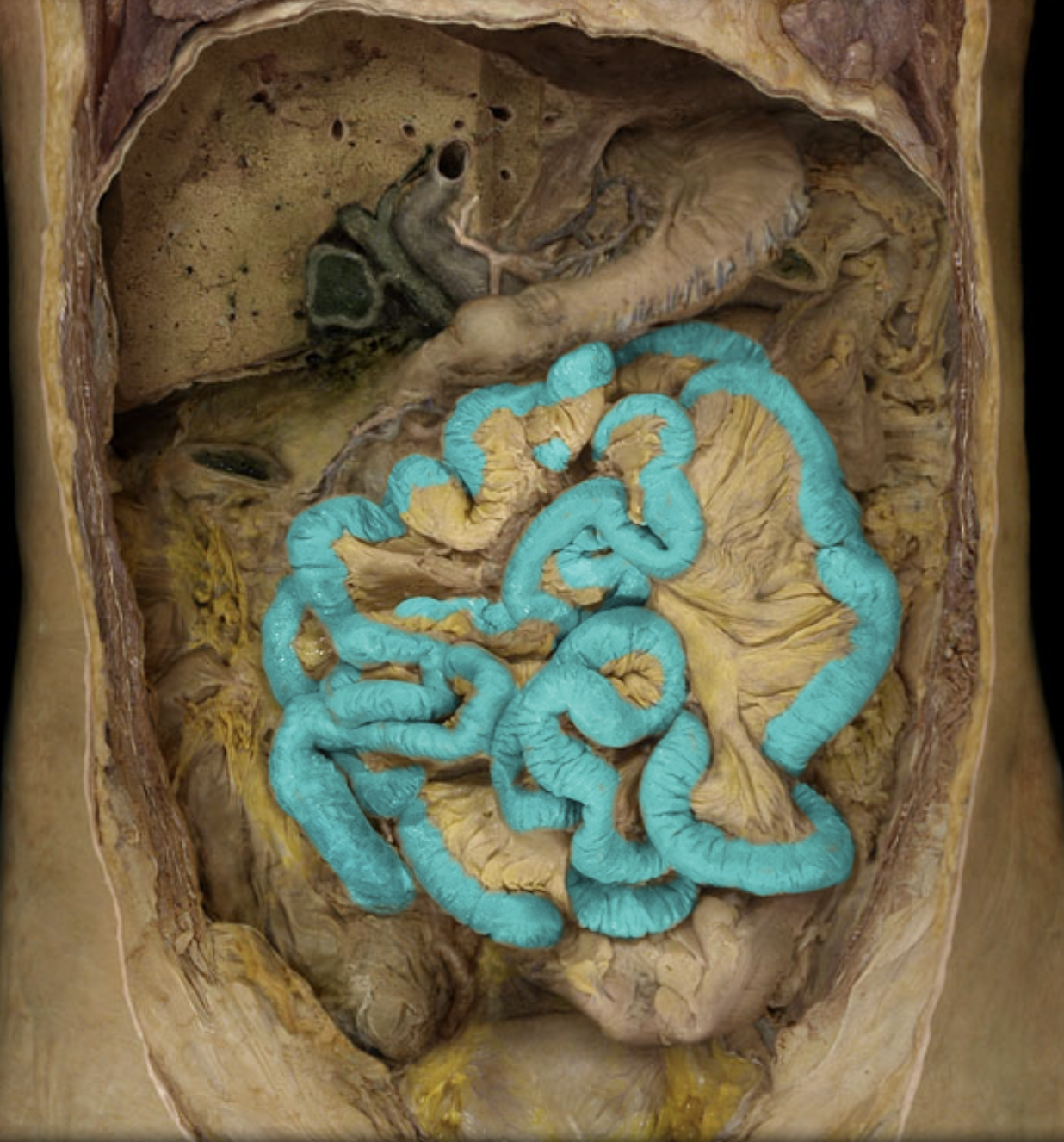
Small Intestine
is a long, coiled tube where most digestion and nutrient absorption occur. It consists of three sections: duodenum, jejunum, and ileum.

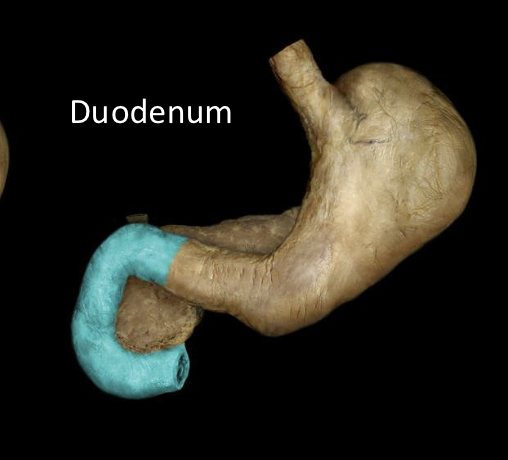
Duodenumis the first section of the small intestine, located between the stomach and the jejunum. It plays a critical role in the digestion of food by receiving secretions from the pancreas and liver.

Pancreatic Duct
A primary duct traversing the pancreas that delivers pancreatic juice to the duodenum alongside the bile duct.

Hepatopancreatic Sphincter
A circular muscular sphincter that regulates the entry of bile and pancreatic secretions into the duodenum.


Liver
The body's largest internal organ, located in the right upper abdominal quadrant, responsible for numerous metabolic functions and the continuous secretion of bile.

Right Lobe of the Liver
The largest anatomical lobe of the liver.

Left Lobe of the Liver
The smaller anatomical lobe of the liver separated anteriorly from the right lobe by the falciform ligament.

Hepatic Portral Vein

Gallbladder
A pear-shaped muscular sac on the inferior liver surface that stores and concentrates bile between meals.

Common Hepatic Duct
The duct formed by the union of the right and left hepatic ducts emerging from the liver.

Bile Duct (Common Bile Duct)
The duct formed by the joining of the cystic duct and common hepatic duct that carries bile to the duodenum.

Mesentery
A fan-shaped, double-layered fold of peritoneum that suspends the jejunum and ileum from the posterior abdominal wall and transmits vessels and nerves.

Duodenum
The shortest (25cm), most fixed C-shaped proximal segment of the small intestine that receives chyme from the stomach.

Jejunum
The middle section of the small intestine, comprising the proximal two-fifths (2.2−2.4m) with a wider lumen and high absorptive activity.


Ileum
The distal three-fifths of the small intestine (3.3−3.6m) terminating at the ileocecal junction.


Cecum
A blind pouch in the lower right abdomen representing the start of the large intestine, from which the appendix projects.

Vermiform Appendix
A narrow, worm-like tube containing lymphatic tissue that extends downward from the cecum.

Ileocecal Junction
The site of connection between the distal ileum and the cecum guarded by a muscular sphincter.

Ascending Colon
The portion of the large intestine extending superiorly along the right abdominal wall to the liver.

Transverse Colon
The longest and most mobile segment of the colon, crossing horizontally across the abdominal cavity.

Descending Colon
The portion of the large intestine that courses downward along the left abdominal wall to the pelvic brim.
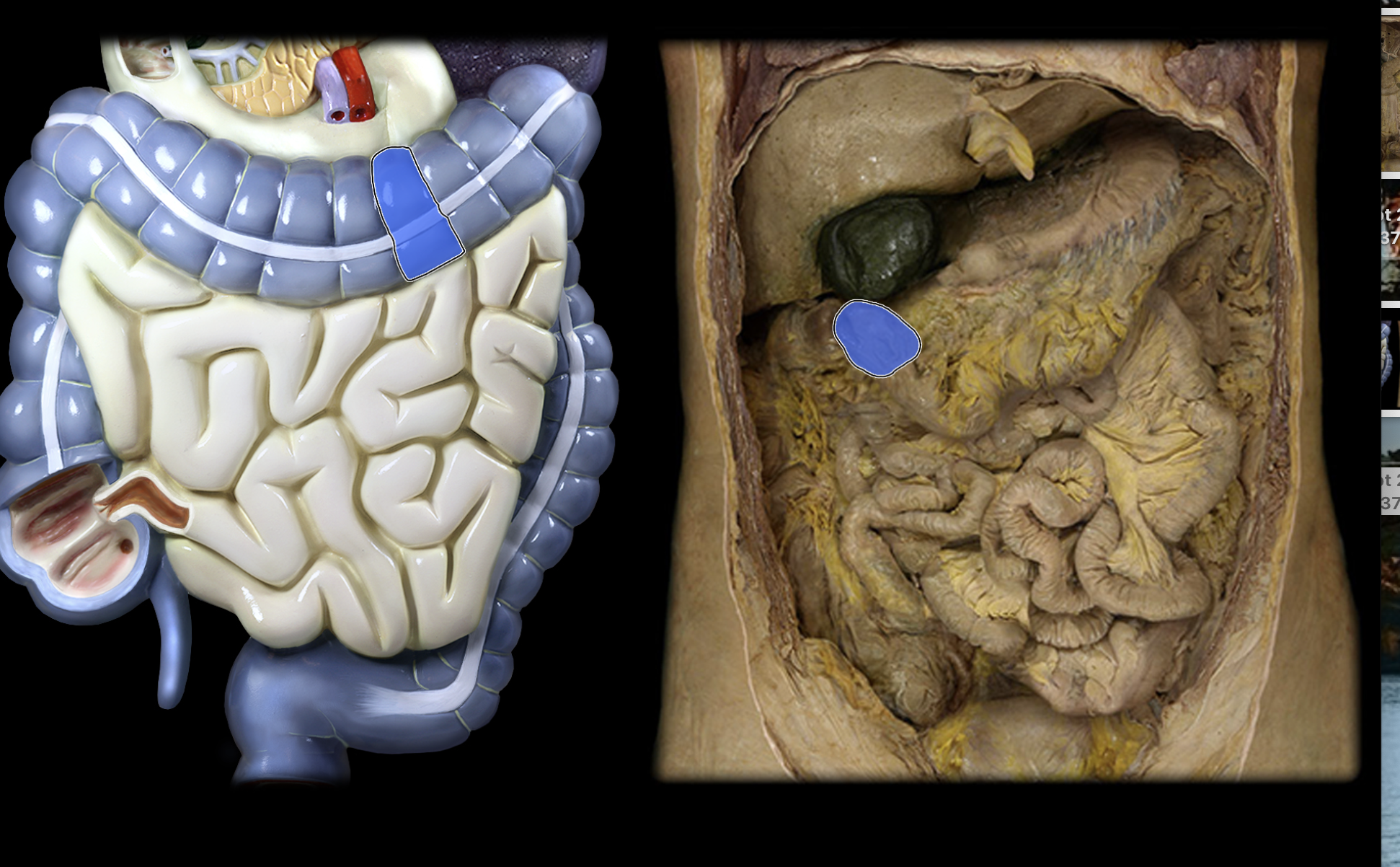
Haustra
Series of pouches or sacculations in the wall of the large intestine produced by tension of the taenia coli.

Rectum
The straight pelvic continuation of the large intestine lying anterior to the sacrum that stores feces prior to defecation.

Anal Canal
The terminal portion of the large intestine through which feces passes to exit the body via the anus.