Intro to Comm Exam 1 Flashcards (Jeopardy + Other)
 Call Kai
 Learn
 Practice Test
 Spaced Repetition
 Match
 Flashcards
 Knowt Play
1/58

Earn XP
Description and Tags
59 Terms
Subjectivity
The notion that no two people attach the same meaning to the messages around us.
Personal Theories
Also known as native theories; our everyday understandings of how communication works.
Scholarly Theories
Theories used to prove or challenge personal theories through a systematic process.
Scholarly Process
Defined by validity, reliability, and utility.
Anomaly
Findings that challenge or contradict an existing theory.
Rhetoric
The earliest study of communication.
“Tip of the Iceberg”
The visible aspects (people, technology/media, symbols).
Inevitability
An invisible aspect of communication; the idea that you cannot "not" communicate.
Noise
In the Shannon-Weaver model, what interferes with message receiving?
Two-Step Flow
Theory by Katz and Lazarsfeld suggesting information flows from media to opinion leaders, then to the public.
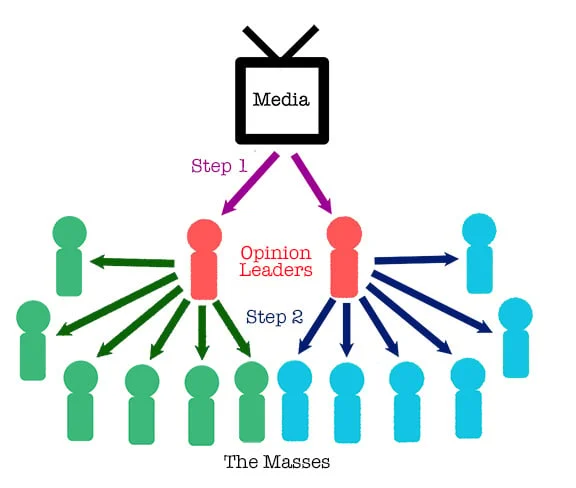
Opinion Leader
Someone who disseminates information to the general public.
Westley and MacLean
Argued that the communication process starts with signals.
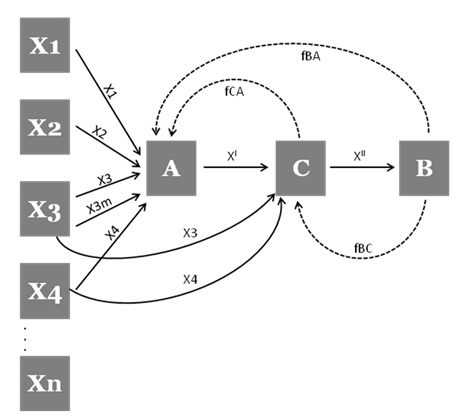
MS ≠ MR (Message sent does not equal message received)
What anomaly was shown in the “Soup or Salad” example?
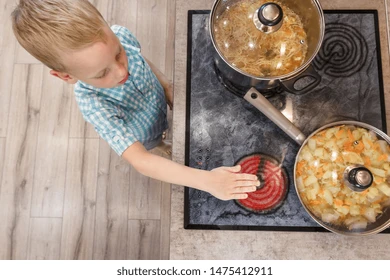
First-order Information Processing
Reflex or automatic learning/responses.
Second-order Information Processing
Using symbols to deal with reality and give it meaning.
Pheromones
Chemical substances ants (and others) might secrete when they die or to communicate.
Navigation
What bees are doing when they "dance" to show a food source.

Territoriality
Using physical markers like beach towels or fences to claim space.
Invertebrae
Rely primarily on chemical/olfactory communication.
Grooming
What Robin Dunbar argues communication started out of.

Syntax and Productivity
The two major aspects of language that separate humans from animals.
Arbitrary
The symbolic relationship between a word (e.g., "dog") and the actual animal.
Syntax
The rules for making sentences.
Productivity
The property of language that makes it possible to create an infinite number of messages.
Paralanguage
Vocal cues that go along with verbal language (pitch, tone, etc.).
Auditory
Communication through vocalization or whistling.

Gustatory
Communication through taste (e.g., the taste of ocean salt water).

Emblems
Gestures that have a direct verbal translation (e.g., a thumbs up).

Tie-signs
Nonverbal cues that signal the relationship between people.

Contradictory
When the tone of speech describes a relationship that is opposite of the words used.
Metacommunication
Talking about how we come across or communicating about communication.
Negotiation
An intersubjective process of directing people to or reconciling meanings.
Culture
A system of norms shared by a group of people.
Monochronic Culture
A culture where "Time is Money" and punctuality is key.
Polychronic Culture
Culture that views time as fluid and flexible.
Civil Inattention
Averting our eyes when people kiss or in other private moments in public.
Self-reflexivity
The capacity for self-consciousness.
Portability
Use of media changes permanence and _______.
Interacting Context and Levels
Why a bad day at work might lead you to pick a fight at home.
S-M-R-E Model
Sender, Message, Receiver, Effect; a classic linear view of communication.
Transactional Model
The most modern view; suggests sender and receiver are simultaneous and inseparable, constantly influencing each other.
Interactive Model
A model that adds "feedback" to the linear process, acknowledging that the receiver responds to the sender.
Constitutive View
The perspective that communication actually creates our social world and relationships, rather than just describing them.
Haptics
The study of touch as communication (e.g., handshakes, hugging, or hitting).
Proxemics
The study of how we use space and distance (e.g., intimate, personal, social, and public zones).
Kinesics
The study of body movement, gestures, and facial expressions.
Chronemics
The study of how we use and structure time.
Vocalics
Also known as paralanguage; non-word vocal cues like pitch, volume, and rate.
Civil Inattention
A concept from Goffman; the process whereby strangers in close proximity demonstrate they are aware of each other without being intrusive (e.g., glancing at someone on an elevator then looking away).
Tact
A strategy used to help others "save face" when a social rule is broken (telling someone they have food in their teeth privately).
Emblems
Gestures with a direct verbal translation (The "OK" sign).
Illustrators
Gestures that "draw" or track what you are saying (pointing to show direction).
Regulators
Gestures used to control the flow of conversation (nodding to tell someone to keep talking).
Intrapersonal
Communication with yourself (thinking, self-talk)
Interpersonal
1-on-1 or very small groups (usually face-to-face).
Group/Organizational Communication
Communication within defined structures (like a workplace).
Public/Mass Communication
One sender to many receivers (usually through media).
Communication
The process through which individuals in relationships, groups, organizations, and societies create and respond to messages in order to relate to the environment and one another.
Invisible Aspects of Communication
These include meaning, learning, subjectivity, negotiation, culture, interacting contexts and levels, self-reference, self-reflexivi-ty, ethics, and inevitability