6A- Arenes
 Call Kai
 Learn
 Practice Test
 Spaced Repetition
 Match
 Flashcards
 Knowt Play
1/53

There's no tags or description
Looks like no tags are added yet.
54 Terms
what effect does infrared light have on the molecules absorbing it
the bonds vibrate
what is the kekule model of benzene
6 carbon atoms in a cyclic structure with alternating single and double C-C bonds
what is the evidence against the kekule model of benzene
benzene has equal C-C bond lengths forming a regular hexagonal structure, if there were double bonds it would have shorter sides when there were double bonds and longer sides on the single bonds
benzene does not undergo electrophilic addition reactions with bromine as its electron density is insufficient to polarise Br2 molecules, it is less reactive than alkenes
benzene has a less exothermic enthalpy change of hydrogenation than expected
what is the name of the structure of benzene now widely accepted
the delocalised model
what is the delocalised model of benzene
benzene is a cyclic hydrocarbon with 6 Cs and 6 Hs
the Cs are arranged in a planar hexagonal ring with bond angles of 120’
each C has 4 bonding electrons, 3 form sigma bonds to 2 other Cs and 1H
the fourth electron from each C is found in a 2p orbital which extends above and below the plane of the molecule
the p orbitals overlap sideways with the neighbouring C atoms creating a delocalised ring of electron density above and below the plane of the molecule
this overlap produces a system of pi bonds which spread over all 6 carbon atoms, the p electrons are no longer held by an individual carbon atom and are delocalised into the ring
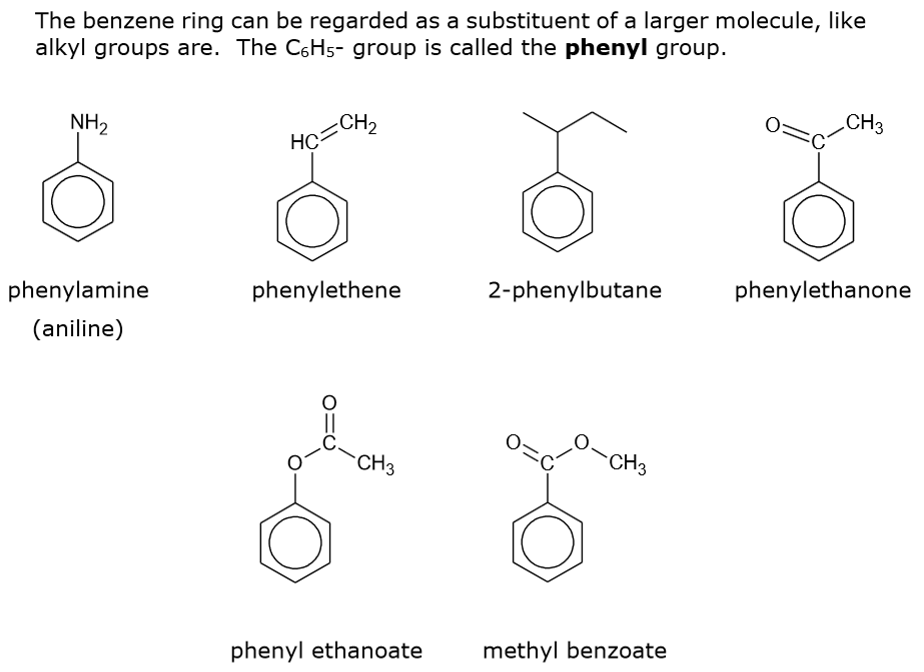
how to name a molecule when a benzene is attached to a chain
prefix phenyl
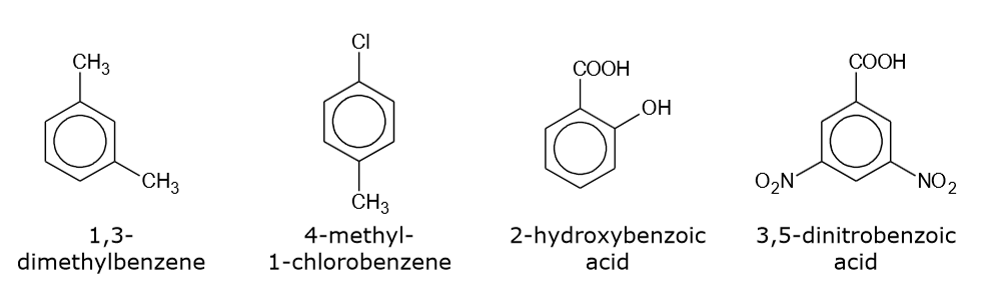
how to name a molecule when there is no main alkyl chain but a benzene
suffix benzene
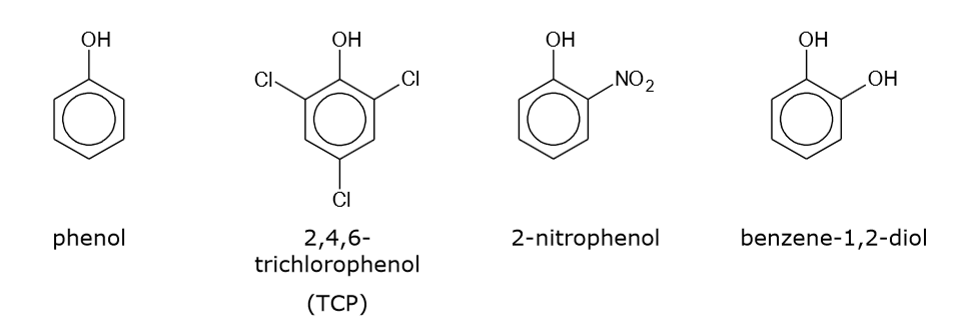
how to name a molecule when there is an alcohol group attached to a benzene
phenol, if there are multiple alcohol groups then it’s benzene prefix e.g. benzene-1,2-diol
what is the name of the reaction between benzene and bromine/chlorine/acyl chloride/haloalkane/nitric acid
electrophilic substitution
what is bromination
reaction of benzene with bromine
what are the reactants and conditions needed for bromination
reactant: Br2
catalyst: halogen carrier e.g. FeBr3
what are the equations for bromination
FeBr3 + Br2 → FeBr4- + Br+
C6H6 + Br+ → C6H5Br + H+
H+ + FeBr4- → FeBr3 + HBr
overall: C6H6 + Br2 → C6H5Br +HBr
what is chlorination
reaction of chlorine with benzene
what are the reactants and conditions needed for chlorination
reactant: Cl2
catalyst: halogen carrier e.g. AlCl3
what is acylation
reaction of an acyl chloride (RCOCl) with benzene
what are the reactants and conditions needed for acylation
reactant: any acyl chloride (RCOCl)
catalyst: halogen carrier e.g. AlCl3
what is alkylation
reaction of a haloalkane with benzene
what are the reactants and conditions needed for alkylation
reactant: any haloalkane (RCl)
catalyst: halogen carrier e.g. AlCl3
what are the electrophilic substitution reactions of benzene
bromination, chlorination, acylation, alkylation, nitration
what is nitration
reaction of nitric acid with benzene
what are the reactants and conditions for nitration
reactant: concentrated HNO3
catalyst: concentrated H2SO4
what are the equations in nitration
HNO3 + H2SO4 → NO2+ + HSO4- + H2O
C6H6 + NO2+ → C6H5NO2 + H+
H+ + HSO4- → H2SO4
overall: C6H6 + HNO3 → C6H5NO2 + H2O
is a catalyst always needed to react an electrophile with benzene
no, polar molecules can have a positive atom that acts as a sufficiently strong electrophile
define electrophile
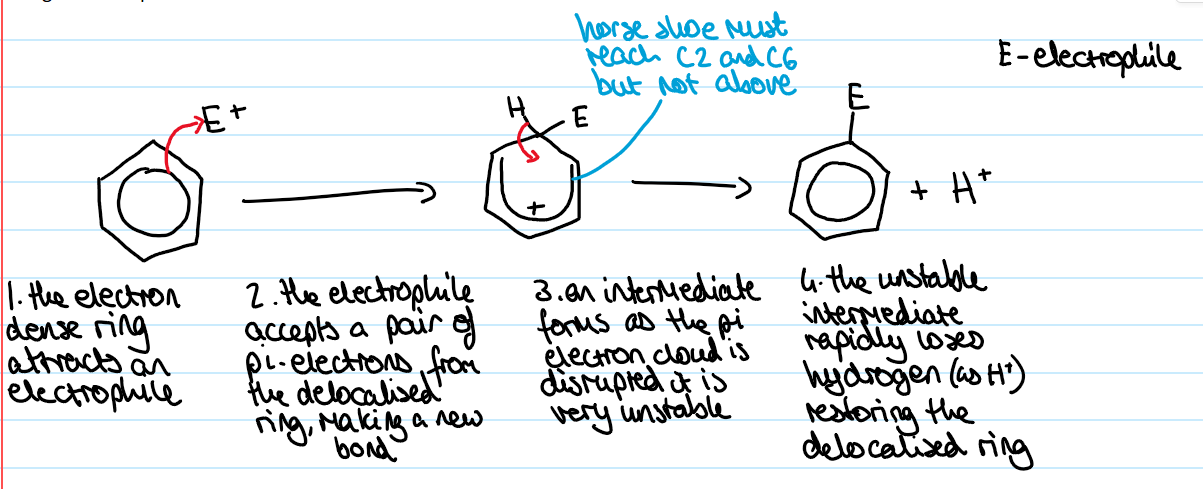
an atom or group of atoms that is attracted to an electron rich centre where it accepts a pair of electrons
what is the mechanism for electrophilic substitution
what is the name of phenols with a single methyl group
cresols
what is the ortho position of a group around a benzene ring
on the 2nd carbon
what is the meta position of a group around a benzene ring
on the 3rd carbon
what is the para position of a group around a benzene ring
on the 4th carbon
what is phenols appearance at RTP
a pink solid
what type of molecule are phenols
very weak acids, able to react with metals and strong bases but not weak bases
what happens in the reaction of phenol with water
partially dissolves
what happens in the reaction of sodium hydroxide with a solution of phenol in water
phenol fully dissolves
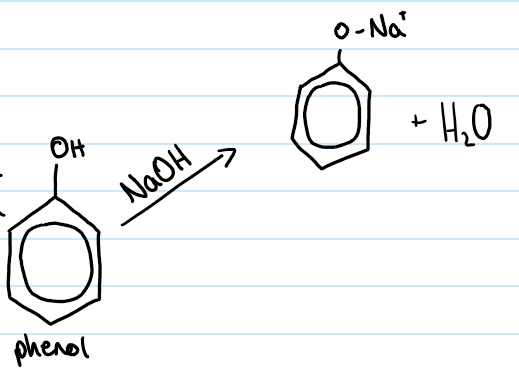
why is sodium phenoxide- the product of phenol reacting with sodium hydroxide- highly soluble but phenol isn’t
it is mase up of charged ions which interact strongly with the polar water molecules whereas phenol is a covalently bonded molecule with a slight dipole
what happens if solid sodium carbonate is added to phenol in water
no change
why does phenol not react with carbonates
it is such a weak acid it only reacts with strong bases and carbonate is a weak base
what happens if bromine water is added to solid phenol
bromine decolourises, white precipitate forms
what makes phenols acidic whereas alcohol have almost no acidic properties
in phenol the electrons in the O-H bond are drawn into the aromatic ring, weakening the bond and making it easier for H+ to be released, once the phenoxide ion is formed it is more stable as the electrons are dispersed across the pi cloud
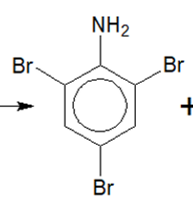
what are the activating groups
hydroxy (-OH) and amine (-NH2) (some alkyl groups are weakly activating and don’t cause multiple substitutions)
what are the features of an activating group
all have features that increase the electron density of the delocalised ring- atoms attached directly to the ring have a lone pair of electrons that get drawn into the ring to increase electron density of the ring and make it more reactive
where are the substitutions with activating groups
ortho and para directing multiple substitutions- 3 substitutions
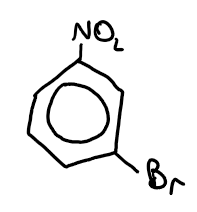
what are the deactivating groups
nitro (-NO2)
what are the types of directing effects
activating, deactivating, neutral
what are the features of deactivating groups
all have features that decreases electron density, extend the area of delocalisation, drawing electrons out of the ring and decreasing the electron density in the ring as a result, so reducing reactivity
where are the substitutions with deactivating groups
mono-substitutions in the meta position only
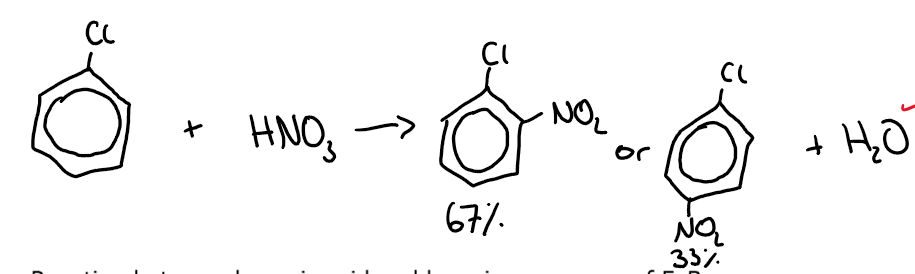
what are the neutral groups in directing effect
halogens
what are the features of neutral groups in directing effects
do not make a significant change to electron density
where are the substitutions with neutral groups
mono-substitution in ortho or para position, mixture of products is roughly 2/3 ortho to 1/3 para
why are alkenes more reactive than arenes (what about alkanes?)
alkenes undergo electrophilic addition, the pi bond is localised and electron dense enough to polarise electrophiles without a catalyst,
arenes undergo electrophilic substitution, the pi bond is delocalised so not electron dense enough to polarise electrophiles, a catalyst is needed to ionise electrophiles before a reactions
(alkanes don’t undergo electrophilic attack as there is no area of high electron density)
is benzene or phenol more reactive
phenol
are alkenes or arenes more reactive
alkenes
why is phenol more reactive than benzene
both undergo electrophilic substitution, but benzene requires a halogen carrier catalyst
phenol has higher electron density as one of the lone pairs from the O in the phenol is delocalised into the pi ring increasing its electron density and making it able to induce a dipole in the attacking species without a catalyst
in benzene the pi bond is delocalised across all of the carbons so has a lower electron density that can’t polarise the electrophile without a catalyst
are activated arenes or deactivated arenes more reactive
activated
why are activated arenes more reactive than deactivated arenes
activated arenes have a lone pair of electrons on the atom directly bonded to the ring, the lone pair is drawn into the pi ring increasing the electron density of the delocalised pi bond, this increases the reactivity of the pi bond as it can polarise the electrophiles without a catalyst
deactivated arenes’ groups attached draw electrons out of the ring, decreasing the electron density of the delocalised pi bond, a catalyst, high temp and pressure is needed to ionise electrophiles before a reaction can occur, decreases reactivity