week #9: viral infections of humans
 Call Kai
 Learn
 Practice Test
 Spaced Repetition
 Match
 Flashcards
 Knowt Play
1/148

There's no tags or description
Looks like no tags are added yet.
149 Terms
viral tropism explains why viruses:
infect particular cells and tissues
requirements: access, entry, replication
access
virus must reach tissue
entry
compatible cell receptors help virus attach and enter
replication
cell must support viral replication
how viruses cause disease:

immune defenses against viruses:
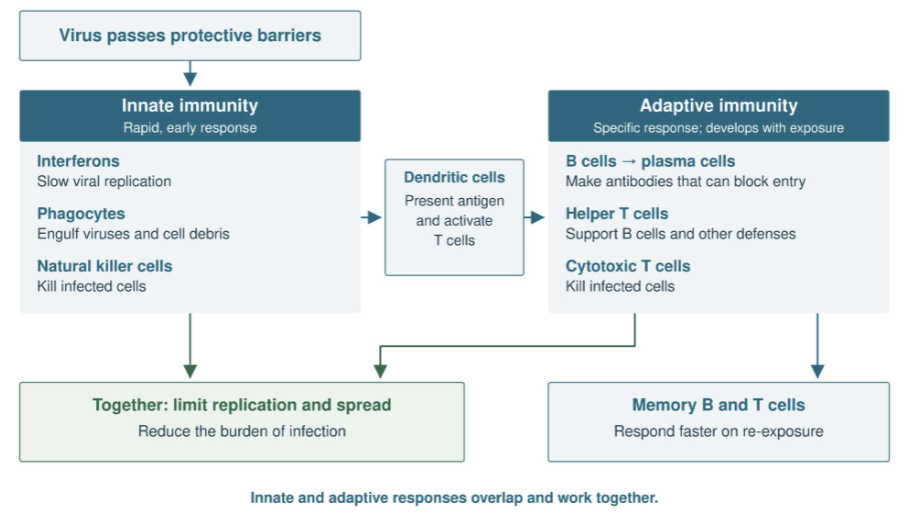
active and passive protection

patterns of viral infection consist of:
acute infection that resolves
chronic infection
latency and reactivation
acute infection that resolves: what happens + ex
immune defenses eliminates virus
ex: hepatitis A
chronic infection: what happens + ex
virus persists w/ ongoing or intermittent replication
ex: chronic hepatitis C
latency and reactivation: what happens + ex
viral genome remains in cells. virus production can restart
ex: varicella-zoster virus - chickenpox followed by shingles
viral infections in nursing care

viral infections by body site & system

measles (rubeola)
pathogen: measles virus (enveloped RNA virus)
reservoir: humans
transmission: airbone - virus can remain the air for up to 2 hrs after person leaves
mechanism: respiratory entry → viral replication → spread through lymphatic tissues and blood → systemic infection
infectious period: usually 4 days before through 4 days after rash onset
measles (rubeola) nursing assessment

measles (rubeola): precautions
begin standard + airborne precautions immediately when suspected
airborne infection isolation room; staff wear a fit-tested N95 or higher
mask the patient when appropriate and tolerated
measles (rubeola): notify
promptly notify clinical team, infection prevention, and public health
measles (rubeola): support & treat
support hydration, nutrition, and comfort
give prescribed antipyretics, oxygen PRN, and vitamin A for children
reassess and escalate deterioration
measles (rubeola): prevent
review immunity and vaccination needs
arrange prompt postexposure prophylaxis (PEP) for eligible susceptible contacts: MMR within 72 hours or immunoglobulin within 6 days
teach patients to call ahead before seeking care
rubella
pathogen: rubella virus (enveloped RNA virus)
resevoir: humans
transmission: respiratory droplets and transmissions across the placenta
mechanism: respiratory entry → replication in nasopharynx and lymph nodes → bloodstream spread → systemic infection
infectious period: approx 7 days before through 7 days after rash onset
rubella nursing assessment
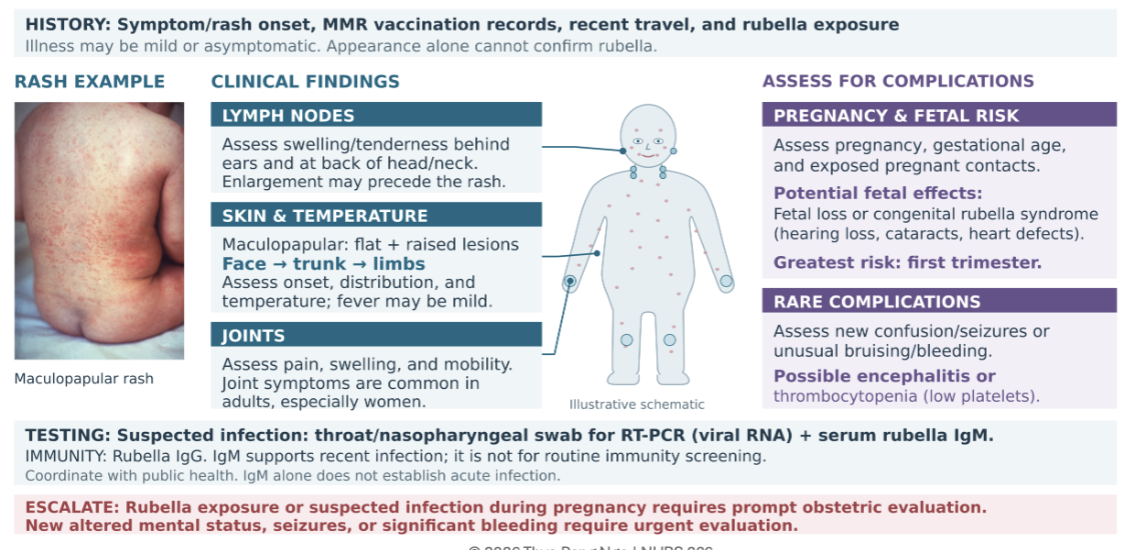
rubella: precautions
begin standard + droplet precautions when rubella is suspected
continue through 7 days after rash onset
rubella: notify
promptly notify clinical team, infection prevention, and public health
rubella: protect pregnancy
arrange prompt obstetric evaluation for exposure or suspected infection during pregnancy
identify potentially exposed pregnant contacts
rubella: support & reassess
provide fluids and prescribed fever/pain relief
reassess symptoms and intake
rubella: prevent
review rubella immunity and MMR eligibility
MMR is contraindicated during pregnancy
arrange postpartum vaccination and for those without evidence of immunity
chicken and shingles
pathogen: varicella-zoster virus (VZV), an enveloped DNA virus
reservoir: humans
transmission: contact w/ blister fluids or inhalation of infectious virus particles
mechanism: primary VZV infection → chickenpox → latency in sensory nerve ganglia → possible later reactivation → shingles
infectious period:
chickenpox: 1-2 days before rash onset until all lesions crust
shingles: from blister appearance until all lesions are dry and crusted
chickenpox and shingles nursing assessment

chickenpox and shingles: precautions
chickenpox/widespread shingles: standard + airbone + contact until lesions crust
localized shingles, immunocompetent: standard, cover lesions until crusted
chickenpox and shingles: treat
shingles: give prescribed antivirals promptly
chickenpox: antivirals for selected high-risk or severe cases
chickenpox and shingles: support & reassess
relieve pain/itching, support hydration and skin care, and reassess
avoid aspirin in children w/ chickenpox: reye syndrome risk
chickenpox and shingles: escalate
eye symptoms, respiratory distress, new neurologic changes, widespread shingles
suspected bacterial skin infection
chickenpox and shingles: prevent
review vaccination and exposed contacts’ immunity
arrange prompt postexposure reassessment
mpox
pathogen: monkeypox virus (MPXV), an enveloped DNA virus
reservoir/source: natural reservoir is uncertain. infected people + animals can transmit virua
transmission: close physical contact, including sexual content; contaminated materials and exposure
mechanism: entry through skin/mucosa → replication → lesions and sometimes systemic illness
infectious period: may begin before symptoms and continues until all lesions heal, scabs separate, and healthy new skin forms
mpox nursing assessment

mpox skin lesions

mpox: precautions
single-person room; standard precautions plus gown, gloves, eye protection and N95 or higher respirator
continue isolation until all lesions have healed, scabs have fallen off, and new skin has formed
mpox: notify
promptly notify the clinical team, infection prevention, and public health
mpox: support & treat
provide fluids, pain relief, and skin care
seek specialist advice for severe or higher-risk illness
mpox: prevent
avoid close physical contact and sharing person items
assess vaccine eligibility and arrange prompt postexposure evaluation
seasonal influenza
pathogen: influenza A & B viruses (enveloped RNA viruses)
reservoir: humans
transmission: respiratory droplets and smaller particles
mechanism: respiratory entry → replication in respiratory epithelial cells → cell injury and inflammation
infectious period: about 1 day before through 5-7 days after symptom onset
seasonal influenza nursing assessment

seasonal influenza: precautions
standard + droplet precautions
staff wear a medical mask on room entry
mask the patient during transportation, if tolerated
seasonal influenza: support & reassess
support hydration, nutrition, and comfort
give oxygen PRN
reassess breathing, oxygenation, and mental status
seasonal influenza: treat
give prescribed antivirals promptly without waiting for test results
best within 48 hours, but still indicated later for hospitalized, high-risk, or severe/progressive cases
seasonal influenza: prevent
review annual influenza vaccination for everyone aged >= 6 months
teach respiratory hygiene, hand hygiene, and when to seek care
avian influenza (H5N1)
pathogen: avian influenza A (H5N1), an enveloped RNA virus
reservoir: wild birds; infected poultry and other animals, including dairy cattle, can exposure humans
transmission: animal exposure can introduce virus through the eyes, mouth, or inhalation
mechanism: entry through eyes or respiratory tract → infection and inflammation → conjunctivitis or respiratory illness; severe disease may develop
infectious period: not reliably established for human cases
avian influenza (H5N1) nursing assessment
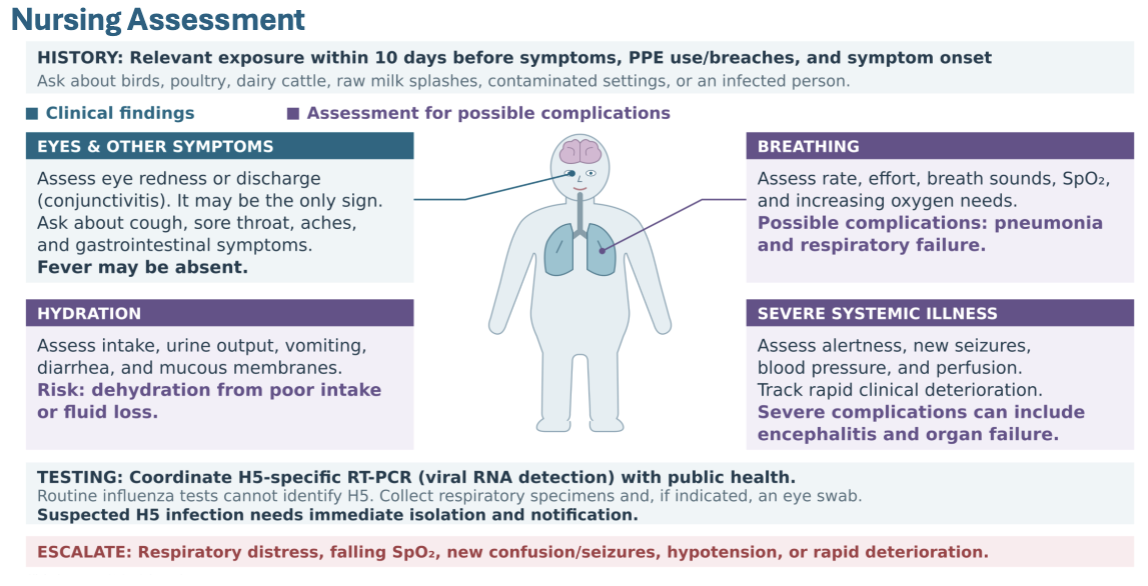
avian influenza A (H5N1): precautions
standard + contact + airborne precautions
N95 or higher respirator, eye protection, and an airbone infection isolation room
avian influenza A (H5N1): notify
promptly notify clinical team, infection prevention, and public health
avian influenza A (H5N1): support & treat
give prescribed oseltamivir promptly, even after 48 hrs - do not wait for results
support oxygenetation + hydration
reassess breathing + mental status
avian influenza A (H5N1): prevent
teach animal-exposure precautions and appropriate PPE
monitor exposed ppl for 10 days after last exposure
covid-19
pathogen: SARCS-CoV-2 (an enveloped RNA coronavirus)
reservoir: humans
transmission: inhalation of infectious respiratory particles
mechanism: viral replication causes respiratory cell injury + inflammation. severe lung involvement can impair gas exchange and cause hypoxemia
infectious period: abt 1-2 days before through 8-10 days after symptom onset
covid-19 nursing assessment

covid 19: precautions
standard precautions plus N95 or higher respiratory, eye protection, and gloves
single-person room: airborne infection isolation room for aerosol-generating procedures
covid 19: support & reassess
support hydration, nutrition, and comfort, give oxygen PRN
reassess breathing, oxygenation, and mental status
covid-19: treat
promptly assess eligible high-risk patients for antiviral treatment
check medication interactions + kidney/liver function
covid-19: prevent
review current covid-19 vaccination eligibility
teach source ctrl, ventilation, and when to seek urgent care
respiratory syncytial virus (RSV) infection
pathogen: respiratory syncytial virus (enveloped RNA virus)
reservoir: humans
transmission: respiratory droplets, direct contact, and contaminated hands or surfaces
mechanism: airway infection → inflammation, in infants: swelling, mucus, and cell debris can obstruct small airways
infectious period: usually contagious 3-8 days, may begin 1-2 days before symptoms
RSV infection nursing assessment

RSV infection: precautions
standard + contact for infants, young children, and immunocompromised adults for duration of illness
RSV infection: support, treat, and reassess
provide fluids and oxygen PRN
gentle nasal suction when secretions impair feeding or breathing
reassess breathing, oxygenation, and mental status
antivirals not routinely used
RSV infection: prevent
infant protection: maternal RSV vaccination or long-acting RSV antibody for infant
eligible adult: RSV vaccination
infectious mononucleosis
pathogen: most often epstein-barr virus (EBV), enveloped DNA virus
reservoir: humans
transmission: mainly saliva (ex: kissing, sharing drinks/utensils)
mechanism: orpharyngeal entry → infection of B lymphocytes → immune activation and lymphoid tissue enlargement. EBV remains latent after infection + can reactivate
infectious period: may spread before symptoms; salivary shedding can persist for months and recur intermittently
infectious mononucleosis nursing assessment

infectious mononucleosis: precautions
standard precautions
select PPE for anticipated contact w/ saliva or other body fluids
infectious mononucleosis: support & treat
encourage fluids, rest, and prescribed pain/fever relief
reassess swallowing and hydration
antivirals are not routinely indicated
infectious mononucleosis: protect the spleen
avoid contact sports, heavy lifting, and strenuous activity until cleared by clinician
infectious mononucleosis: prevent
avoid kissing and sharing drinks, utensils or toothbrushes during illness
no licensed EBV vaccine is available
mumps
pathogen: mumps virus, an enveloped RNA virus
reservoir: humans
transmission: respiratory droplets and direct contact w/ infected saliva
mechanism: replication in upper respiratory tract + nearby lymph nodes → bloodstream spread → inflammation of salivary glands + sometimes other organs
infectious period: usually 2 days before through 5 days after salivary gland swelling begins
mumps nursing assessment

mumps parotid gland swelling

mumps: precautions
begin standard + droplet precautions when suspected - continue through 5 days after gland swelling begins
staff wear medical mask on entry. mask patient during transport
mumps: notify
notify clinical team, infection prevention, and public health
mumps: support & treat
provide fluids, soft foods, and prescribed pain/fever relief
use warm or cool compresses for comfort
reassess intake and response
mumps: prevent
review MMR documentation and vaccination eligibility
public health may recommend a third MMR dose for designated groups during outbreak
viral gastroenteritis
pathogens: norovirus and rotavirus (both nonenveloped RNA viruses
transmission: recal-oral spread via contaminated hands, food, water, or surfaces
mechanism: intestinal infection disrupts absorption and secretion. vomiting and diarrhea cause fluid and electrolyte losses
infectious period: transmission is greatest during illness and early recovery. viral shedding can continue after symptoms resolve
viral gastroenteritis nursing assessment

viral gastroenteritis: precautions
norovirus and rotavirus: standard + contact precautions
norovirus: continue for at least 48 hrs after symptoms resolve
rotavirus: continue throughout illness
viral gastroenteritis: support and treat
give oral rehydration solution in small, frequent amounts when tolerated
give prescribed IV fluids for severe dehydration or unsuccessful oral rehydration
viral gastroenteritis: reassess
monitor intake/output, perfusion, mental status, and response to fluids
viral gastroenteritis: prevent
use soap-and-water handwashing and environmental disinfection
report suspected outbreaks
review infant rotavirus vaccination
viral hepatitis viruses
HAV
HBV
HCV
HDV
HEV
viral hepatitis, HAV: main transmission + course & prevention
fecal-oral route, including contaminated food/water, and close contact
acute infection only, vaccine avail
viral hepatitis, HBV: main transmission + course & prevention
blood, sexual contact and perinatal exposure
acute or chronic infection, vax avail
viral hepatitis, HCV: main transmission + course & prevention
mainly blood exposure
often chronic, curable w/ treatment but no vax
viral hepatitis, HDV: main transmission + course & prevention
blood and other infectious body fluids
requires HBV, can cause more severe liver disease, preventing HBV infection
viral hepatitis, HEV: main transmission + course & prevention
contaminated water or undercooked infected meat
usually acute, greater risk of severe disease during pregnancy
may become chronic w/ immunosuppression
viral hepatitis

viral hepatitis: precautions
standard precautions and safe sharp handling
add contact precautions for incontinent patients w/ HAV or HEV
viral hepatitis: support
support hydration and nutrition, advise avoiding alcohol
review medications and supplements for potential liver injury
viral hepatitis: treat
HAV and most acute HEV: supportive care
chronic HBV: antiviral suppression when indicated
HCV: curative antiviral treatment
HDV or complicated HEV: specialist management
viral hepatitis: reassess
monitor symptoms, mental status, bleeding, and ordered liver tests
support treatment adherence and follow-up
viral hepatitis: prevent
review HAV/HBV vaccination
arrange prompt assessment of exposed contacts for indicated postexposure prophylaxis
genital herpes
pathogen: HSV-1 or HSV-2, enveloped DNA viruses
reservoir: humans
transmission: direct skin or mucosal contact during sexual activity, including oral-genital contact. transmission to newborn can occur during birth
mechanism: local infection → lifelong latency in sensory nerve ganglia → possible reactivation
infectious period: intermittent viral shedding can occur with or without visible lesions
genital herpes nursing assessment
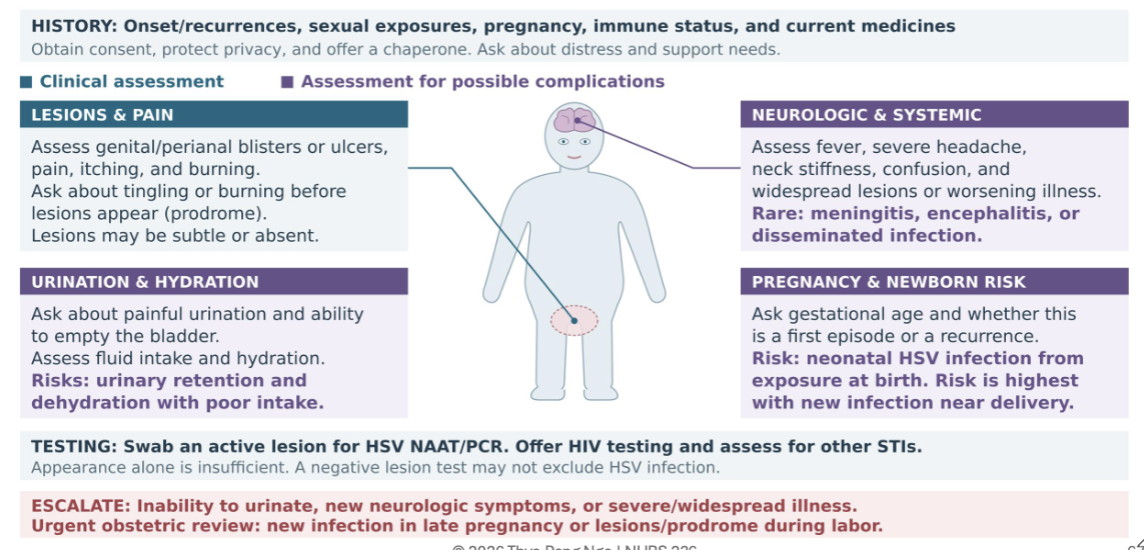
genital herpes: precautions
standard precautions for recurrent localized disease
add contact precautions for severe primary or disseminated mucocutaneous disease until lesions are dry and crusted
genital herpes: treat
give prescribed antivirals promptly for all first clinical episodes
suppressive therapy reduces recurrences and can reduce HSV-2 transmission
genital herpes: support & reassess
provide pain relief, reassess urination, hydration, and lesion healing
coordinate care w/ obstetric team during pregnancy
genital herpes: prevent
avoid sexual contact during lesions or prodromal symptoms
condoms reduce risk but do not eliminate transmission
support partner communication