Animal Biology Lab Final
 Call Kai
 Learn
 Practice Test
 Spaced Repetition
 Match
 Flashcards
 Knowt Play
1/119

There's no tags or description
Looks like no tags are added yet.
120 Terms

What is the Phylum and Class?
Porifera, Calcarea
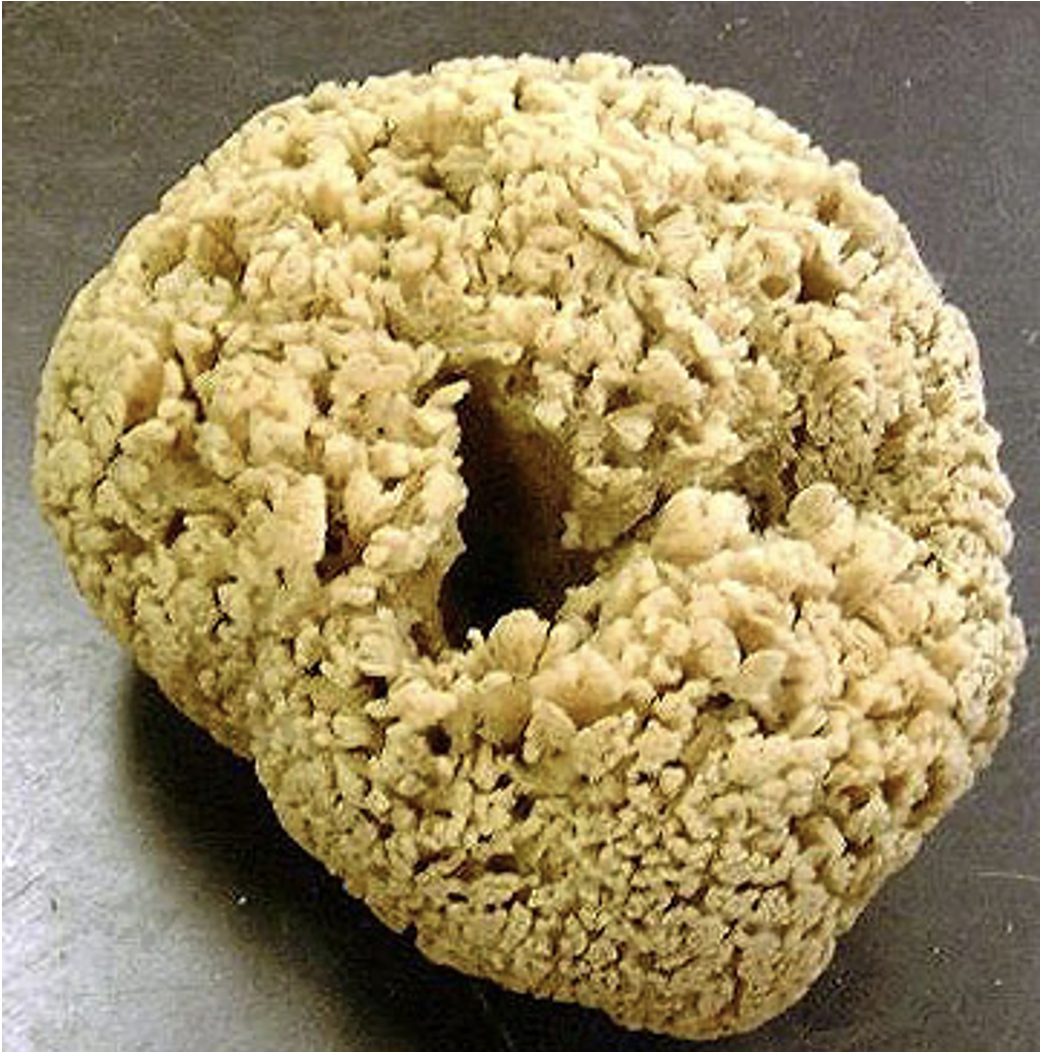
What is the Phylum and Class?
Porifera, Demospongiae

What is the Phylum and Class?
Porifera, Hexatinellida

What is the Phylum and Class?
Porifera, Demispongiae

What is the Phylum and Class?
Porifera, Homoscleromorpha

What is the Phylum and Class?
Porifera, Homoscleromorpha

The spicules of this animal are composed of what compound?
Spongin
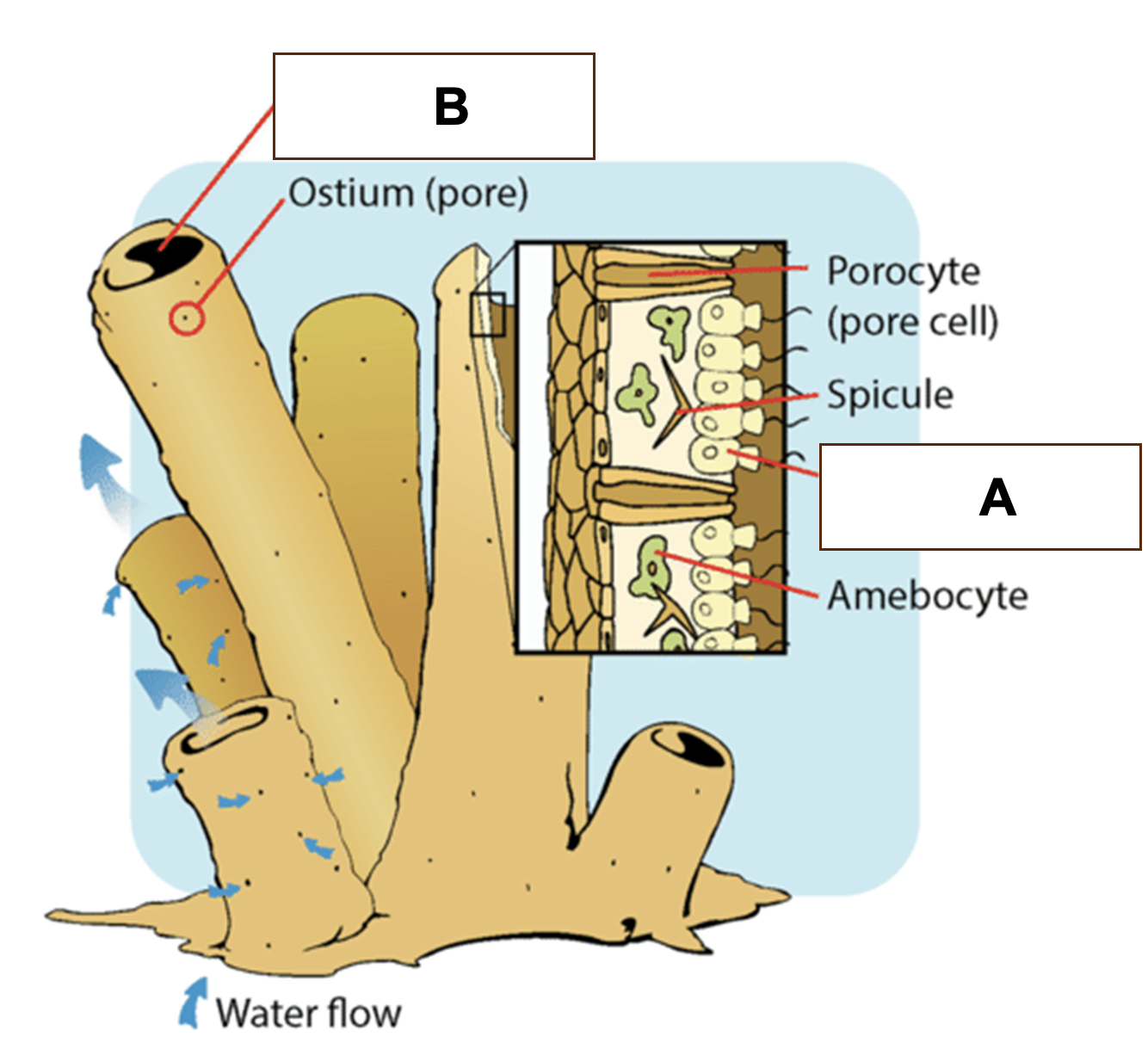
Identify the:
a. cell type
b. structure
a. choanocyte
b. osculum
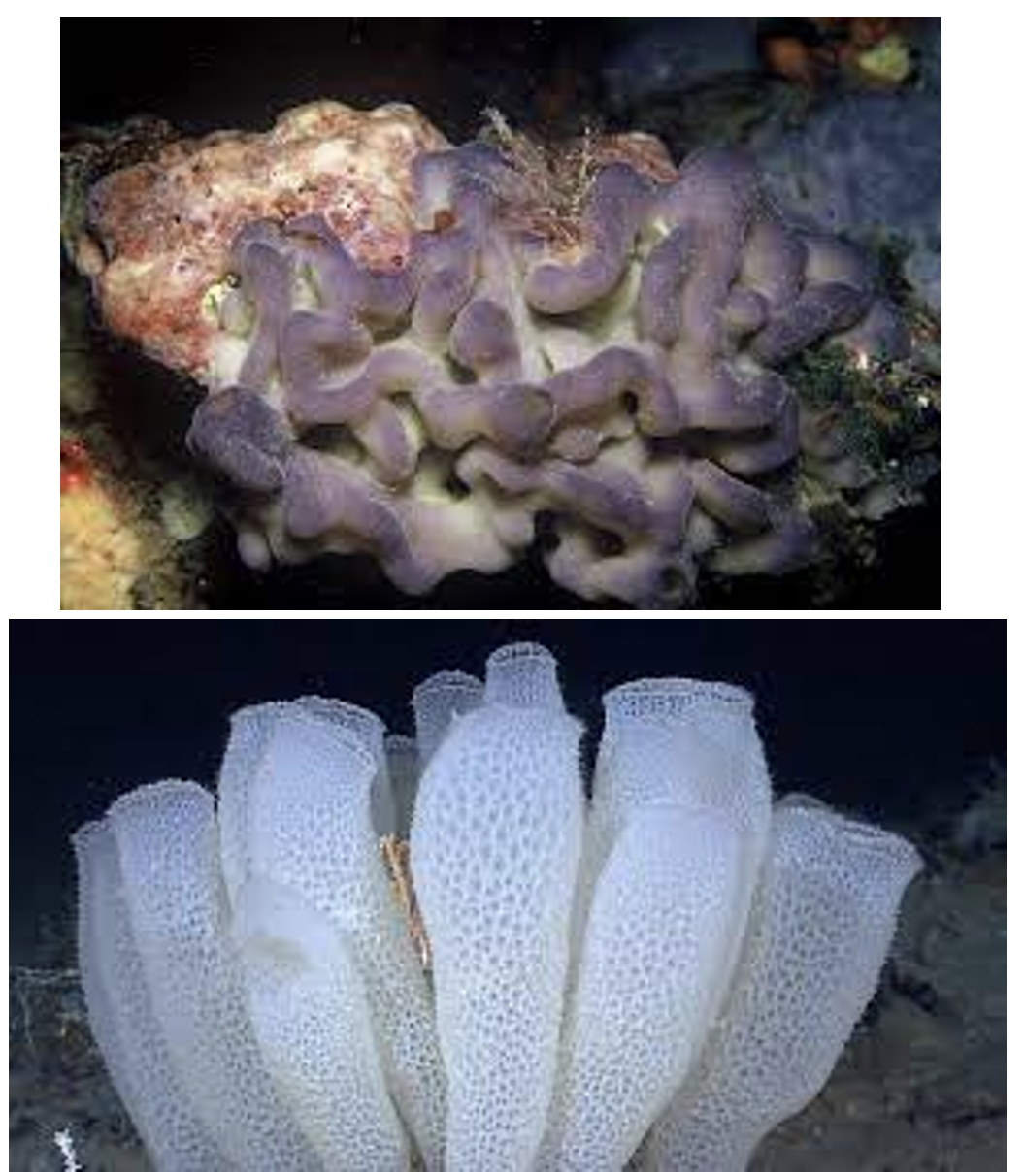
Are these sponges from the same class? If not, what classes are they from?
No; Homoscleramorpha, Hexactinellida

What type of symmetry does this phylum usually exhibit? Name the phylum.
Asymmetrical and Radial; Porifera
What are the 3 types of Porifera canals? Which type does each class exhibit?
Asconoid, Syconoid, Leuconoid
Calcarea = all 3
Hexactinellida = syconoid and leuconoid
Demospongiae = leuconoid
Homoscleromoprha = leuconoid
What are the 3 types of Cnidae functions in Cnidarians?
penetrant (injects venom), glutinant (secretes adhesive), volvent (ensnares prey)
What is the dominant body plan for Anthozoa?
POLYP ONLY, no Medusa
What is the dominant body plan for Staurozoa?
POLYP ONLY, no Medusa
What is the dominant body plan for Scyphozoa?
MEDUSA dominant
What is the dominant body plan for Cubozoa?
MEDUSA dominant
What is the dominant body plan for Hydrozoa?
POLYP dominant
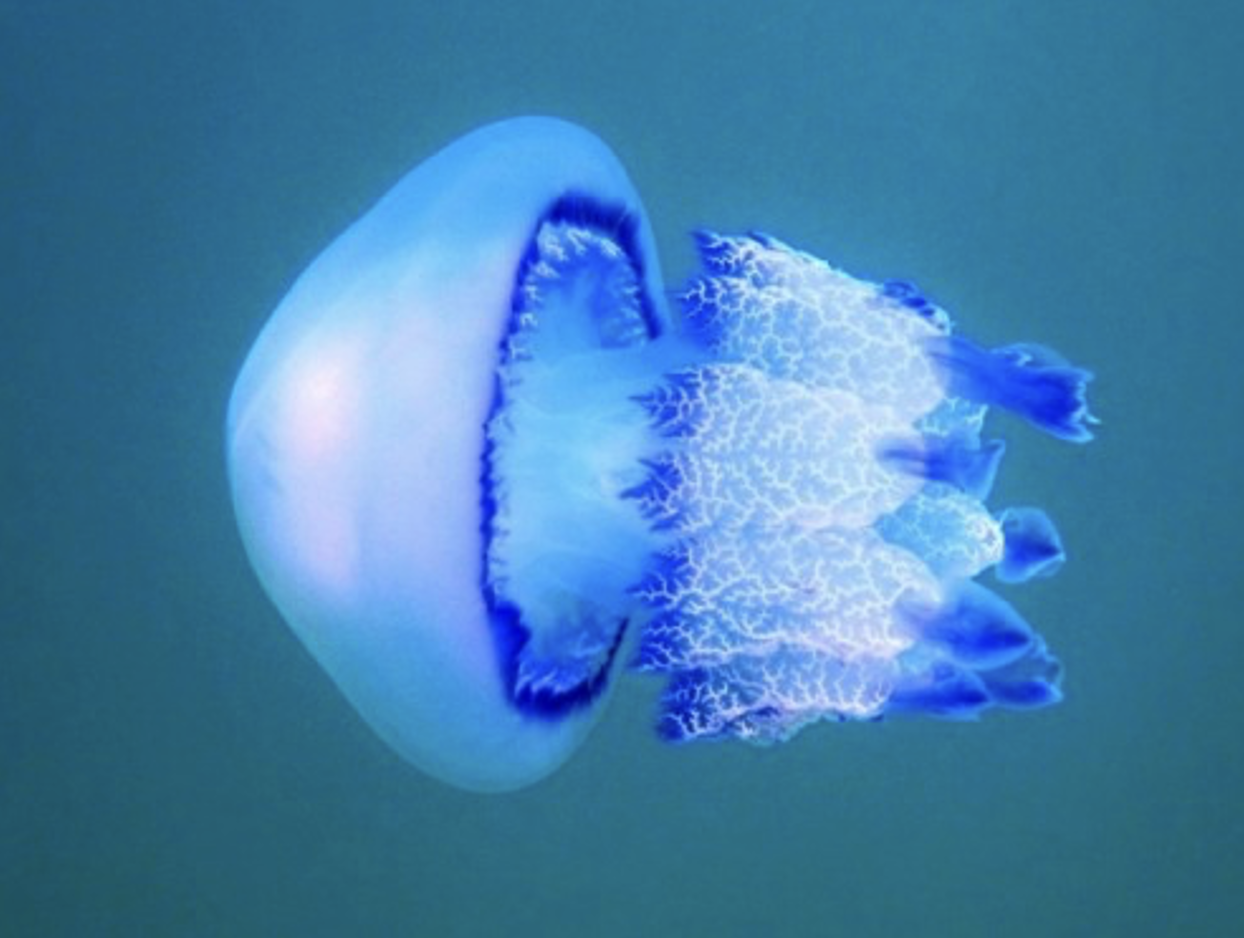
To which Phylum and Class does this animal belong?
Cnidaria, Scyphozoa (“true jellies”

Name the two main body plans found in this animal’s phylum, and list which one is usually free-swimming.
Medusa and Polyp; Medusa is free-swimming
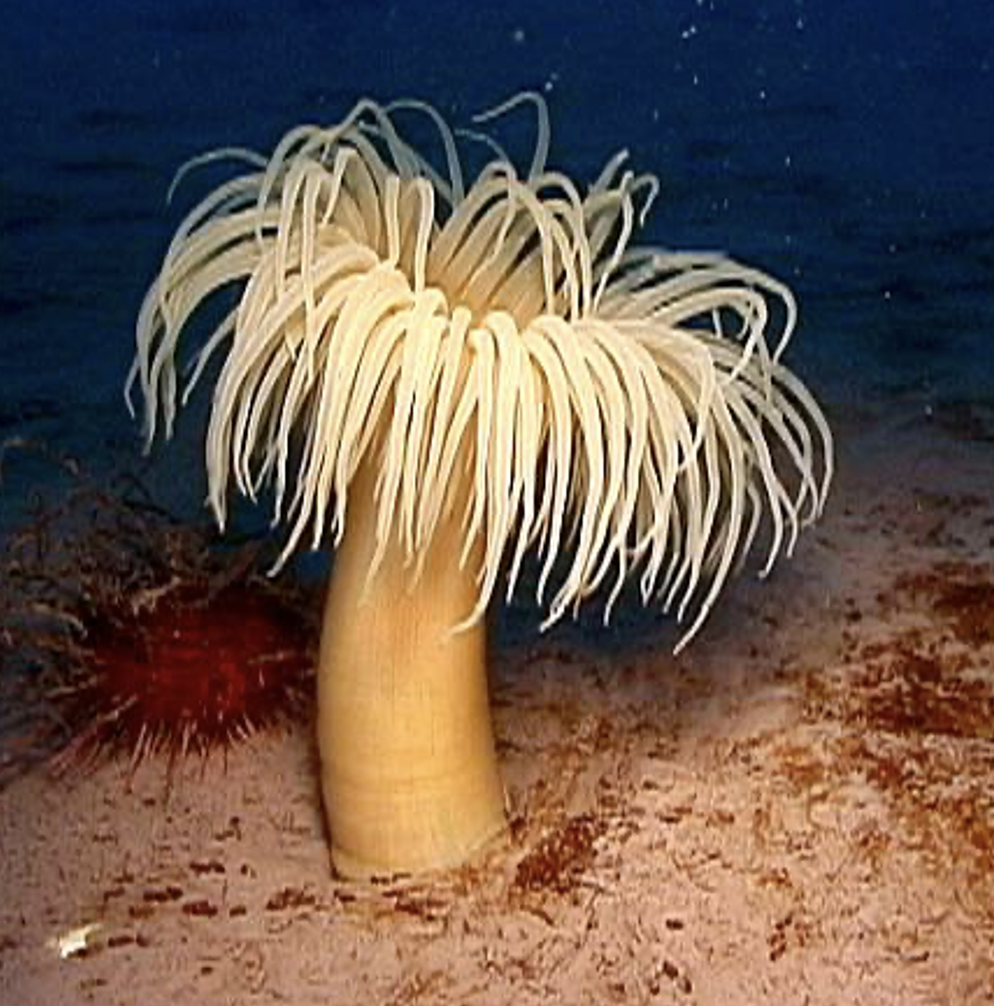
To which Phylum & Class does this animal belong?
Cnidaria, Anthozoa (anemones/true corals)
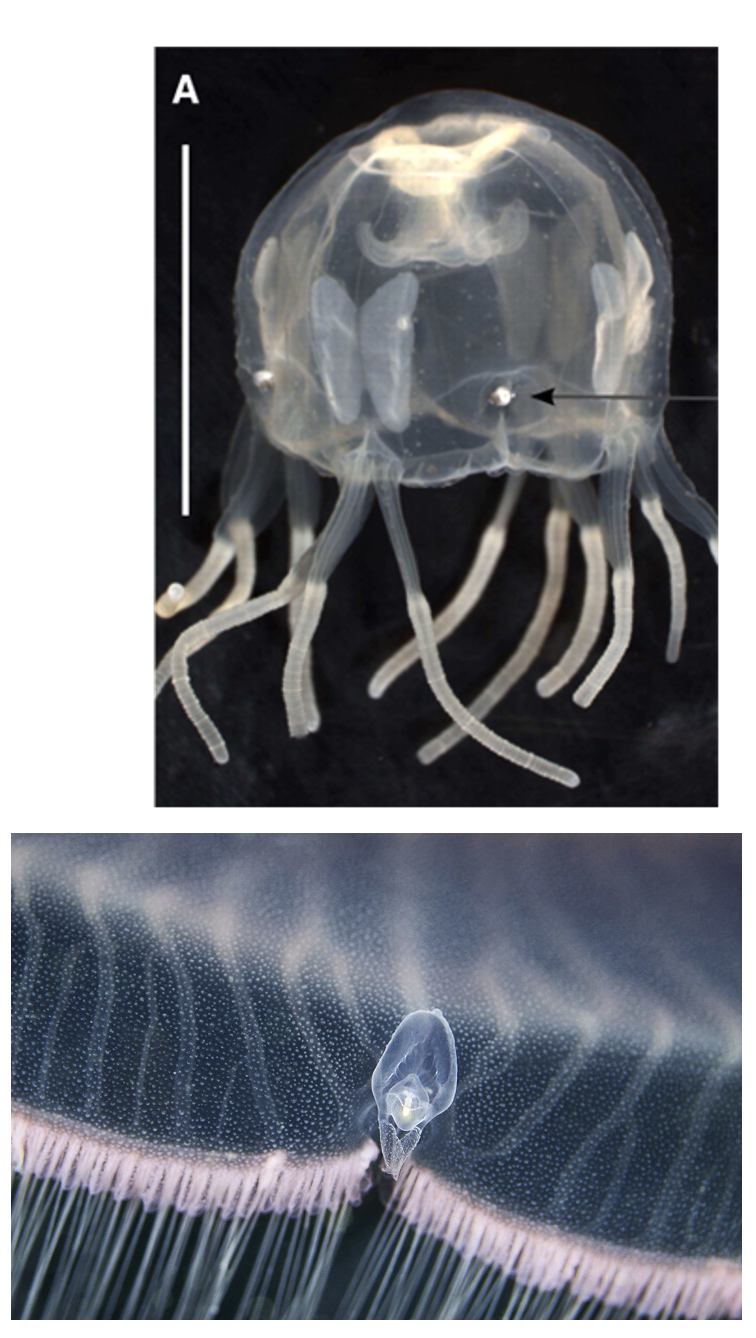
Identify the stalk/club-like sensory structure in these organisms. Name one class of organisms that exhibit this structure.
Rhopalium; Cubozoa or Scyphozoa

What is the name for the type of gut/digestive system of this animal? Is it a complete digestive system?
Gastrovascular Cavity; No, single opening only
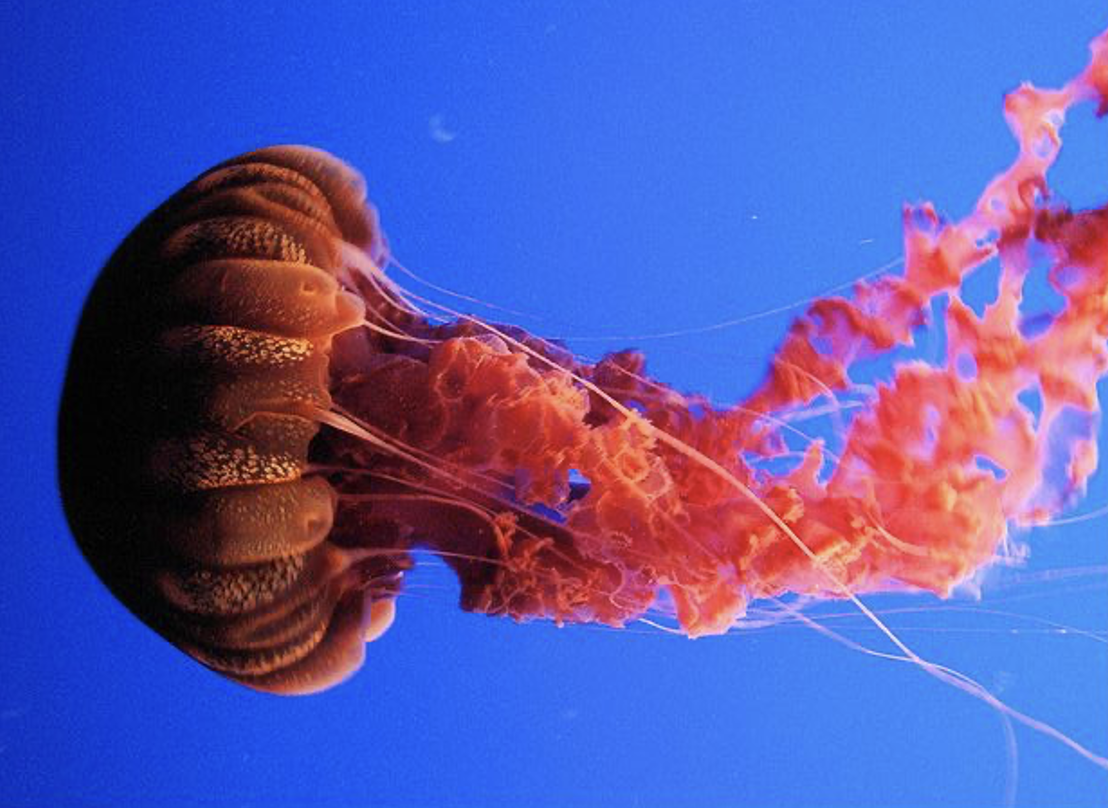
What type of nervous system does this animal have? Does it have a centralized brain?
Nerve Net; No

Identify the Phylum and Class these animals belong to.
Cnidaria, Staurozoa
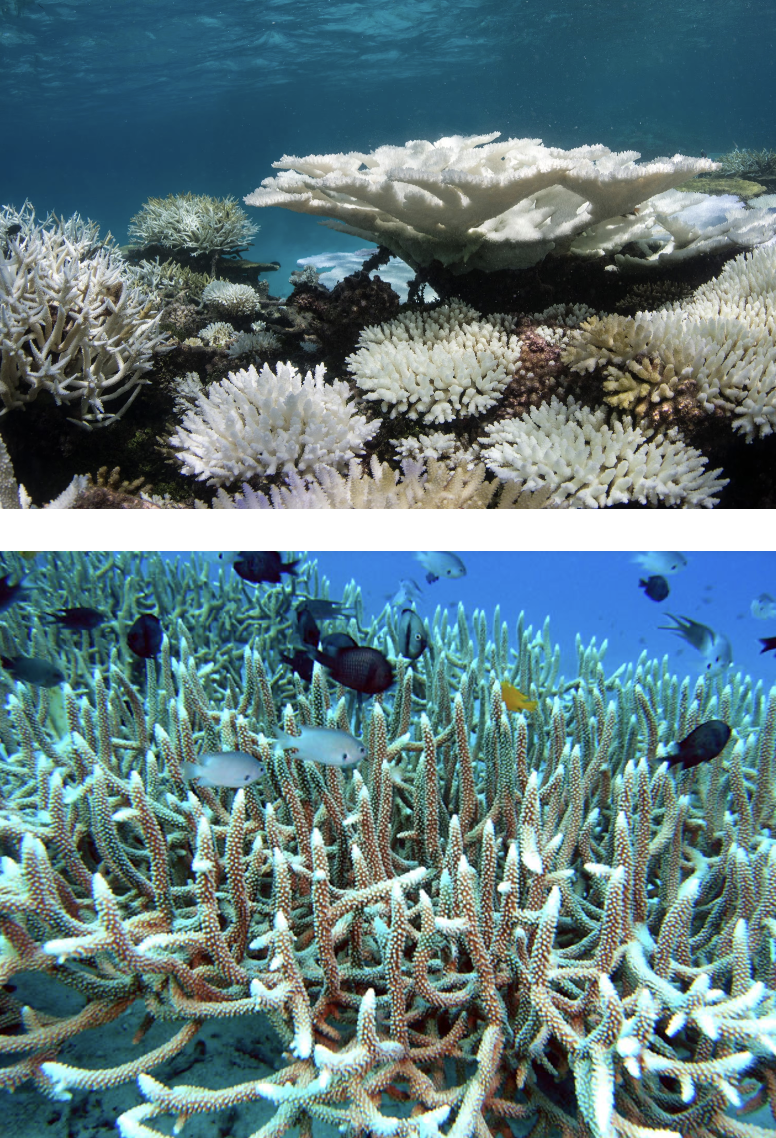
Identify the Class these organisms belong to & the material their skeletons are comprised of.
Anthozoa, calcium carbonate

These corals are bleached due to increased ocean temperature. What are the symbiotic algae called that gave these corals their color prior to bleaching?
Zooxanthellae

To which Class does this animal belong?
Cubozoa
Which Cnidarians possess rhopalia?
Scyphozoa and Cubozoa
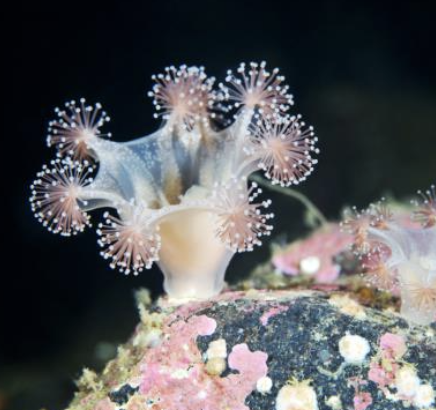
Identify the Phylum and Class these animals belong to.
Cnidaria, Staurozoa

This is a cnidocyte. Which Phylum of organisms use these structures? Name one specific type or function of these structures
Cnidarian
Penetrant: Inject venom to prey
Glutinant: Secretes adhesive
Volvent: Ensnares/entangles prey

Identify the Phylum and Class these animals belong to.
Cnidaria, Cubozoa
What are the 2 types of corals discussed and what types of skeletons do they have? What are these skeletons made of?
stony (true) corals with external skeleton made of calcium carbonate
soft corals with endoskeleton made of calcareous spicules

Identify the Phylum and Class these animals belong to.
Platyhelminthes, Monogenea
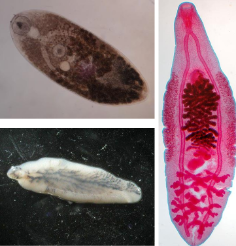
Identify the Phylum and Class these animals belong to.
Platyhelminthes, Trematoda

Identify the Phylum and Class these animals belong to.
Platyhelminthes, Cestoda

Identify the Phylum and Class these animals belong to.
Platyhelminthes, Turbellaria

What type of body cavity is present in this animal?
Acoelomate
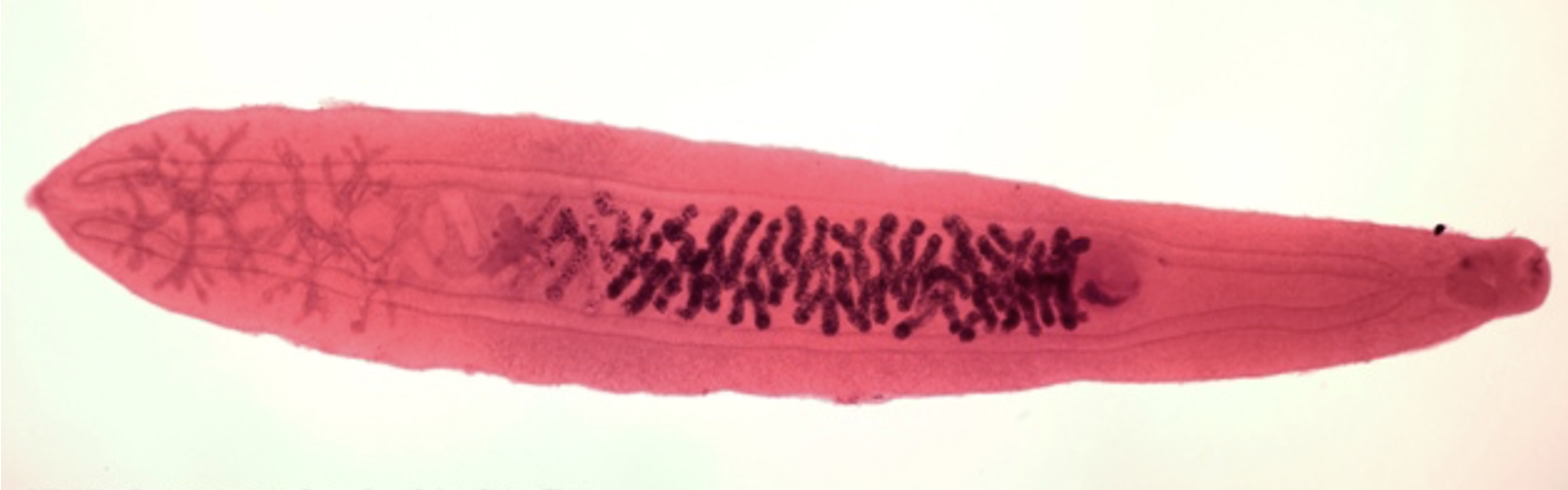
Identify the Phylum and Class these animals belong to.
Platyhelminthes, Trematoda
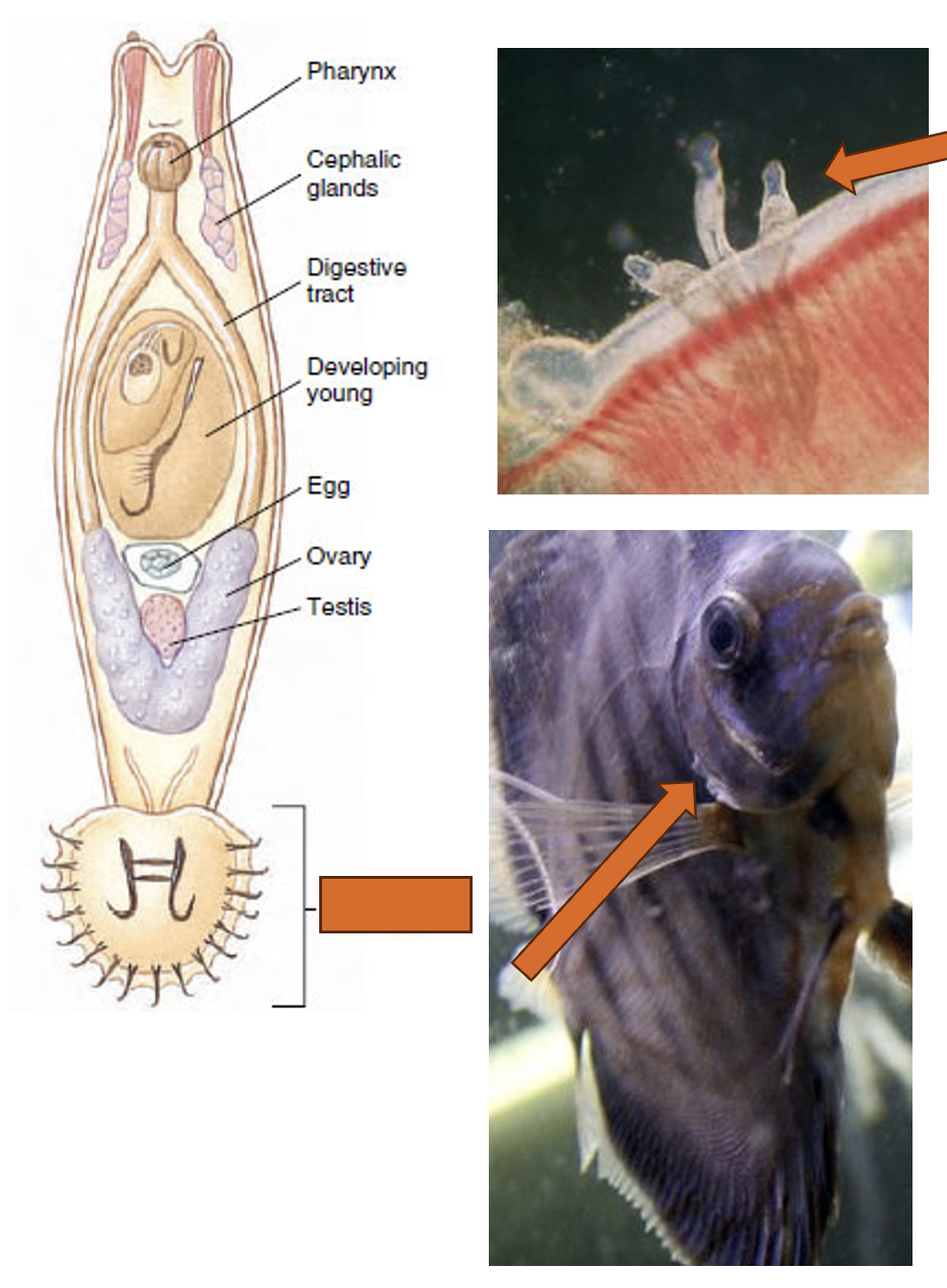
These animals were recovered attached to a fish’s gills. This fish is the only host in the organism’s lifecycle. To which phylum and class does this organism belong? What is the name of the structure it used to attach itself to the gills?
Platyhelminthes, Monogenea; Opisthaptor
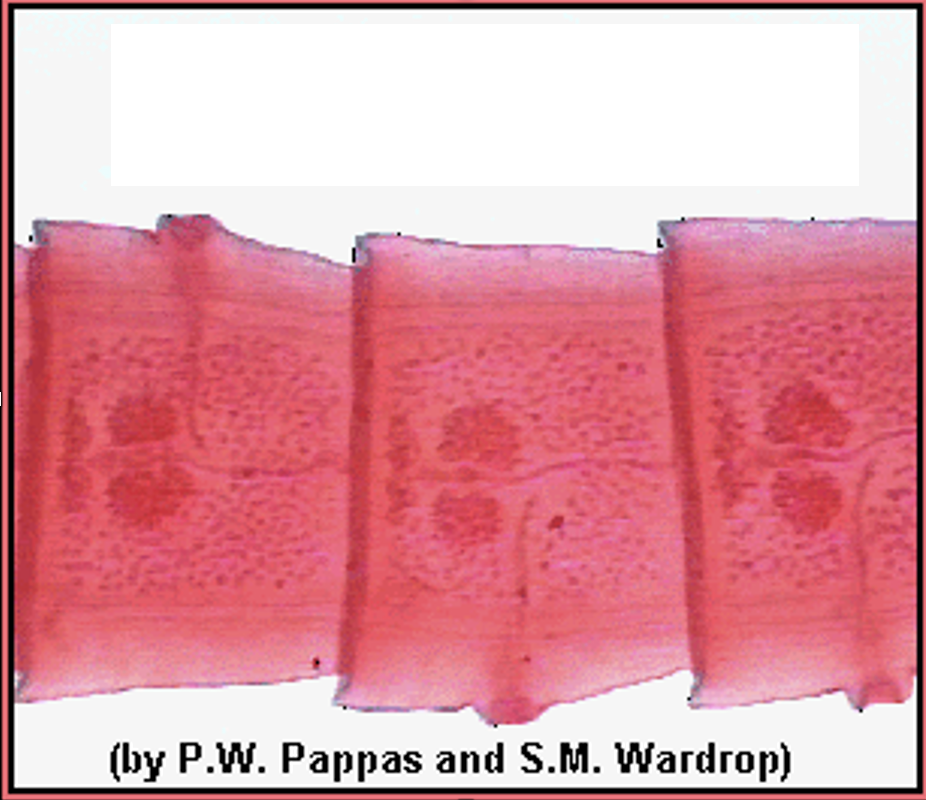
What are these segments called? Which class of animals are they a characteristics of? Does this animal have a complete digestive tract?
Proglottids, Cestoda, No

Identify the Phylum and Class these animals belong to.
Platyhelminthes, Cestoda

Identify the structure this organism uses to attach to its host.
Scolex

Which class does this animal belong to? What are the specialized excretory cells found in the phylum to which the class belongs?
Turbellaria, Flame Cells (protonephridia)

Identify the Class these animals belong to and identify the indicated structures. What test was performed to determine how this organism responded to touch?
Turbellaria; ocelli (eyespots) and auricles (sensory); Thigmotaxis

Identify the Phylum and Class these animals belong to.
Mollusca, Aplacophora

Identify the Phylum and Class these animals belong to.
Mollusca, Monoplacophora

Identify the Phylum and Class these animals belong to.
Mollusca, Polyplacophora

Identify the Phylum and Class these animals belong to.
Mollusca, Scaphopoda

Identify the Phylum and Class these animals belong to.
Mollusca, Gastropoda

Identify the Phylum and Class these animals belong to.
Mollusca, Bivalvia

Identify the Phylum and Class these animals belong to.
Mollusca, Cephalopoda

Identify the Phylum & Class to which these animal belong
Mollusca, Monoplacophora

What are the specialized cells that allow this animal to rapid change color for camouflage or communication?
Chromatophores
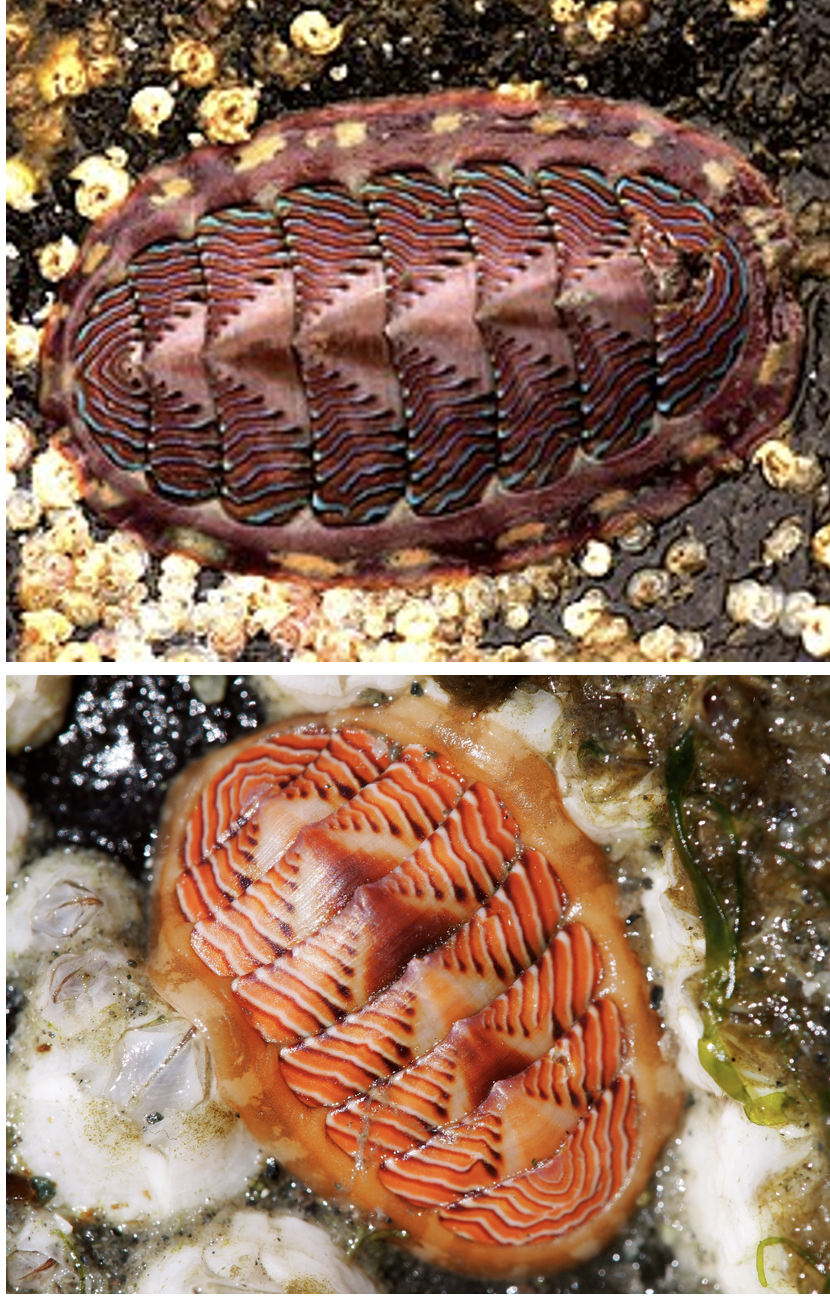
To which phylum and class do these animals belong?
Mollusca, Polyplacophora

What is the name of the structure this animal is using to scrape algae to eat?
Radula

What Phylum & Class does this animal belong to?
Mollusca, Gastropoda

Many animals have sensory structures concentrated at their anterior end. What is this phenomenon called?
Cephalization

Identify the shiny, smooth layer of this shell.
Nacreous Layer (mother of pearl)

Which is the anterior side of this shell? Which part of the shell is the umbo?
3 - Anterior
2 - Umbo

Identify the Phylum to which this animal belongs and name the structure it uses to close its two valves
Mollusca, Adductor Muscle

Identify the Phylum & Class to which this animal belongs, and name the structures indicated
Phylum Mollusca, Class Cephalopoda
Blue - Siphon
Green - Mantle
Yellow - Fins

Which letters represent and dorsal and ventral regions of this animal?
B. Dorsal
D. Ventral

During development, this snail’s shell rotated moving the mantle cavity and anus to the anterior end (above the head). What is this process called? Name either a benefit or risk of this body orientation.
Torsin
Benefit - protection
Disadvantage - fouling risk increases

Identify the Class this animal belong to and list the structure that secretes the shell
Bivalvia
Mantle along pallial line
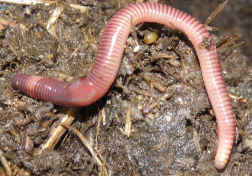
What Phylum & Clade does this animal belong to?
Annelida, Sedentaria (Ogliochaete)

What Phylum & Clade does this animal belong to?
Annnelida, Errantia (polychaete)

What Phylum & Family does this animal belong to?
Annelida, Hirudinidae
What are setae and what do they do?
chitinous bristles that aid in locomotion and anchoring

Identify structure [A].
Are new segments of this animal formed closer to [B] or [C]?
Clitellum; Structure C

To which phylum and clade does this animal belong?
Annelida, Errantia
What is metamerism? Name a phylum that exhibits it.
A body plan characterized by repetition of body segments; Annelida

Identify the name of the structure for the lateral projections on this animal
Parapodia
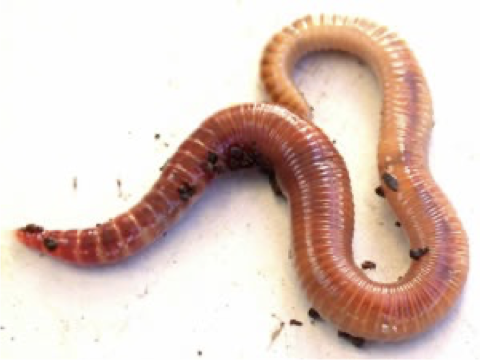
To which Clade does this animal belong?
Sedentaria

What type of body cavity does this organism exhibit? What is the (red) layer of tissue this body cavity is surrounded by?
Coelomate; mesoderm

What are the chitinous bristles often found in this phylum of animal? (Also identify the phylum)
Setae; Annelida

What are septa?
And does this animal have them?
Internal structure that separate body segments; No (leeches have no septa, earthworms do)

Identify the Clade this animal belongs to that is characterized by its band-like reproductive structure. Which structure in this animal’s digestive system is used to grind ingested food?
Clitellata; Gizzard

To which Phylum, Clade, and Family does this organism belong?
Annelida, Sedentaria, Hirudinidae

What Phylum does this animal belong to?
Nematoda

What Phylum does this animal belong to?
Rotifera
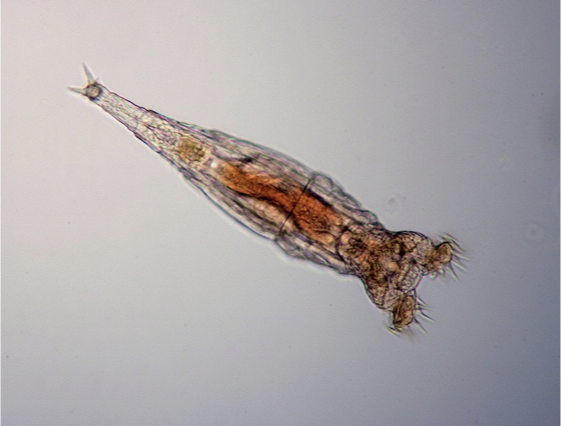
What Phylum does this animal belong to?
Rotifera
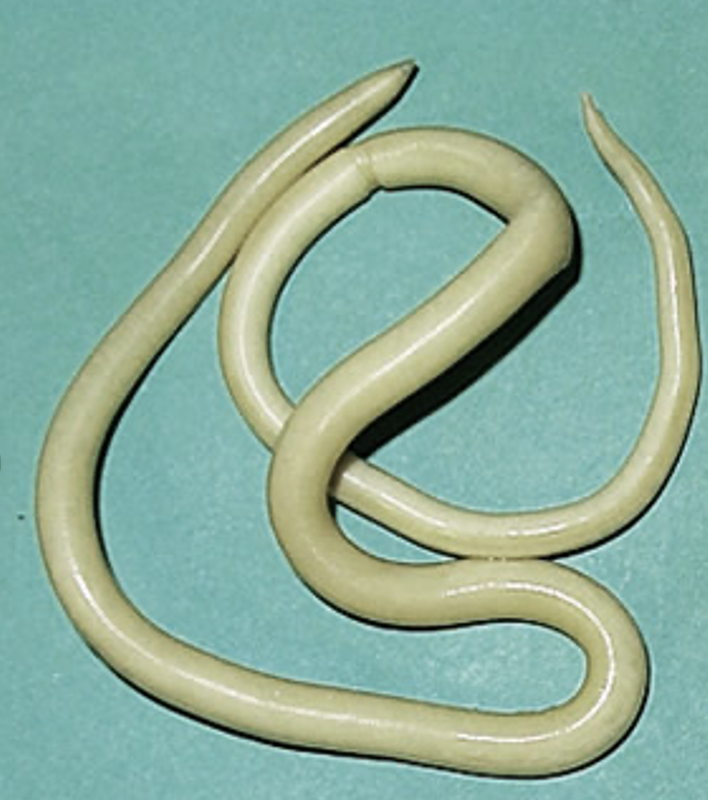
Define sexual dimorphism. How do you tell if this animal is male or female?
Males and females are physically different, beyond possessing different sex organs. Males have curved posterior, females are larger

What Phylum does this animal belong to?
Nematoda
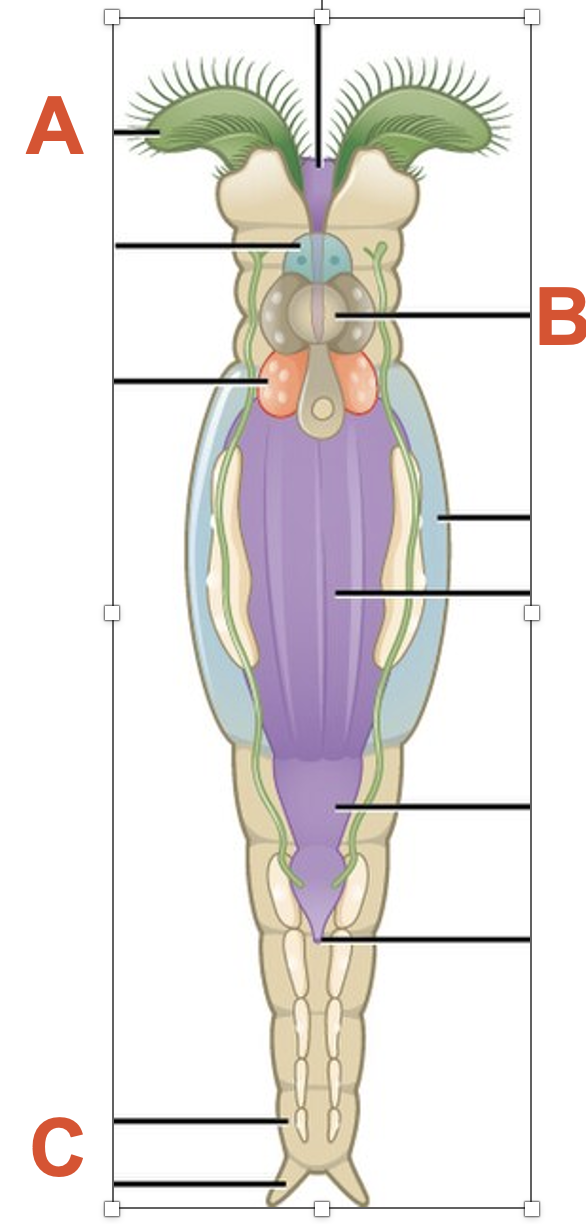
Identify structures A, B & C
A - Corona
B - Mastax
C - Foot/toes/pedal gland

These animals shed their outer layer between larval stages as they grow. Identify the phylum of the animals, the scientific term for the shedding process, and the name of the structure that is shed.
Nematoda; Ecdysis; Cuticle

What type of body cavity do these organisms possess? Is it segmented?
Pseudocoelom; No

Identify the Phylum to which this animal belongs and the name of the structure indicated by the arrow.
Corona

Identify the Phylum, Subphylum & Class to which this animal belongs.
Phylum Arthropoda, Subphylum Chelicerata, Class Pycnogonida (Sea spiders)

Identify the Phylum and Subphylum this extinct animal belongs to.
Arthropoda, Trilobita
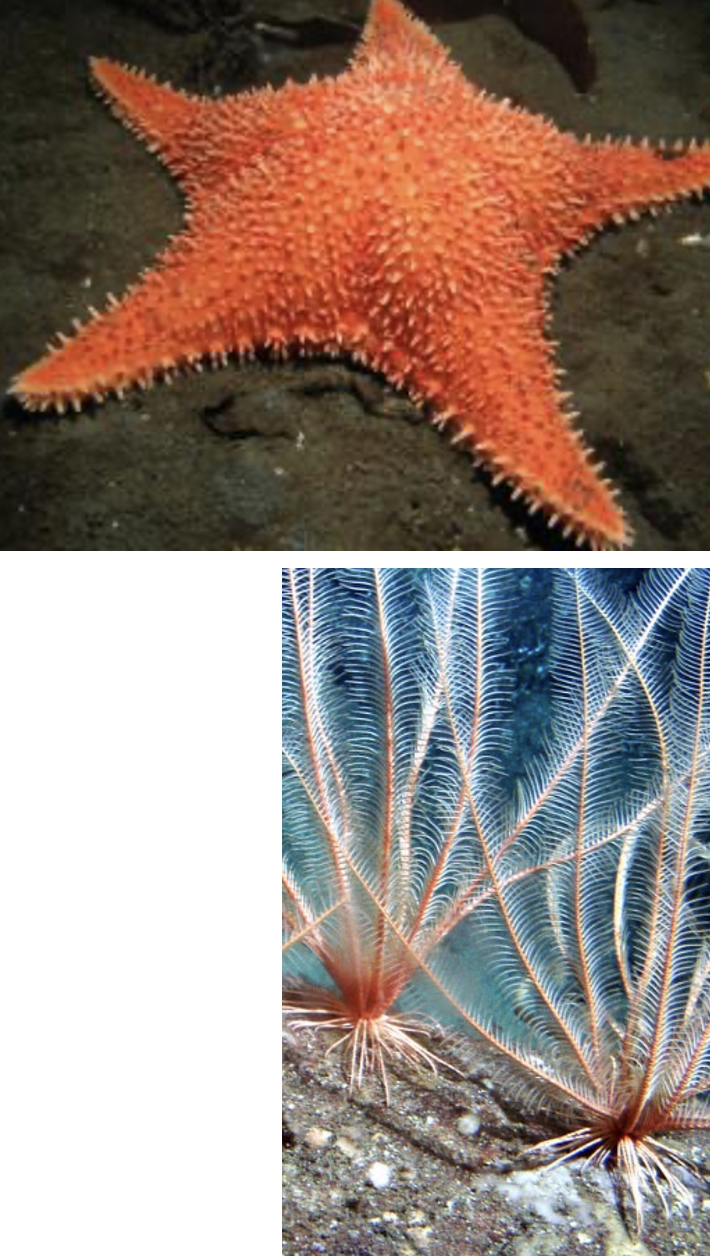
For the top and bottom organism, identify the class to which each belongs, and state if its oral surface faces up or down.
Asteroidea; Down
Crinoidea: Up

To which Subphylum does this animal belong? Identify the structure being protruded from this animal’s mouth.
Elutherozoa; Cardiac Stomach
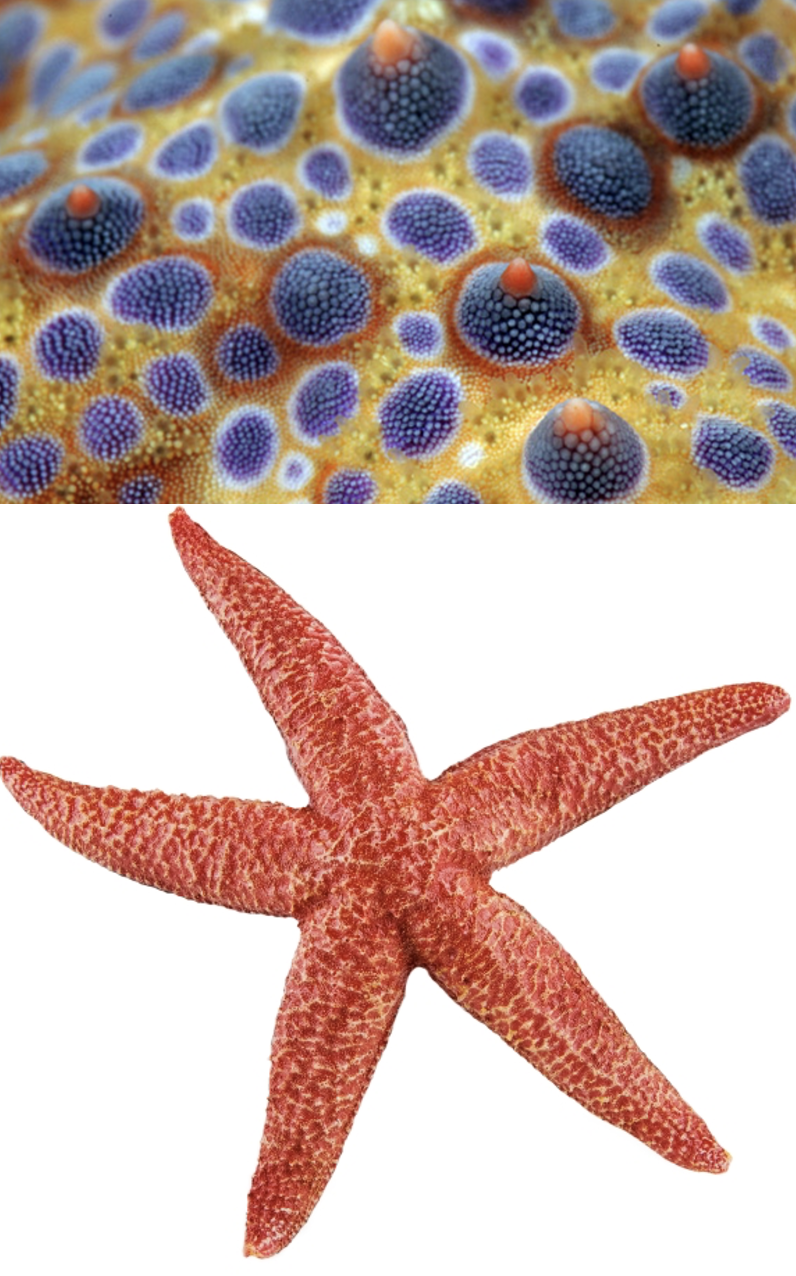
To which Phylum does this organism belong? What are the spine-like calcareous structures in the dermis?
Echinodermata; Ossicles

To what phylum and class does this animal belong?
Echinodermata; Holothuroidea

Identify which Subphylum these organisms belong to, and their individual classes.
Myriapoda; Chilopoda, Diplopoda

What type of branching do the appendages of this Class of animal exhibit?
Biramous

To which Class does animal A belong?
Ophiuroidea
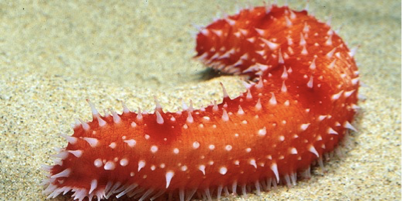
To which Class does animal B belong?
Holothuroidea

What type of symmetry do adults of this group exhibit?
Pentaradial

Name the system of canals and valves which is derived from the coelom and unique to this phylum. Also, identify the indicated structure, which is the opening to this hydraulic system.
Water vascular system; Madreporite

How are the tube feet of animal A and B different, if they are at all?
A: Tube feet lack suckers; are mostly sensory
B: Tube feet have suckers; are used for locomotion & feeding