Wild Game Species in Texas
 Call Kai
 Learn
 Practice Test
 Spaced Repetition
 Match
 Flashcards
 Knowt Play
1/62

Earn XP
Description and Tags
Vocabulary and identification flashcards covering big game, waterfowl, upland birds, migratory doves, exotic cervids, anatomical structures, group nomenclature, and disease susceptibility for wild game species in Texas.
63 Terms
Puddle Ducks (Dabblers)
A group of ducks that launch vertically straight up into flight, feed in shallow water with heads submerged and tails/butts sticking up, can utilize small confined ponds, and typically feature a brightly colored iridescent wing speculum.
Diving Ducks
Canvasback, Redhead, Bufflehead, Greater Scaup, Lesser Scaup, Surf Scoter
Speculum
A distinct, often brightly colored or iridescent patch located on the secondary wing feathers of ducks (especially prominent in puddle ducks), utilized by hunters and biologists for species identification.
Shadowing
An identification feature in waterfowl where a female duck (hen) displays a subtle, ghosted version of the male's (drake's) head profile, crest, bill structure, or breast pattern.

CANADA GOOSE
A monomorphic wild goose characterized by a black head and neck with a distinct white cheek/chin strap.

SNOW GOOSE
A migratory goose species that occurs in three distinct adult color morphs—white morph (white with black wingtips in flight), blue morph, and intermediate morph—whose juveniles display darker, mottled plumage.

GAGGLE
The specific group terminology for a flock of geese gathered together on the ground.

SKEIN

PLUMP
The specific collective noun used to describe a flock of geese flying bunched tightly together.

SANDHILL CRANE (monomorphic)
"Ribeye of the Sky"
migratory bird

MOURNING DOVE
A native Texas, monomorphic, migratory dove species whose season opens first in the fall, named for its sad, crying call. It features a gray body, large black wing spots, a peach belly, pink legs, and a sharply pointed tail in flight.

WHITE-WINGED DOVE
A medium-sized, native, monomorphic, migratory dove with a rounded tail and a prominent white wing stripe that flashes as a large white patch in flight; expanding northward across Central Texas.

WHITE-TIPPED DOVE
A dove species (also known as the white-fronted dove) with white-tipped outer tail feathers and a pale whitish breast; it is the most common dove across the Americas but is restricted strictly to South Texas within the United States.

Eurasian Collared-Dove
A non-native, invasive dove species that is the largest dove in the region, subject to a year-round hunting season (open 365 days a year) and commonly adapted to urban areas where firearm discharge is prohibited.
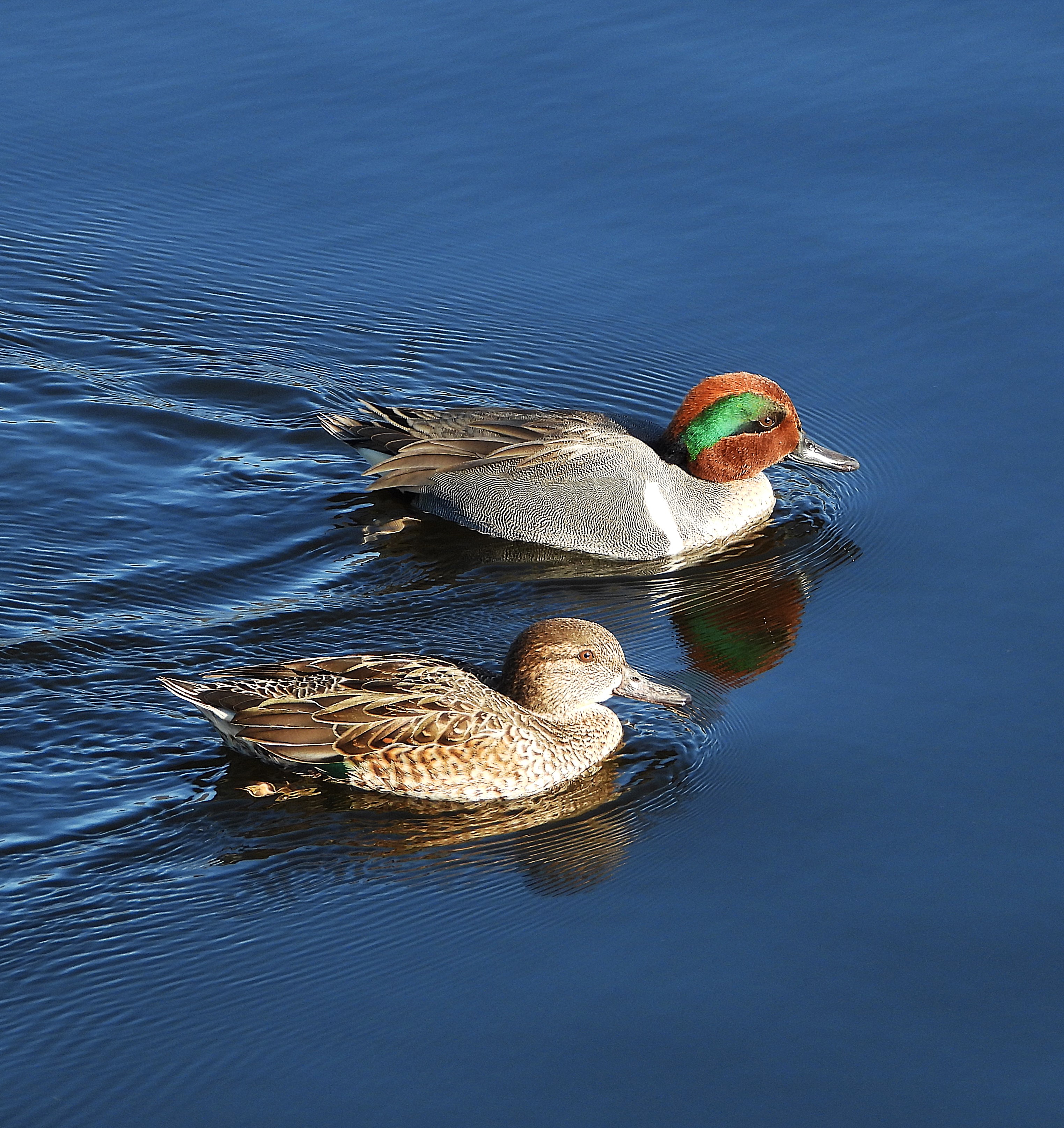
GREEN-WINGED TEAL
The smallest North American dabbling duck and the first duck species to arrive in Texas during fall migration; drakes feature a chestnut head with an iridescent green eye patch and a vertical white flank stripe, while hens are identified by a bright green speculum.
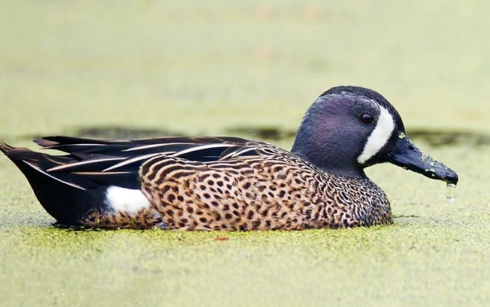
BLUE-WINGED TEAL
A dabbling duck named for the chalky powder-blue upper wing coverts (shoulder patches) on both sexes; drakes feature a slate-gray head with a bold white facial crescent in front of the eye and a black crown and bill.
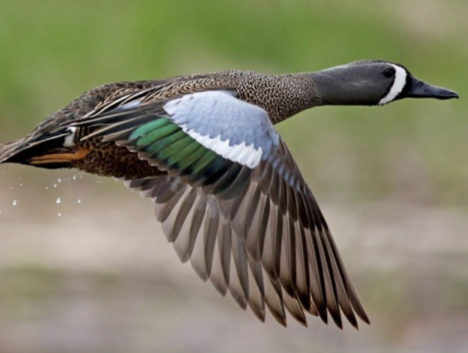

NORTHERN PINTAIL
A slender dabbling duck with a long neck and needle-like central tail feathers; drakes exhibit a white breast streak extending up the side of the neck into a chocolate-brown head.

WOOD DUCK
A perching dabbler capable of launching directly into flight from tree branches; drakes possess a crested iridescent green head, bluish-black tipped bill, and purplish-brown breast, while hens shadow the drake's crested head profile.


BLACK-BELLIED WHISTLING DUCK
A monomorphic duck with long pink legs, a long neck, a bright red bill, chestnut body, and black belly; classified as a dabbling duck because it walks easily on dry land and perches in trees.

GADWALL
A dabbling duck noted for its "understated elegance"; drakes lack flashy iridescent head colors, exhibiting an intricate vermiculated gray and brown body pattern with a distinctive black rump patch.


CANVASBACK (dimorphic)
A large diving duck identified by a long, continuous sloping head profile resembling a slide from crown to bill tip, a black breast, and a canvas-white back; drakes have an all-black bill and red eyes that dull outside the spring breeding season.


REDHEAD (dimorphic)
A diving duck often confused with the canvasback, distinguished by a rounded head with an abrupt forehead angle, darker gray back, and a bluish bill with a black tip; hens frequently exhibit nest parasitism by depositing eggs in other ducks' nests.

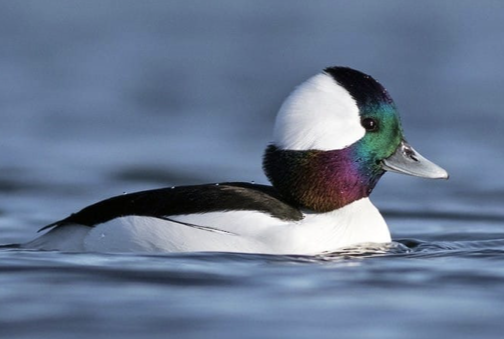
BUFFLEHEAD (dimorphic)
Diving duck
drakes, hens, chicks
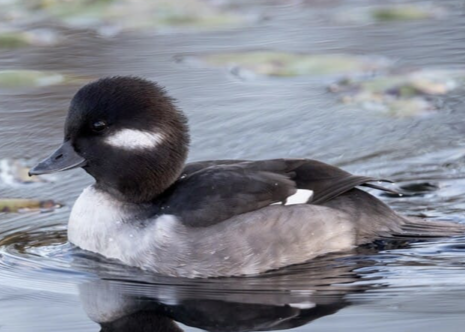

GREATER SCAUP (dimorphic)
A diving duck with a black-and-white vermiculated body pattern, blue bill, yellow eye, and a smoothly rounded head exhibiting an iridescent green sheen.


LESSER SCAUP
A diving duck slightly smaller than the greater scaup, distinguished primarily by a peaked or pointed crown profile and an iridescent purplish sheen on its head.


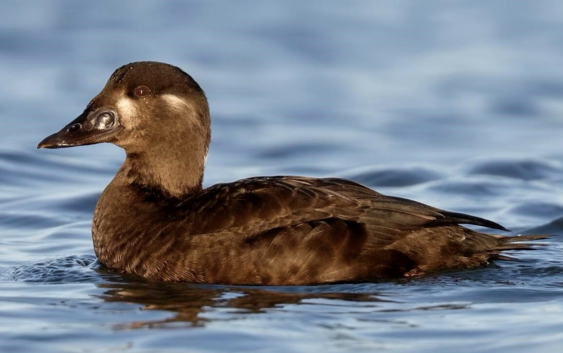
SURF SCOTER
A medium-sized, primarily black sea diving duck featuring white patches on the nape and forehead, distinguished by a heavy, swollen bill displaying a large circular pattern; hens shadow the heavy bill structure.
Upland Game Birds
Non-waterfowl game bird species not reliant upon water bodies for nesting or breeding, typically hunted in fields and woodlands with dogs, and huntable with a standard hunting license without migratory bird endorsements.
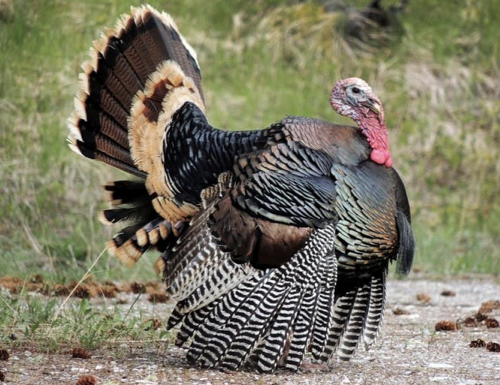
WILD TURKEY
Native to Texas
Tom, hen, jake, jennie, poult


JAKE
A juvenile or sub-adult male wild turkey, distinguished from a mature tom by duller head contrast and an uneven tail fan contour resulting from molted central feathers growing longer than unmolted juvenile outer feathers.
Turkey Beard
A cluster of specialized, modified feathers (not hair) that emerges directly from the breast tissue (never the chin) of a wild turkey; scored by length alongside leg spurs for harvest records.
Rio Grande Wild Turkey
The most abundant and widespread subspecies of wild turkey in Texas, occupying habitats across South, Central, and North Texas.
Eastern Wild Turkey
The wild turkey subspecies distributed in East Texas, inhabiting the Post Oak Savannah, Pineywoods, and Gulf Coast prairies and marshes.
Merriam's Wild Turkey
The rarest wild turkey subspecies found in Texas, restricted geographically to the high-elevation ponderosa pine mountain habitats of far West Texas.

NORTHERN BOBWHITE QUAIL
A dimorphic upland game bird whose cock features a black-and-white striped face, white throat bib, and scaled belly; statewide populations have declined roughly 75% since the 1980s due to red imported fire ants and habitat destruction.

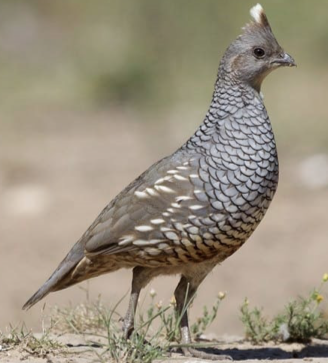
SCALED QUAIL
A monomorphic desert quail displaying a distinctive white-tipped peaked crest and breast feathers with dark margins that resemble fish scales; native to arid grasslands in the western third of Texas.
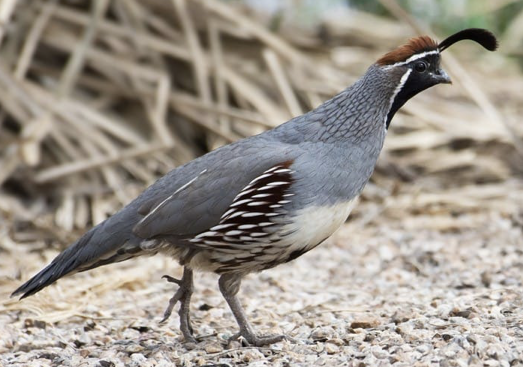
GAMBEL’S QUAIL
A dimorphic desert quail inhabiting the Trans-Pecos region; cocks feature a prominent teardrop/comma-shaped black head plume, black face outlined in white, and a chestnut crown.

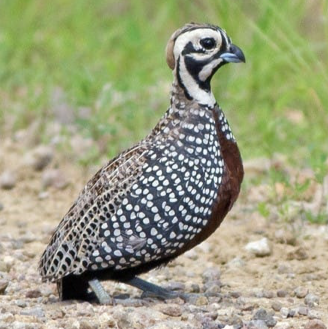
MONTEZUMA QUAIL
A secretive, dimorphic Trans-Pecos desert quail; cocks display a striking black-and-white harlequin clown face and white-spotted flanks. Although classified as a game bird, it has no open hunting season because it is a Species of Greatest Conservation Need.


PLAIN CHACALACA
A large, monomorphic arboreal galliform with a small head and long tail found in the Lower Rio Grande Valley of Texas into Mexico, colloquially called the "Mexican tree pheasant".

ATTWATER’S PRAIRIE CHICKEN
An endangered coastal prairie grouse with no open hunting season, characterized by erectable neck feathers (pinnae) and bright yellow inflatable neck air sacs displayed by males during courtship.
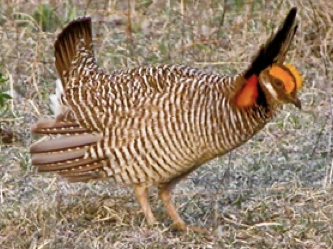
LESSER PRAIRIE CHICKEN
An endangered grouse species of the Texas Panhandle and high plains with no open hunting season, distinguished during male courtship displays by orange or orangish inflatable neck air sacs.
Pinnae
Elongated, dark, ear-like neck feathers present on prairie-chickens that lie flat against the neck in regular posture and are raised upright during breeding displays.
Lek
A traditional communal arena or dancing ground where male prairie-chickens gather each spring to inflate neck air sacs, boom, raise pinnae, and dance to compete for mates.

CONGREGATION
The official, technical collective noun used to describe a group of American alligators.

COVEY
The traditional group terminology applied to a flock of quail.
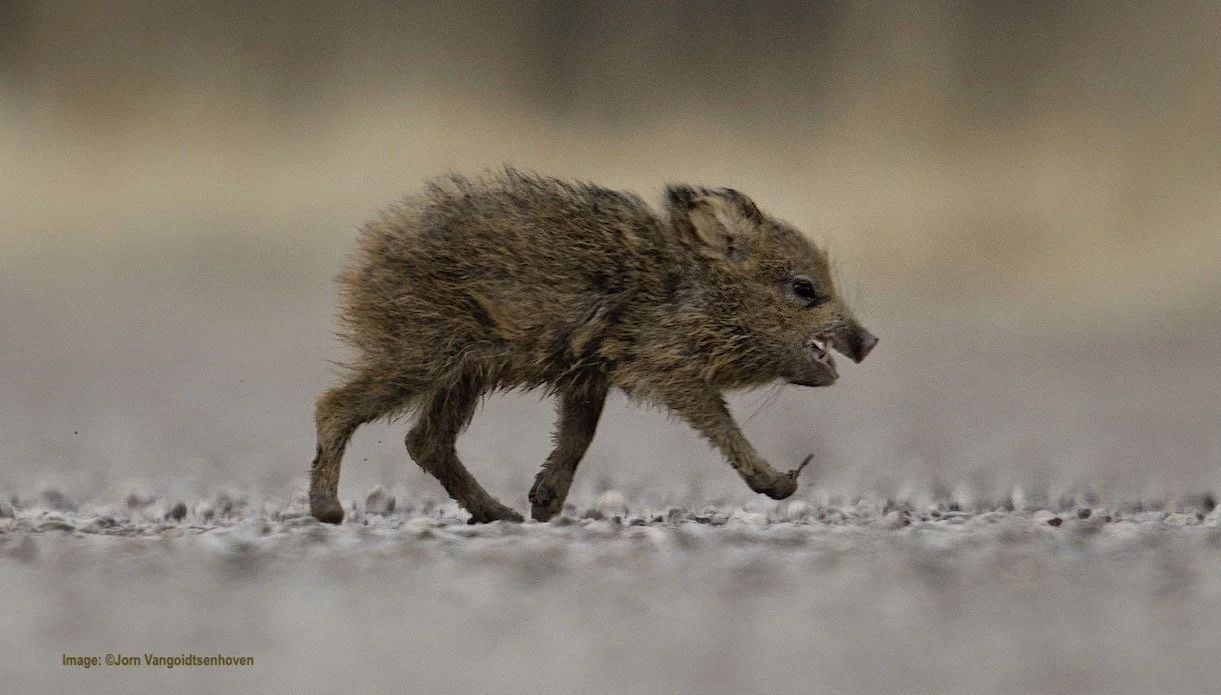
RED
The specific term designating a young or juvenile collared peccary (javelina).

COLLARED PECCARY / JAVELINA
A native Texas ungulate (Tayassu tajacu, or javelina) possessing a faint whitish-yellow collar across the shoulder; not a true pig, with young classified as reds.

PRONGHORN ANTELOPE (BUCK)
Buck, doe, fawn, herd
immune to CWD


MULE DEER
A native Texas cervid (Odocoileus hemionus) found mainly in West Texas and the Panhandle, characterized by bifurcated branching antlers, large ears, a white rump, and known susceptibility to CWD.


WHITE-TAILED DEER
The ubiquitous native Texas cervid (Odocoileus virginianus) whose tines branch off a single main beam; confirmed susceptible to Chronic Wasting Disease (CWD).

ELK
A large cervid (Cervus canadensis, formerly C. elaphus) biologically native to Texas that is highly susceptible to CWD and renowned for its distinctive, echoing bugle call during the fall rut.
Chronic Wasting Disease (CWD)
A fatal neurodegenerative prion disease of cervids that impairs herd trophy quality by causing infected animals to die before reaching prime, trophy-producing age classes.
Exotic Cervid
PROBABLY SUSCEPTIBLE TO CWD
Axis deer, Fallow deer, Red deer, Sika deer

AXIS DEER (EXOTIC CERVID)
probably sucseptible to CWD
An exotic cervid (Axis axis) native to the Indian subcontinent; both males and females retain prominent white body spots throughout adulthood, paired with a solid white throat bib and dark dorsal stripe.

FALLOW DEER (EXOTIC CERVID)
Probably susceptible to CWD
buck, doe, fawn, herd

SIKA DEER (EXOTIC CERVID)
Probably susceptible to CWD
An exotic cervid (Cervus nippon) native to East Asia with faint or subtle adult spotting; proven susceptible to CWD after imported North American elk introduced the prion to South Korea.


RED DEER (EXOTIC CERVID)
Probably susceptible to CWD
A European cervid (Cervus elaphus) capable of hybridizing with native elk; hybridization poses severe conservation threats by reducing body and antler size and wiping out the native elk's bugle vocalization.

BLACKBUCK ANTELOPE (EXOTIC BOVID)
Not a cervid - not susceptible to CWD
Buck, doe, calves, herd)

RING-NECKED PHEASANT (cock, hen)
An exotic upland game bird native to East and Central Asia that is established and hunted in the Texas Panhandle; roosters exhibit brilliant iridescent plumage, a long pointed tail, and a white neck collar.

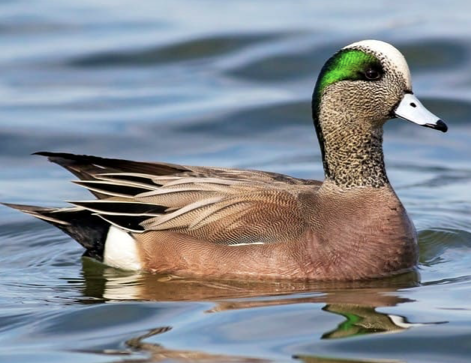
AMERICAN WIGEON
dabbler
drake, hen, chick
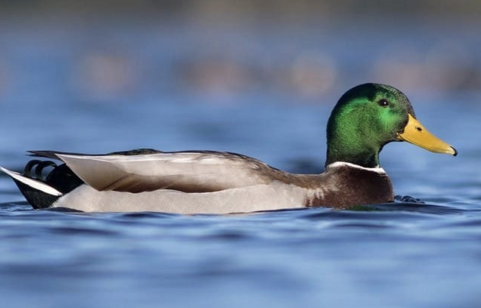
MALLARD
dabbler
drake and hen
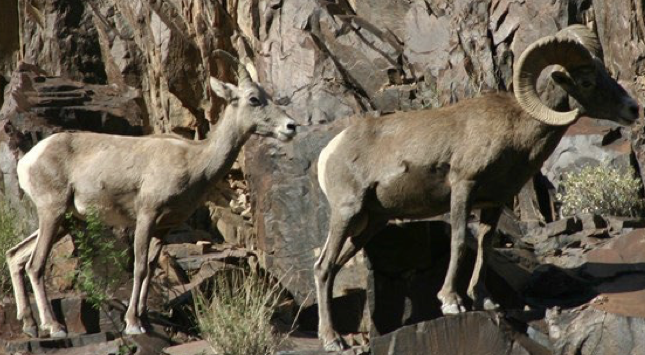
BIGHORN SHEEP (ram, ewe, lamb, herd)
Respiratory disease complex / pneumonia
no cwd


AMERICAN BISON (bull, cow, calf, herd)
Malignant Catarrhal Fever (from domestic sheep 6-9 months of age)
Haemonchus
Less impact from Tritrichomonas foetus than in cattle
Not susceptible to CWD

AMERICAN ALLIGATOR
male - bull
female - cow
young - hatchling
group - congregation