Chapter 7: The feeling mind Emotion + Motivation
 Call Kai
 Learn
 Practice Test
 Spaced Repetition
 Match
 Flashcards
 Knowt Play
1/30

There's no tags or description
Looks like no tags are added yet.
31 Terms
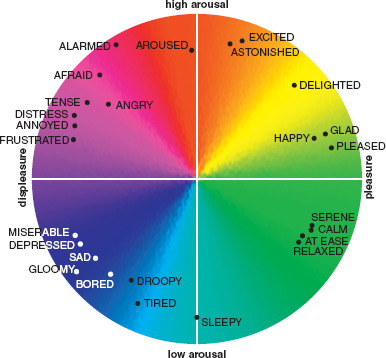
Emotion
physical sensation + conscious subjective feelings
Motivation
a process that arouses, maintains, and guides behavior towards a goal
more direct and precise than emotion
Thirsty? She is MOTIVATED to drink some water.

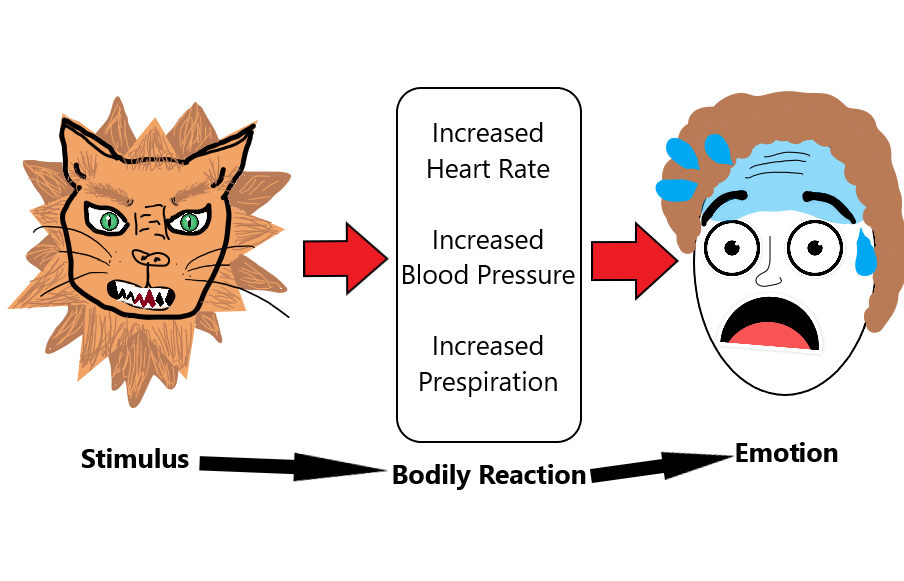
James Lange Theory
A theory of emotion that proposes that physical sensations lead to subjective feelings
Catharsis
A theory of emotion that views emotion as a reservoir that fills up and spills over; it predicts that expressing an emotion will reduce arousal.

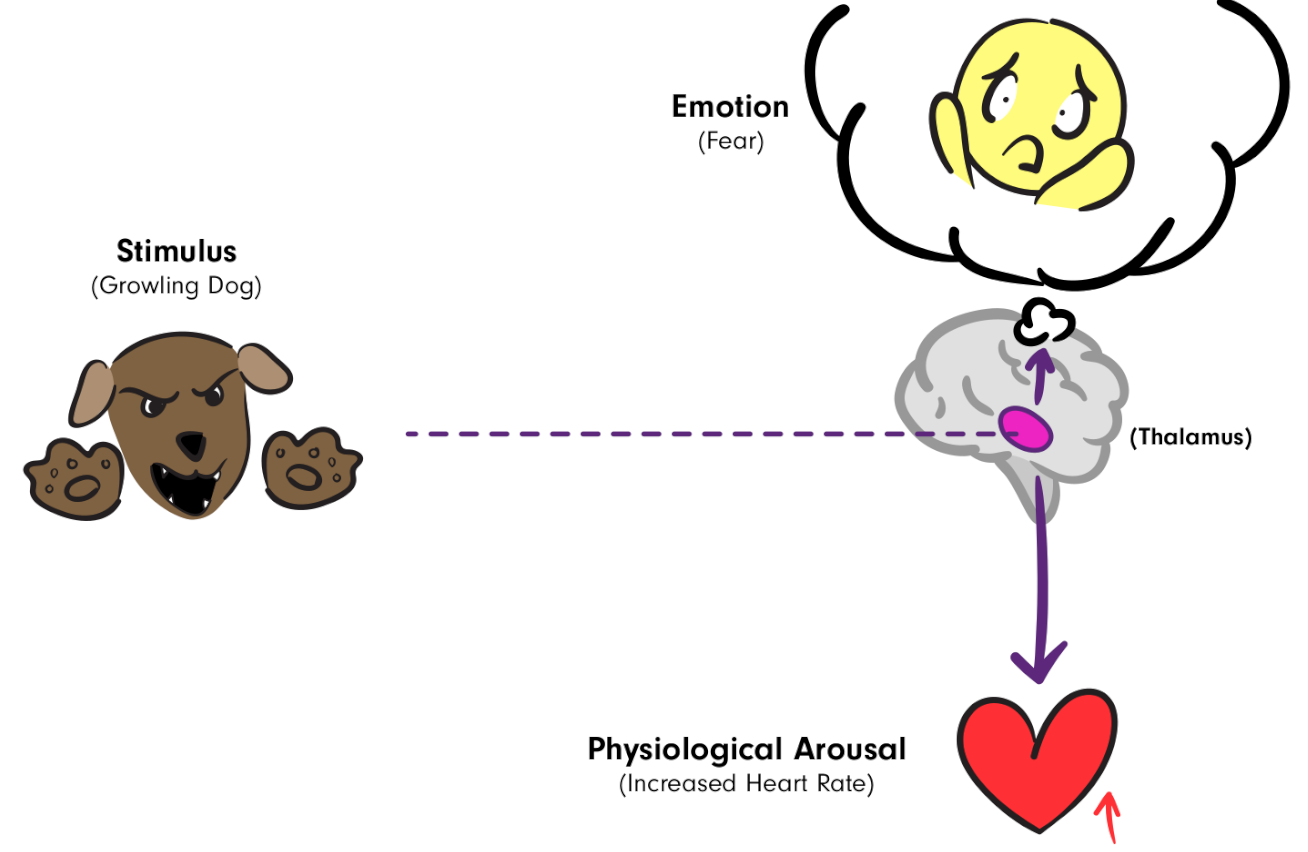
Cannon-Bard Theory
A theory of emotion featuring the simultaneous and independent occurrence of physical sensations and subjective feelings during an emotional experience.
Schachter–Singer two-factor theory
A theory of emotion in which general arousal leads to assessment, which in turn leads to subjective feelings.

somatovisceral afference model of emotion (SAME)
A model of emotion in which a range of physical sensations from precise to general requires varying degrees of cognitive processing prior to subjective feelings.
Appraisals
The detection and assessment of stimuli that are relevant to personal well-being.
Yerkes-Dodson Law
the ideal amount of arousal interacts with the complexity of a task
For simple tasks, such as outrunning a predator, greater arousal leads to greater performance.
For more complex tasks, such as taking a difficult exam, arousal levels that are too high can begin to interfere with performance
Insula
Regions of cortex located at the junction of the frontal and temporal lobes.

Display rules
A cultural norm that specifies when, where, and how a person should express an emotion.
homeostasis
A steady internal balance, or equilibrium.
e.g. If we feel thirsty, we drink water to maintain our temperature
set points
value that is defended to maintain homeostasis.
drive
A state of tension and arousal triggered by cues important for survival.
drive REDUCTION
The state of relief and reward produced by removing the tension and arousal of the drive state.
incentive
A reward that pulls an organism’s behavior in a particular direction.
an EXTERNAL factor
Intrinsic reward
A reward that arises internally.
Extrinsic reward
reward that arises externally
Glucose
A type of sugar that plays an important role in hunger levels.
Leptin
A hormone secreted by fat cells that helps the body maintain an appropriate level of stored fat.
Satiety
A sense of feeling full and not requiring further food.
Body Mass Index (BMI)
A height-to-weight ratio used to identify healthy weight, underweight, overweight, and obesity.
Anorexia nervosa
An eating disorder characterized by the maintenance of unusually low body weight and a distorted body image.
Bulimia nervosa
An eating disorder characterized by bingeing, purging, and having feelings of depression, disgust, and lost control.
Binge-eating disorder
An eating disorder characterized by eating abnormally large amounts of food at one sitting and feeling that eating is out of control, without compensatory behaviors such as induced vomiting or the use of laxatives.
estradiol
female sex hormone
testosterone
male hormone
Sexual orientation
Stable pattern of attraction to members of a particular sex
affiliation
association with other people
Achievement motivation
a desire to excel or outperform others
Self-actualization
A state of having fulfilled your potential.