chapter 14 rate of reactions
 Call Kai
 Learn
Learn Practice Test
 Spaced Repetition
 Match
Match Flashcards
 Knowt Play
1/8

There's no tags or description
Looks like no tags are added yet.
Name | Mastery | Learn | Test | Matching | Spaced | Call with Kai | Chat |
|---|
No analytics yet
Send a link to your students to track their progress
9 Terms
How do we measure the rate of reactions?
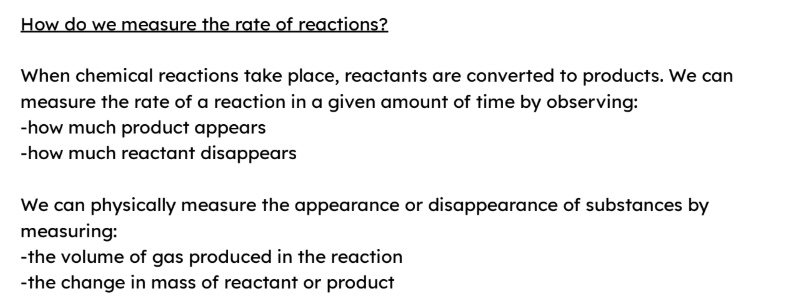
1. Volume of gas produced:
if a gas is produced in a reaction, we can measure the rate of reaction by measuring
the volume of gas given off in a fixed amount of time
Example
Reaction of marble chips (calcium carbonate) with dilute hydrochloric acid:
Calcium carbonate + hydrochloric acid → calcium chloride + water + carbon dioxide
CaCO3(s) + 2HCL(aq) → CaCL2 (aq) + H2O (l) + CO2 (g)
- we can find the rate of this reaction by measuring the volume of carbon dioxide
gas produced at regular time intervals
** can draw tangents at pts to determine steep vs gentle
2. Change in mass:
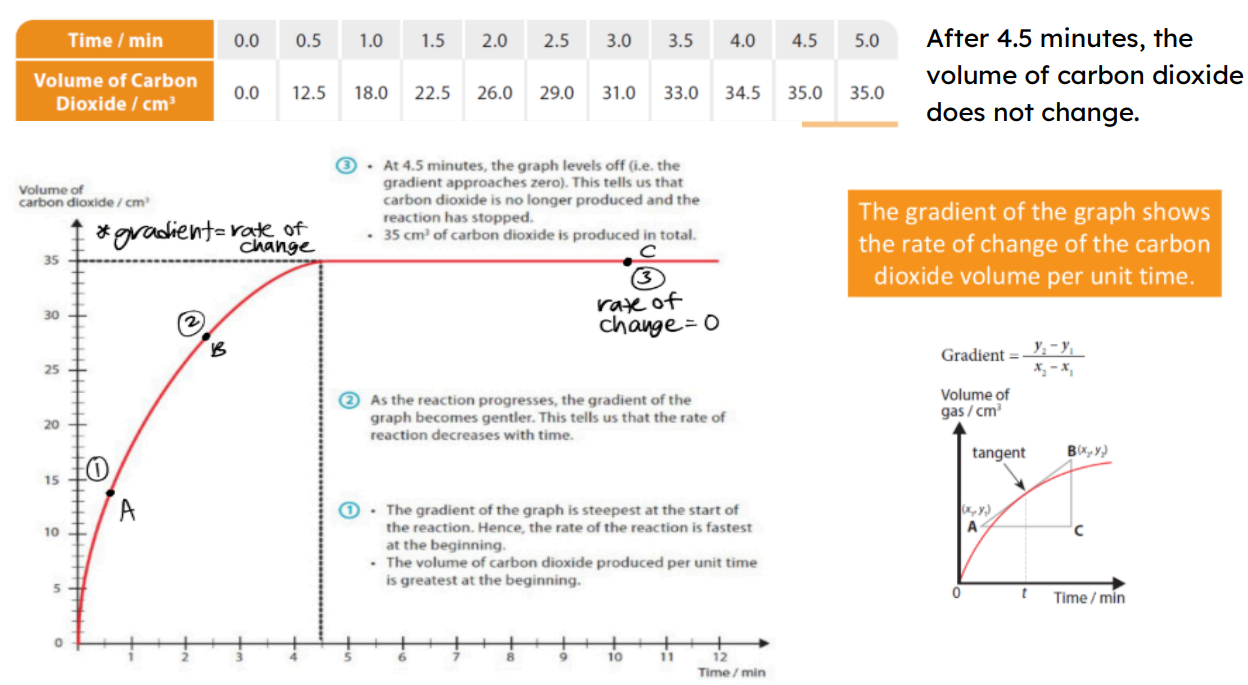
The mass of reactants decreases as they get used up, while the mass of products
increases.
- We can measure the rate of reaction by finding the change in mass of either the
reactants or products.
-reaction between marble chips (calcium carbonate) with dilute hydrochloric acid:
Since the carbon dioxide gas produced can escape to the surroundings, the mass of the
reaction mixture will decrease
-we can find the rate of reaction by measuring the change in mass of the reaction
mixture at regular time intervals
Cotton wool -> prevent acid spray
What determines the rate of reactions?
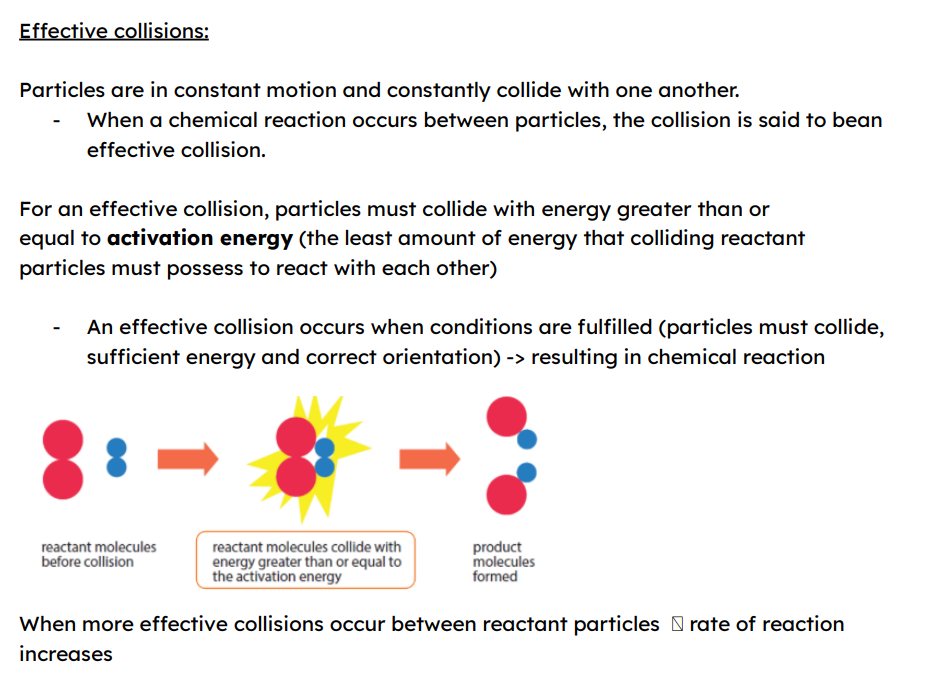
Effective collisions: (5)
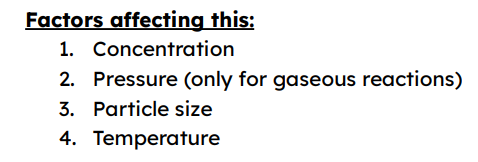
Factors affecting this:
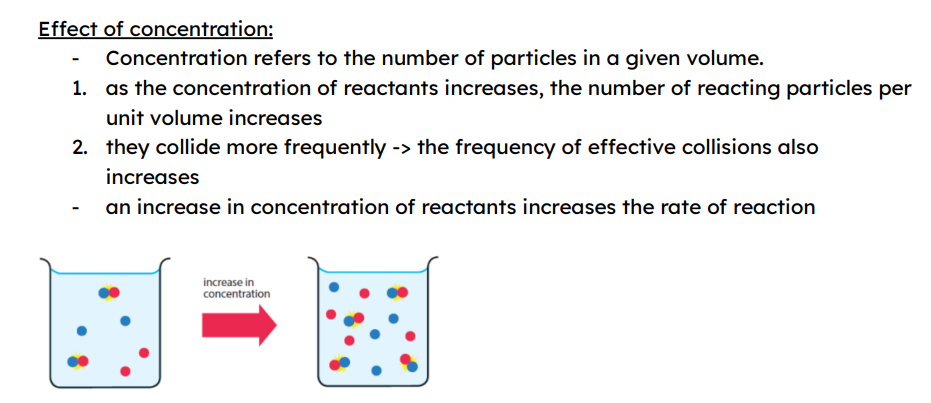
Effect of concentration:
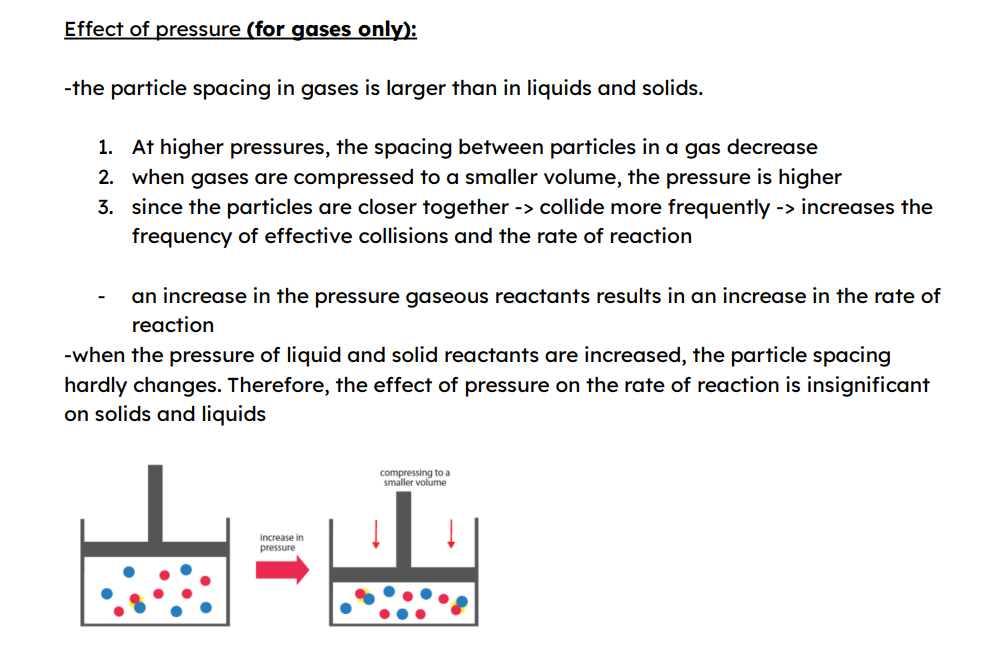
Effect of pressure (for gases only):
** must also state increasing the number of reactant particles per unit volume of gas
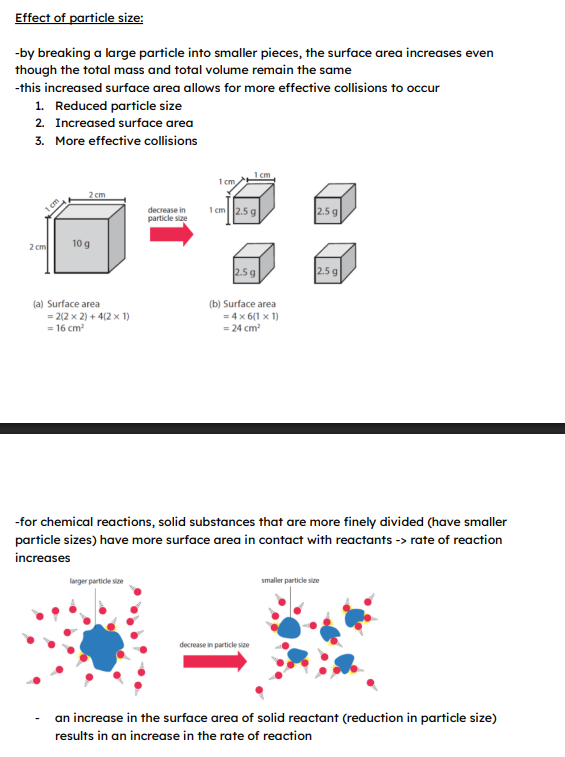
Effect of particle size
must also collide more frequently and increases the frequently of effective collisions
** exposed surface area
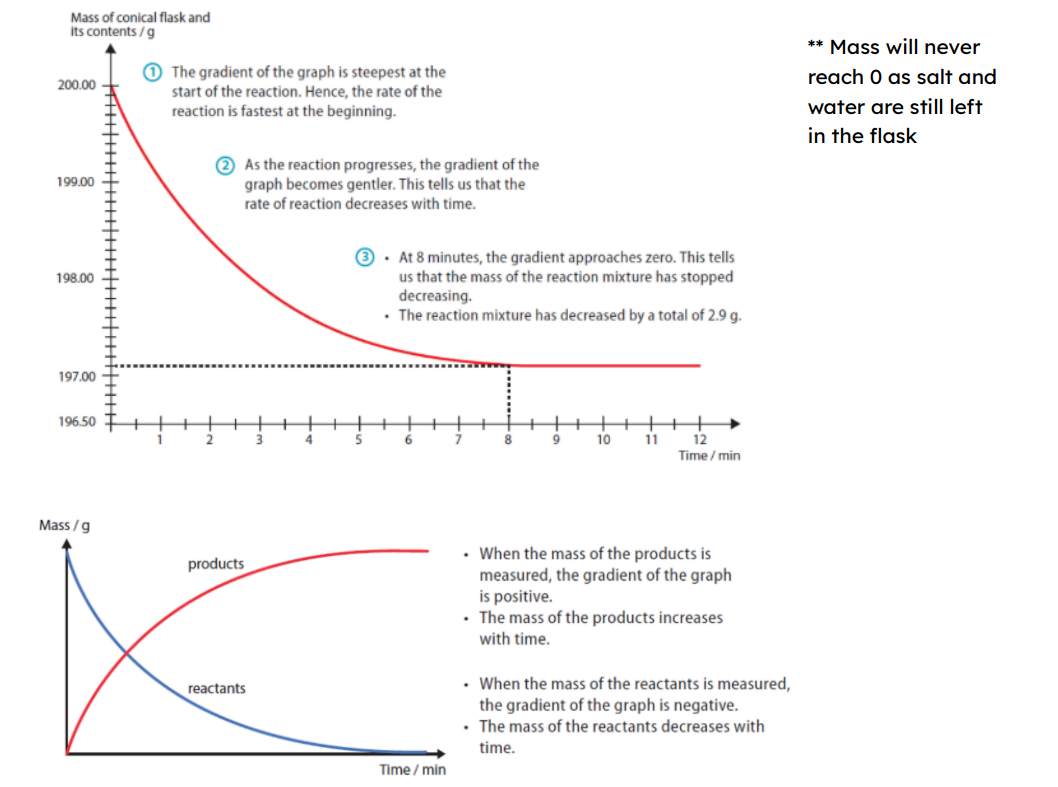
Effect of temperature