week 5 study guide
 Call Kai
 Learn
 Practice Test
 Spaced Repetition
 Match
 Flashcards
 Knowt Play
1/131

There's no tags or description
Looks like no tags are added yet.
132 Terms
The human body consists of how much water?
50-80%
What are the functions of water in the body? (4)
Transports nutrients and oxygen throughout the body
Helps remove waste
Regulates body temperature through perspiration
Provides the basic component of blood and other bodily fluids
What are the 3 types of amino acids and how does the body use them?
Essential amino acids are ones the body cannot produce.
Nonessential amino acids are ones the body can make from essential amino acids or as proteins break down.
Conditional amino acids are not usually essential but might become essential when the body is undergoing stress or illness
The body uses amino acids from proteins to repair and build tissues. They can also be used for energy if other sources (carbohydrates and fats) are unavailable
What does too little or too much protein do to the body?
Too little causes weight loss, malnutrition, fatigue, and increased susceptibility to infection.
Too much protein will wind up as body fat or be converted to glucose.
The body requires additional protein when…
major recovery
burns
major infections
major trauma
surgery
major growth
pregnancy
breastfeeding
infancy
adolescence
How does the body use carbohydrates? List examples of simple and complex carbohydrates
primarily for energy for its cells and all their functions as it burns it more efficiently than other macros
carbs convert to glucose, and is stored as glycogen in the liver
too little carbs results in protein loss, weight loss, and fatigue
Too much can lead to weight gain and tooth decay.
What do fats do for the human body?
essential for the absorption of fat-soluble vitamins, provide structure for cell membranes, promote growth in children, maintain healthy skin, assist with protein functions, and help form various hormone-like substances that have important roles, like preventing blood clots and controlling blood pressure. Stored fat has the protective function of insulating and protecting organs.
Too little fat can cause vitamin deficiencies, fatigue, and dry skin.
Too much fat can cause heart disease and obesity.
unsaturated fat
Less dense and heavy.
They are oils and have less potential for raising cholesterol levels (thus causing heart disease) than saturated fats.
Unsaturated fats can be monounsaturated (olive, canola, and peanut oil) or polyunsaturated (corn, sunflower, and safflower oil)
trans fat
a fatty acid used to preserve processed food products. It is a byproduct of solidifying polyunsaturated oils (a process called hydrogenation) and raises LDL (“bad”) cholesterol level
saturated fat
solid at room temperature
Primarily from meat products as well as palm and coconut oil, this type of fat also raises LDL.
fat soluble vitamins
A D E K
water soluble vitamins
B1, B2, B3, B6, B12, folate, pantothenic acid, biotin, vitamin c
In what order are ingredients listed on food labels?
In descending order, with the highest volume listed first
What are general dietary guidelines for patients with diabetes?
Eating several small, nutrient-dense meals consistently throughout the day.
Avoiding or severely limiting foods high in added sugars. Properly balancing blood sugar is essential when high-sugar foods are consumed.
Limiting foods high in carbohydrates, especially those with refined grains.
Consuming more fiber. Fiber is an essential nutrient to help break down carbohydrates.
What are general dietary guidelines for patients with kidney disease?
Limit salt/sodium
Be cautious with protein
Eat heart-healthy foods
Minimize phosphorus intake
Control potassium levels
What are dietary considerations for patients with celiac disease?
Look for foods labeled “gluten-free”, “no gluten”, “free of gluten”, or “without gluten”
Avoid foods made with ingredients that naturally contain gluten: wheat, barley, and rye
Be cautious of cross-contact, especially when eating out at a restaurant
Prepare and store gluten-free foods separately from foods with gluten that other household members might be consuming
Opt for naturally gluten-free foods whenever posible
What are the signs and symptoms of anorexia nervosa?
Self-starvation
Perfectionism
Extreme sensitivity to criticism
Excessive fear of weight gain
Weight loss of at least 15%
Amenorrhea (no menstrual periods)
Denial of feelings of hunger
Excessive exercising
Ritualistic eating behavior
Extreme control of behavior
Unrealistic image of the self as obese
What are the warning signs and symptoms of bulimia nervosa?
Buying and consuming large amounts of food
Purging after eating excessive amounts of food
When dining with others, using the bathroom immediately after eating
Using laxatives and diuretics
Keeping weight constant while overeating fattening foods
Mood swings
Depression and guilt after binging and purging
What is the target calorie range for 19-30 y/o male and female?
sedentary, mod active, active
male: 2400, 26-2800, 3000
female: 2000, -2200, 2400
What is the target calorie range for 30-50 y/o male and female?
sedentary, mod active, active
male: 2200, 2400-2600, 28-3000
female: 1800, 2000, 2200
water sources
water, veggies, fruit
protein sources
Meat, poultry, fish, cooked beans, eggs, nuts, seeds, nut butters
carbohydrates food sources
Whole grains, vegetables, fruits, rice, beans, potatoes
fat food sources
Fatty fish (tuna, salmon, sardines), avocado, olive oil
vitamin A sources
Milk fat, meat, leafy veggies, egg yolks, fish oil, Orange & yellow fruits
vitamin B sources
Fish, meat, poultry, whole grains, seeds, nuts, yeast, avocados, bananas
vitamin c sources
Berries, citrus fruits, green peppers, mangoes, broccoli, potatoes, cauliflower, tomatoes
vitamin d sources
Sunlight, fortfied milk, eggs, fish, liver
vitamin E sources
Fortified cereal, nuts, veggies oils, green & leafy veges
Folate sources
Green & leafy veggies, beans, asparagus, legumes
vitamin k sources
Green & leafy veggies, dairy products, grain products, meat, eggs, fruits
pantothenic acid
Meat, grains, legumes, fruits, veggies
sodium sources
Beef, pork, sardines, cheese, green olives, sauerkraut
potassium sources
Whole/skim milk, bananas, prunes, raisins
calcium sources
Milk/milk products, meat, eggs, cereals, nuts, legumes
phosphorus sources
Milk, cheese, meat, poultry, cereals, nuts, legumes
magnesium sources
Green leaves, nuts, cereal grains, seafood
iron sources
Soybean flour, beef, beans, clams, peaches
iodine sources
Seafood, iodized salt, dairy products
zinc sources
veggies
not on study guide: seafood, pork/poultry
What is the size of a standard calibration box on the ECG?
10 mm tall by 5 mm wide
What is the standard ECG paper speed?
25mm/second

On ECG paper, each small horizontal square represents ___ seconds
0.04
On ECG paper, each large horizontal square represents ___ seconds
0.20 seconds
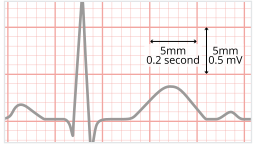
Sinus bradychardia
Heart rate less than 60/min
Sinus tachycardia
Heart rate greater than 100/min and one P wave preceding each QRS complex
Sinus arrest
A break in the normal EKG
-insignificant if less than 6 seconds
-pause = 3 seconds
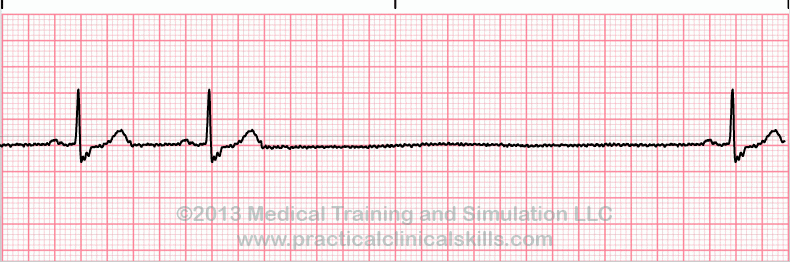
Atrial flutter
A single area within the atrial tissue is firing at a rate faster than the rate the ventricles are responding to. The result is multiple flutter waves for each QRS complex on the EKG

Atrial fibrillation
There is rapid, disorganized firing of multiple sites within the atrial tissue. This results in lots of fibrillatory waves between QRS complexes. It also results in an irregular QRS rhythm
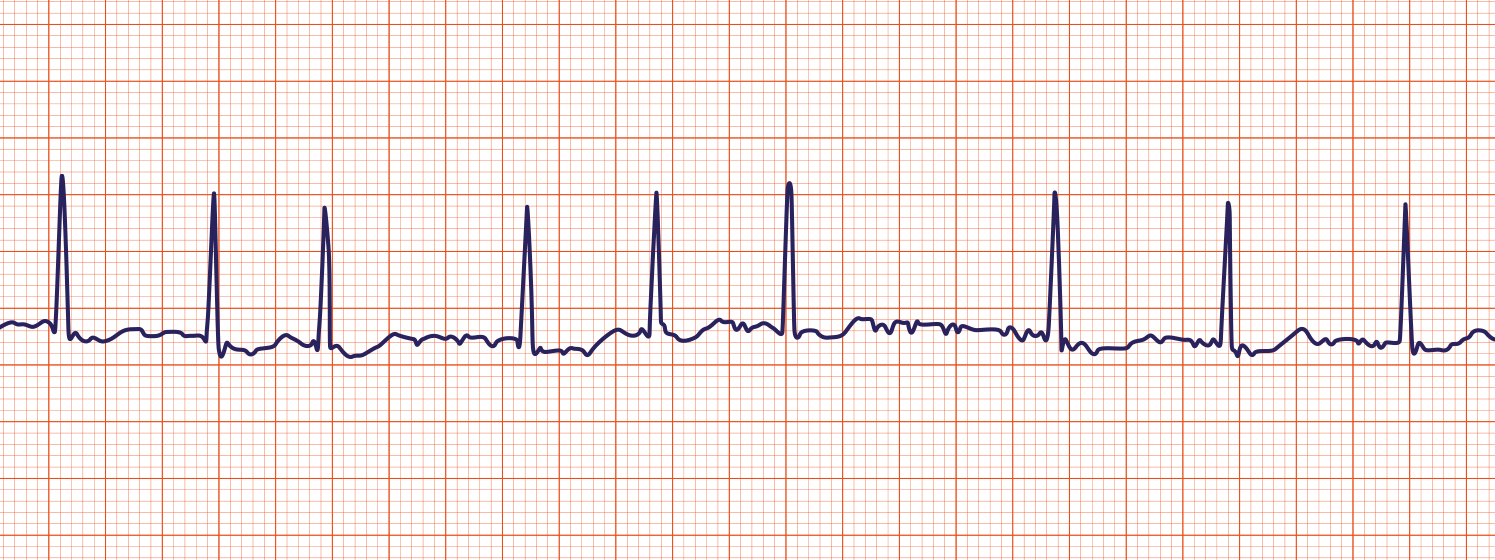
Ventricular tachycardia
regular, fast rhythm characterized by large, irregular, wide QRS complexes on the EKG. Typically, P waves are absent, not visible, or occur randomly throughout the tracing.
3 types

Ventricular fibrillation
abnormal heart rhythm where the ventricles twitch or quiver, not pumping blood to the rest of the body. Ventricular fibrillation does not produce a pulse, as the ventricles cannot pump any blood, and patients typically become unconscious within seconds

Asystole
the complete absence of any waves on the EKG tracing. Immediately check that the patient is awake and alert
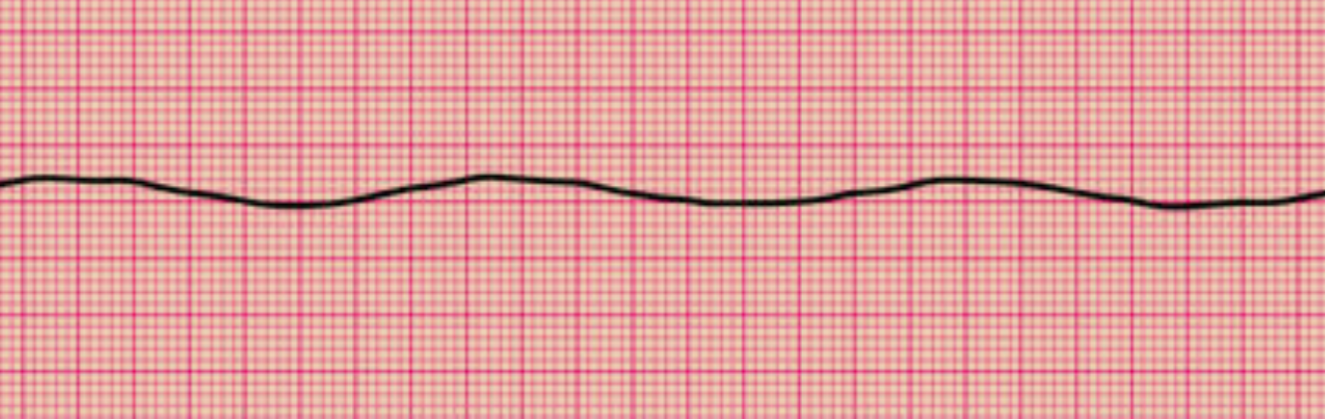
Somatic tremor
irregular spikes throughout the tracing and is related to muscle movement
If patients have conditions that lead to uncontrolled muscle movement, have them lay their hands palms-down under their buttocks to reduce somatic interference

AC interference
characterized by regular spikes in the EKG tracing.
related to poor grounding/external electricity interfering with the tracing.
Nearby electrical equipment such as lights, computers, and other items plugged into wall sockets
Ensure proper grounding of the machine by using a three-prong plug, avoiding crossed lead wires, moving the bed away from the wall, and turning off unnecessary electronic devices
Wandering baseline
results from movement associated with breathing or poor electrode connection.
The baseline will wander away from the center of the paper, causing difficulty in tracing interpretation.
Clean the skin before attaching the electrodes. Instruct the patient to avoid using creams and lotions
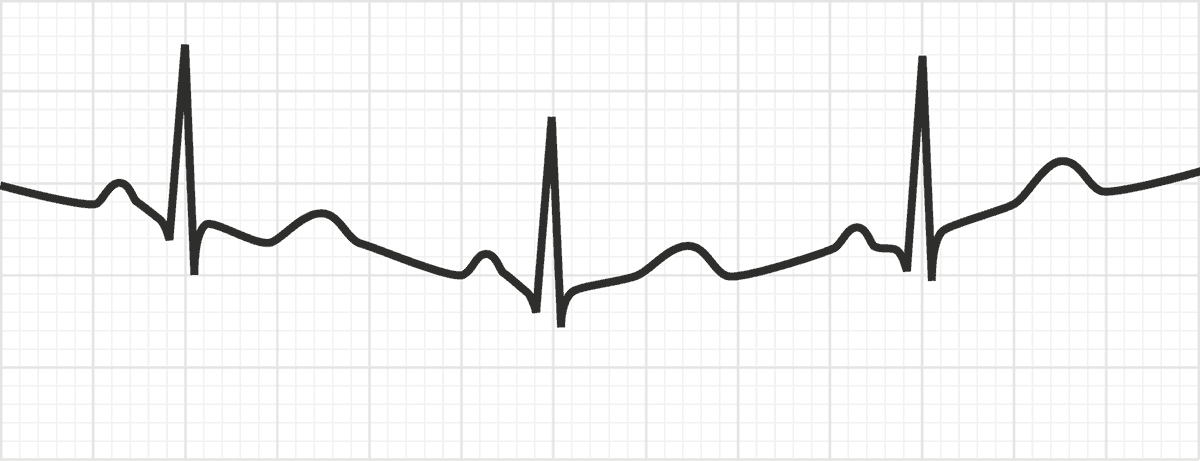
Interrupted baseline
there is a break in the tracing
usually related to a disconnected or broken lead wire
a flat, horizontal line will print on the EKG tracing
Regular cleaning, maintenance, and inspection of the lead wires will alert the MA to potential lead wire concerns
gingko biloba
blood circulation and brain function
What steps are included in patient preparation and positioning for an ECG?
Instruct patients to remove pantyhose, tights, socks, or anything covering the feet or lower legs. A drape or gown should be worn with the opening in the front. Always ask patients if they want an additional cover for added privacy or comfort.
Remove jewelry (bracelets, necklaces), which can interfere with lead placement or touch the lead wires during the procedure.
Turn off all electronic devices, such as cell phones, and remove them from the patient. These items could lead to artifacts on the EKG tracing.
Place patients in the supine position, lying flat on their back, for the EKG. If a patient cannot lie flat on their back, elevate the head of the bed to a 45-degree angle in semi-Fowler’s position.
If possible, instruct patients to avoid applying any substance to the skin (lotions, powders, oils, ointments) prior to the procedure. Help ensure the skin is clean by using alcohol wipes, soap, and water at the attachment or electrode sites. Some facilities have electrolyte pads to prep the sites of electrode placement.
white limb lead goes where
right arm
black limb lead goes where
left arm
red limb lead goes where
left leg
green limb lead goes where
right leg
where does V1 go?
right side of the sternum at the fourth intercostal space
where does V2 go?
left side of the sternum, directly across from V1 at the fourth intercostal space
where does V4 go?
left side of the chest, fifth intercostal space, midclavicular line
where does V3 go?
left side of the chest, midway between V2 and V4*
where does V5 go?
left side of the chest, fifth intercostal space, anterior axillary line
where does V6 go?
left side of the chest, fifth intercostal space, midaxillary line
stress test
pt’s attached to heart monitoring equipment and exercise on a treadmill or stationary bike to see how the heart handles stress.
They might receive thallium, a dye that provides additional information on blood flow within the heart.
pt’s who cannot run on a treadmill or ride a stationary bike may receive a non-exercise stress test that involves a medication that mimics the stress placed on the heart during activity.
What is a holter monitor?
A portable device for cardiac monitoring that is worn for at least 24 hours.
Instruct patients to assume their normal activities and keep a diary of those activities while wearing the monitoring device.
The diary activities should include the time of the activity and details pertaining to the activity.
Patients should also press the "event" button on the monitor if they experience any cardiac symptoms (such as palpitations) or neurological symptoms (such as syncope) and record a description of the activity surrounding the symptoms.
Patients should not move the electrodes. They should avoid showers until the electrodes are removed.
Exposure to electrical forces such as metal detectors should also be avoided.
Typically, patients will wear a Holter monitor for 24 to 72 hours, based on the provider’s orders.
dietary needs for diabetics
½ non-starchy veggies
¼ carbs
¼ protein
water or 0 cal drink
CDC recommendations
Describe team-based patient care
creates a partnership between providers and patients to ensure that patients are educated and actively involved in their care.
Every team member is accountable for providing quality care with the shared goal of patients receiving the right care from the right person at the right time.
This approach requires communication among all members of the team.
name two healthcare delivery models that practice team-based care
patient-centered medical home (PCMH)
accountable care organization (ACO)
comprehensive care
An approach that includes care for all of the patient’s needs, not just certain medical and physical concerns. This involves the providers as well as the entire health care team.
Patient-centered care
Positions patients and their families as core members of the team.
The focus is on the individual needs and preferences of the patient throughout various stages of life.
Coordinated care
the provider-directed medical practice oversees all specialty care, hospital, home health care, and community services.
works to create and maintain open communication between the patient and other members of the team. This is aided by information technology, such as electronic health records (EHRs).
Accessible services
include tools (open scheduling, extended hours, communication with providers) provided through patient information web portals.
Quality and safety commitments
include delivering quality health care.
This is met by delivering evidence-based medicine assessed by collecting safety data and measuring and responding to patient experiences and satisfaction.
5 core functions of the patient-centered medical home (PCMHs) care delivery model
comprehensive care
patient centered care
coordinated care
accessible services
quality and safety commitments
Accountable Care Organizations (ACOs):
Group of medical professionals associated with a defined patient population that are accountable for the quality and cost of care delivered to those patients.
primary care provider
the first person from whom a patient will seek care & services. main goal is coordinating preventative health care services
specialist
a provider that diagnoses and treats conditions that require a specific area of expertise and knowledge
physician assistant
have similar training to physicians and are licensed to practice medicine as long as a licensed doctor supervises them
registered nurse
licensed by an individual state w/ an associates or bachelors degree. can perform more complicated tasks
pharmacist
prepared and dispenses medications prescribed by authorized providers
psychiatrist
physicians who diagnose, prescribe, medicines for and treat meantal behavioral and emotional disorders
Colorectal cancer screening
This is recommended starting at age 45 and can be done by performing a fecal occult blood test (FOBT) to detect blood in the stool or colonoscopy. If FOBT is positive, a colonoscopy will be recommended.
diabetes screening
Blood glucose tests are recommended every 3 years for adults, or sooner, depending on medical history.
Dental examination screening
The American Dental Association recommends a dental exam and cleaning yearly. Dental health can affect a patient’s overall health.
Bone density screening
Screening is recommended for osteoporosis with bone measurement testing to prevent osteoporotic fractures in postmenopausal patients younger than 65 years at increased risk of osteoporosis, as determined by a formal clinical risk assessment tool.
breast cancer screening
A mammogram is an x-ray of the breast to help identify cancer. The American Cancer Society recommends that screening starts at age 40.
dilated eye exam
Patients who have an increased risk of eye disease should have a dilated eye exam. Risk factors include diabetes, African American race, age over 40 years, and family history of glaucoma.
cervical cancer screening
A Pap test is used to help identify cervical cancer.
Recommendations include every 3 years from age 21 to 29 years. For patients age 30 to 65 years, recommend screening every 3 or 5 years if having a Pap test and a test for human papillomavirus (HPV).
lung cancer screening
Annual screening for lung cancer with low-dose computed tomography (LDCT) is recommended for adults age 50 to 80 years who have a 20-pack-year smoking history and currently smoke or have quit within the past 15 years.
cholesterol screening
Adults who have a family history of high cholesterol levels may need to be tested more regularly.
blood pressure screening
Adults who have a family history of high cholesterol levels may need to be tested more regularly.
nicotine/tobacco use screening
Various tools can be used. Typically, questions asked are related to current and past nicotine usage. The focus is on whether tobacco products are used, which kind, how much per day, history of use, and quitting behaviors.
Intimate partner violence screening
covers domestic abuse for all genders. Intimate partner violence includes controlling behaviors, physical abuse, sexual abuse, and emotional or verbal abuse.
Hepatitis C screening
A person who has risk factors should be tested.
Risk factors include being born between 1945 and 1965; history of blood transfusions or organ transplant before 1992; use of injected illegal drugs; and chronic liver disease, HIV, or AIDS.
Alcohol use screening
female: no more than 1 drink a day
male: no more than 2 drinks per day
Drinking more than the recommended daily amount may lead to other health issues