23: Nucleic Acid Techniques 2
 Call Kai
 Learn
 Practice Test
 Spaced Repetition
 Match
 Flashcards
 Knowt Play
1/12

There's no tags or description
Looks like no tags are added yet.
13 Terms
What is a clone?
A collection of molecules or cells genetically identical to an original molecule or cell.
What does it mean to clone a gene?
To produce many copies of a specific DNA sequence.
How can bacteria be used to clone a gene?
A gene is inserted into bacterial DNA, and bacterial replication produces additional copies of that DNA.

What are the two types of genes that can be cloned?
Exact copies of natural genes and altered versions of natural genes
How does recombinant DNA technology make gene cloning possible?
It allows foreign DNA to be inserted into a replicating carrier, such as a plasmid, which can then be propagated inside host cells.

What is a plasmid?
A naturally occurring, circular, double-stranded DNA molecule found separately from the main bacterial chromosome

What does extrachromosomal DNA mean?
DNA that exists separately from an organism's main chromosome.
Ex: plasmids exist separately from the bacterial DNA
Why are plasmids useful in recombinant DNA technology?
They can carry foreign DNA and replicate independently inside bacterial cells (aka. not impact bacterial DNA)
What is the function of restriction enzymes in plasmid cloning?
They recognize specific DNA sequences and cut DNA and plasmids at or near those locations, producing sticky ends
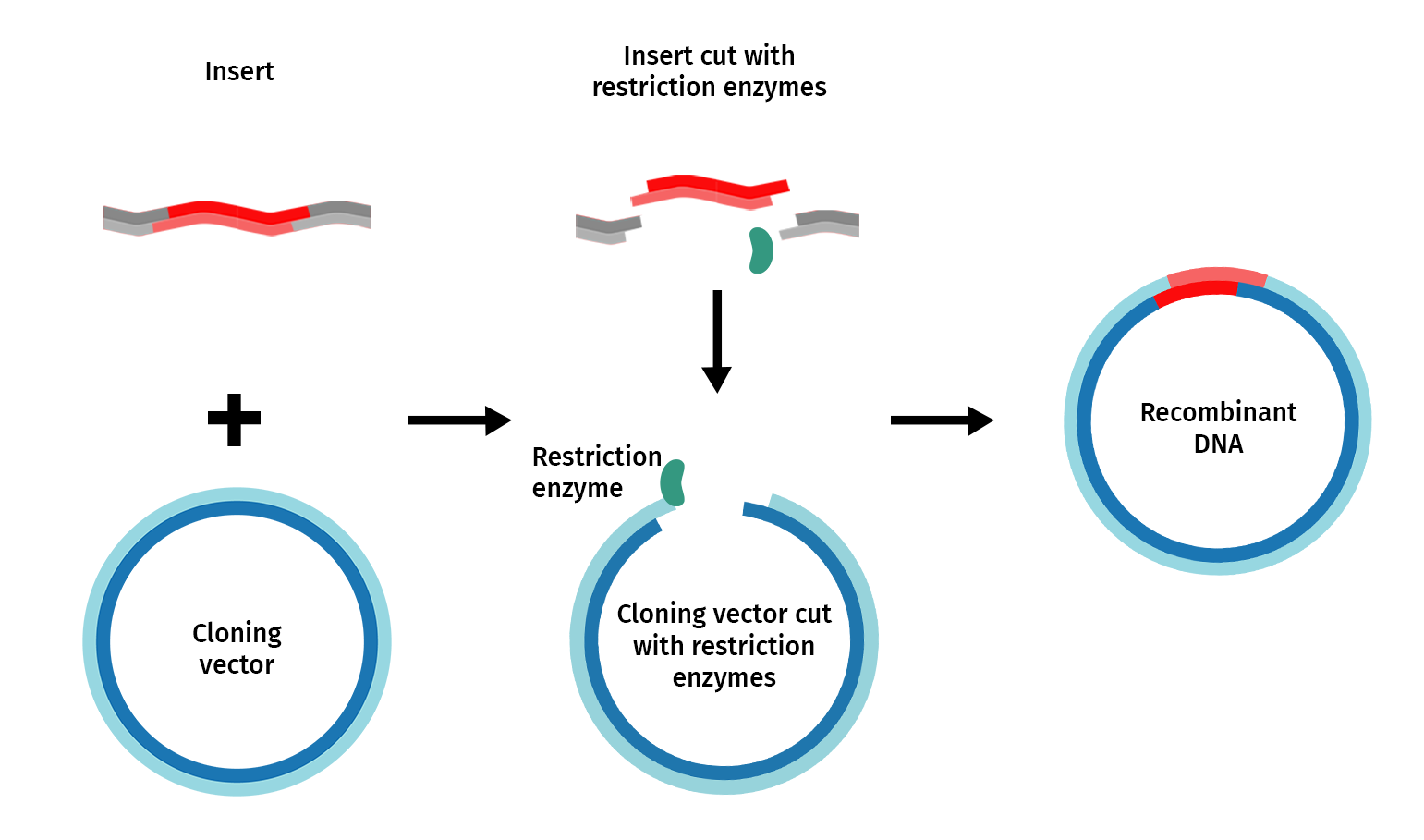
What is the function of DNA ligase in recombinant DNA technology?
It seals the sugar-phosphate backbone by forming phosphodiester bonds between DNA fragments of the insert DNA and plasmid DNA
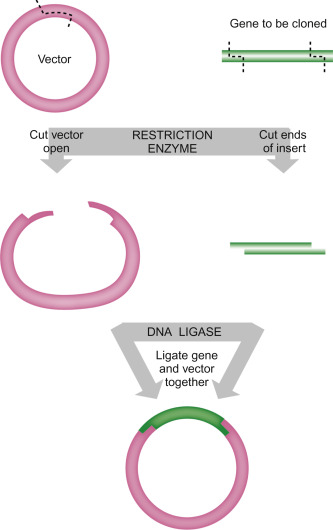
What is recombinant DNA?
A DNA molecule containing genetic material combined from different sources

What does it mean that recombinant plasmids can be autonomously replicated and propagated?
They can replicate independently of the bacterial chromosome and be copied as the host bacteria grow and reproduce.
Process of recombinant DNA technology:
• Plasmids can be cleaved by restriction enzymes, leaving
sticky ends
• Artificial plasmids can be constructed by linking new DNA
fragments to the sticky ends of plasmid
• These recombinant molecules can be autonomously
replicated, and hence propagated
