✔️✔️Dentistry L8/9: Oral Pathology I/II🟢
 Call Kai
 Learn
 Practice Test
 Spaced Repetition
 Match
 Flashcards
 Knowt Play
1/135

There's no tags or description
Looks like no tags are added yet.
136 Terms
Dentistry L8: Oral Pathology I
Dentistry L8: Oral Pathology I

Alveolar mucositis
This is inflammation of the alveolar
mucosa
Sublingual mucositis
This is inflammation of mucosa on the floor of the mouth
Labial/buccal mucositis
This is inflammation of the lip or cheek mucosa
Caudal mucositis
KNOW THIS
This is inflammation of mucosa of the caudal oral cavity, bordered medially by the palatoglossal folds and fauces, dorsally by the hard and soft plate, and rostrally by alveolar and buccal mucosa
Feline stomatitis
KNOW THIS
This is a condition in the cat characterized by inflammation of the oral mucosa, often affecting the area immediately lateral to the palatoglossal folds with or without inflammation of other oral mucosa. It commonly presents during the chronic stage, with or without inflammation extending into mucosa of the oropharynx.
Contact mucositis, contact mucosal ulceration, kissing ulcers, contact ulcers
KNOW THIS
These are lesions in susceptible individuals that are secondary to mucosal contact with a tooth surface bearing the responsible irritant, allergen, or antigen
Palatitis
This is inflammation of the mucosa covering the hard and or soft palate
Glossitis
This is inflammation of mucosa of the dorsal and or ventral tongue surface
Chelitis
This is inflammation of the lip
Tonsilitis
This is inflammation of the palatine tonsil
Pharyngitis
This is inflammation of the pharynx
Glossitis
What is this?

Caudal mucositis
What is this?

Stomatitis
What is this?

Palatitis
What is this?

Incisive papilla = NORMAL
KNOW THIS
Elevation of mucosa at the rostral end of the median line of junction of the halves of the palate, concealing the orifices of the incisive ducts
What is this known as?

Palatine rugae
KNOW THIS
What is the name of the transverse ridges of mucosa on the hard palate?

1. feline chronic gingivostomatitis (FCGS)/feline chronic stomatitis
2. juvenile periodontitis (cats)
3. Canine chronic ulcerative stomatitis (CCUS, previously CUPS)
Name 3 localized oral inflammatory diseases seen in cats and dogs
feline chronic gingivostomatitis (FCGS)
What is being described below?
-Widespread oral inflammation that is beyond gingivitis and periodontal disease and may extend into submucosal tissues
-Thought to be multifactorial
-Increasing age is a risk factor
-CATS
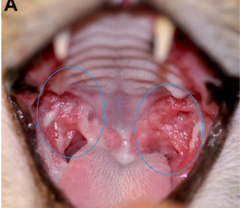
widespread oral inflammation that is beyond gingivitis & periodontal disease and may extend into submucosal tissues
KNOW THIS
What is stomatitis?
inflammation of the caudal oral mucosa lateral to the palatoglossal folds
KNOW THIS
What is caudal stomatitis?
calicivirus
Feline chronic gingivostomatitis (FCGS) is likely associated with _____
-Dysphagia & pain
-Extensive oral inflammation and ulceration of the soft tissues
-Sublingual mucositis and contact mucositis can be present
-Severe, proliferative inflammation of the caudal oral mucosa
-Vocalization when opening the mouth
-Hypersalivation
-Halitosis
What are the symptoms/exam findings associated with feline chronic gingivostomatitis (FCGS)?

palatoglossal arches (fauces)
What region is most commonly affected by feline chronic gingivostomatitis (FCGS)?
feline chronic gingivostomatitis (FCGS)
If you open this cats mouth and it screams, what is the likely cause?

Surgical management including full- or partial-mouth dental extractions
Refer!
What is the standard of care treatment for feline chronic gingivostomatitis (FCGS)?
false!
T/F - Medical management is enough for feline chronic gingivostomatitis (FCGS)
up to 6 months
How long can it take for feline chronic gingivostomatitis (FCGS) lesions to fully resolve post surgery?
good alternative to glucocorticoids especially for heart and kidney problem cats BUT it requires serial bloodwork and will be expensive
Cyclosporin can be used for medical management of cats with feline chronic gingivostomatitis (FCGS).
What do you need to keep in mind with using this drug?
glucocorticoids
Mainstay of therapy for refractory cases of feline chronic gingivostomatitis (FCGS)?
Gingivitis and alveolar/labial/buccal ulcerative mucositis
Describe what you're looking at here
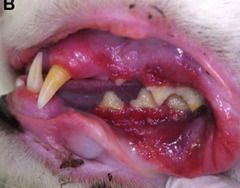
Cat with juvenile periodontitis
Describe what you're looking at here

Cats (
Juvenile periodontitis is more common in [cats/dogs]
Juvenile periodontitis has NO caudal mucositis & is NOT PAINFUL
KNOW THIS
How is juvenile periodontitis different from stomatitis?
COHAT with extractions
How do you treat juvenile periodontitis?
Canine Chronic Ulcerative Stomatitis (CCUS, old: CUPS)
KNOW THIS
This is a severe canine inflammatory condition affecting the gingiva and mucosa of the oral cavity. Localized vestibular ulcers (kissing lesions) may be present.

chronic mucocutaneous disorder of stratified squamous epithelium of uncertain etiology that affects oral & genital mucous membranes, skin, nails, & scalp
What is oral lichen planus (OLP)?
Canine Chronic Ulcerative Stomatitis (CCUS, old: CUPS)
This dog comes in, depressed, anorexic, inability to fully open the mouth. There is restricted yawning as a result, drooling, and is head shy. You find this.
What's the likely diagnosis?

Localized vestibular ulcers (kissing lesions)
What are the arrows pointing to?

-Medical: often unrewarding alone - homecare, immunomodulatory therapy and multimodal pain control
-Surgical: COHAT, OraVet, cleanings every 6 mo.
-Can do extraction of all teeth if you choose to go aggressive route (note: dogs often do not do well with full mouth extractions)
What are the medical and surgical managements for Canine Chronic Ulcerative Stomatitis?
Autoimmune disease conditions which have oral manifestation (ulceroproliferative)
Erythema multiforme, lupus erythematosus, pemphigus vulgaris, eosinophilic granuloma complex in cats, eosinophilic stomatitis in dogs, and wegner's granulomatosis are all examples of what?
Erythema multiforme (remember this caues intraoral AND extraoral problems including pinna, ulcerative stomatitis, and glossitis)
What is this?

erythema multiforme
This is a vesiculobulbous or ulcerative skin disease that has oral involvement but it is UNCOMMON.
Affects intraoral AND extraoral sites like the ventrum of the trunk, mucocutaneous junctions, footpads, pinna, ulcerative stomatitis and glossitis.

Lupus erythematosus (this is most likely DLE)
What is this?

lupus erythematosus
This autoimmune disease is characterized by autoantibodies against various cellular antigens affecting the epithelial cells of the skin and the mucosa

DLE (discoid lupus erythematosus) & SLE (systemic lupus erythematosus)
There are two forms of lupus erythematosus.
What are they?
-DLE: lichenified (thickened, leathery skin due to scratching), crusted, depigmented lesions typically on nasal planum, perioral, periocular and pinna lesions
-SLE: acute lesions on mucosa, skin, and *ORGANS*
What is the difference between DLE (discoid) and SLE (systemic)?
Pemphigus vulgaris
What is this?

Pemphigus vulgaris
This autoimmune disease is rare, caused by autoantibodies directed against desmoglein 3 (goal is to link skin cells)

1. keratinized oral epithelium affected (hard palate, gingiva, dorsal tongue)
2. 90% of patients have oral lesions = mucocutaneous junction
3. fragile vesicles, patchy areas of ucleration
What are some features of pemphigus vulgaris?
oral
Which lesions occur 1st in pemphigus vulgaris - oral or skin?
Eosinophilic granuloma complex
What is being described below?
-unilateral and bilateral indolent ulcers = aka rodent ulcers
-lesions on the upper lip that result from an allergic reaction
-linear, well circumscribed, raised, yellow-pink lesions
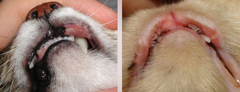
lip margin & palate
What are the 2 lesions we see most commonly affected by eosinophilic granuloma complex?
Eosinophilic granuloma complex
This 3 year old female cat presented to your clinic with dysphagia and ptyalism (hypersalivation). Owner states they have recently started a new diet. This is what you see.
What is this?

-CATS: Oral mucosa, lip, tongue, palate; may also be seen on skin, paws, cheek, lip commissure, chin, pinna
-DOGS: commonly seen palate lesions
Where does eosinophilic granuloma complex occur in cats? How is this different from dogs?
Insect bites, food allergy, atopy, immunosuppresion
Name some things that trigger the eosinophilic granuloma complex in cats
Female, 2-6 years old
Describe the classic signalment of eosinophilic granuloma complex cats
Eosinophilic stomatitis in dogs
What is this?

Palatal; less commonly tongue, lips, or mucosa
Where do eosinophilic stomatitis lesions tend to be in dogs?
Palatal (often no clinical signs)
Overall, dogs are more likely to get [palatal/tongue] lesions with eosinophilic stomatitis (with the exception of the siberian huskey)
1. siberian huskies: oral eosinophilic granulomas on tongue, sometimes palate
2. cavalier king charles: eosinophilic stomatitis, mucosal ulceration, plaque and granulomatous lesions
What are the two presentations of eosinophilic stomatitis in the *two most represented breeds?*
Young: 1-7 years of age
What is the common age of dogs affected by eosinophilic stomatitis?
Guarded (because of variability in response to treatment)
What is the prognosis like for eosinophilic stomatitis?
Wegner's granulomatosis
What is this?

Wegner's Granulomatosis
What is being described below?
-SUPER RARE
-uncommon canine inflammatory disorder affects the gingiva, oral mucosa and underlying alveolar bone
-lesions can be multifocal, bruised, erythematous, expansile, and febrile
-can see bone loss radiographically
-key to diagnosing is presence of granulomatous inflammation that is not secondary to fungal or infectious disease
-DOGS
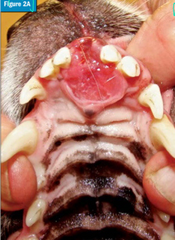
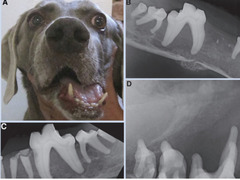
Hyperparathyroidism
KNOW THIS
What is being described below?
-Rubber jaw, renal osteodystrophy, fibrous osteodystrophy, osteodystrophia fibrosa
-Secondary vs nutritional
-Low phosphorus or low calcium to phosphorus ratio -> take nutrients from bone
-Teeth are healthy, but there is no normal bone around it = pathognomonic
Congenital hypothyroidism
What is being described below?
-RARE
-teeth hidden under lots of gum tissue
-clinical features of dwarfism
-obstipation & megacolon have been primary presenting complaints
-supplement with levothyroxine
-gingivectomy to allow for normal dental eruption
-CATS

Uremic ulcers
What is being described below?
-Caused by chronic renal disease
-Dogs AND cats
-Multifocal oral ulceration
-Fibrinoid necrosis of arterioles within the oral mucosae
-Lesions typically occur along the ventral aspect of the tongue and buccal mucosa
-Lesions are characterized as a foul-smelling film coating the ulcerated surface (necrotic tissue)
-Uremic odor may be detectable from the mouth
-feline chronic gingivostomatitis (FCGS)
-severe gingivitis, moderate calculus, caudal mucositis
-Treatment of choice = extract all remaining teeth
4 yo. female spayed domestic short hair presented oral pain and inflammation. FIV/FeLV neg. Owner observed pain when eating. No weight loss at time of presentation. Slower eating but not anorexic. Describe what you're seeing, what the problem is, and what to do.

cats
Who does better with extractions - dogs or cats?
Dentistry L9: Oral Pathology II
Dentistry L9: Oral Pathology II

Odontogenic
This is the term to describe developing or forming from tissue that allows the formation of teeth
"Relating to or originating from"
Carcinoma
This is a tumor that arises from the epithelium
Sarcoma
This is a tumor that arises from non epithelial tissue
procedure of surgical oncology aiming to remove a tumoral mass in its entirety, completely surrounded by a continuous layer of healthy tissue
What is en bloc?
palliative
_____ treatments aim to shrink cancer, slow down its growth or control symptoms, not cure
definitive
Therapy aimed to minimize the long-term adverse effects of therapy and to enhance the long- term control of the cancer
Benign odontogenic tumors (see all the "omas")
KNOW THIS
Peripheral odontogenic fibroma, canine acanthomatous ameloblastoma, odontoma, amyloid producing odontogenic tumor, feline inductive odontogenic tumor, and feline epulides are all examples of what types of tumors?
-not very aggressive
-can provide significant LOCAL destruction
-originate from tooth tissue
What are the characteristics of benign odontogenic tumors?
Benign non-odontogenic tumors
KNOW THIS
Papilloma, osteoma, plasma cell tumors, and giant cell tumors are all examples of what types of tumors?
Malignant non-ondotogenic tumors
KNOW THIS
Squamous cell carcinoma (like papillary SCC), oral malignant melanoma, fibrosarcoma (high-low), and osteosarcoma are all examples of what types of tumors?
high clinical aggressiveness but low mitotic index on histopath
What does it mean if a fibrosarcoma is high-low?
Anesthesia & radiographs
What is the standard of care for a COHAT?
Peripheral odontogenic fibroma
What is being described below?
-2nd most common odontogenic tumor!
-Slow growing, benign, firm, sessile to pedunculated, non-ulcerated lesion, usually associated with free gingiva of tooth
-Not invasive & benign

1. fibromatous = only soft tissue
2. ossifying = bone involvement
What are the 2 variants of peripheral odontongenic fibroma?
1. canine acanthomatous ameloblastoma (this one is NOT seen in cats)
2. peripheral odontogenic fibroma
What are the top 2 most common odontogenic tumors in dogs?
-Peripheral Odontogenic Fibroma of rostral mandible
-rads = mineralization within soft tissue
-TREATMENT: en bloc resection of tumor & teeth involved; extraction
What is this? How do you treat?

Canine acanthomatous ameloblastoma = teeth pushed out from space occupying mass and there is pitting
What is this?

Canine acanthomatous ameloblastoma
What is being described below?
-Most common OT in DOGS
-Benign odontogenic tumor in dogs appears as an extraosseous swelling with or without tooth displacement and bone invasion
-Commonly appears in *ROSTRAL MANDIBLE* in golden retrievers, akitas, cockers, and shelties

rostral mandible
What area is commonly affected by canine acanthomatous ameloblastoma?
-Canine acanthomatous ameloblastoma
-TREATMENT: wide excision within 1 cm margins
What is this? How do you treat it?

canine acanthomatous ameloblastoma
Which odontogenic tumor shows sheets of mature cells that are clearly squamous epithelium bonded by palisading cells on histology?
Odontoma
KNOW THIS
What is being described below?
-Benign, inductive tumor
-Seen in young animals, and is often non painful, expansile.
- TWO TYPES: complex (disorderly dental tissue) & compound (contains tooth like structures and denticles)
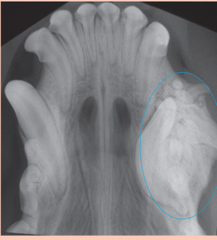
-Odontoma "denticle" = compound odontoma
-TREATMENT: marginal excision or intracapsular excision
What is this? How do you treat?

-Amyloid producing odontogenic tumor
-TREATMENT: surgical resection within 1 cm (basically are going to amputate just behind 305 and remove everything rostrally)
An older animal comes in presenting with gingival enlargement and a slow growing expansive mass.
What is this? How do you treat?

Feline inductive odontogenic tumor
What is being described below?
-Young CATS (8-18mo)
-"Inductive"
-Raised, submucosal, rapidly expansive, locally destructive, soft tissue mass
-Usually unilateral on rostral MX
-May be locally invasive, but does not metastasize
-TREATMENT: wide excision is curative

Feline Epulides
What is being described below?
-Variety of gingival masses in the cat
-Presence of a combination of fibromatous, ossifying, and acanthomatous features within the same lesion
-Surgical management is recommended
-High recurrence rate with conservative resection
-No bone involvement

Pyogenic granuloma
What is caused by contact with the maxillary 4th premolar to tissue (mandibular first molar in dogs)?

Normal jaw alignment, but one or more individual teeth are malpositioned
KNOW THIS
What is Class 1 malocclusion (MAL1)?