4.1 Water and its Properties
 Call Kai
 Learn
 Practice Test
 Spaced Repetition
 Match
 Flashcards
 Knowt Play
1/64

There's no tags or description
Looks like no tags are added yet.
65 Terms
Freshwater is essential for who?
For all forms of life
Is the amount of clean, fresh water on Earth unlimited?
No
How many people each day die from drinking or using unsafe water? What causes the deaths?
Up to 30 000
Biological contaminants from poor sanitation
Water makes up _____ of Earth’s surface
70%
_____ of Earth’s water is concentrated in the oceans. The remaining percentage is what?
97.5%
Fresh water
What makes something “freshwater”?
Water in which the dissolved mineral content is less than 1000mg/L
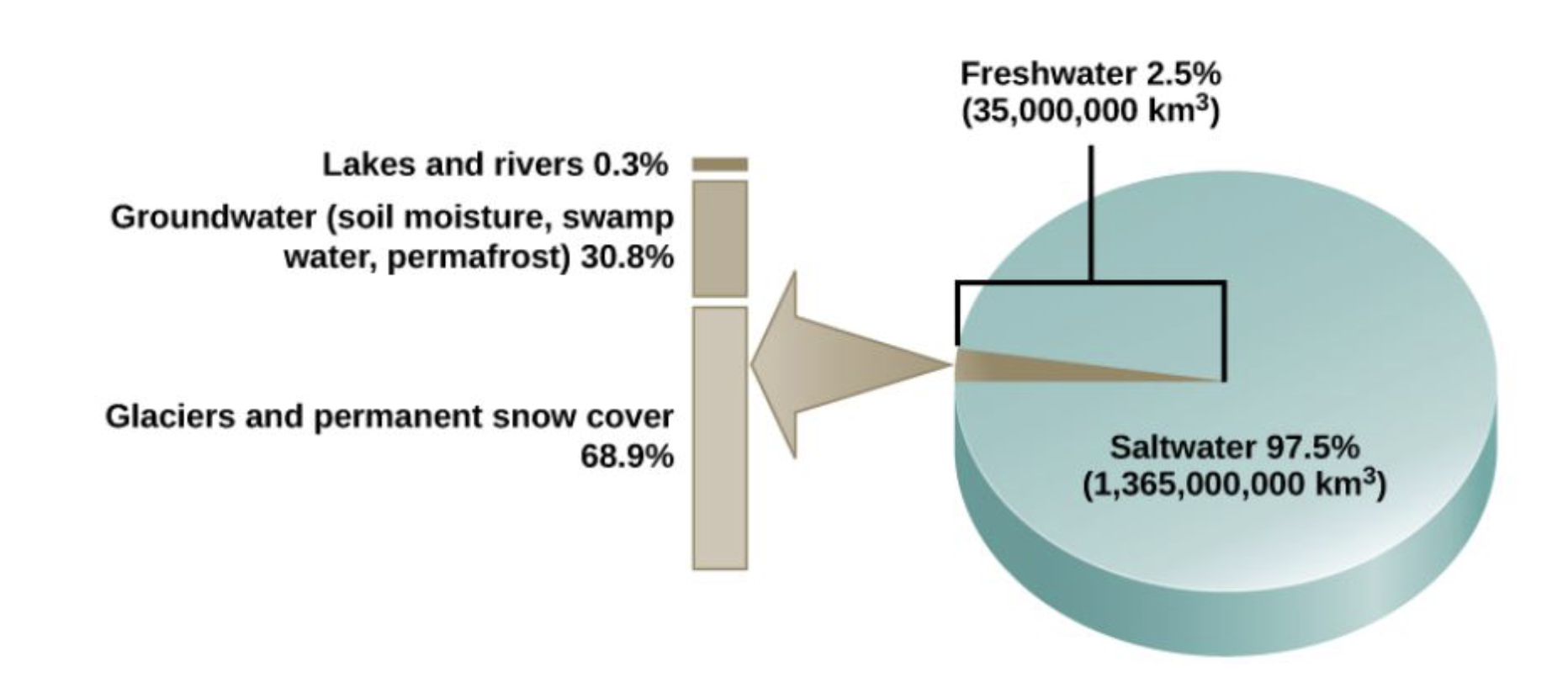
Is most of Earth’s freshwater accessible?
No
Do all water molecules have the same shape and chemical composition?
Yes
What is the chemical composition of a water molecule?
2 Hydrogen atoms linked to 1 central Oxygen atom

Briefly describe the water cycle
Powered by energy from the sun
Solar energy causes surface water to evaporate
Water vapour rises from the Earth’s surface, leaving behind contaminants
Nature’s way of purifying

Is air hotter or cooler as altitude increases?
Cooler
Describe how water vapour become rain or snow
Water vapour rises and cools
Condense into droplets of liquid water
More water molecules get added, droplets become heavier
When they become too heavy they fall as rain or snow
How do droplets become rain or snow?
The type of precipitation depends on the temperature of the air through which the droplets fall and return to the Earth’s surface
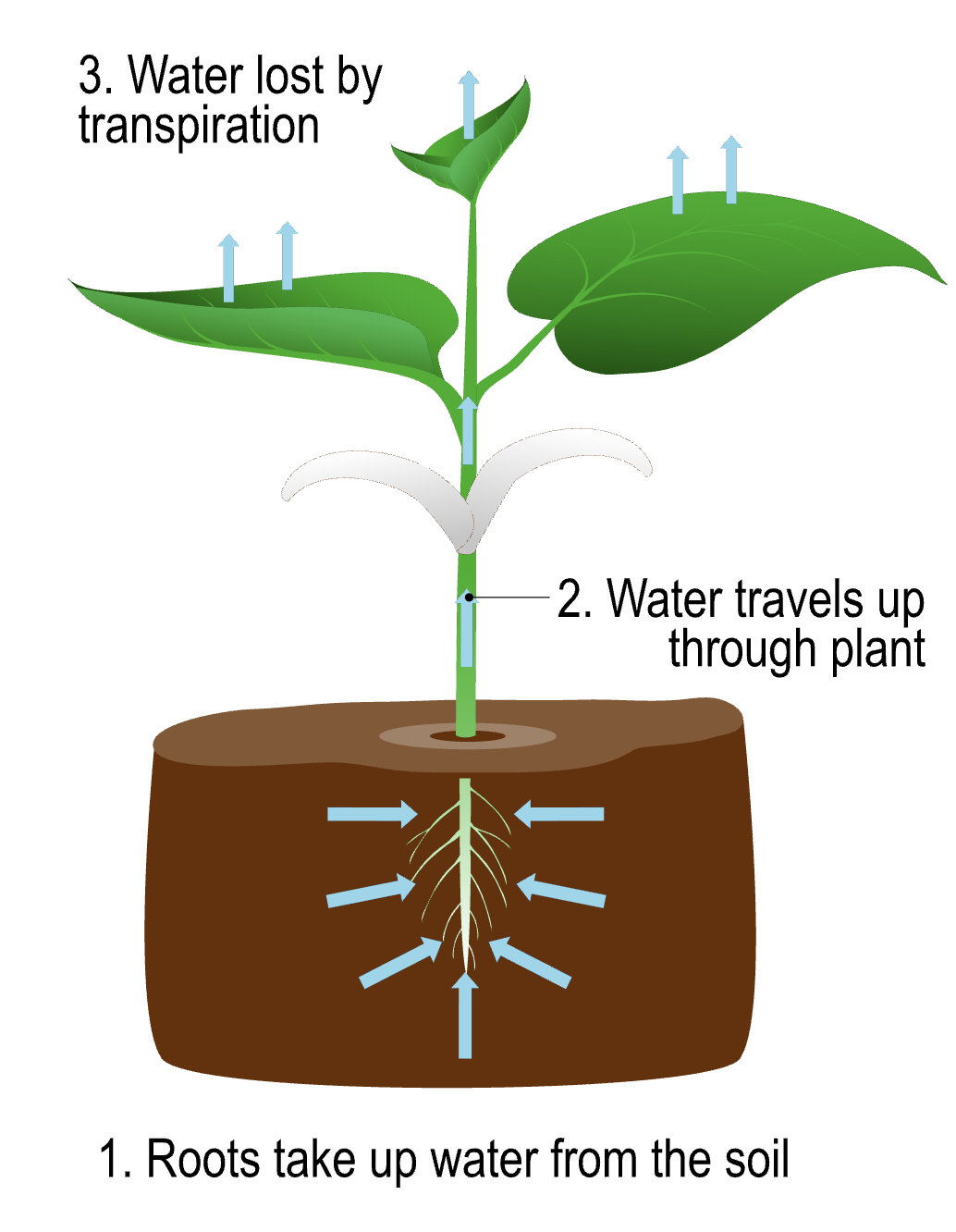
A great deal of evaporation occurs where? What is this process called?
From the leaves of plants
Transpiration
Define aquifer
Massive underground water deposits that can supply many people and farms with water
True or false: the total supply of water on Earth has been the same for billions of years
True
True or false: vegetation has the capacity to purify water
True
Why is it important to carefully monitor and control the amount of water removed from the ground?
To keep the aquifer sustainable
Rate at which water is removed cannot exceed the rate at which the aquifer is replenished
Otherwise, water will no longer be available for future users
Why is it necessary to restrict the use of fertilizers and pesticides in areas of aquifers/groundwater?
Unused fertilizers and pesticides seep deep into ground where they can contaminate aquifers
The healthy functioning of each _____ in your body depends on what?
Cell
A delicate balance of water and the dissolved components it contains
What special “in an out” function does water supply?
Medium that carries nutrients and waste in and out of your cells and throughout your body
Define physical property
Properties that can be observed without a chemical change
NO formation of a new substance
Define chemical property
What a substance does as it changes into a new substance
Give 2 common examples of both physical and chemical properties
Physical: boiling point and solubility
Chemical: combustibility and reactivity
Is the boiling point of water high or low?
High at 100oC

Besides boiling point, what other unusual high thing is there about water? What does this mean for water?
Has a high specific heat capacity
Which is the amount of energy required to raise the temperature of 1g of a substance by 1oC
Means it takes a lot of energy to warm it up and it takes a long time to cool
Describe water temperature beside a large body of water like a lake
Takes a long time to warm up in the summer while the ground warms quickly
Hottest day? Lake is nice and cool. Wind blowing off the water cools the land nearby
Opposite is true when lake still holds warmth from the summer and wind warms nearby land
What can you take from this large body of water example?
Reason why Regina (no water) is much colder and hotter than Toronto (Lake Ontario) even though they’re nearly at the same latitude
The unusual properties of water can be explained by looking at what?
By examining the structure and shape of its molecules
Is a water molecule polar?
Yes
What type of bonds and why make up a water molecule
Polar covalent
Polar because Oxygen pulls the electrons (-)
Covalent because Hydrogen and Oxygen are non-metals
A polar covalent bond results from what?
The unequal sharing of a bonding pair of electrons
Oxygen is more electronegative so the electrons are pulled towards oxygen
Creates a negative environment around the Oxygen atom and a positive environment around the Hydrogen atoms

If water stays warm for long or cold for long, what does this mean about bonds between molecules?
Indicates strong forces of attraction between its molecules
Explain why water molecules have a strong bond to each other
Because of water’s polarity
The strong polar bonds within each molecule mean oxygen (-) from one molecule if attraction to Hydrogen (+) on another molecule
This attraction, of Oxygen (-) and Hydrogen (+) from difference molecules attracting each other, is called what?
Hydrogen bonds

Are hydrogen bonds strong or weak?
Weak
Is a water molecule symmetrical or asymmetrical? Polar or non-polar?
Asymmetrical (molecules are bent)
Polar
Which intermolecular force accounts for the relatively high boiling point of water?
Hydrogen bonding
What three main things about water is hydrogen bonding responsible for?
High boiling point
High surface tension
Liquid state at room temperature
If you were to heat up water and glass, which would experience the larger temperature increase? Why?
Glass
Water’s high specific heat capacity means it takes a lot of energy to warm it up
The characteristics of a water sample depend on what?
What’s dissolved in the sample
Very small concentrations of solutes in water are often expressed as what?
Parts per million
ppm

What does 18.0 of Calcium mean?
18 Calcium ions for every million particles in the sample
Pure water contains what?
Only H2O molecules
How is pure water produced?
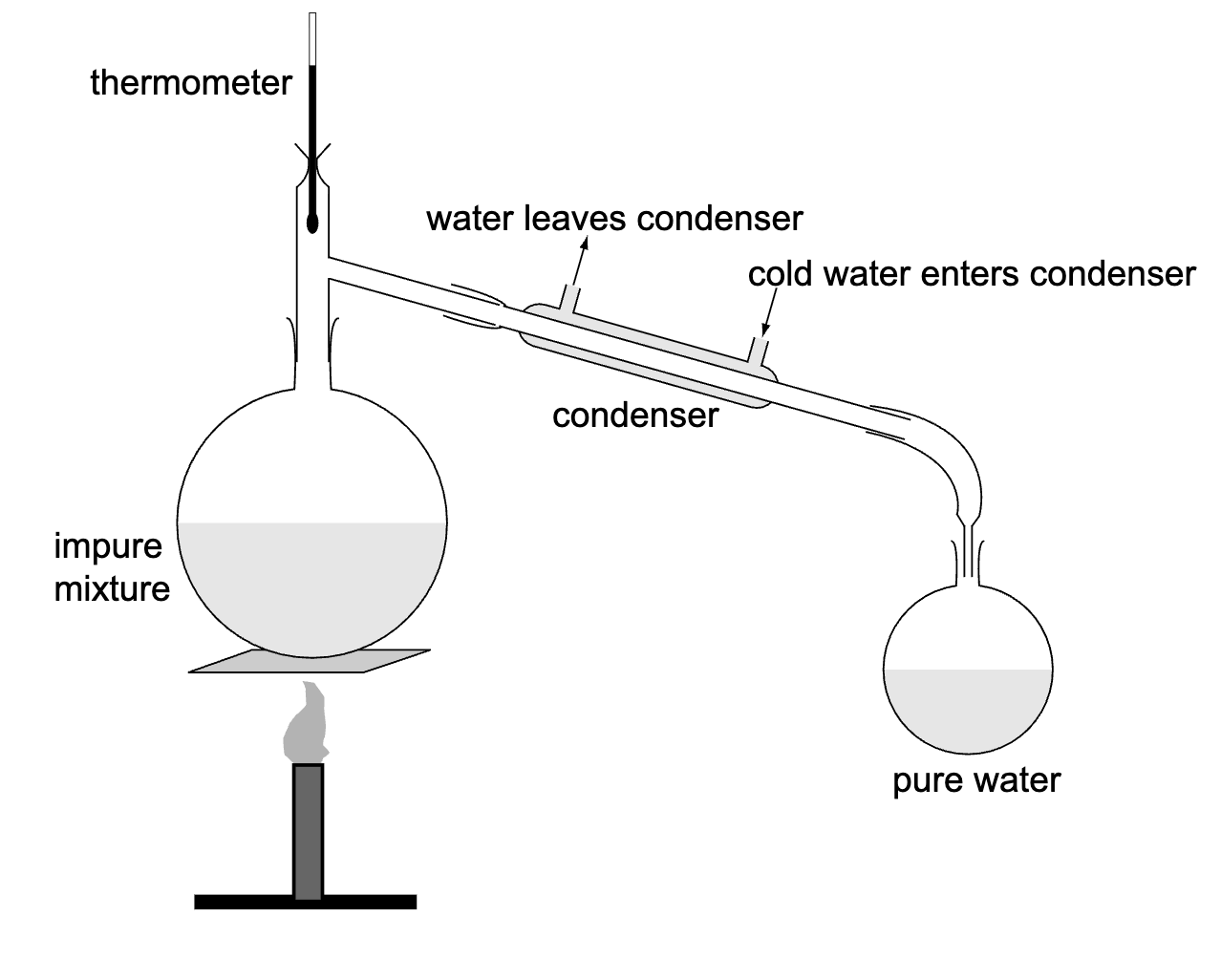
Through distillation
Describe the process of distillation
Liquid water is converted into steam
Passes through a condenser
A continuous stream of water cool the steam and causes it to condense into liquid water
What does a dehumidifier do?
Moist air is pulled into the device by a fan
Air passes through a cold coil where it condenses into liquid water
Definition of water quality depends on what?
The intended use of the water
What criteria must water meet for drinking?
Appropriate taste, clarity, odour, safe concentration levels of solutes/pathogens
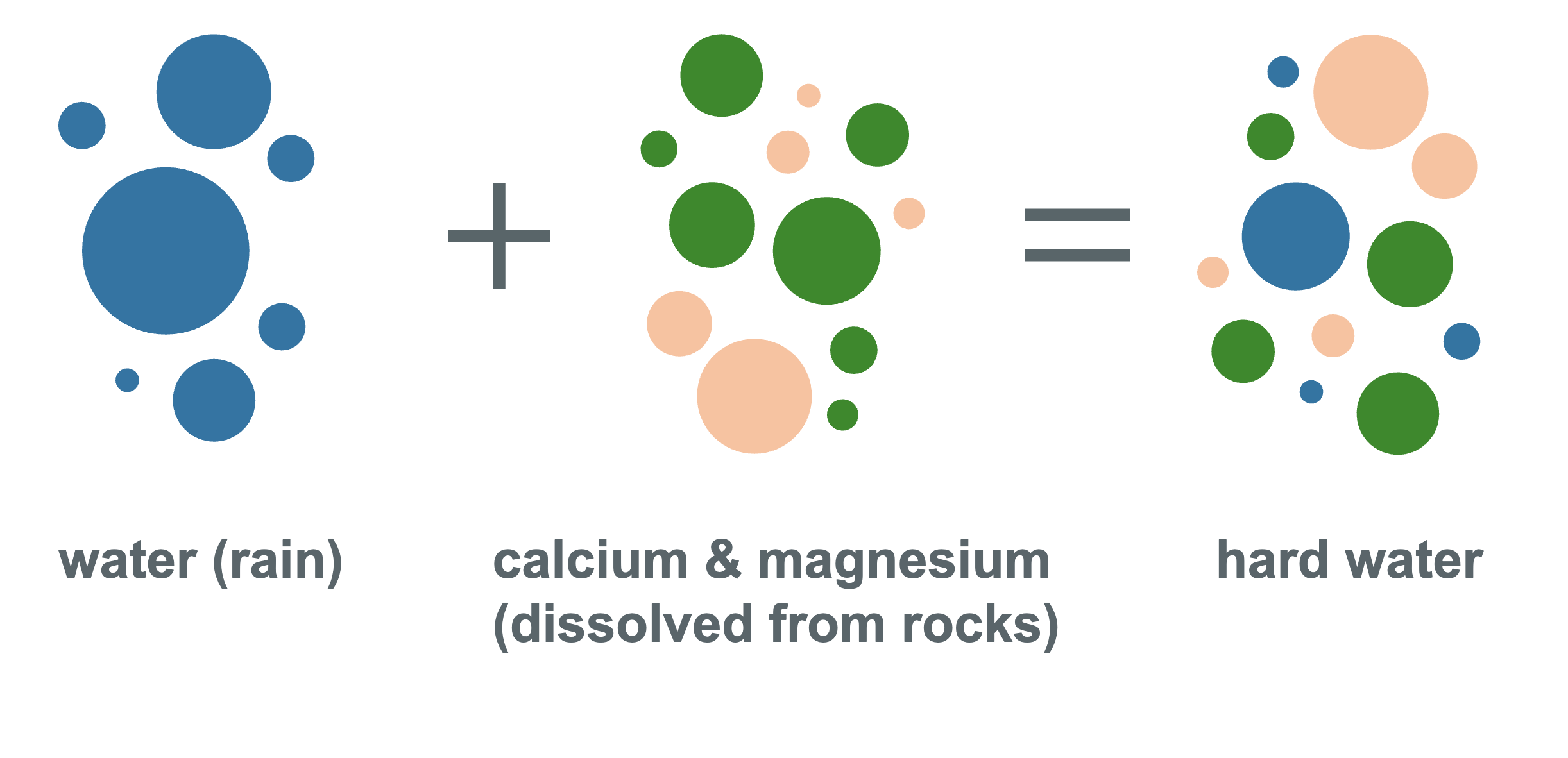
Define hard water
Water with an unusually high content of minerals like calcium and magnesium
Define soft water
Water with no/low content of minerals

What is used to “soften” water?
Ion exchanger
Describe an ion exchanger
Resin canister with Sodium ions at the surface
As hard water passes through the resin, Mg and Ca ions adhere to the surface and are replaced by Na ions.

If water contains sodium is it soft or hard?
Soft water