BIO EXAM
 Call Kai
 Learn
 Practice Test
 Spaced Repetition
 Match
 Flashcards
 Knowt Play
1/240

Earn XP
Description and Tags
EVERYTHING YOU NEED TO KNOW!
241 Terms
What are the smaller units that make up DNA? What do they consist of?
DNA nucleotides - deoxyribose sugar (pentose 5-carbon), phosphate group - sugar-phosphate backbone (Linked by covalent bonds - phosphodiester), and nbase (linked to sugar by N-glycosidic bond)
What is complementary base pairing? Why is this important?
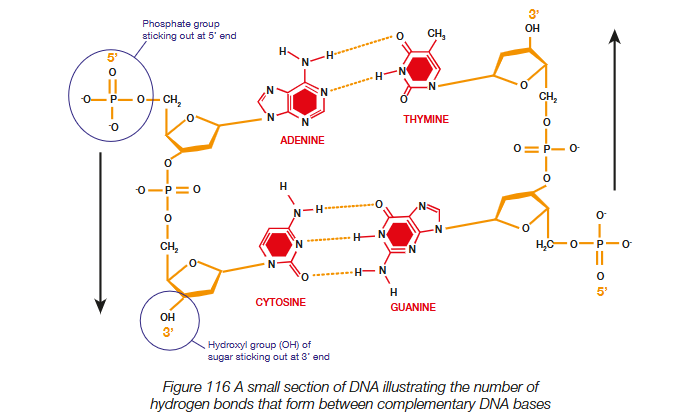
A=T - 2 weak hydrogen bonds
C≡G - 3 weak hydrogen bonds
Nitrogenous bases link the 2 complementary strands tgt via weak hydrogen bonds
Why?
Easy to break and reform so that bases can be exposed to allow semi-conservative DNA replication to occur - ensures accurate replication - facilitates protein synthesis (transcription + translation) - DNA repair
What is the structure of a DNA molecule?
Double helix - 2 complementary strands - read in opposite directions (i.e. top to bottom or bottom to top) (ALWAYS 5’ to 3')
What are chromatin, chromosomes, and chromatids?
Chromatin:
loosely packed and decondensed DNA during interphase - allows for bases to be read - protein synthesis (wound around histone proteins)
Chromosomes:
tightly packed and hihgly condensed DNA (wound around histone proteins)
Chromatid:
One-half of a replicated chromosome - 2 sister chromatids joined at centromere form chromosome
What is the fundamental reason that biotechnology exists?
DNA is universal
Complementary base pairing as well
What is cytosol vs. cytoplasm?
Cytosol - liquid part of cytoplasm
Cytoplasm - consists of everything within the cell membrane inc. organelles
What is the full name of DNA and RNA?
Deoxyribonucleic acid
Ribonucleic acid
What is the karyotype of a human?
46 chromosomes total
1 pair of sex chromosomes XX - female XY - male
22 autosomal (non-sex chromosomes)
What are telomeres? Function?
Ends of the chromosome
Protects the tip of the chromosome from breakdown + stops chromosomes from binding to one another
Why does DNA condense into chromosomes?
To protect DNA from damage during cell division as a result of tangling leading to breakages
Compare the DNA of eukaryotic cells, prokaryotic cells, and mitochrondria/chloroplasts.
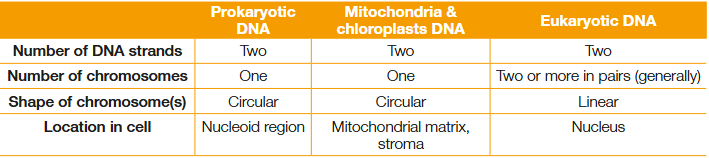
mtDNA
cpDNA
BOTH ARE NOT BOUND TO HISTONE PROTEINS
What direction is DNA written?
Beginning - 5’ (PO43- sticking out) to end - 3’ (sugar molecule with {OH} hydroxyl group sticking out)
What property allows DNA molecules to be separated?
Charged - negative - phosphate group (PO43-)
What is a gene?
a unique sequence of nucleotides that codes for a polypeptide chain, functional protein or an RNA molecule.
What direction do the enzymes read the DNA strand? Build?
3’ to 5’
5’ to 3’ - antiparallel
Why is semi-conservative DNA replication?
1 parent double-stranded DNA molecule/2 daughter DNA molecules made up of:
1 complementary newly synthesised strand - one original strand (conserved from parent DNA molecule)
Why is the # of times DNA replication can occur limited?
Everytime DNA is replicated - telomeres shorten - after a certain number of DNA replications the telomeres are too short for further replication
Describe why chromosomes are not visible in cells that are not dividing.
CHROMATIN CANNOT BE SEEN UNDER A LIGHT MICROSCOPE
Which # number carbon of the deoxyribose sugar is bonded to the phosphate group of the same nucleotide?
5’
3’ - bonded to next nucleotide’s phosphate group
What are 2 differences between DNA in nucleus and DNA in chloroplasts/mitochondria?
Multiple linear vs. single, circular
Bound to histone proteins vs. not associated with histone proteins
What features of DNA essential to DNA replication?
Weak h-bonds between complementary base pairs - can be broken to separate the strands and expose nitrogenous bases
Double-stranded - both strands can act as templates for synthesis
Complementary base pairing - accurate replication
Define a genome vs. proteome?
Total number of genes of an organism
Complete set of all the proteins made by an organism
What does RNA consist of?
Ribonucleic acid - also made up of nucleotides but diff composition
Ribose (5-carbon pentose sugar)
Phostphate group
Nitrogenous base (A, U- uracil instead of thymine, C, G)
What are key differences between RNA and DNA?
Ribose vs. deoxyribose sugar (hydroxyl at 2’ vs. H at 2’ carbon)
Uracil instead of thymine for nitrogenous bases
Single-stranded vs. double-stranded
What are the base pairing rules for RNA?
TEMPORARILY BONDS TO COMPLEMENTARY BASE ON THE TEMPLATE STRAND OF THE DNA MOLECULE
RNA IS SINGLE STRANDED
A=U - 2 weak hydrogen bonds
C≡G - 3 weak hydrogen bonds
What are the 4 major types of RNA and their roles?
mRNA - messenger RNA - Carries the genetic code transcribed from a gene (DNA) in the nucleus to the ribosomes in the cytoplasm to serve as a template for protein synthesis.
tRNA - transfer RNA - contains anticodon - 3 bases complementary to a specific mRNA codon - transports specific amino acids from the cytoplasm to the ribosome during translation.
rRNA - ribosomal RNA - Combines with proteins to form ribosomes, serving as the site of translation - ribozyme catalyses peptide bonds for amino acid chain
miRNA - microRNA - Regulates gene expression after transcription - bind to section of mRNA - preventing it from being translated
DEACTIVATES MATURE MRNA - if needed/body doesnt need more of that protein
NON-CODING RNA MOLECULE
What kind of cells have introns/exons? Define?
PRO & EU - Exons - coding sequences of DNA - highly conserved
EU - Introns - non-coding sections - less highly conserved - can be transcribed into RNA molecules (such as miRNA, rRNA, and tRNA so it aint useless)
What bond links amino acids?
Peptide bonds
What are the main enzymes involved in DNA replication and function?
Helicase: [UNZIPPER]
•Unwinds the DNA double helix molecule.
•Separates the 2 strands by breaking the hydrogen bonds between the complementary bases.
DNA Polymerase: [BUILDER]
•DNA polymerase attaches new nucleotides to form new strands using the pre-existing strands as a template
Primase: [INITIALIZER]
•Makes the primer so DNA polymerase knows where to start
DNA Ligase: [GLUER]
•DNA ligase is a DNA-joining enzyme. If two pieces of DNA have matching ends, ligase can link them to form a single, unbroken molecule of DNA.
Describe the role of h-bonding in the interactions between DNA, mRNA, and tRNA?
Binds mRNA to DNA template strand during transcription
Binds mRNA codons to tRNA anticodons during translation
Why is the genetic code degenerate?
One amino acid can be coded for by multiple mRNA codons/other types like DNA sequences
Why does translation occur immediantly after transcription in bacterial cells but not in eukaryotic cells?
Bacteria - both processes occur in cytoplasm
Eukaryotic - transcription occurs in the nucleus - translation cytoplasm
What is the primary/secondary/tertiary/quarternary structure of proteins?
number, sequence and type of amino acids in the polypeptide chain - peptide bonded amino acids LETTERS
localised coiling (alpha (α) helix) or folding (beta (β) pleated sheet) of the polypeptide chain - h-bonding between amino acids WORDS
Specific 3D shape crucial for protein function - forces of attraction between amino acids e.g. h-bonding, ionic bonding, strong covalent disulfide bonds SENTENCES -determines active site of enzymes
2 or more polypeptide chains - e.g. globular proteins PARAGRAPH
What are antibodies? What shape are they?
Lymphocytes - white blood cells - produce antibodies (proteins) complementary to antigens (non-self) to deactivate/neutralise possible threats
Y-shaped
What are the types of hormones?
STEROIDS ARE NOT PROTEINS i.e. NOT ALL HORMONES ARE PROTEINS
Why are fibrous proteins insoluble in water?
Hydrophobic side chains on surface - do not form favourable interactions with water like h-bonding
What is the induced fit model?
Initial contact: The substrate approaches an active site that is only approximately complementary.
Induction: Binding triggers a slight conformational (3D shape) change in the enzyme.
Catalysis: The shape change puts strain or tension on the bonds within the substrate.
Lowering activation energy: By straining the bonds and properly orienting the reactants, the enzyme lowers the activation energy required for the reaction to proceed.
Release: Products are formed and leave the active site; the enzyme returns to its original shape and is reusable.

What is the enzyme-subtrate model
OLD!!!
Enzymes: Biological catalysts (mostly globular proteins) made of amino acid chains folded into a specific 3D tertiary structure.
Active Site: A small, specialized pocket or cleft on the enzyme surface where the substrate binds via weak, non-covalent interactions (e.g., hydrogen bonds, ionic bonds).
What factors affect rate of enzyme activity?
Temp
pH
CAN DENATURE - CAUSE CHANGE TO 3D SHAPE OF ENZYME - no longer complementary - subtrate cant bind
Conc. of substrate
Conc. of enzyme
Inhibitors (competitive - compete with substrates by binding to active sites, non-competitive - bind to allosteric site - induce conformation change, end-product inhibition - bind to allosteric site - hgih conc. of product)
ROR explanations

What do I need to remember about enzymes?
Not consumed in the reaction - on both sides of the equation
What are the 5 components of modern cell theory?
Cells are the units of structure and function in all organisms
New cells arise from pre-existing cells
Cells require and use energy
Cells contain genetic info (DNA) that is passed on to daughter cells
Organisms can be uni/multicellular
What are the oldest widely accepted fossils?
Cyanobacteria - which formed stromatolites - consist of layers produced as calcium carbonate precipitated over growing bacteria filaments
What is the primordial soup theory/Miller-Urey experiment?
The experiment used: water, methane, ammonia and hydrogen
The water was heated, and sparks were used to simulate lightning.
.The mixture was cooled to allow the water vapour to condense.
After just 1 week 15% of the carbon present was in the form of organic compounds.
13 of the 20 amino acids were detected.
A high concentration of the nucleotide base, adenine was found.
What are arguments against primordial soup theory?
Geochemists now believe the early Earth atmosphere did not contain the same proportions of gases used in the experiment.
Water breaks down protein chains into amino acids (or other constituents), making it very difficult to produce proteins (or other polymers) in the primordial soup.
The amount of energy required is greater that the likely energy generated by electrical storms.
What is the deep sea vent theory?
Geothermal vents warmed ocean water to temperatures conducive to life processes.
Released hydrogen-rich molecules and minerals that organisms could use to obtain energy
What is thought to be RNA’s role in the first cells?
RNA world hypothesis - FIRST SIMPLE CELLS MAY HAVE CONTAINED RNA INSTEAD OF DNA
Ribozymes self-replicate
Enzymes taking on the role of proteins to catalyse reactions - wide range of metabolic reactions
What are ribozymes? How can they self-replicate?
Enzymes made of RNA
RNA can take the form of a double helix or a single strand - allows ribozymes to self-replicate and replicate other RNA molecules
Explain the endosymbiotic theory?
Explains the evolution of eukaryotic cells from prokaryotic ancestors
Proposes that…
chloroplasts and mitochondria were once ‘free-living’ prokaryotic organisms
were engulfed by another cell by endocytosis
Instead of being digested, the prokaryotes evolved within the host cell in a symbiotic relationship.
The host would have taken in a prokaryotic cell that may have had the capacity to photosynthesise (and thus supply it with organic molecules) or perform aerobic respiration (providing energy for the cell)
The engulfed prokaryotes would obtain shelter and protection from predators.

What evidence supports the endosymbiotic theory?
Circular DNA
Double membrane with inner membranes - resemble the cell membranes of prokaryotes - indicate bacterial origin
Divide by binary fission - however they rely on proteins synthesised by genes located in the nucleus for their division
Ribosomes - more similar to prokaryotic ribosomes (70S) in size and structure than eukaryotic ones (80S)
DNA - Mitochondria and chloroplasts have their own circular DNA, which is very similar to bacterial DNA.
What are mutations? How can they be passed on?
Random permanent changes to DNA sequence of an organism
Germline cell mutations - the cells that become gametes - mutation passed onto offspring - every cell in the offspring will have the mutation.
Somatic (body cells) - not passed on
For DNA-DNA hybridisation what threshold defines a species?
~95%
What does random error do? How is reliability of investigation increased?
RPR
Random error - affects precision (degree to which repeated measurements show same/similar results) - affects reliability (ability to produce same results under the same conditions)
Increase sample size/number of trialsIncreasing sample size
What is a molecular clock?
Compares the evolution of biological molecules (e.g. DNA/proteins) to estimate the time in history that 2 species diverged from a CA (accumulation of neutral mutations that become fixed in populations through genetic drift)
speciation.
How It Works
Proportional differences: The number of differences in amino acid sequences between species is proportional to the time since they diverged. (i.e. Fewer differences = more closely related (MRCA); more differences = more distantly related (diverged longer ago from an MRCA)
Mutation rate: Different proteins accumulate changes at constant rates (e.g. cytochrome c).
Time extrapolation: Time of divergence is estimated by extrapolating the number of amino acid changes against a known mutation rate graph.
ON A MOLECULAR CLOCK - The point represents the estimated time of their closest common ancestor that they evolved from - might have 2 species on it
Calibration/accuracy?
Fossil records, biological evidence, species samples being analysed
More samples used from these sources to generate the clock - more precise calibration
What are phylogenetic trees?
CA - root of tree
Branching points - species diverging from other species

What is an example of comparitive genomics technology?
Computer-based analysis - Clustal Omega
What is DNA sequencing?
DNA Sequencing Definition: A laboratory technique used to determine the exact order of nucleotide bases (A, T, C, and G) in a specific gene or an organism's entire genome.
Determining Relatedness: Comparing sequenced DNA from different species reveals evolutionary relationships; a higher percentage of similarity indicates a more recent common ancestor because less time has passed for mutations to accumulate.
Essential tool that makes comparative genomics possible
What is rRNA sequencing?
Definition and Targets: A technique that sequences the universal ribosomal RNA genes (16S rRNA in prokaryotes; 18S rRNA in eukaryotes) to study evolutionary relationships.
Advantages?
Universal - all living organisms require ribosomes
Highly Conserved Regions - few mutations - scientists to easily design complementary primers to amplify the gene via PCR across different species.
Highly Variable Regions where mutations occur more readily - researchers distinguish between different species and construct phylogenetic trees.
Community Sampling - Detect multiple species simultaneously - no isolate or culture - making it ideal for analyzing complex samples like the human microbiome or food poisoning outbreaks.
What is amino acid sequencing? What is an example of a protein used for this?
Comparing same type of proteins from diff species
Diff species produce proteins with similar amino acid sequences - it is inferred that DNA is similar - inherited from RCA
e.g. cytochrome C - necessary in aerobic respiration pathway (must be examples of proteins that gave been maintained thru evolutionary history ∴ crucial for survival)
How are new alleles created?
MUTATIONS
Sources of genetic variation in sexually reproducing organisms?
Mutations
Crossing over (P1 of M1)
Independent assortment (M1 of M1)
Random fertilisation - random fusion of an ovum and sperm - unique collection of chromosomes and alleles
What is crossing over and independent assortment?
Homologous chromosomes are next to each other - synapsis resulting in a bivalent - the non-sister chromatids are in contact at a number of points - chiasmata - enzymes cut identical sites on the non-sister chromatids and sections of DNA swap between them - results in recombinant chromosomes (contain unique combinations maternal/paternal alleles) - increasing genetic variation in gametes
Homologous pairs align randomly on either side of the equator of the cell - resulting in diff combos of maternal/paternal chromosomes being distributed into gametes - increasing genetic variation
Calcs: 2n - where n is the number of HOMOLOGOUS CHROMOSOMES in the organism
What are homologous chromosomes?
Maternal/ paternal - identical sister chromatids
What is a limitation of rRNA sequencing?
Qualitative method of determining unknown species and different types of species in a sample, but it cannot provide researchers with the quantity of each species
What is a limitation of DNA-DNA hybridisation?
Time-consuming to produce hybrid DNA of each pair of species
Why does comparing the base sequence of teh cytochrome c gene provide more info than compating the amino acid sequence for which it codes?
Diff base triplets, the DNA nucleotide sequence, can code for 1 amino acids, hence some changes are not reflected in the amino acid sequence.
What does higher genetic similarity indicate?
more closely related, hence diverged from an MRCA - less time for mutations to accumulate
What are post-zygotic mechanisms?
ZYGOTE FORMED - NO VIABLE, FERTILE ADULT
Hybrid inviability - zygotes formed but fails to develop into a healthy organism (unlikely to reach sexual maturity and contribute to the gene pool) (e.g. individuals are weak and compete only poorly for resources or early mortality)
Hybrid sterility - Hybrid formed cannot reproduce (i.e. odd # of chromosomes; without complete set of homologous chromosomes meiotic division fails - unable to produce gametes)
What are pre-zygotic mechanisms?
Prior to fertilisation - NO ZYGOTE
Temporal - breeding cycles/times of fertility differ between species
Gamete - incompatibility of gametes (sperm and egg) from populations of diff species (e.g. sperm do not respond to chemical signals from the egg or cannot penetrate the egg of a member of an unrelated species) (TRANSFER OF GAMETES MUST OCCUR BUT NO FERTILISATION)
Behavioural - specific mating calls/rituals that are directed and responded to by only members of a particular population
Mechanical - incompatible sexual organs (genitalia) (i.e. anatomical differences) - also applies to plants which may use diff pollinators (e.g. bees, birds, bats)
What are the principle groups for classifying an organism?
Do Koalas Prefer Chocolate Or Fruit, Generally Speaking?
Domain
Kingdom
Phylum
Class
Order
Family
Genus
Species
What is the species definition/limitations?
Multiple/debated
MAIN ONE (BIOLOGICAL) - Individuals of the same species can interbreed and produce fertile offspring
CANNOT APPLY THIS CONCEPT TO…
asexually reproducing species
Fossils
Overlap of populations/hybrids
Lack of data on breeding behaviour
Hybrids may produce offspring with the the original species
Morphological - classified according to structural (morphological) features that are unique to a particular group of organisms
Limitations…
Individuals from diff species can look similar
VERY SIMILAR IS A STRETCH
MORPHOLOGICAL - FOSSILS - no available evidence of interbreeding hence biological definition doesn’t apply
Biochemical - DNA/protein evidence
What is a population?
Group of individuals of the same species that interbreed together in a geographical area at a particular time
What is a gene pool?
Total collection of alleles for all genes present within a population of x at a given time
Why can hybrids with an odd number of chromosomes not undergo meiosis to sexually reproduce? What about with an already haploid species?
There won’t be a homologous pair to separate with the odd number of chromosomes, preventing meiosis - hence, sterile
No homologous pairs to separate - hence, do not reproduce through meiosis
What species are more likely to survive selection pressures?
Large gene pool - more genetic diversity found in population (large diversity of alleles) - higher probability of having an advantageous trait - more likely to survive changing and/or harsh environment (higher chance of adapting to the selection pressure via natural selection)
HENCE SMALLER GENE POOL - MORE LIKELY TO GO EXTINCT
Is sexual or asexual reproduction more likely to facilitate evolution?
SEXUAL - offspring have greater genetic variation - potential for natural selection to act
Evolution in asexually reproducing species tends to happen quick if there is a favourable mutation - as every offspring of the one with the favourable mutation would have the mutation
What is the process of natural selection?
1. Variation (initial and final frequencies) - ALLELE FREQUENCY
2. Identify selection pressure/s
3. Survival advantage (e.g. camoflague from predators)
4. Differential Survival and Reproduction - ALLELE FREQUENCY CHANGES AS INDIVIDUALS WHO SURVIVED TO REPRODUCTIVE AGE PASS ON ADVANTAGEOUS TRAITS
5. Trait Frequency Increase - natural selection leading to population shift.
ADAPT TO THE Q.
FOR EVOLUTION - mutations accumulate - eventually reproductively isolated - new species
What are homozygous and heterozygous genes?
homo - same (2 dom/2 recessive alleles)
hetero - diff - (1 dom/1 recessive allele)
Dominant - 1 gene in genotype required to express feature
Recessive - 2 copies of the allele are required for the feature to be expressed
What are the 4 categories of mutations?
Lethal - lead to death (sickle cell anaemia and cystic fibrosis)
Advantageous - beneficial trait aids survival
Disadvantageous - cause disease not fatal (e.g. osteoporosis)
Neutral - no effect on appearance (phenotype) or function
What is sickle cell anaemia?

Mutation: A point (substitution) mutation changes adenine (A) to thymine (T) in the 6th codon of the beta-globin gene (GAG changes to GTG) - 6th amino acid glutamic acid to valine
Codominance / Incomplete Dominance: Heterozygous individuals express both normal and abnormal hemoglobin, resulting in mild or no symptoms - recessive trait
Distorts normal biconcave red blood cells into a rigid sickle shape that blocks capillaries.
Evolutionary / Selective Advantage (Malaria): Heterozygotes (HbA HbS) have a survival advantage in malaria-endemic regions because the malaria parasite (Plasmodium) cannot successfully reproduce inside sickled/abnormal red blood cells.
How can changes in the gene pool occur?
Mutations - new allele appears
Gene flow - movement of alleles between diff populations of the same species (can occur when individuals move in and out of populations or migrate) - can change the frequency of alleles found in the gene pool
Genetic drift - random changes in the frequency of alleles (e.g. founders effect - small group splits from a main population to inhabit a new area/bottleneck effect - when a severe event drastically reduces the size of an existing population)
Natural selection - evolution driven by selection pressures of the environment
What are biotic and abiotic selection pressures?
Predation
Competition
Human activities
Disease
Temperature
Light intensity
Why do mutations rarely change allele frequencies in human populations?
Only germline cell mutations are inherited and affect allele frequencies - most muations occur in somatic cells
What is speciation? Types?
Process that gives rise to new species
ALLOPATRIC
SYMPATRIC - same geographical region (Polyploidy or occupying diff micro-habitats/niche)
Explain the process of secondary succession?
Secondary succession - after a disturbance. - faster than primary
Starting Condition: Ecosystem previously existed but was cleared by a disturbance (e.g., bushfire, flood, logging).
Developed soil and seeds remain intact, allowing fast-growing grasses and weeds to rapidly colonize the bare soil.
Shrubs and small trees grow next, outcompeting the pioneers.
Animals begin to return - further changing the ecosystem to become more habitable for themselves/other species - encourage more species to come
A stable, mature, and self-sustaining ecosystem is eventually restored, but may have a variety of different species to the original.
Explain the process of primary succession?
Starting Condition: lifeless, barren rock with no pre-existing soil (e.g., cooled lava, retreated glaciers).
Spores/seeds arrive via wind. Autotrophic pioneer species (lichens/mosses) break down rock and add organic matter. As pioneers die, they build up soil depth and change soil characteristics (nutrient availability, water retention).
The developing soil allows grasses, shrubs, and faster-growing trees to displace pioneers. Species come to the community and change the environment to be more suitable for them and niche availability increase.
Climax Community: Deep, nutrient-rich soil supports large, slower-growing trees, creating a stable and mature, ecosystem.
What is adaptive radiation?
Form of divergent evolution where a single CA species rapidly diversifies into large number of distinct new species.
This occurs when different populations are exposed to different selection pressures as they occupy unique, newly available ecological niches
What is divergent evolution?
Evolution of new species from a CA - each group separating from others via allopatric or sympatric speciation and accumulating diff in their genome by mutations - subjected to diff selection pressures - no gene flow - reproductively isolated
Compare divergent and convergent evolution

Analagous features - evolved separately in different lines of evolution
Homologous - common origin - from CA
What is convergent evolution?
Distantly related species - evolved from a CA longer ago - resemble each other due to similar selection pressures
What is the difference between bio-accumulation and bio-magnification?
Bio-accumulation: Toxins build up within a single organism over time because they cannot be broken down or excreted.
Bio-magnification: Toxin concentrations increase at higher trophic levels as consumers eat contaminated prey. - e.g. microplastics
DDT: A toxic pesticide that bio-magnifies up food chains (e.g., accumulating heavily in tertiary consumers).
Methyl Mercury: Bio-magnifies in deep-sea fish, posing risks to developing human brains (e.g., why pregnant women are advised to limit consumption).
Microplastics: Degraded plastic waste entering food chains.
Other Pollution Threats: Acid rain and photochemical smog (from fossil fuel combustion)
What are the major human-induced pollution threats to global biodiversity?
Burning fossil fuels for energy - releases ghg such as CO2 - trapping more heat - increasing global temperatures - contributing to climate change
What are keystone species?
Important for balance of the ecosystem (e.g. predators, mutualists - rely on each other in partnerships that both benefit from)
Disproportionately large effect on its environment relative to its abundance.
Indirect Effects: You need to understand that predators don't just affect their direct prey; they create a ripple effect that alters the entire physical environment (like plant growth and soil stability).
What is the indicator species of environmental change?
Amphibians - permeable skin - sensitive to change (death/ decline in populatino signifies that smth is happening)
What is the greenhouse effect vs. the enhanced greenhouse effect?
Solar radiation is re-emitted by Earth’s surface as infrared (IR) / heat radiation.
Greenhouse gases (such as CO2) absorb and re-emit IR radiation back toward Earth, keeping the planet warm enough for life.
Enhanced Greenhouse Effect: Human activities (fossil fuel combustion, deforestation) increase greenhouse gas concentrations, trapping more heat and causing global warming.
How do introduced species affect biodiversity?
Introduced species - foreign - invasive/exotic species
Compete with native species for habitat/resources
Plants - arent a suitable food source for native species
Predators of native species
Often have no predators in the new environment - no natural population control
Impacts Australia’s ecosystem e.g. cane toads, rabbits
Why does low genetic diversity threaten a population's survival?
Reduces the gene pool, making the population less likely to possess the traits needed to survive changing environmental pressures or diseases (e.g., DFTD in Tasmanian devils, chlamydia in koalas).
Causes: Historic population reductions lead to genetic drift and decreased genetic diversity.
Vulnerability: Limited genetic variation in immune genes increases susceptibility to diseases.
Evolution: Diverse gene pools increase the likelihood that some individuals will survive changing selective pressures.
What are gene probes?
Single-stranded DNA/RNA segments that are complementary to the target gene- readily located - radioactive/fluorescent markers - when it binds gene of interest hybridised with the probe
What are restriction enzymes?
Cut the sugar phosphate backbone - recognise short nucleotide sequences (4 to 8 nucleotides) - results in DNA fragments - enabled scientists to move genes from one organism to another.
How do they work:
They associate with the DNA and slide along the helix until they recognize a specific sequence of base pairs that signal the enzyme to stop sliding - restriction site.
Restriction enzymes then cut the sugar-phosphate bond between two specific nucleotides at the palindrome.
They produce either blunt or sticky ends.
DNA that has been cut with restriction enzymes is separated using a process known as gel electrophoresis.
When preparing for DNA transfer - same restriction enzyme is used for the host (bacteria plasmid) and donor - so that cuts are made in the same way - sticky ends enable complementary binding - DNA ligase joins - recombinant DNA
e.g. EcoR1 - sticky
EcoRV - blunt
BOTH FROM Escherichia coli diff strains tho

What are restriction enzymes in nature?
Bacterial defense mechanism against viral DNA - bacteriophages (virus infects bacteria/other unicellular organisms) - inject their DNA into bacteria and then use the bacterial cellular machinery to reproduce more copies of themselves - Bacteria produce restriction enzymes to cut the phage DNA, thereby destroying the phage.
What is PCR? Explain the process
amplification (making copies of DNA) in vitro.
1. 95 - Denaturing - temp is increased to 95°C which causes breaking of the hydrogen bonds between the nucleotide strands of the target DNA.
2. 55 - Annealing - temp is decreased to around 55°C which allows primers to anneal to the separated strands of target DNA through the formation of hydrogen bonds between complementary bases.
3. 72 - Elongation - The temperature is increased to 72°C which is the optimum for the taq polymerase. DNA polymerase extends the primers and creates new nucleotide strands using free DNA nucleotides.
4. Repeat