Plants in the Landscape: Mixed Woods & Plains Species
 Call Kai
 Learn
 Practice Test
 Spaced Repetition
 Match
 Flashcards
 Knowt Play
1/33

Earn XP
Description and Tags
Includes practice for identifying species that may be found in mixed woods and plains habitats.
34 Terms

Identify this species:
Red Maple
Acer rubrum
Found in wetlands, riparian areas, forest edges, upland mixed woods, ridges
Supports moths (Acronicta retardata, Dryocampa rubicunda), leaf miners, specialist bees
Early pollinator
Tree; 15-25 m tall

Identify this species:
Silver Maple
Acer saccharinum
Found in floodplains, riparian forests, wetlands
Host of the rosy maple moth (Dryocampa rubicunda), aphids, and gall-formers
Tree; 20-30 m tall

Identify this species:
Smooth Serviceberry
Amelanchier laevis
Found in forest edges, uplands, rocky slopes
Supports hairstreak butterflies; birds eat fruits
Shrub/small tree; 3-9 m tall

Identify this species:
Bitternut Hickory
Carta cordiformis
Found in floodplain and upland forests
Hosts luna moth (Actias luna) caterpillars; hickory bark beetles
Tree; 20-30 m tall

Identify this species:
Shagbark Hickory
Carya ovata
Found in upland forests, ridges, slopes
Supports regal moth (Citheronia regalis) larvae; gall insects; squirrels love nuts
Tree; 20-30 m tall

Identify this species:
Alternate-Leaf Dogwood (AKA Pagoda Dogwood)
Cornus alternifolia
Found in moist woods, forest edges, ravines
Supports spring azure butterflies, dogwood sawflies; birds love berries
Shrub/small tree; 4-8 m tall
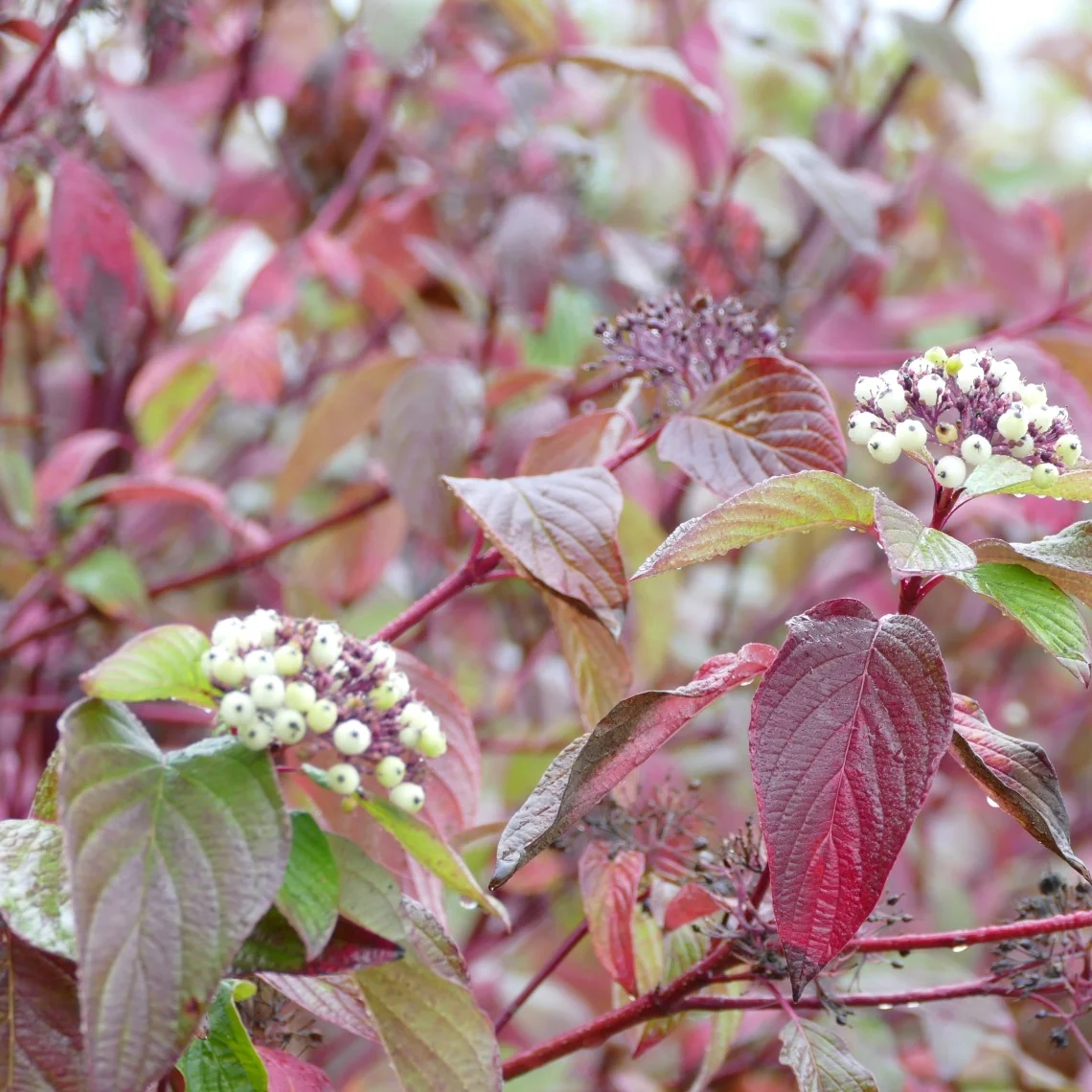
Identify this species:
Red Osier Dogwood
Cornus sericea
Found in wetlands, riparian areas, forest edges
Supports dogwood borer moth; birds feed on berries
Shrub; 1.5-4 m tall

Identify this species:
Cockspur Hawthorn
Crataegus crus-galli
Found in forest edges, thickets, old fields
Host for hawthorn lace bug, cedar-hawthorn rust fungus; important late winter/early spring food source (softened persistent fruit) for migratory birds and other wildlife
Small tree/shrub; 6-10 m tall

Identify this species:
Northern Bush Honeysuckle
Diervilla lonicera
Found in dry rocky slopes, forest edges, sandy uplands
Nectar source for bumblebees; supports clearwing moths
Low-growing shrub; 0.6-1.2 m tall

Identify this species:
Green Ash
Fraxinus pennsylvanica
Found in floodplains, riparian forests, moist lowlands
Hosts tiger swallowtail (Papilio glaucus); emerald ash borer (EAB)
Second most common ash
Tree; 15-25 m tall

Identify this species:
Ironwood (AKA Hop Hornbeam)
Ostrya virginiana
Found in upland hardwood forests, rocky slopes
Supports polyphemus moth (Antheraea polyphemus) larvae
Tree; 10-15 m tall

Identify this species:
Northern Red Oak
Quercus rubra
Found in upland hardwood forests, ridges, sandy loams
Supports over 500 Lepidoptera species (caterpillars, gall wasps)
Tree; 20-30 m tall

Identify this species:
Staghorn Sumac
Rhus typhina
Found in old fields, forest edges, disturbed sites
Supports sumac flea beetles; birds eat fruit clusters
Shrub/Small Tree; 3-8 m tall

Identify this species:
Wild Red Raspberry
Rubus idaeus subsp. strigosus
Found in forest openings, old fields, roadsides, disturbed areas
Host for numerous Lepidoptera including raspberry moths; flowers attract bees; fruits support birds, mammals, people
Shrub; 1-2 m tall

Identify this species:
American Basswood
Tilia americana
Found in moist upland woods, rich soils, forest edges
Supports mourning cloak butterfly and specialist bees
Tree; 18-25 m tall

Identify this species:
American Elm
Ulmus americana
Found in floodplains, riparian zones, moist bottomlands
Hosts elm leaf beetle, tiger swallowtail, leaf miners
Prone to Dutch Elm Disease (DED)
Tree; 20-30 m tall

Identify this species:
Nannyberry
Viburnum lentago
Found in moist woods, forest edges, streambanks, lowlands
Larval host for spring azure butterfly (Celastrina ladon)
Shrub/Small Tree; 3-6 m tall

Identify this species:
Boxelder Maple (AKA Manitoba Maple)
Acer negundo
Found in riparian zones, floodplains, disturbed areas; common weed tree
Hosts boxelder bugs (Boisea trivitta), leaf miners, aphids, Lepidoptera larvae
Tree; 10-20 m tall
Can have both trilobate and pinnately compound leaves
Start as male and become female as they age

Identify this species:
Black Maple
Acer nigrum
Found in upland mesic forests, slopes, ridges
Hosts rosy maple moth (Dryocampa rubicunda), gall mites, leaf miners, aphids
Tree; 20-35 m tall
Tends to hybridize with Sugar Maples

Identify this species:
Sugar Maple
Acer saccharum
Found in upland mesic forests, slopes, ridges; climax species
Hosts rosy maple moth (Dryocampa rubicunda), gall mites, leaf miners, aphids
Tree; 20-35 m

Identify this species:
Yellow Birch
Betula alleghaniensis
Found in moist upland slopes, mesic hardwood forests
Hosts birch leafminer (Fenusa pusilla), luna moth caterpillars
Tree; 20-25 m tall
Mid-succession species; often found in hemlock forests; requires optimal soil conditions to thrive

Identify this species:
American Hazlenut
Corylus americana
Found in forest edges, upland thickets
Hosts specialist moths (Catocala spp.), gall-forming aphids
Shrub; 2-5 m tall
Has fuzzy leaves and edible nuts

Identify this species:
American Beech
Fagus grandifolia
Found in rich upland forests, slopes, ravines; often grows with sugar maple
Hosts beech blight aphid, beech leafminer, Early Hairstreak (Erora laeta) and other Lepidoptera
Tree; 20-30 m tall
Prone to Beech Leaf Disease (BLD) when young and Beech Bark Disease (BBD) when old
Slow-growing, long-lived climax species

Identify this species:
White Ash
Fraxinus americana
Found in moist uplands, floodplains, valleys
Hosts ash sawfly larvae, emerald ash borer, various moths
Tree; 20-30 m tall
Prone to Emerald Ash Borer (EAB) like all ash species
Most common ash tree in Ontario


Identify this species:
Butternut (AKA White Walnut)
Juglans cinerea
Found in moist slopes, streambanks, mixed forests
Hosts banded hairstreak (Satyrium calanus), walnut caterpillars, husk fly; edible nut
Tree; 12-20 m tall
Endangered due to Butternut Canker

Identify this species:
Ninebark
Physocarpus opulifolius
Found in streambanks, thickets
Host for raspberry leafroller, white spring, unicorn caterpillar, and bluish spring (among many others)
Shrub; 1-3 m tall
Many cultivars exist, popular due to pretty late spring/early summer flowers and leaf colour variations
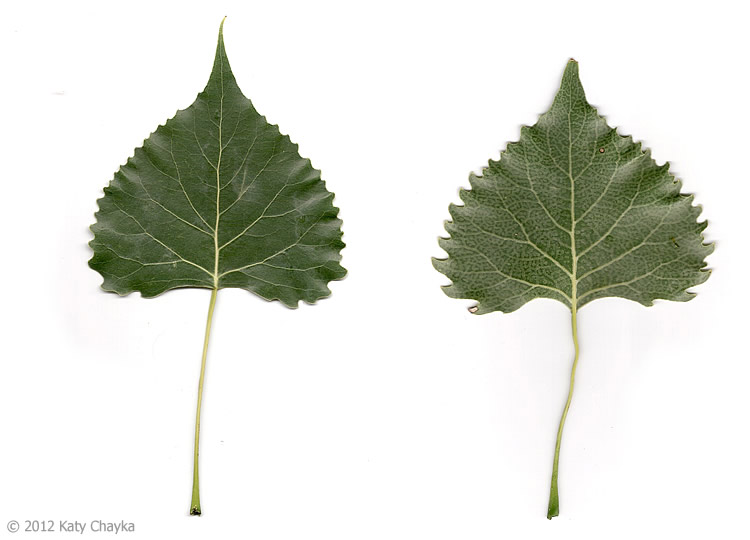
Identify this species:
Eastern Cottonwood
Populus deltoides
Found in riparian zones, floodplains, disturbed soils
Hosts cottonwood leaf beetle, Lepidoptera larvae, cicadas
Tree; 20-30 m tall
Named after fluff on seeds
Fast-growing; pioneer species —> first to grow in succession with shrubs
Leaf is flat on bottom; similar to aspen since in same genus (Populus)

Identify this species:
American Plum
Prunus americana
Found in forest edges, fencerows, uplands
Hosts eastern tent caterpillar, plum curculio; many Lepidiopteran species supported by Prunus
Prunus can be identified by two tiny dots on the petiole, which are glands called extrafloral nectaries
Shrub/Small Tree; 4-10 m tall
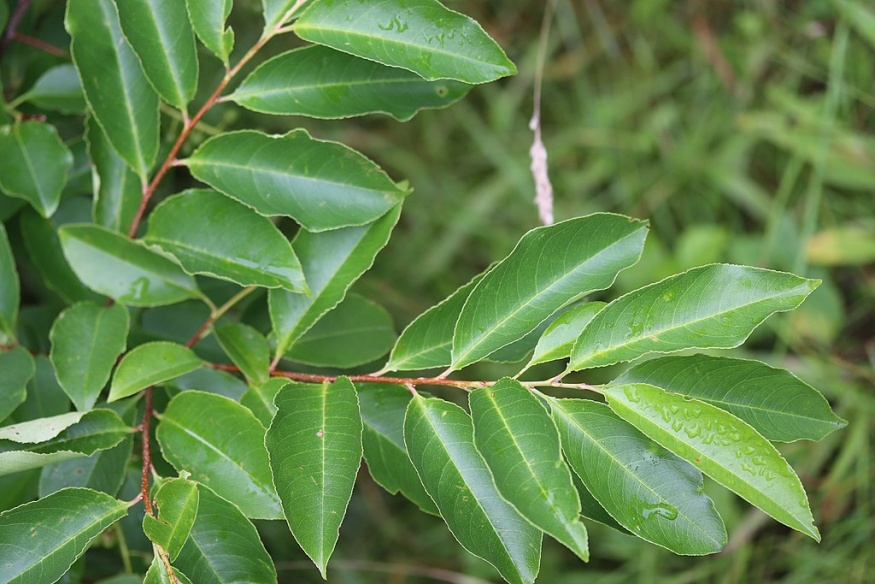
Identify this species:
Black Cherry
Prunus serotina
Found in upland forests, forest edges, old fields
Hosts eastern tent caterpillar and tiger swallowtail caterpillars. Prunus support many Lepidopteran species.
Prunus can be identified by two tiny dots on the petiole, which are glands called extrafloral nectaries
Tree; 15-25 m tall
Leaf is most proportionally long and thin of Prunus species from this week
Bark looks like corn flakes; gas exchange is what causes bark appearance

Identify this species:
Chokecherry
Prunus virginiana
Found in riparian areas, forest edges, uplands; understory species
Hosts tent caterpillars and tiger swallowtails caterpillars
Shrub/Small Tree; 3-8 m tall
Commonly affected by Black Knot fungus
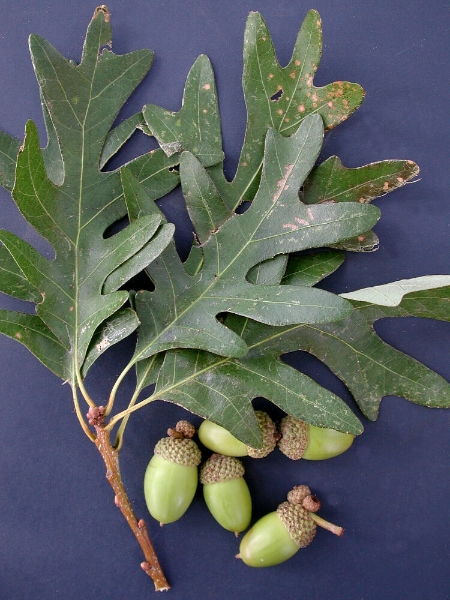
Identify this species:
White Oak
Quercus alba
Found in dry upland ridges, well-drained slopes
Supports over 500 Lepidoptera species, hairstreaks, duskywings, cynipid gall wasps
Tree; 20-30 m tall
Slow-growing, long-lived; climax species

Identify this species:
Northern Pin Oak
Quercus ellipsoidalis
Found in dry upland sandy soils, ridges, well-drained acidic sites, fire-adapted oak savannas; likes flat and dry environments
Hosts more than 400 Lepidoptera species (e.g. Banded Hairstreak Satyrium calanus, Catocala moths); cynipid wasps (gall-formers: Andricus spp.)
Tree; 15-20 m tall
Takes two years for acorns to be viable

Identify this species:
Bur Oak
Quercus macrocarpa
Found in prairie-forest transition, uplands, savannas
Hosts numerous Lepidoptera, gall wasps, leaf miners
Tree; 20-25 m tall
Pretty tough; becoming more common as urban tree

Identify this speceis:
Smooth Rose
Rosa blanda
Found in prairie edges, uplands, forest margins
Hosts rose sawfly, specialist bees (Andrena spp.), leaf miners
Shrub; 1-2 m tall
Good barrier plant; edible rose hips; rose hips are edible