THAD Chap 27: Buddhism+East Asian Art 447–451, 500-1200 ce
0.0(0)
Studied by 0 people Call Kai
 Learn
Learn Practice Test
 Spaced Repetition
 Match
Match Flashcards
 Knowt Play
Card Sorting
1/26

There's no tags or description
Looks like no tags are added yet.
Last updated 3:57 PM on 10/7/26
Name | Mastery | Learn | Test | Matching | Spaced | Call with Kai | Chat |
|---|
No analytics yet
Send a link to your students to track their progress
27 Terms
1
New cards
Map 27.1 East Asia, c. seventh century CE. (The Gaya Confederation of city-states was conquered by Silla in 532.)
2
New cards
27.1 Pensive Bodhisattva, probably Maitreya (Korean Mireuk), Three Kingdoms period, early seventh century. Gilt bronze, height 36⅞ in. (93.5 cm). National Museum of Korea, Seoul.

3
New cards
27.2 Hōryūji, Asuka period, seventh century. Nara prefecture, Japan.

4
New cards
27.3 Plan of Hōryūji. Original plan, early seventh century (right) and plan of the reconstruction, c. 711 (left).
5
New cards
27.4 Hōryūji pagoda (cross-sectional drawing).
6
New cards
27.5 Tori Busshi, Shaka Triad, Hōryūji, Nara prefecture, Japan, Asuka period, dated to 623. Gilt bronze, height 46 in. (1.17 m).

7
New cards
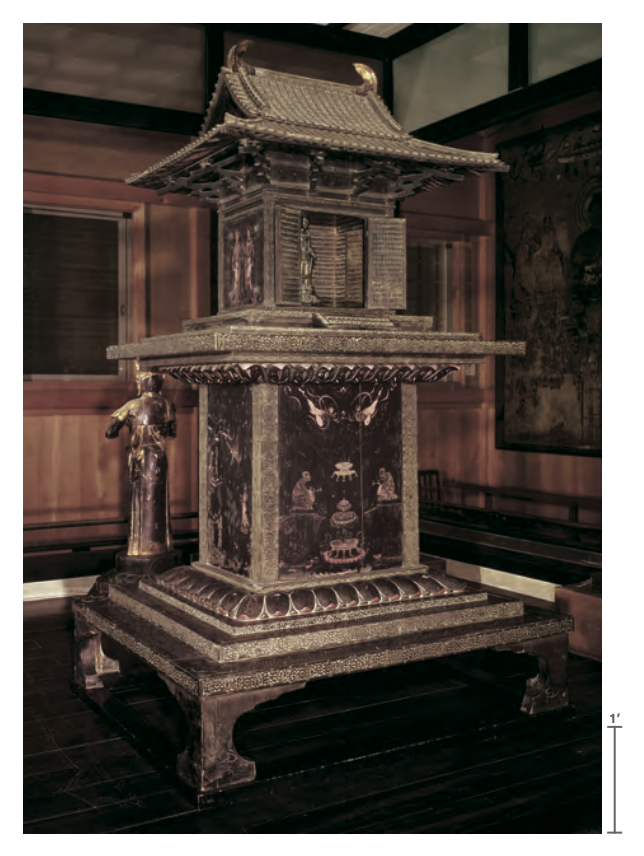
27.6 Tamamushi Shrine, Hōryūji, Nara prefecture, Japan, Asuka period, c. 650. Cypress and camphor wood, with lacquer, height 7 ft. 7½ in. (2.32 m). Gallery of Temple Treasures, Hōryūji.
8
New cards
27.7 Mahasattva Jataka, detail of the Tamamushi Shrine, Asuka period, c. 650. Lacquer painting on wood. Gallery of Temple Treasures, Hōryūji, Nara prefecture, Japan.

9
New cards
bodhisattva
in early Buddhism and Theravada Buddhism, a being with the potential to become a buddha; in Mahayana Buddhism, an enlightened being who vows to remain in this world in order to aid all sentient beings toward enlightenment.
10
New cards
icon
an image of a religious subject used for contemplation.
11
New cards
buddha; Buddha, the
a buddha is a being who has achieved the state of perfect enlightenment called Buddhahood; the Buddha is, literally, the “Enlightened One”; generally referring to the historical Buddha, Siddhartha Gautama, also called Shakyamuni and Shakyasimha.
12
New cards
iconography
images or symbols used to convey specific meanings in an artwork.
13
New cards
cloister
a covered walkway, lined with a colonnade, walled on the outside and open to a courtyard; usually found in religious buildings.

14
New cards
pagoda
in East Asia, the stupa form: a tall structure that houses Buddhist relics.

15
New cards
kondō
literally, “golden hall”; the main hall of a Japanese Buddhist temple.

16
New cards
post-and-lintel
a form of construction in which two upright posts support a horizontal beam (lintel).

17
New cards
cantilever
a horizontal beam, slab, or other projecting structural member that is anchored at only one end.

18
New cards
brackets
wooden supports that channel the weight of the roof to the supporting lintels and posts; used in East Asian architecture.

19
New cards
stupa
a mound-like or hemispherical structure containing Buddhist relics.

20
New cards
finial
a decorative knob, usually found on top of a pole or part of a building.

21
New cards
pradakshina
the ritual circumambulation (walking or moving around) of a sacred place in Hinduism, Buddhism, and Jainism.

22
New cards
tableau
a stationary scene of people or objects, arranged for artistic impact.

23
New cards
mudra
a symbolic gesture in Hinduism and Buddhism, usually involving the hand and fingers.

24
New cards
mandorla
in religious art, a halo or frame that surrounds the entire body.
25
New cards
votive
an image or object created as a devotional offering to a deity.
26
New cards
filigree
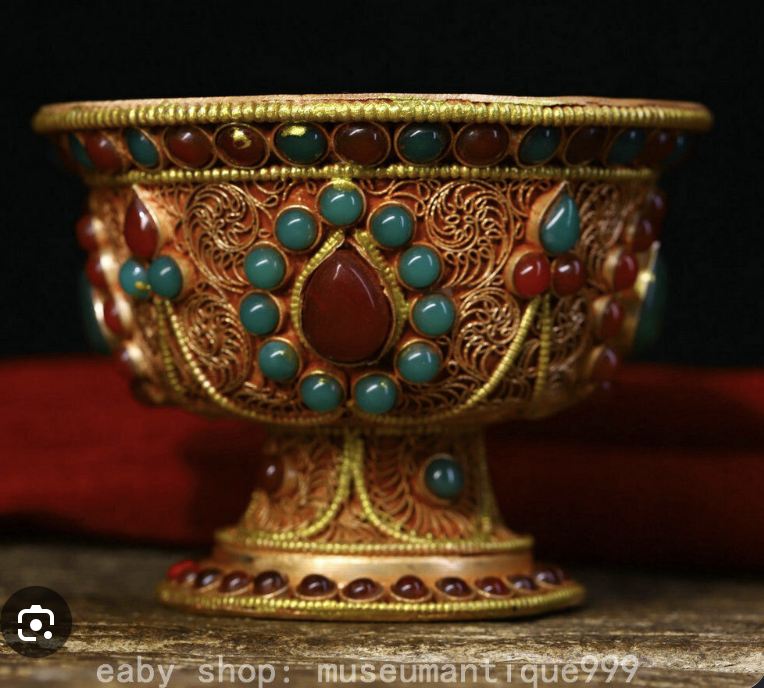
a type of decoration, typically on gold or silver, characterized by ornate tracery.
27
New cards
lacquer
a liquid substance derived from the sap of the lacquer tree, used to varnish wood and other materials, producing a shiny, water-resistant coating.
