105 week 9
 Call Kai
 Learn
 Practice Test
 Spaced Repetition
 Match
 Flashcards
 Knowt Play
1/58

Earn XP
Description and Tags
ch 13
59 Terms
marketing communications
inform
remind
persuade
build relationships
communication model
source
message
medium
receiver
noise
feedback
promotion planning
underlying this concept is the idea that people think, feel, and they do (hierarchy of effects)
advertising
non-personal communication from an identified sponsor using mass media
one of the most important areas in promotions and communications
steps to develop an advertising campaign
step 1 - understand target audience
step 2 - establish message and budget objectives
step 3 - create the ads
step 4 - pretest what the ads will say
step 5 - choose the media type(s) and media schedule
step 6 - evaluate the advertising
sales promotion
programs designed to build interest in or encourage purchase of a good or service during a specified period
sales promotion vs advertising
they are both paid promotional activities with identifiable sponsors
sales promotion is more immediate short-term objective
advertising is longer-term objective
trade sales promotions
allowances, discount and deals
co-op advertising
trade shows
promotional products
point of purchase (POP) displays
incentive programs
push money
promotion
the coordination of a marketer’s communication efforts to influence attitudes or behavior
Web 3.0 or Web3
A progression of the Web in which artificial intelligence becomes ubiquitous, with everyday users gaining more power over their personal information
users will have more control over their own data and artificial intelligence will allow for a more seamless connection between physical products and digital experiences, opportunities for connecting with current and potential customers will continue to expand
Today, the importance of what both the company and others say in the digital world has grown exponentially as consumers spend less and less time with traditional media and more time with digital and social media.
Marketing communication in general performs one or more of four roles
Informs consumers abt new goods and services
Reminds consumers to continue using certain brands
Persuades consumers to choose one brand over others
Builds relationships with customers
Integrated marketing communication (IMC)
the process that marketers use “to plan, develop, execute, and evaluate coordinated, measurable, persuasive brand communication programs over time to targeted audiences.”
argues that consumers come in contact with a company or a brand in many different ways before, after, and during a purchase
multichannel promotion strategy
a marketing communication strat where marketers combine traditional advertising, sales promotion, and public relations activities with online buzz-building activities
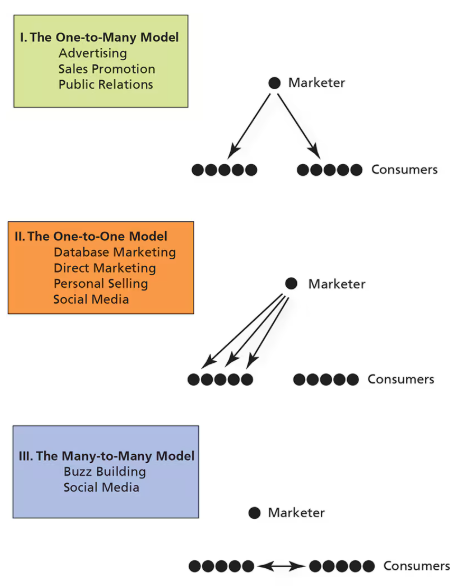
Three models of marketing communication
one-to-many — a mktng team develops and sends msgs to many
advertising
sales promo
public relations
one-to-one — marketers speak to consumers and bus customers individually
database marketing
direct marketing
personal selling
social media
many-to-many —inc exponentially nowadays
buzz building
social media
word-of-mouth communication
when consumers provide info abt products to other consumers
communication process
the process whereby meaning is transferred from a source to a receiver

source
an organization or individual that sends a message
to do this, the source must translate the idea into a perceivable form (like a TV commercial) —> encoding
encoding
the process of translating an idea into a form of communication that will convey meaning
may use words, music, a celebrity, an unknown actor, an actual customer, etc
message
the actual content of that perceivable form of communication that goes from the source to a receiver
may be in the form of an advertisement, a public relations press release, a coupon offer, a different sales promotion program,… etc
medium
a communication vehicle that reaches members of a target audience.
For marketers, this vehicle can be TV, radio, a magazine, social media sites such as Instagram, a company website, an Internet blog, a billboard, or even a coffee mug that displays a product logo
2 major challenges when selecting one: 1) the target market will be exposed to the medium; 2) the characteristics and image of the prod are not in conflict with the medium
receiver
the organization or individual that intercepts and interprets the message
decoding
the process whereby a receiver assigns meaning to a message; that is, they translate the message they perceive back into an idea that makes sense to them
noise
anything that interferes with effective communication
can block messages
feedback
receivers’ reactions to the message
the best feedback for marketing communication is for customers to enter into long-term relationships with the brand—or at the very least to purchase the product
updated Web 2.0 communication
we’re living through profound changes in the way customers link to companies—and to each other
We can trace these important changes to the advent of Web 2.0
marketers can create messages that reach specific individuals (like when you see ads on your phone based on the websites you browsed earlier this week), or they can instantaneously beam the same content to literally millions of people with just a click
distinguish among communications in terms of how specific the audience is:
the one-to-many model: the traditional form of mass communication whereby a broadcaster sends a message to a very large audience (like a commercial you see while you’re watching Cruel Summer).
The one-to-one model: This format describes messages that are up close and personal. This is the oldest way to communicate, but it’s still important in many marketing contexts today. Although you may doubt this when you watch some groups out at brunch who spend so much of the meal tapping and swiping on their smartphones instead of actually having a conversation with each other, anytime you work with a salesperson, a party planner consultant, or maybe a financial professional, you’re still doing things old school.
The many-to-many model: This format describes the social media revolution that allows almost everyone to engage in a constant conversation with almost everyone else!
outbound marketing
messages that come from the organization and are intended for those who have agreed to receive them
it’s not always clear where these messages actually originate and how accurate they are, but as a form of promotion, their goal is to inform, remind, persuade, and/or build relationships with receivers
inbound marketing
messages that come to the organization from others outside
ethical bribe
a fancy term for an opt-in incentive to join an email mailing list
by doing do, you’re sending the co feedback on their link
clicking on cos that come up on ur search page = youre also communicating a response to their messages
promotion mix
the communication elements that the marketer controls
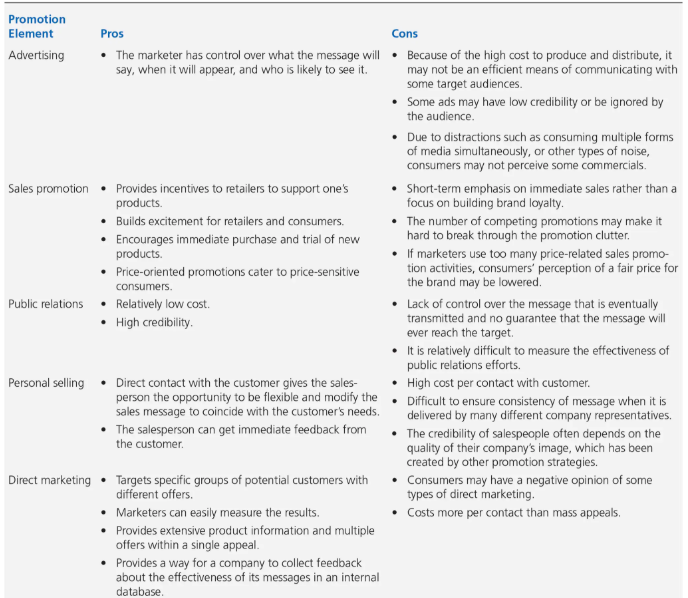
elements of the traditional one include advertising, sales promotion, public relations, personal selling, and direct marketing
new one includes:
Media advertising
Sales promotion
Public relations, including event marketing and sponsorships
Personal selling
Direct marketing
Out-of-home advertising
Point-of-purchase advertising
Social media
Digital/Internet advertising
control continuum
The messages that consumers receive about companies and products differ in terms of how much the marketer can control the content

mass communication
relates to TV, radio, magazines, and newspaper
Advertising: the most familiar and visible element of the promotion mix. — can convey rich and dynamic images that establish and reinforce a distinctive brand identity. — useful to communicate factual information about the product or to remind consumers to buy their favorite brand.— In recent years, Internet advertising has grown exponentially
Sales promotion: Consumer sales promotion includes programs such as contests, sweepstakes, or other incentives that marketers design to build interest in or encourage purchase of a product during a specified period. Unlike other forms of promotion, sales promotion intends to stimulate immediate action (often in the form of a purchase) rather than to build long-term loyalty.
Public relations: describes a variety of communication activities that seek to create and maintain a positive image of an organization and its products. — include efforts to present negative company news in the most positive way so that this information will have less damaging consequences.
steps to develop the promotional plan
step 1 - identify target audience
step 2 - establish communication objectives
let them know in a timely and affordable way that the org has a product to meet their ends
step 3 - determine and allocate communication budget
- determine total promotion budget
- decide on a push or pull strategy
- allocate budget to specific promotion mix
step 4 - design the promotion mix
step 5 - evaluate effectiveness
hierarchy of effects
a series of steps prospective customers move through, from initial awareness of a product to brand loyalty