BIO 215 Exam 4
 Call Kai
 Learn
 Practice Test
 Spaced Repetition
 Match
 Flashcards
 Knowt Play
1/37

There's no tags or description
Looks like no tags are added yet.
38 Terms
What is transcription the process of
DNA to RNA
what are the 3 main RNA products of transcription
rRNA, tRNA, and mRNA

explain this photo
rRNA’s make up the ribosome

explain this photo
tRNA’s are involved in translation

explain this photo
mRNA’s are the messages that are translated
explain the start site of prokaryotes for transcription
RNA polymerase binds to promoter through a promoter sequence at the transcription start site where transcription begins
what are the 3 steps of transcription
initiation, elongation, and termination
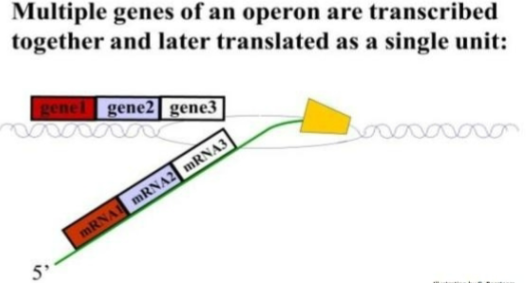
operons are found in
bacteria
what is an operon
multiple genes transcribed as one unit (oftentimes related genes or in same enzymatic pathway)
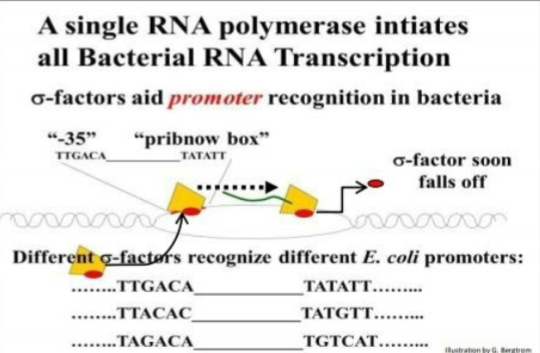
explain prokaryotic transcription initiation
one RNAP initiates transcription by binding to promoter (prinbow box with TATATT), sigma factors aid promoter recognition, without sigma it transcribes randomly

explain prokaryotic elongation for transcription
RNAP continues through the gene and transcribes, uses NTP’s for complementary sequences, hydrolyzes the pyrophosphate off

explain rho-dependent termination
form of prokaryotic termination, rho factor terminates transcription, rho protein is a DNA-RNA helicase, binds around a 72 base C region, uses ATP hydrolysis to move along RNA, breaks hydrogen bonds between RNA and DNA

explain rho-independent termination
internally complementary sequence near 3’ end of transcript folds to form hairpin loop structure that serves as termination signal and kicks of RNAP
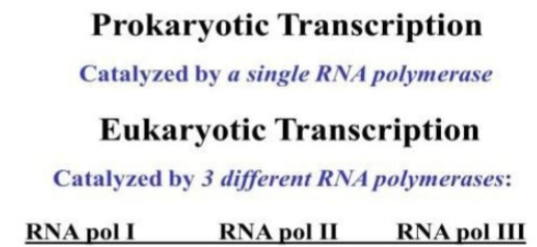
what are the three RNAPs in eukaryotes
RNAPI (rRNA), RNAPII (main one, mRNA), RNAPIII (tRNA)
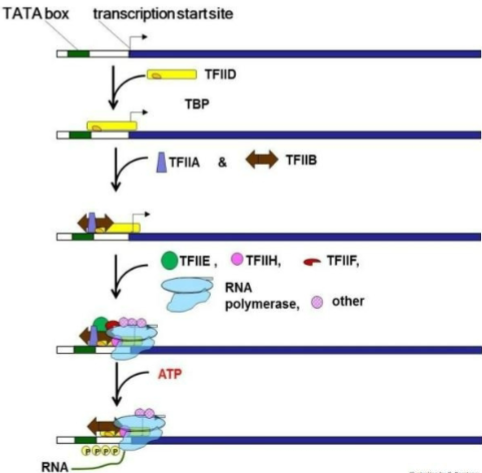
explain eukaryotic initiation for transcription
TATA box promoter, TBP/TFIID bind to the transcription start site, general transcription factors assemble RNAPII which forms the pre-initiation complex, TFIIH uses ATP and helicase to unwind DNA
explain chromatin and the major groove
transcription factors in eukaryotes must bind the DNA sequences obscured by chromatin, penetrates to the bases through the major groove of the DNA to read the sequence
explain elongation and termination in eukaryotes
dependent on phosphorylation of the CTD of the RNAPII, not much is known about termination

explain the promoters of RNAPIII
internal, 5S rRNA has two internal promoter sequences bound TFIIIs and RNAPIII, RNAPIII is lined up in the beginning to transcribe the whole thing
explain the promoters for RNAPI
normal, rRNAs, promoters, TFIs
what is the end product of transcription
RNA transcript

explain introns and exons
exons are expressed sequences and are retained, introns are intervening sequences and are spliced out

explain splicing using snRNPs
small nuclear ribonucleoproteins binds to pre-mRNA, 3 sites (5’, 3’, and branch sites)

explain the spliceosome
binding of snRNPs form the spliceosome, loops intron around after breaking bonds, lariat structure, joins the exons together
explain the other 2 groups of introns
Group I is mRNA and tRNA in bacteria, mitochondrial and chloroplasts, self-splicing ribozymes. Group II is also some mitochondrial and chloroplasts, some mRNA in bacteria, and encode proteins for splicing in vivo
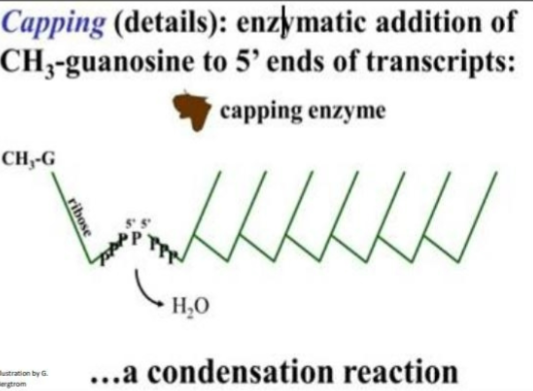
explain capping
enzymatic addition of a methyl guanosine 5’ to 5’ cap, helps with stability, nuclear export, and ribosome binding
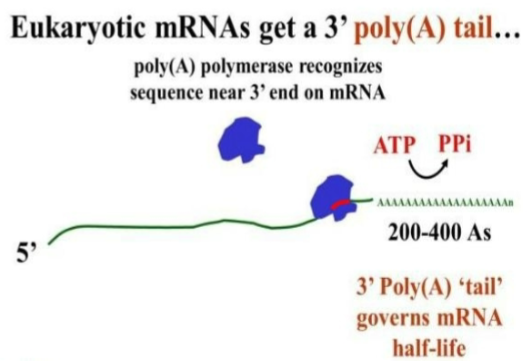
what happens to the 3’ end of mRNA
Poly(A) tail is added, which helps with half-life of mRNA in cytoplasm, nuclear export, and ribosome binding

explain rRNA cleavage
45S transcription units are transcribed as a precursor and processed into 3 mature rRNAs, (18S, 5.8S, and 28S), RNases and endonucleases degrade the spacer RNA
what happens after rRNAs are made
they are methylated by snoRNAs, which protects sites from cleavage
what is the first step of tRNA transcription
tRNAs are clustered together in genome,

explain tRNA processing
5’ leader removed, 3’ end replaced with CCA, modification of bases

explain ribosome export from nucleus
in nucleolus, assembles proteins and rRNAs, exports subunits out into cytoplasm
explain mRNA export from nucleus
nuclear transport factor binds mRNA, Poly(A) binding proteins and Cap binding proteins bind, exported through nuclear pore complex
what is a codon
3 base pairs and 1 amino acid
what is a degenerate
multiple codons for some amino acids
what are the important codons
AUG (start codon/methionine), UAA/UAG/UGA (stop codon, no amino acid, release factor)
explain percent coding
88% of genome coded by E.Coli, only 1.5% of genome coded in humans

explain the genetic code in prokaryotes
it is colinear which means the length of the gene in the DNA is proportional to the length of protein produced, has no introns/splicing, codon length is 4³ which means 64 codons can fit between the 20 amino acids
explain triplet codons
64 codons, must be non-overlapping, to test they took single/double/triple mutants to determine if base deletion caused protein or no protein