Lab 15
 Call Kai
 Learn
 Practice Test
 Spaced Repetition
 Match
 Flashcards
 Knowt Play
1/26

There's no tags or description
Looks like no tags are added yet.
27 Terms

Clade Ecydsozoa: Phylum Arthropoda
2/3 known species of animals are arthropods (84%)
found in nearly all habitats
appendages of some arthropods are modified for walking, feeding, sensory reception, reproduction, and defense
body is covered by cuticle
exoskeleton made of layers of protein and polysaccharide chitin
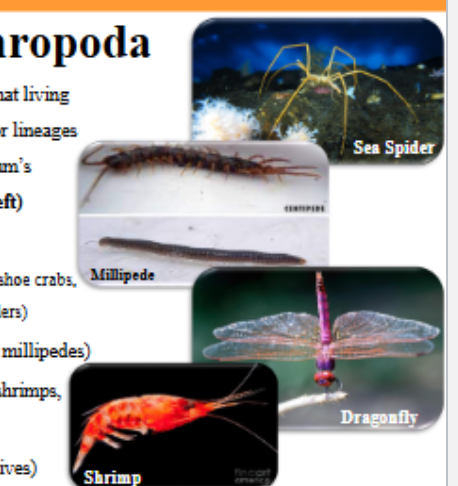
Clade Ecydsozoa: Phylum Arthropoda
grows = molting exoskelton
has eyes, olfactory receptors, and antennae for touch and smell
have an open circulatory system, no vessels to contain blood
Hemolymph is circulated into spaces surrounded tisses and organs
variety of organs specialized for gas exchange have evolved in arthropods
respiratory gases move through tracheal tubes
highly branched, increase surface area-volume ratio for gas exchange
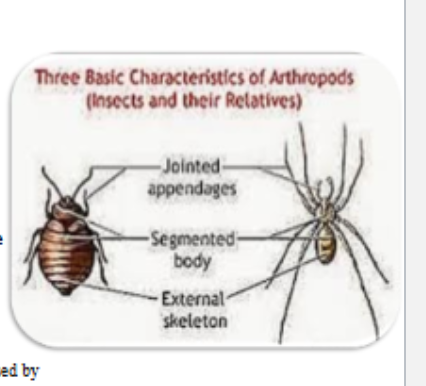
Clade Ecydsozoa: Phylum Arthropoda: Body Plan
segmented body
hard exoskeleton
jointed appendages
evolution characterized by a decrease in the number of segments and an increase in appendage specialization
may have been caused by changes in Hox gene sequence or regulation
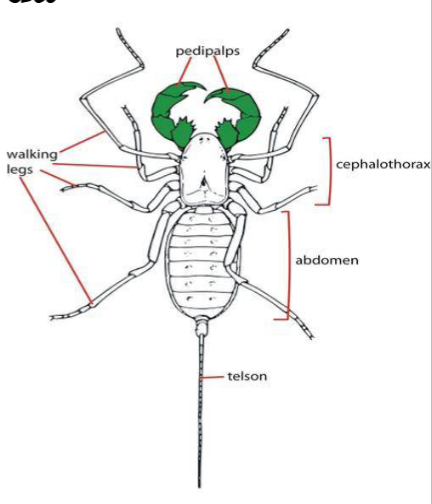
Clade Ecydsozoa: Phylum Arthropoda
has 5 major lineages that diverged into 5 subphyla, 4 left
Subphyla include
Chelicerata
Myriapoda
Crustacea
Hexapoda

Clade Ecydsozoa: Phylum Arthropoda: Subphylum Chelicerata
named for claw like feeding appendages called chelicerae
earlierst cheliceriforms were eurypterids
most marine chliceriforms are extinct
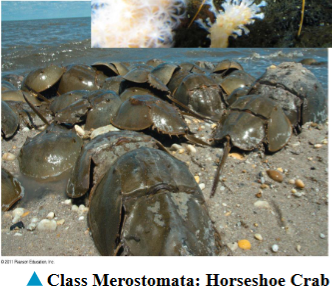
some are alive including horseshoe crabs
most modern cheliceriforms are arachnids
includes spiders, scorpions, ticks, and mites
arachnids have an abdomen and cephalothorax
has 6 pairs of appendages: chelicerae, pedipalps and for pairs of walking legs

Clade Ecydsozoa: Phylum Arthropoda: Subphylum Chelicerata
subphylum has classes
Arachnida
Scorpion
Dust Mite
Web building spider
Merostomata
Horseshoe crab
Pyconogonida
Sea Spider
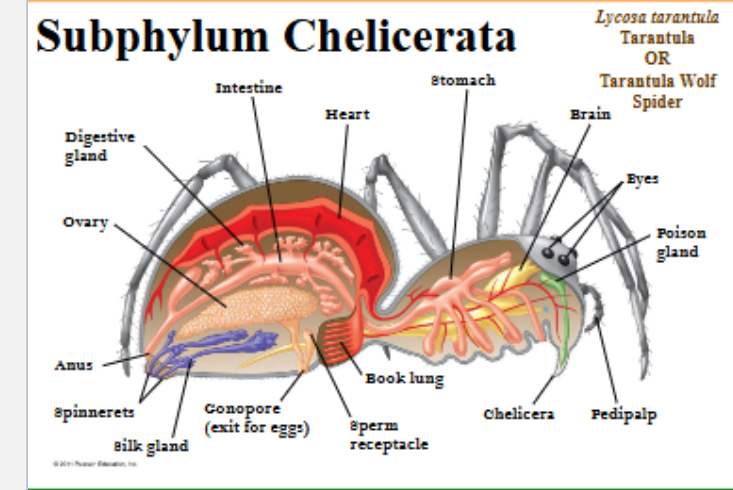
Clade Ecydsozoa: Phylum Arthropoda: Subphylum Chelicerata: Lycosa tarantula

Clade Ecydsozoa: Phylum Arthropoda: Subphylum Myriapoda
includes centipedes and millipedes
are terrestrial and have jaw like mandibles
two body sections (head and trunk)
simple eyes
centipedes are carnivores
have one pair of legs per trunk segment
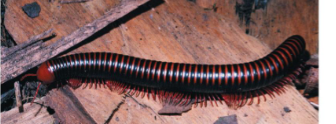
most millipedes are herbivores, eat decaying plants
millipeds have many legs
two pairs of legs per trunk segment

Clade Ecydsozoa: Phylum Arthropoda: Subphylum Myriapoda
includes
Class Chilopoda
Class Diplopoda
Class Pauropoda
Class Symphyla

Clade Ecydsozoa: Phylum Arthropoda: Subphylum Crustacea
separate males and females
Class Brachiopoda
▪ Class Remipedia
▪ Class Chephlocarida
▪ Class Maxillopoda
▪ Class Ostracoda
▪ Class Malacostraca
includes subclass
Copepods
Decapods
Isopoda
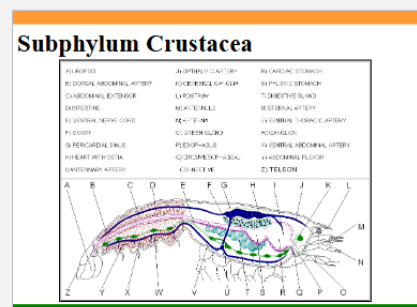
Clade Ecydsozoa: Phylum Arthropoda: Subphylum Crustacea: Subclass Copepods
species are closely related to Planktonic crustaceans
among most numerous of all animals
short cylindrical bodies clearly divided into a number of segments
Clade Ecydsozoa: Phylum Arthropoda: Subphylum Crustacea: Subclass Decapods
five pairs of thoracic appendafes
one of more are pincers
have stalked eyes and are covered by a carapace
include lobsters, crabs, crayfish, and shrimps
Clade Ecydsozoa: Phylum Arthropoda: Subphylum Crustacea: Subclass Isopods
include terrestrial, freshwater, and marine species
all have two pairs of antennae, compound eyes, and four sets of jaws
e.g. pill bugs
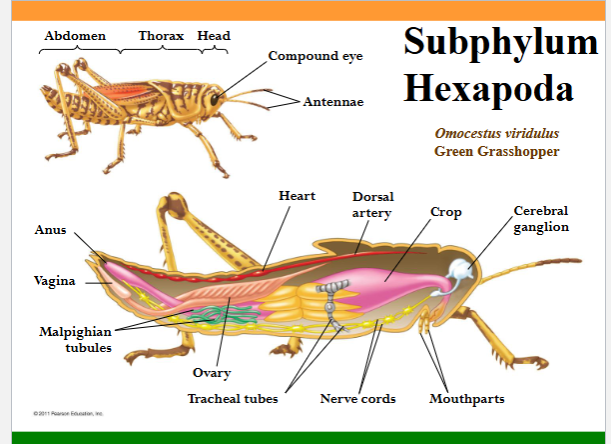
Clade Ecydsozoa: Phylum Arthropoda: Subphylum Hexapoda
includes insects and relatives
more species than all other forms of life
separate male and female/ reproduce secually
live in almost all terrestrial habitats, and freshwater
internal anatomy includes several complex organ systems
body divided into 3 main regions
head
thorax
abdomen
appendages are uniramous/ unbranched and a single pair of antennae is present
3 pairs of legs and 2 pairs of wings on thorax of adults
Clade Ecydsozoa: Phylum Arthropoda: Subphylum Hexapoda
gas exchange via trachea
diversified following the evolution of flight, adaptation to feeding on gymnosperms, and expansion of angiosperms
flight is insect key to success
escape predators, find food, new habitats
many undergo metamoprophosis during dvp
over 30 orders
includes class
Insecta
Entognatha
Clade Ecydsozoa: Phylum Arthropoda: Subphylum Hexapoda
incomplete metamorphosis
larval stage (nymphs) resembles, grow via series of molts til adulthood
Incomplete Metamorphosis
✓ Have larval stages known by such names as maggot, grub, or caterpillar
✓ The larval stage looks completely different from the adult stage
complete metamorphosis
larval stages named maggot, grub, or caterpillar
looks completely different than adult stage

Clade Ecydsozoa: Phylum Arthropoda: Subphylum Hexapoda: Omocestus viridulus: Grasshopper
Clade Ecydsozoa: Phylum Arthropoda: Subphylum Chelicerata: Class Merostomata: Limulus polyphemus (Horseshoe crab)
Clade Ecydsozoa: Phylum Arthropoda: Subphylum Chelicerata: Class Arachnida: Heterometrus longimanus (Black Scorpion)

Clade Ecydsozoa: Phylum Arthropoda: Subphylum Chelicerata: Class Arachnida: Dermatophagoides pteronyssinus (Dust Mite)

Clade Ecydsozoa: Phylum Arthropoda: Subphylum Chelicerata: Class Arachnida: Web building spider

Clade Ecydsozoa: Phylum Arthropoda: Subphylum Chelicerata: Class Pycnogonida: Sea spider

Clade Ecydsozoa: Phylum Arthropoda: Subphylum Myriapoda: Class Diplopoda: Archispirostreptus gigas (Millipede)
Clade Ecydsozoa: Phylum Arthropoda: Subphylum Myriapoda: Class Chilopoda: Scutigera coleoptrata (Centipede)

Clade Ecydsozoa: Phylum Arthropoda: Subphylum Myriapoda: Class Pauropoda: Pauropus amicus

Clade Ecydsozoa: Phylum Arthropoda: Subphylum Myriapoda: Class Symphyla: Hanseniella magna

Clade Ecydsozoa: Phylum Arthropoda: Subphylum Hexapoda: Class Insecta
Lethocerus americanus - American Water Bug
Danus plexippus - Monarch butterfly