Proteins
 Call Kai
 Learn
 Practice Test
 Spaced Repetition
 Match
 Flashcards
 Knowt Play
1/30

There's no tags or description
Looks like no tags are added yet.
31 Terms
what is a protein?
large molecules made up of chains of amino acids
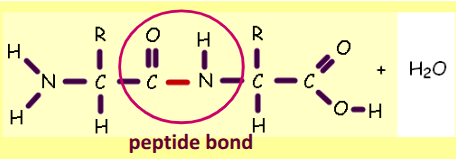
what is a dipeptide?
2 amino acids covalently joined by a peptide bond
what is a peptide bond?
covalent bond formed between 2 amino acids via condensation reaction
what is the difference between a polypeptide and a protein?
protein - fully folded functional molecule
polypeptide - single molecule, made up of long chain of amino acids covalently bonded by peptide bonds
each polypeptide is encoded for by a single gene
what is the primary structure of a protein?
order of amino acids in a polypeptide chain which are formed by peptide bond via condensation reaction
what is the secondary protein structure?
initial folding of polypeptide chain due to formation of hydrogen bonds into 2 3D shapes: a-helix, b-pleated sheet
describe structure of a-helix
polypeptide chain forms spiral
each amino acids forms hydrogen bonds with the amino acid 4 units along
describe the structure of b-pleated sheet
2 parts of the polypeptide chain lay side by side, hydrogen bond formed between them
what is a prosthetic group?
molecule/ion tightly bound to protein or enzyme required for for biological function
non-amino acid, non-protein
what are the 4 types of bond in a tertiary structure that can form between R groups of amino acids?
hydrogen bonds
disulfide bridge
hydrophobic interactions
ionic bond
what is quaternary structure of protein?
final 3D shape formed from more than one polypeptide chain
which bonds are found in primary structure?
none
which bonds are found in secondary structure?
hydrogen bonds
which structure is the final 3D folded shape?
tertiary structure
which bonds are found in quaternary structure?
hydrogen bond
disulfide bridge
ionic bonds
homophobic interactions
what is a conjugated protein?
contain non-protein prosthetic groups
what is a prosthetic gorup?
ion or molecule bound to protein required for biological function
what are features of the globular structure?
spherical shape
water soluble due to hydrophilic R groups forming hydrogen bonds, hydrophobic R groups cluster in centre
may be conjugated
function depends on shape
easily denatures
what are named examples of globular proteins?
haemoglobin
insulin
describe the properties of haemoglobin
globular protein which can change shape
quaternary structure - more than one polypeptide chain
conjugated protein contains 2 α and 2 β subunits each with a haem prosthetic group - iron ion
describe the properties of insulin
globular protein with specific, fixed shape
what are the features of collagen?
fibrous protein
covalent bonds form between triple helices to make microfibris (quaternary structure)
flexible but does not stretch
what are the properties of elastin?
fibrous protein which recoils after being deformed
does not have high tensile strength
what are features of fibrous proteins?
straight chain linear unfolded due to no hydrogen bonds
insoluble
high tensile strength
why are fibrous proteins sraight chain / linear?
primary structure contains repeated sequence of hydrophobic amino acids
insufficient OH groups to form hydrogen bonds, so do not coil into helix
why are fibrous proteins insoluble?
no OH groups to form hydrogen bonds
what are the differences between globular and fibrous proteins
globular - spherical, soluble, highly folded, no structural function
fibrous - linear straight chain, insoluble, have structural function
what are the similarities between fibrous proteins and globular proteins?
how to break hydrogen bonds?
heating & strong alkalis
how to break ionic bonds?
strong alkalis
what is denaturating?
irreversible disruption of protein structure by breaking bonds