I.M (FINALS) | LESSON 3 - 4
 Call Kai
 Learn
Learn Practice Test
 Spaced Repetition
 Match
Match Flashcards
 Knowt Play
1/22

There's no tags or description
Looks like no tags are added yet.
Name | Mastery | Learn | Test | Matching | Spaced | Call with Kai | Chat |
|---|
No analytics yet
Send a link to your students to track their progress
23 Terms
Subquery
This is a query inside a query, it is also called an INNER QUERY
Outer Query
This is what you call the main query that includes the subquery
Inline Views
A subquery that is created in the FROM clause is called?
Nested Query
This is a subquery that can be frequently found in the WHERE clause
Entity Relationship Diagram (ERD)
This is a diagram that shows the relationship of all entity created in database and explains its logical structure.
Rectangles
Ovals
Diamonds
What are the three basic symbols ERD uses?
Peter Chen
Who is the creator of Chen’s notation invented in 1976?
Chen’s Notation
This is invented in 1976, a detailed way of notation. This notation is one of the first in designing software and still popular in making ERD.
Entity
This can be a person, place, object, event, or concept stored in database.

Strong Entity
This symbol can exist without the need of any other entity and has primary key.

Weak Entity
This symbol cannot exist without the strong entity and doesn’t have primary key

Associative Entity
This relates the instances of other entity using definite attributes to the relationship among them.

Attributes
This is a property that describes the entity. It is connected to the entity using straight lines.
Relationship
This is used to label the association of entities.

Key Attribute
This uniquely identifies the strong entity.

Partial Key Attribute
This is known as the discriminator, it uniquely identifies the weak entity.
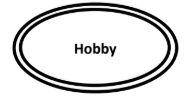
Multivalued Attribute
This is an attribute that can have many value.
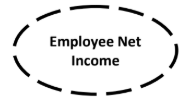
Derived Attribute
The value can be computed from other attributes which may or may not be inserted in the database.

Composite Attributes
These are attributes that can be divided into parts.
Relationship
This is used to label the association of entities. It is usually used verbs or verb phrases to identify the relation. This uses the diamond or rhombus symbol.

Mandatory Relationship
Seeing the illustration above, what kind of optionality of relationship is presented?

Optional Relationship
Seeing the illustration above, what kind of optionality of relationship is presented?
Cardinality of Relationship
This defines the degree or number of attributes of the relationship connecting two entities. it is characterized by “1”, “N” or “M” which is located at the end of the relationship.