BIOL 213 Exam 3
 Call Kai
 Learn
 Practice Test
 Spaced Repetition
 Match
 Flashcards
 Knowt Play
1/73

Earn XP
Description and Tags
what the flip
74 Terms
Complementary DNA Strand
A base pairs with T - Two hydrogen bonds & Less stable than G-C base pairs
G base pairs with C - Three hydrogen bonds & More stable than A-T base pairs
3’ with -OH and 5’ with free phosphate group running anti-parallel

Avery, MacLeod, and McCarty Experiment 1944
demonstrating that DNA is the transforming principle in two different ways by isolating each component or deleting components one by one to see the effects
Avery, MacLeod, and McCarty Alternate Experiment 1944
demonstrating that protein or RNA is the transforming principle in two different ways by isolating each component or deleting components one by one to see the effects
Hershey-Chase Experiment 1952
Label phage DNA with 32P and phage proteins with 35S, then infect bacteria, let the ‘injection’ occur, then tear off the virus and demonstrated DNA is injected into host cells and carries viral genetic data
Genetic Carrier infecting Human Cells Hypothetical Experiments
isolation of cell parts or culturing new cells
Central Dogma
DNA is duplicated in replication, DNA creates RNA in transcription via RNA Polymerase, and RNA creates proteins in translation via tRNA and Ribosomes

DNA Compaction in Eukaryotes
DNA is packaged into linear chromosomes by specialized proteins making it accessible for enzymes/proteins as needed by the cell and wrapped around histones in the nucleolus
DNA Compaction in Prokaryotes
DNA is stored as a singular circular molecule called the bacterial chromosome and less known how it is packaged but by various proteins in the nucleoid of the cytoplasm
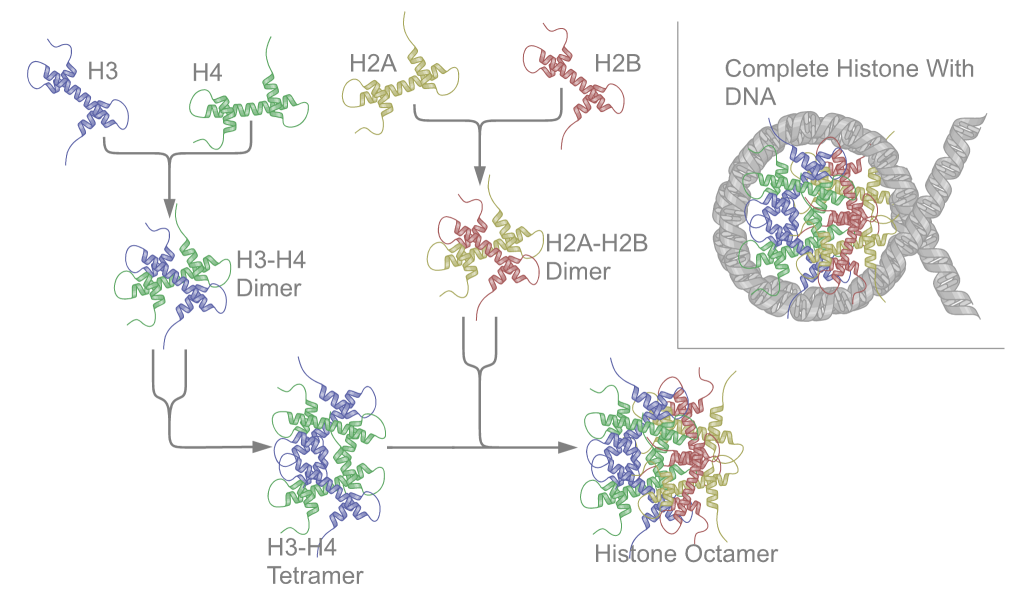
DNA on Histones
DNA wraps 147 nucleotides around disk for the first level of compacting, then wraps around another nucleosome disk and form 8 proteins (two copies of H2A, H2B, H3, and H4) which is the histone along with H1 which is required for 30nm fiber packing level
Histone Modifications
serve as docking sites for other proteins that influence chromatin structure; modifications that neutralize/reduce the positive charge of histones cause them to bind less tightly to DNA
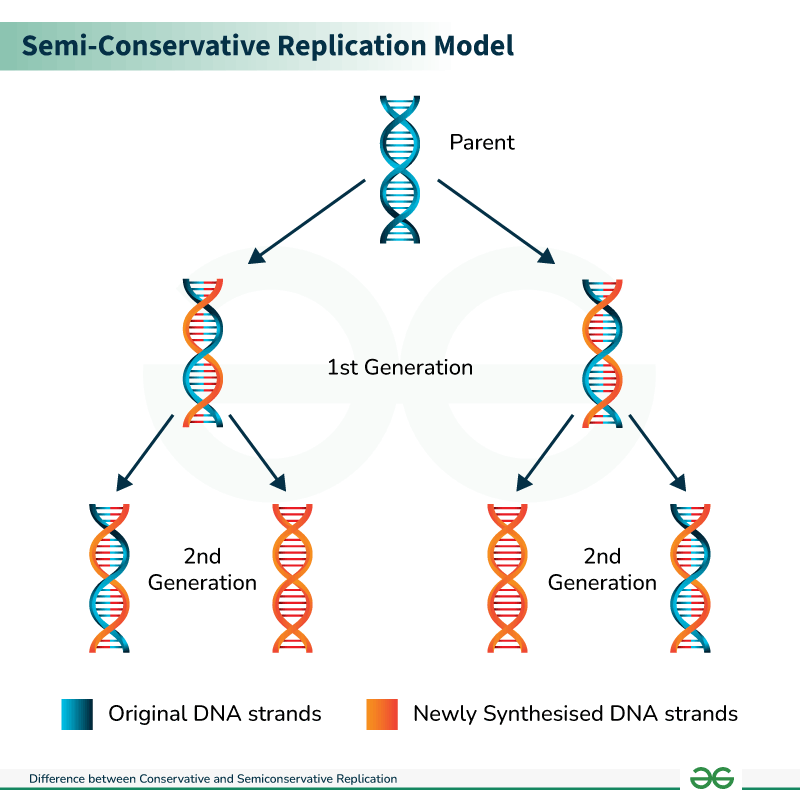
Semi-Conservative DNA Experiment
Meselson-Stahl showed that after one generation both new strands have one side of the original and one replicated using heavy and light bacteria and saw after 40 minutes, saw 2 kinds of DNA molecules after 2nd replication with 4 granddaughter strains
DNA Replication
process of producing two identical replicas from one original DNA molecule in the nucleus with short stretches of RNA synthesized by primase

Telomerase
ribonucleoprotein enzyme needed to replicate chromosome ends and helps the cell distinguish true chromosome ends
DNA Repair
Excision - a nuclease will remove the damaged/wrong region
Replacement - DNA polymerase will synthesize new strand
Ligation - the enzyme ligase will connect the newly synthesized nucleotide with the next one (nick repair)
Recombination
requires alignment of homologous sequences and can mend multiple types of DNA damage; most often occurs right after DNA replication to repair double-strand DNA breaks and conserved across virtually all cells
Transposon
common recombination protein/mobile genetic element that jumps genes around from donor DNA to target OR (jumping, A) makes a copy of one piece and give it to the target DNA (copying, B)
Retrovirus
Entry & Uncoating: The virus fuses with the host cell membrane and releases its single-stranded RNA (ssRNA) genome and viral enzymes into the cytoplasm.
Reverse Transcription: The viral reverse transcriptase enzyme synthesizes a complementary DNA (cDNA) strand from the viral RNA template, degrades the RNA, and builds a double-stranded proviral DNA.
Integration: Viral integrase transports the double-stranded viral DNA into the host cell nucleus and inserts it into the host's chromosomal DNA (becoming a provirus).
Transcription & Translation: Using the host's cellular machinery, the provirus is transcribed into viral RNA and translated into viral proteins.
Assembly & Budding: New viral particles assemble at the membrane and bud out to infect other cells
Acyclovir & AZT
Frontline therapeutic/treatment for Herpesvirus - looks like a G base and the top of the ribose sugar
Frontline therapeutic/treatment for HIV retrovirus - looks like a T base and a ribose with a modified 3’ OH
the sugar is missing so the viruses are dumb and add 3 phosphates making it charged and cannot diffuse anymore
DNA Polymerase
Synthesis of DNA and proofreading
Single-stranded DNA-binding protein (SSB)
Prevent the reannealing of DNA
DNA helicase
Uses energy from ATP hydrolysis to unzip the DNA molecule
Sliding clamp protein
Tethers DNA polymerase to DNA
DNA Primase
Synthesizes short lengths of RNA (primers)
Ribonuclease (RNAse)
Re-zips the DNA after synthesis
DNA ligase
Forms phosphodiester bonds between DNA fragments on the same strand; it can make hybrid genes, proteins, organisms, etc.
DNA topoisomerases
relieve the tension that builds up in front of a replication fork
Repair polymerase
replace RNA with DNA
Removal of RNA Primase and Ligase Sealing Gaps
DNA Polymerase going from 5’ to 3’ degrades RNA nucleotides of the primer and replacing them with DNA nucleotides
DNA Ligase seals the gaps between the nucleotides laid out
RNA polymerase
RNA is synthesized from A-U and G-C nucleotides added to 3’ end of RNA strand (5’ to 3’) with no primer needed and multiple can initiate transcription
Strand with Key Information
Template Strand (3’ to 5’) provides the physical information but the Coding Strand (5’ to 3’) carries the genetic information but it holds the wrong nucleotides
mRNA
code for proteins as it carries the genetic code directly from DNA to the ribosome
rRNA
form the core of the ribosome and catalyze protein synthesis
miRNA/siRNA
regulate gene expression by targeting specific mRNA molecules for degradation or blocking translation
tRNA
serves as adaptors between mRNA and amino acids during protein synthesis
Promoter
DNA sequence upstream of a gene that is recognized by RNA polymerase as a start point
Selective Transcribed Regions
cells are highly specialized and dynamic so transcription is tightly regulated to specific active gene regions to avoid wasting metabolic energy and this is determined by the orientation of the promoter
Prokaryotic Transcription
Sigma factor is the subunit of RNA polymerase and responsible for the recognition of the promoter sequence and tight binding of the RNA polymerase to the DNA within the cytoplasm
Eukaryotic Transcription
three types of RNA polymerase and requires general transcription factors within the nucleus
Eukaryotic RNA processing
5’ capping to safeguard the molecule against chemical breakdown and ribosomal assembly with 3’ Polyadenylation to end transcript along with splicing to locate non-coding regions to join coding sequences together
Introns
intervening sequences making up 25% of human genome and after removed they are “recycled”
Exons
expressed sequences and make up small 1% of human genome that are spliced together
Codon Redundancy
RNA can be translated in 3 possible reading frames depending on where the decoding process begins since it is unclear which amino acids would be grouped together but Wobble Hypothesis says the last one can be unimportant most of the time
Met/Start is AUG; STOP is UAA, UAG, UGA
Eukaryotic mRNA
protein production is a multi-step process and looks for the first AUG codon to start with only one protein structure per stand and highly modified end zones
Prokaryotic mRNA
mRNAs lack 5’ caps so the ribosomes instead search for the Shine-Dalgarno sequence and there can be multiple binding sites within a single strand
Ribosomal Assembly on a mRNA
initiation begins with Met binding to P site, elongation occurs as the growing polypeptide chain continues to be added upon the APE sites, and termination is triggered when binding to a STOP codon and releases the new protein
A, P, E Sites
aminoacyl-tRNA site lets charged tRNA binds to its mRNA codon
peptidyl-tRNA site is the condensation of amino acids
exit site is where the “uncharged” tRNA is ejected
Polysome
multiple ribosomes initiate on a single mRNA polyribosomes
Regulation of Protein Expression
Transcription Control that regulates how often the RNA polymerase binds to a gene; RNA processing Control that regulates how primary transcripts are spliced; Translational Control that regulates the efficiency of modifying initiation factors; Post-Translation Control that regulates altering or destroying proteins after production
Bacterial Ribosomal Antibodies
neomycin, erythromycin, azithromycin, streptomycin, tetracycline, kanamycin, gentamycin (memorize 5)
Ubiquitin & Proteasomes
Proteins that need to be degraded are marked by covalent modifications
Proteins are degraded to amino acids by proteases in a process called proteolysis which is catalyzed by large protease complexes
Steps where Protein Activity can be Controlled
transcriptional control, RNA processing control, RNA transport and localization control, translational control, mRNA Degradation control, and post-Translational control
DNA-binding Motifs
Homeodomain, Zinc finger, Leucine zipper, Helix-loop-helix
Bacterial trp Operon
the repressor binds to the operator only when it is also bound to tryptophan but defaults to ON because of low affinity and OFF when abundant
Bacterial lac Operon
controlled by positive and negative regulation and encodes proteins important for import and digestion of lactose and defaults to OFF and ON when abundant without glucose
Glucose Effect on Operons
off when presence of glucose and lactose or when lactose is absent only
on when absence of glucose and lactose or when presence of lactose only
Eukaryotic Transcription Regulation
three different RNA polymerase types that require general transcription factors and regulatory proteins can influence initiation from a great distance (>1,000 bp), and may even be downstream of promoter; ground state is restrictive for chromatins
Bacterial Transcription Regulation
single type of RNA polymerase that can initiate without helper proteins and generally bind within the promoter; ground state is active for chromatins
Enhancers
act as volume control to amplify transcription rates and provide binding sites for specific activator proteins; position and orientation specific
Gene Latch Circuit
must remain permanently ON when the initial signal vanishes as it is a gene encoding a transcription activator protein driven by a promoter that has two distinct activation inputs so it is OFF in the absence of the signal
Regulatory RNAs
Small Interfering RNAs Are Produced From Double-Stranded;
Foreign RNAs to Protect Cells From Infections;
RNA interference (RNAi) eliminate foreign dsRNA produced by viruses and transposons;
MicroRNAs Direct the Destruction of Target mRNAs;
Long non coding RNAs regulate mammalian gene activity
Somatic Cells & Mutations
body cells that are mutated would not pass on the mutation since their genetic code is not heritable but can lead to unregulated cell division like cancer
Germ Line Cells & Mutations
s*x cells; two different depending on gender and different mutations will arise based on gender too and in every cell in the offspring’s body
Mutation within a gene
nucleotide deletions/change like a point mutation and are often found in humans
neutral or silent mutations can accumulate at a steady rate even if they don’t change in the protein gene sequence

Mutation in regulatory DNA
mutations in the promoter or others can reduce expression or turn things on or off when not wanted like lactase

Gene duplication and divergence
most common mechanism for producing new genes and can acquire new mutations and change function

Exon shuffling mutations
recombination within introns that surround exons and results in novel combination of protein domains and many eukaryotic genes are from this result

Transposition mutations
can affect genes they insert into and can move an intro from one gene to another and might accidently break an exon and turn into something else like RNA or jump into a completely different gene/chromosome like tail loss in humans

Horizontal transfer mutations
piece of DNA passed from one cell to another, even another organism, not to progeny; in bacteria through conjugation allows transfer of plasmids or even whole chromosomes

Origin of Gene Families
most likely originated from gene duplication like the globin gene family as an error during cell division creating an extra copy of an existing gene so with two identical copies, one can accumulate mutations safely and create new families
Unequal Crossover
occurs when misaligned genomes are spliced and one ends up with a duplication and the other ends up with none of the targeted gene

Human Genome Size & Percentage Encoding Proteins
3.2 * 10^9 (3.2 billion) base pairs & 2 meters of DNA but vast majority of the human genome does not encode proteins since only 1.5% does
Open Reading Frame Identification
how coding genes are identified in the genomic DNA sequence because it is a segment of DNA that lacks stop codons so find Met to find the beginning of the reading frame
Prokaryotic Gene Structure
continuous coding sequences arranged in operons sharing a single promoter and terminator with non-coding insertions
Eukaryotic Gene Structure
discontinuous, individual units with alternating patches of coding and non-coding sequences with an upstream promoter