2.10: Enzymes
 Call Kai
 Learn
 Practice Test
 Spaced Repetition
 Match
 Flashcards
 Knowt Play
1/15

There's no tags or description
Looks like no tags are added yet.
16 Terms
What are enzymes?
biological catalysts
proteins
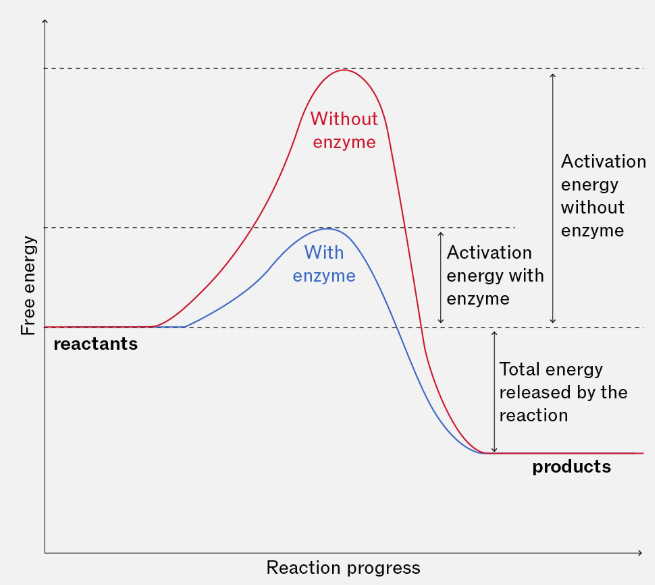
speed up reactions by reducing the activation energy
are not altered or used up during a reaction so can be reused
Structure of enzymes
all enzymes are globular proteins
they are soluble in water (due to the presence of many hydrophilic groups which face outwards)
they have a specific tertiary (3d) structure
the active site, made of just a few amino acids, is involved in catalysis
the rest of the amino acids maintain the shape of the enzyme and active site
Enzymes play a crucial role in…
regulating metabolism
What are the two categories of reaction (which enzymes catalyse)?
anabolic
catabolic

Anabolic reactions
the ‘building’ up of large molecules
large molecules are synthesised from their components
e.g. fatty acids are synthesised in cells by the fatty acid synthetase enzyme complex
Catabolic reactions
large molecules are broken down into smaller molecules
these reactions usually release energy
e.g. the enzyme amylase catalyses the hydrolysis of starch into maltose
Where can enzymes function?
inside cells (intracellular)
outside cells (extracellular)
Intracellular enzyme example
catalase
decomposes hydrogen peroxide, a harmful byproduct of aerobic metabolism, into water and oxygen

How do extracellular enzymes function outside the cell, and what are they usually used for?
they are secreted by cells to function outside the cell
often used in digestion, where large nutrient molecules need to be broken down
Extracellular enzyme example
amylase
produced by salivary glands and pancreas
catalyses the hydrolysis of starch into maltose
Active site and specificity of enzymes
the active site of an enzyme has a specific shape to fit a specific substrate
the shape of the active site (and therefore the specificity of the enzyme) is determined by the complex tertiary structure of the protein
the shape of an active site is complementary to the substrate it catalyses
they bind to form an enzyme-substrate complex
the enzyme catalyses the reaction and the products are formed in an enzyme-product complex
the enzyme then releases the products and is left unchanged
Induced fit model of enzyme action
the enzyme and its active site, and sometimes the substrate can change shape slightly as the substrate molecule enters the enzyme
these are called conformational changes

What factors affect enzymes?
temperature
pH
enzyme concentration
substrate concentration
How do temperature and pH affect enzymes?
enzymes work best at an optimum pH and temperature
at extreme pH and temperatures, the shape of the active site changes and enzymes become denatured
this means the enzyme can no longer bind to the substrate
Affect of substrate concentration on enzymes
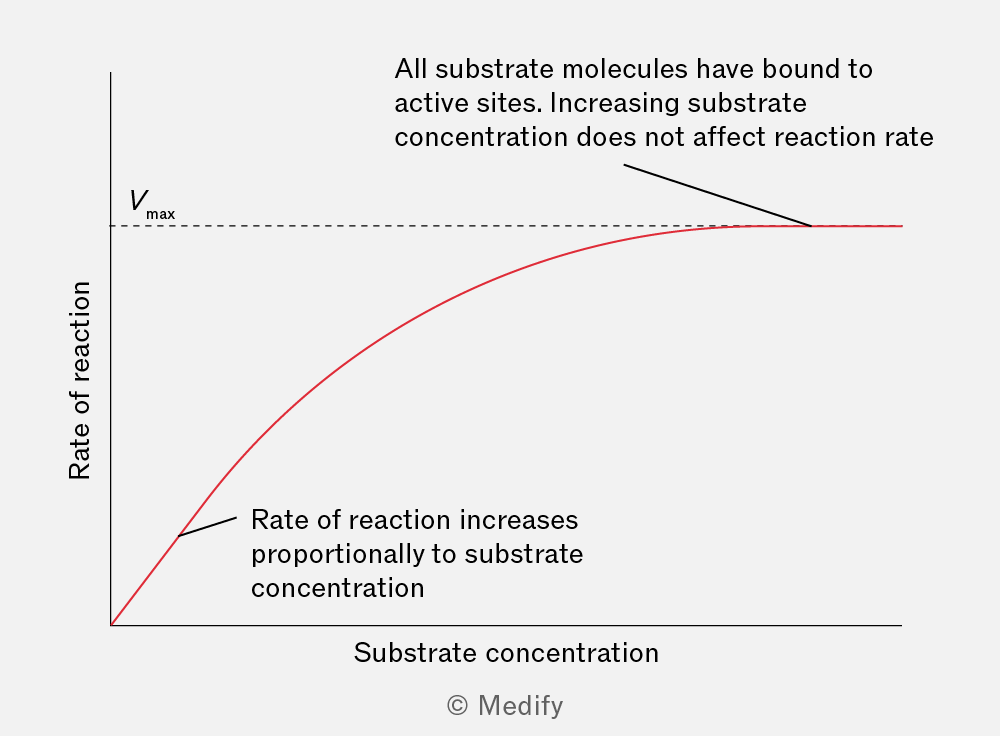
initially increasing substrate concentration increases the rate of reaction as there is an increased chance of forming enzyme-substrate complexes
the rate of reaction plateaus when all active sites are bound to substrates
at this point the enzyme concentration becomes the limiting factor
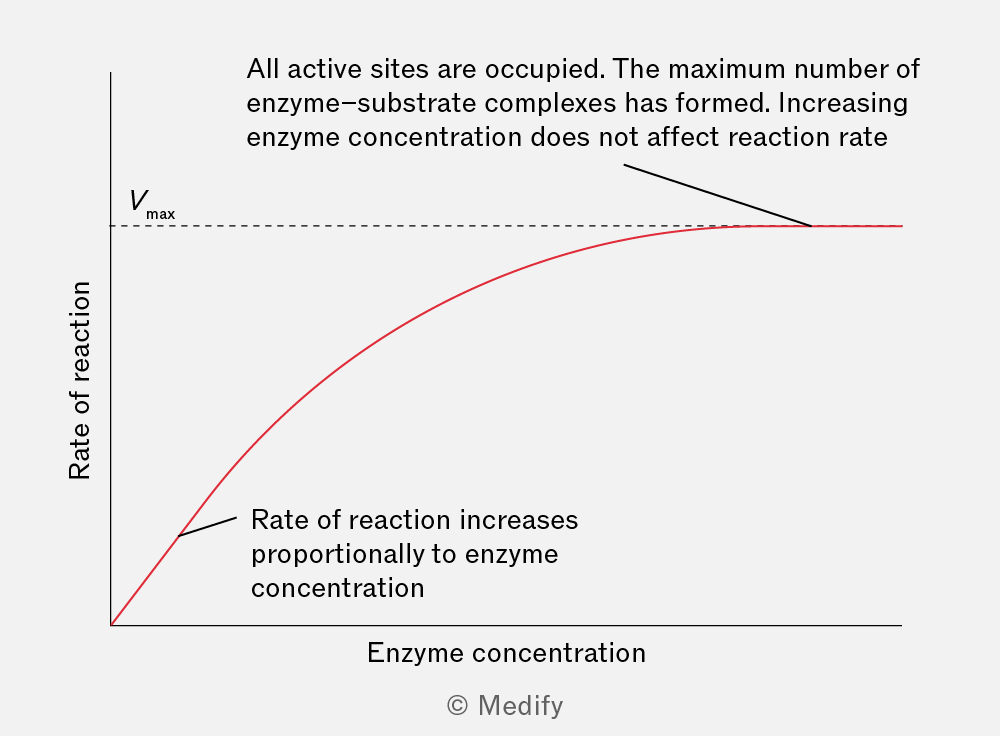
Effect of enzyme concentration on rate of reaction
initially, enzyme concentration increases the rate of reaction as there are more active sites available to form enzyme-substrate complexes
once all the substrates have bound to active sites, increasing enzyme concentration will have no affect as substrate availability becomes the limiting factor