Microbiome Cutaneous System I + Cutaneous Microbes
 Call Kai
 Learn
 Practice Test
 Spaced Repetition
 Match
 Flashcards
 Knowt Play
1/49

There's no tags or description
Looks like no tags are added yet.
50 Terms
⭐ Q: What is a microbiome, and what types of microorganisms does it contain?
A microbiome is the community of microorganisms that live in and on a host organism.
It includes bacteria, yeasts and other fungi, and viruses, which colonize different body sites, including the skin, gut, nasal cavity, oral cavity, and reproductive tract.
Different body sites have distinct microbial communities.
what is a beta defensin and cathelicidin? what do they do?
They are AMPs, antimicrobial peptides
They provide direct antimicrobial activity and help regulate innate and adaptive immune responses
⭐ Q: How is the microbiome initially acquired by newborn animals?
The microbiome is initially acquired primarily through maternal transmission, including nursing, passage through the birth canal, and close physical contact.
Nursing introduces maternal microorganisms into the gastrointestinal tract, helping establish the gut microbiome.
Vaginal birth and close contact contribute microorganisms to the skin microbiome.
Animals delivered by Cesarean section may experience different initial microbial exposures, although the long-term health implications are not yet fully understood.
⭐ Q: Which TWO oral cavity-associated bacterial families are commonly found on feline skin?
A. Moraxellaceae and Pasteurellaceae
B. Nocardioidaceae and Sphingomonadaceae
C. Porphyromonadaceae and Paraprevotellaceae
D. Xanthomonadaceae and Pseudomonadaceae
C. Porphyromonadaceae and Paraprevotellaceae
⭐ Q: Which bacterial families belong to the Proteobacteria group commonly found on canine skin?
A. Porphyromonadaceae, Paraprevotellaceae, and Nocardioidaceae
B. Moraxellaceae, Xanthomonadaceae, and Sphingomonadaceae
C. Staphylococcaceae, Streptococcaceae, and Enterococcaceae
D. Bacteroidaceae, Prevotellaceae, and Veillonellaceae
B. Moraxellaceae, Xanthomonadaceae, and Sphingomonadaceae.
what bacterias are prevalent in canine atopic dermatitis?
staph pseudintermedius 92%
ans
Malassezia pachydermatis
what bacterial type is bacterial DNA gyrase?
Type II topoisomerase
⭐ Q: What factors influence the composition and diversity of the microbiome?
Microbiome composition varies according to body site, glandular secretions, UV exposure, age, environment, hygiene, diet, medications, and contact with other organisms.
For example, sebaceous secretions and sweat can create different local environments that support different microbial communities.
Microbial diversity also tends to differ between urban and rural environments, and antimicrobial medications can alter the composition of existing microbial populations.
🔎 What this means:
Body site: Different environments support different microbes.
Environment and contact: Exposure to other organisms influences microbial populations.
Medications: Antimicrobials can disturb existing communities.
Diet and secretions: Available nutrients influence which organisms thrive.
⭐ Q: How does the normal microbiome contribute to immune tolerance, immune defense, and wound healing?
The normal microbiome helps establish immune tolerance, allowing the immune system to distinguish harmless resident microorganisms from potential pathogens.
It also strengthens innate immune defenses by stimulating immune cells and limiting pathogen colonization.
During wound healing, microorganisms help regulate the initiation and resolution of inflammatory responses.
A normally healing wound can contain microorganisms without being infected.
⭐ Q: How does Staphylococcus epidermidis protect the skin against pathogenic microorganisms?
Staphylococcus epidermidis is a predominantly commensal, coagulase-negative bacterium commonly found on healthy skin.
It helps protect the host by enhancing innate immunity, competing with potentially pathogenic microorganisms, and promoting T-cell migration into the epidermis through interactions involving dendritic cells.
A commensal organism is one that normally lives on a host without causing disease.
⭐ Q: What does Staphylococcus epidermidis use to protect you against Staphylococcus aureus?
Staphylococcus epidermidis produces a serine protease, an enzyme that breaks down proteins.
This enzyme inhibits formation of Staphylococcus aureus biofilms and can degrade biofilms that have already formed.
A biofilm is a protective community of microorganisms embedded in an extracellular matrix, making them more difficult to eliminate.
By disrupting these biofilms, S. epidermidis helps prevent S. aureus from establishing a persistent infection.

⭐ Q: What are microbial proteases, and how can they be beneficial or harmful to the host?
Proteases are hydrolytic enzymes that break down proteins.
Certain commensal microorganisms secrete proteases that inhibit competing pathogens or disrupt their biofilms, thereby protecting the host.
However, proteases can also act as virulence factors when pathogenic microorganisms use them to damage host tissue or interfere with host defenses.
A virulence factor is a microbial feature that promotes the organism's ability to cause disease.
⭐ Q: What are antimicrobial peptides (AMPs), and what do they do?
Antimicrobial peptides (AMPs) are small defensive proteins or peptides with antimicrobial and immune-regulating functions.
The lecture emphasizes beta-defensins and cathelicidins. They provide direct antimicrobial activity and help regulate innate and adaptive immune responses.
Host skin can produce AMPs in response to bacteria or bacterial products, while microorganisms can also produce antimicrobial substances that inhibit competitors.
Beta-defensins contribute to immune-cell recruitment and activation, wound healing, and defense against staphylococcal organisms.

⭐ Q: How does the microbiome influence skin pH and susceptibility to infection?
The microbiome contributes to maintaining the skin's pH, which affects the ability of different microorganisms to colonize the skin.
Changes in pH can favor the growth of certain pathogens and contribute to dysbiosis.
Human skin is generally more acidic than canine and feline skin. Consequently, products formulated for human skin may not maintain the optimal pH for veterinary patients.
⭐ Q: What is dysbiosis?
Dysbiosis is an imbalance in the composition of the microbiome.
It commonly involves reduced microbial diversity, with changes in the relative abundance of different species, and decreased numbers of beneficial bacteria.
What are the two defining features of dysbiosis, and how does it differ from infection?
It’s 2 defining features are:
1. Reduced microbial diversity, with changes in the relative abundance of different species
Decreased numbers of beneficial bacteria.
Dysbiosis is not synonymous with infection. An animal may have an abnormal microbial community without an active infection, although dysbiosis can increase disease susceptibility.
🔎 What this means:
Reduced diversity: Fewer different microbial populations or an uneven distribution.
Fewer beneficial bacteria: Loss of organisms that normally support health.
Infection: Disease caused by pathogenic microbial activity, which may develop alongside dysbiosis
⭐ Q: How does cutaneous dysbiosis affect the skin barrier and increase susceptibility to disease?
Cutaneous dysbiosis is associated with abnormal skin barrier function, including increased transepidermal water loss (TEWL) and altered skin pH.
Transepidermal water loss is the movement of water from the body through the epidermis into the environment.
An impaired barrier provides less effective protection against microbial invasion, increasing susceptibility to skin infection.
The relationship is bidirectional: dysbiosis can contribute to barrier dysfunction, while an abnormal barrier can further promote dysbiosis.
⭐ Q: Which veterinary diseases are associated with cutaneous dysbiosis, and what does this association mean?
Cutaneous dysbiosis has been associated with atopic dermatitis, non-healing wounds, mast cell tumors, and equine pastern dermatitis.
Atopic dermatitis is an allergic inflammatory skin disease, while equine pastern dermatitis is an inflammatory condition involving the horse's distal limbs.
These associations indicate that abnormal microbial communities occur alongside these conditions, but association does not automatically establish that dysbiosis caused the disease.
⭐ Q: What is the hygiene hypothesis, and how does early microbial exposure affect immune tolerance?
The hygiene hypothesis proposes that exposure to a diverse range of microorganisms early in life helps the developing immune system establish appropriate tolerance.
Reduced exposure to microorganisms during early development may contribute to an increased risk of allergic and autoimmune diseases.
The lecture discusses rural environments and early contact with household pets as examples of exposures associated with greater microbial diversity.
⭐ Q: What is alpha diversity, and how does it change in animals with atopic dermatitis or pyoderma?
Alpha diversity describes microbial diversity within a particular sample or community.
Animals with atopic dermatitis or pyoderma (bacterial skin infection) commonly have reduced cutaneous alpha diversity.
This means their skin microbiomes contain fewer different organisms or have become dominated by a smaller number of microbial populations.
💡 Think: Alpha diversity = How diverse is this one microbial community?
⭐ Q: How do bacterial culture and next-generation sequencing differ in assessing the microbiome?
Bacterial culture involves growing microorganisms on laboratory media, isolating colonies, and identifying the organisms present.
Culture is less sensitive for anaerobic or fastidious organisms (microbes with difficult or specialized growth requirements). Rapidly growing species may also outcompete others, making the results unrepresentative of the original microbial community.
Next-generation sequencing (NGS) identifies bacterial populations through genetic material, allowing analysis of a much broader range of organisms and their relative abundances without requiring them to grow in culture.
🔎 What this means:
Culture: Identifies organisms that can grow under laboratory conditions.
NGS: Uses genetic sequences to identify a more diverse microbial community.
⭐ Q: How is 16S ribosomal RNA used to identify bacteria during next-generation sequencing?
16S ribosomal RNA (16S rRNA) contains regions that are highly conserved across bacterial species, allowing broad bacterial detection.
It also contains hypervariable regions whose sequences differ among bacterial groups, allowing identification and comparison of organisms.
By analyzing these sequences, researchers can estimate the relative abundance of different bacterial populations within a microbiome.
Relative abundance describes the proportion of a community represented by a particular organism, rather than necessarily providing its absolute number.
⭐ Q: Why does the feline skin microbiome contain a relatively high proportion of oral-associated bacterial families?
Cats frequently groom themselves through licking, transferring microorganisms from their oral cavity onto their skin and hair coat.
Consequently, feline skin contains relatively high proportions of oral-associated bacterial families, including Porphyromonadaceae and Paraprevotellaceae, compared with some other species.
The lecture also emphasizes that microbial populations vary among anatomical sites on the cat's body, and healthy cats may demonstrate greater microbial diversity than allergic cats.
⭐ Q: How does microbial diversity vary among skin sites in dogs, and which site has the greatest diversity?
In dogs, mucosal surfaces and mucocutaneous junctions generally have lower microbial diversity than haired skin.
A mucocutaneous junction is the transition between ordinary skin and a mucous membrane, such as the lip margin.
The dorsal nose has the highest microbial diversity among the sites described in the lecture, likely because dogs repeatedly contact other animals and environmental surfaces while sniffing.
The skin surface is also more microbially diverse than deeper dermal and subcutaneous tissues, although microorganisms can be detected in those deeper regions.
⭐ Q: Which microbial changes are associated with canine atopic dermatitis?
Canine atopic dermatitis is associated with reduced skin microbial diversity and increased representation of Staphylococcus pseudintermedius.
The lecture reports predominant S. pseudintermedius colonization in approximately 92% of dogs with canine atopic dermatitis (CAD) compared with 40% of healthy dogs.
Malassezia pachydermatis, a yeast commonly present on canine skin, also becomes more abundant in dogs with CAD.
The important distinction is that these organisms may be part of the normal microbiome but become problematic when their populations increase disproportionately.
Q: 🟡 LOWER PRIORITY — How does the equine skin microbiome vary seasonally, and how is it associated with pastern dermatitis?
The equine skin microbiome varies by season and anatomical location.
The lecture describes greater representation of Proteobacteria during spring and autumn, particularly in ventral regions, and Firmicutes during summer and winter, particularly on the dorsum.
Equine pastern dermatitis is associated with reduced microbial alpha diversity. Wound formation and bandaging can also alter equine microbial communities.
⭐ Q: What are probiotics, prebiotics, and postbiotics, and how do they differ?
Probiotics provide beneficial microorganisms intended to improve or restore the microbiome. The lecture discusses both oral and topical applications.
Prebiotics provide substances that support the growth of beneficial microorganisms already present, such as fermentable fibers or certain carbohydrates.
Postbiotics, as described in the lecture, provide beneficial products or components derived from microorganisms rather than relying on live bacterial colonization.
🔎 What this means:
Probiotic: Supplies beneficial microbes.
Prebiotic: Feeds beneficial microbes.
Postbiotic: Supplies beneficial microbial products or components.
💡 Think:
Pro = provide bacteria
Pre = feed bacteria
Post = products from bacteria.
⭐ Q: How does knowledge of the microbiome influence antimicrobial treatment decisions in veterinary dermatology?
Antimicrobial stewardship means using antimicrobial medications appropriately to avoid unnecessary disruption of beneficial microorganisms.
The lecture recommends avoiding antimicrobial treatment when there is no evidence of infection or dysbiosis requiring it, because unnecessary antibiotics can worsen microbial imbalance.
When antimicrobials are indicated for a skin infection, topical treatment may be preferred when appropriate, because it can reduce unnecessary effects on the gastrointestinal microbiome.
For example, prescribing systemic antibiotics to a dog with atopic dermatitis but no evidence of bacterial pyoderma may unnecessarily disrupt its microbiome.
⭐ Q: How do bacteria, fungi, and viruses differ in their basic cellular organization and replication?
Bacteria are single-celled prokaryotes that lack a membrane-bound nucleus and other membrane-bound organelles.
Fungi, including yeasts, are eukaryotes with a membrane-bound nucleus and other organelles.
Viruses are not cells and can reproduce only within living host cells.
🔎 What this means:
Bacteria: Prokaryotic cells.
Fungi: Eukaryotic cells.
Viruses: Require living cells to replicate.

⭐ Q: How do gram-positive and gram-negative bacteria differ in their cell envelope structure?
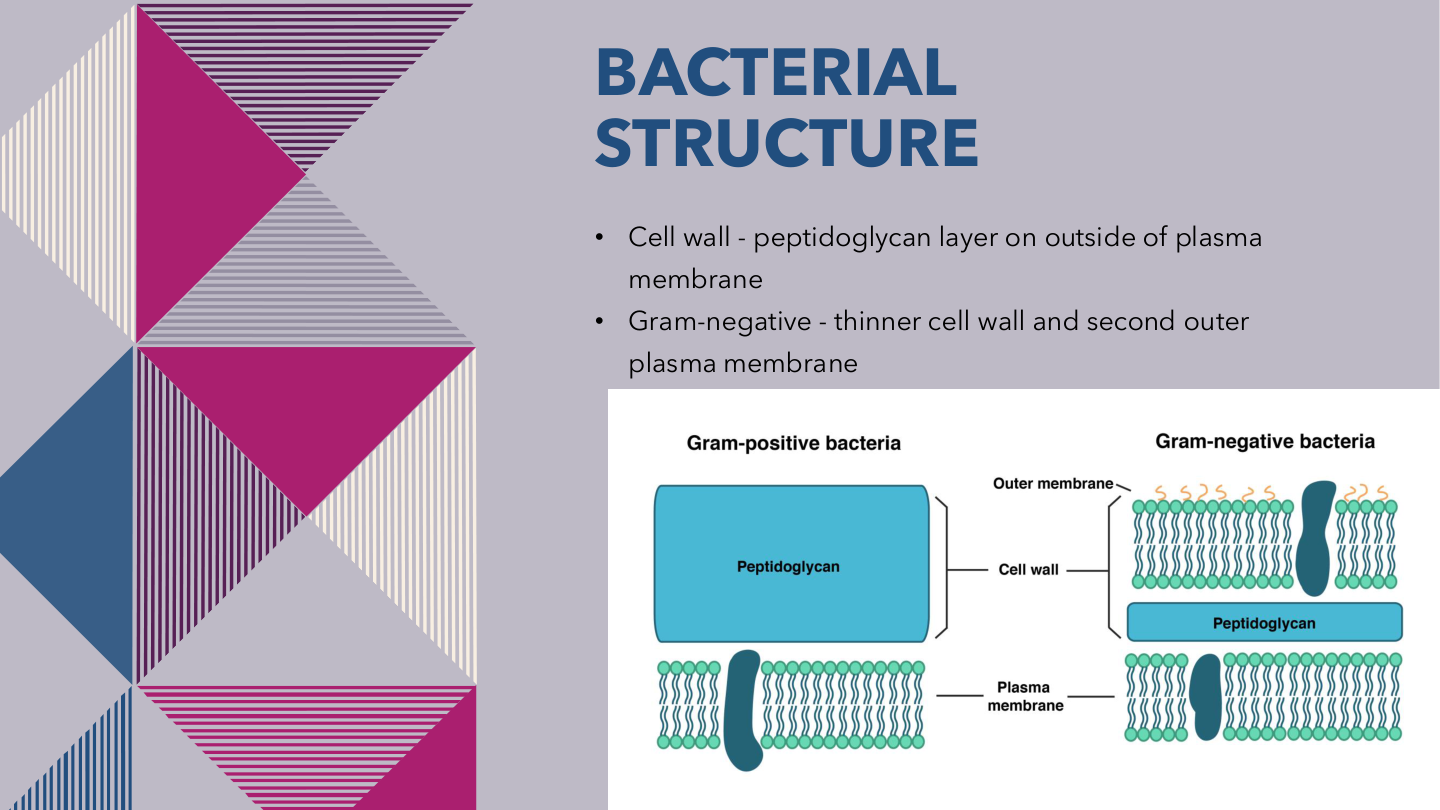
Gram-positive bacteria possess a relatively thick peptidoglycan cell wall outside their plasma membrane.
Gram-negative bacteria possess a thinner peptidoglycan layer and an additional outer membrane.
Peptidoglycan is a structural material that provides strength and shape to bacterial cell walls.
These structural differences affect how antibacterial drugs can act on different bacteria.
⭐ Q: What is the bacterial folate pathway, and why is it important for bacterial replication?
The folate pathway produces molecules needed for bacterial growth, including deoxythymidine monophosphate (dTMP), purine nucleotides, and certain amino acids.
Nucleotides are building blocks of DNA and RNA, making them essential for replication.
Because bacteria use folate metabolism to produce these necessary components, the pathway can be targeted by antimicrobial medications.

⭐ Q: What is bacterial DNA gyrase, and how does it facilitate DNA replication?
DNA gyrase is a bacterial type II topoisomerase that regulates DNA supercoiling.
As bacterial DNA is unwound during replication, positive supercoiling develops ahead of the replication machinery and can prevent further unwinding.
DNA gyrase relieves this torsional stress and introduces negative supercoils, allowing replication to continue.
Because DNA gyrase is essential for normal bacterial DNA replication, it is an important antimicrobial drug target.

⭐ Q: How do the 30S and 50S subunits of bacterial ribosomes differ in structure and function?
The 30S small ribosomal subunit participates in translating messenger RNA (mRNA), including the alignment of transfer RNA (tRNA) with mRNA.
The 50S large ribosomal subunit participates in protein synthesis and contains 5S and 23S ribosomal RNA.
The two subunits assemble into a functional bacterial ribosome.
Their structural differences from mammalian ribosomes allow certain antibiotics to inhibit bacterial protein synthesis selectively.
🔎 What this means:
30S: Small subunit; mRNA decoding and tRNA positioning.
50S: Large subunit; protein synthesis, including peptide formation.
Antimicrobial significance: Distinct bacterial ribosomal structures can be targeted by antibiotics.
⭐ Q: What is the function of bacterial DNA-directed RNA polymerase, and why is it a potential antimicrobial target?
DNA-directed RNA polymerase is an enzyme that produces RNA using DNA as a template, allowing bacterial genes to be expressed.
The lecture notes that prokaryotes have one principal type of RNA polymerase.
Because RNA production is essential for bacterial function and the bacterial enzyme differs from mammalian enzymes, it can be targeted by antimicrobial drugs.
⭐ Q: What are the major bacterial shapes and arrangements used during morphological identification?
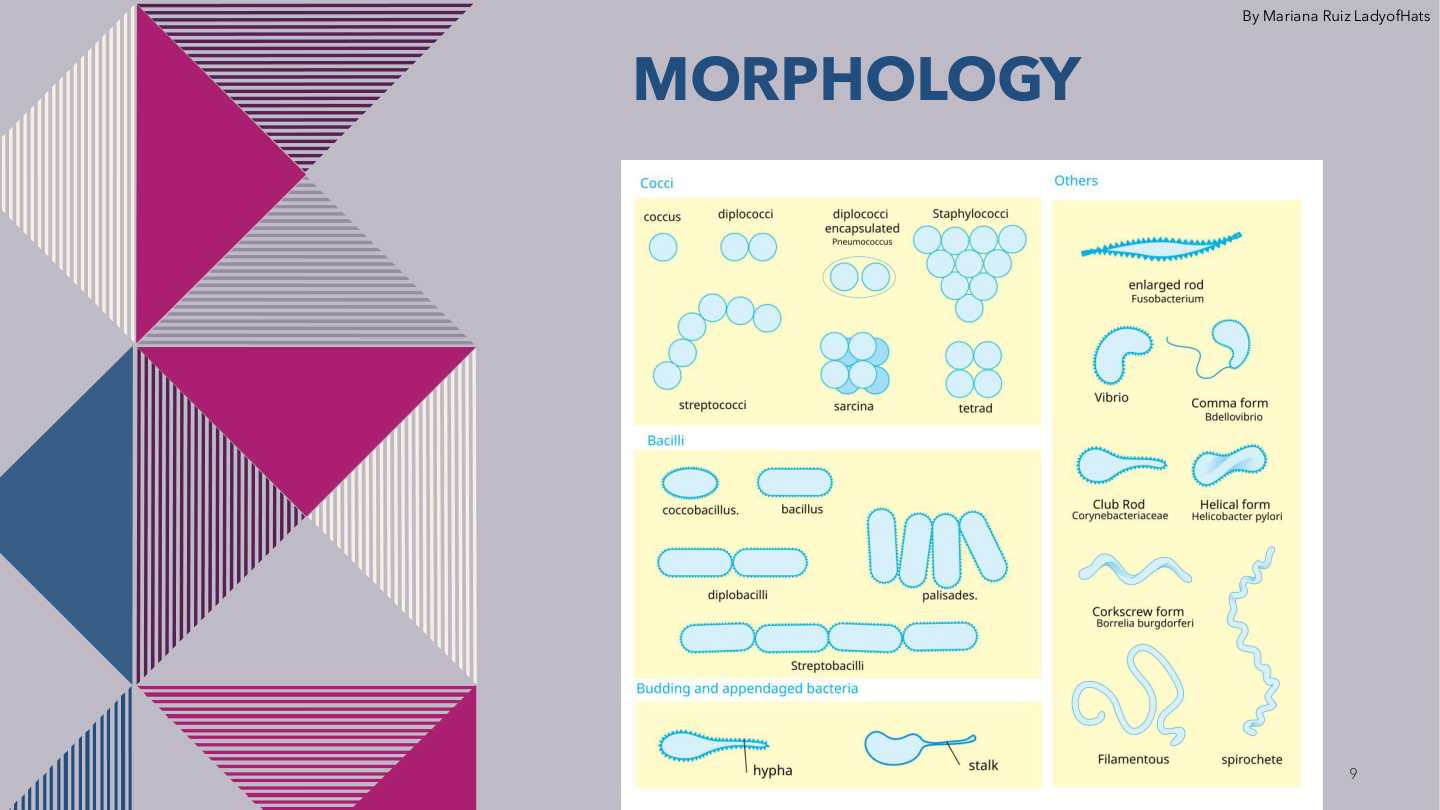
Cocci are spherical bacteria, while bacilli are rod-shaped bacteria. Other bacterial forms can be curved, filamentous, or spiral-shaped.
Cocci can appear in pairs (diplococci), groups of four (tetrads), chains (streptococcal arrangements), or clusters (staphylococcal arrangements).
Observing bacterial morphology helps narrow the possible identity of microorganisms during cytological examination.
⭐ Q: What are the major characteristics of Staphylococcus species, and how do commensal and opportunistic species differ?
Staphylococcus species are gram-positive cocci that can occur in multiple arrangements, including pairs and tetrads. They are facultative anaerobes, meaning they can grow with or without oxygen.
Some are predominantly commensal, such as coagulase-negative S. epidermidis.
Others, including coagulase-positive S. aureus and S. pseudintermedius, may be normal residents but can act as opportunistic pathogens when conditions favor infection.
An opportunistic pathogen causes disease when circumstances such as altered microbial balance or impaired host defenses allow it to proliferate.
⭐ Q: Which opportunistic Staphylococcus species are most commonly associated with skin disease in dogs, cats, and horses?
In dogs, the lecture emphasizes Staphylococcus pseudintermedius and Staphylococcus schleiferi.
In cats, the organisms emphasized are Staphylococcus pseudintermedius and Staphylococcus aureus.
In horses, important examples include Staphylococcus aureus, Staphylococcus hyicus, and Staphylococcus delphini.
🔎 What this means:
Dogs: S. pseudintermedius, S. schleiferi.
Cats: S. pseudintermedius, S. aureus.
Horses: S. aureus, S. hyicus, S. delphini.
⭐ Q: What are the primary and secondary skin lesions associated with staphylococcal pyoderma?
Staphylococcal pyoderma is a bacterial skin infection commonly associated with opportunistic Staphylococcus species.
Primary lesions include papules, which are small raised skin lesions, and pustules, which contain purulent material.
Secondary lesions include crusts and epidermal collarettes, which are rings of scale remaining after superficial pustules rupture.
🔎 What this means:
Papule: Small, solid raised lesion.
Pustule: Small lesion containing pus.
Crust: Dried inflammatory material on the surface.
Epidermal collarette: Ring of scaling remaining after a superficial lesion ruptures.

⭐ Q: What are the major structural components of fungal cell walls and membranes, and why are they important antimicrobial targets?
The fungal cell wall contains a polysaccharide scaffold, including chitin and glucans, which provides structural support.
The fungal plasma membrane contains ergosterol, an important membrane component.
Some fungi may conceal cell-wall components with structures such as capsules, helping them evade host immune recognition.
Differences between fungal and mammalian cellular structures allow certain antifungal medications to act selectively against fungal organisms.

⭐ Q: What is Malassezia pachydermatis, and why can its overgrowth cause skin disease in dogs and cats?
Malassezia pachydermatis is a yeast commonly found on the skin of dogs and cats.
It requires lipids for growth and may therefore be associated with oily skin regions.
When its population becomes excessive, it can contribute to pruritus (itching) and signs of chronic inflammation.
Its presence alone does not necessarily indicate disease because it can also be part of the normal cutaneous microbiome.
⭐ Q: What is a microbial biofilm, what is it composed of, and how does it protect microorganisms?
A biofilm is a community of bacteria or fungi that adhere to one another and to surfaces within a self-produced extracellular matrix.
The biofilm matrix contains polysaccharides, proteins, lipids, and DNA.
Microorganisms within biofilms can differ in gene expression and behavior from freely suspended (planktonic) organisms.
Biofilms protect microorganisms against desiccation, antimicrobial medications, and host immune defenses, making infections involving biofilms more difficult to treat.
⭐ Q: How do herpesviruses, papillomaviruses, and poxviruses differ in their characteristic cutaneous lesions?
Herpesviruses can produce vesicles, bullae, and ulcers. They may persist within the host and periodically reactivate, causing recurrent disease.
Papillomaviruses typically produce proliferative lesions, including nodules or plaques with a verrucous (wart-like, frond-shaped) surface. Some lesions may undergo malignant transformation.
Poxviruses may cause papules, vesicles, or pustules, often with pale lesions surrounded by erythema. Some poxviruses can be transmitted by arthropods, particularly in large animals.
🔎 What this means:
Herpesvirus: Vesicles, bullae, ulcers, and recurrence.
Papillomavirus: Proliferative, wart-like lesions.
Poxvirus: Papules, vesicles, or pustules; possible arthropod transmission.
⭐ Q: How can skin cytology and knowledge of microbial morphology help guide treatment decisions?
Skin cytology involves microscopically examining cells and microorganisms collected from skin lesions.
By evaluating microbial morphology, inflammatory cells, and the animal's species, the clinician can narrow the list of likely pathogens.
Knowledge of bacterial and fungal structures also helps determine which antimicrobial drug targets may be appropriate.
Cytology supports clinical decision-making but does not always provide definitive species identification.
⭐ Q: A dog with atopic dermatitis develops papules, pustules, crusts, and epidermal collarettes. Which complication and organism should be suspected?
The lesions suggest bacterial pyoderma, potentially occurring secondary to atopic dermatitis.
Staphylococcus pseudintermedius is an important organism to suspect because it is a common opportunistic pathogen in dogs and is associated with canine skin dysbiosis.
Cytology can help evaluate the suspected infection and guide further management.
The skin lesions alone cannot definitively identify the bacterial species.
⭐ Q: Why can antimicrobial medications target bacterial or fungal cells without producing identical effects in mammalian cells?
Selective antimicrobial toxicity relies on biological differences between microorganisms and mammalian cells.
Bacterial targets include peptidoglycan cell walls, bacterial folate pathways, DNA gyrase, bacterial ribosomes, and bacterial RNA polymerase.
Fungal targets include structural components such as ergosterol-containing membranes and fungal cell walls.
Because mammalian cells differ in these structures or pathways, drugs can exploit those differences to inhibit or kill microorganisms while reducing effects on the host.
⭐ Q: Why is Staphylococcus aureus particularly important from a One Health perspective?
Staphylococcus aureus is an important zoonotic and human healthcare concern, particularly when it is methicillin-resistant (MRSA).
Cats and horses are important veterinary hosts for S. aureus, whereas dogs more commonly develop infections involving S. pseudintermedius.
Because MRSA can spread between humans and animals, identifying it may require additional infection-control precautions, environmental decontamination, and consideration of human exposure.
For example, a cat with recurrent pyoderma whose owner works in human healthcare may warrant earlier bacterial culture because of potential MRSA exposure.
⭐ 🔄 UPDATED/REPLACEMENT Q: Why are microbial biofilms particularly difficult to eliminate with antimicrobial treatment, and how can they cause recurrent infections?
Biofilms are communities of microorganisms enclosed within a protective extracellular matrix composed of polysaccharides, proteins, lipids, and DNA.
The matrix limits antimicrobial penetration, protects against immune defenses, and helps prevent desiccation.
Additionally, microorganisms inside biofilms may become less metabolically active or replicate more slowly, making them less susceptible to antimicrobials that target active bacterial growth.
These organisms may survive treatment and become active again afterward, resulting in recurrent or persistent infections.
🔎 What this means:
Physical protection: The matrix limits access by drugs and immune cells.
Reduced replication: Some organisms become less susceptible to growth-dependent antimicrobials.
Recurrence: Surviving organisms can reactivate after treatment.
💡 Think: A biofilm is a fortified bacterial city whose residents can hide behind walls and temporarily stop working until the threat passes.
Staphylococcal pyoderma lesions
Papules can progress to pustules, which rupture and form crusts or epidermal collarettes. A scab is a blood-derived type of crust; not all crusts are scabs
Papillomavirus
Pigmented viral plaques in dogs can undergo malignant transformation into squamous cell carcinoma.
Staphylococcus species
The professor specifically highlights S. schleiferi as an exception to the general tendency for coagulase-negative staphylococci to be less pathogenic.