BIO121 Final Exam (30%)
 Call Kai
 Learn
 Practice Test
 Spaced Repetition
 Match
 Flashcards
 Knowt Play
1/122

There's no tags or description
Looks like no tags are added yet.
123 Terms
Modes of Reproduction
A____ Reproduction: Produces o____ that are g____ i____ c___ of a s____ p____.
S____ Reproduction: C____ v____ in t____ by c____ u____ s____ of g____ i____ from t____ p____.
**A___ c___ o____ from a group of p__-e____ c____ that multiply / reproduce via c___ d____.
asexual, offspring, genetically identical copies, single parent
sexual, creates variation, traits, combining unique sets, genes inherited, two parents
all cells originate, pre-existing cells, cell division
Chromosome Duplication (Overview)
P____ to division, e____ c____ d____ to produce t____ i____ s____ c____.
S____ c____ are j____ t____ along their length and a____ m____ t____ at a narrow r___ called the c____.
During cell division, s____ c____ s____ into t___ n___ d____ c___, delivering a c____, i____ g____ to e___.
prior, each chromosome duplicates, two identical sister chromatids
sister chromatids, joined together, attached most tightly, region, centrosome
sister chromatids separate, two new daughter cells, complete identical genome, each

The Eukaryotic Cell Cycle
I____
Occupies approximately ___% of the c___ c____ d____.
1) __ Phase (First Gap): Cell g___ in s___, i____ c____ v___, and s____ o____.
2) __ Phase (Synthesis): D__ is r____ and c____ and d____.
3) __ Phase (Second Gap): Cell c____ g____ while completing f____ p____ for d____.
M____ (M) Phase
M____: D____ of the n____
C____: D____ of the c____, p____ the cell into t___ d____ d____ c____.
interphase
90%, cell cycle duration
G1, grows, size, increasing cytoplasmic volume, synthesizes organelles
S, DNA, replicated, chromosomes, duplicated
G2, continues growing, final preparations, division
Mitotic
Mitosis, division, nucleus
cytokinesis, division, cytoplasm, partitioning, two distinct daughter cells
Biological Roles of Mitosis
M____ i____ c____ n____ and s____ across c___ g____.
D____ G____:
I____ organism b___ s___ and t____ s____.
C___ R____ and R____:
R____ w___-o___ or d____ body cells
A____ reproduction in s___-c____ and s____ eukaryotic organisms
maintains identical chromosome number, structure, cell generations
developmental growth
increasing, body size, tissue structure
cell replacement, repair
replacing worn-out, damaged
asexual, single celled, simple
Homologous Chromosomes & Genetic Content
Human s____ (body) cells are d____ (2n), carrying t__ p____ of h____ c____.
Homologous chromosomes share the s___ l____, s____, and g___ l____.
somatic, diploid, two pairs, homologous chromosomes
same length, size, gene locations
Cell Division Control Mechanisms in Eukaryotic Cells: Regulation and Checkpoints
Cell division is r____ by m____ c____ g___ e____.
N__-d____ c___ are k___ in the __ Phase by m____ r____ b____.
C____ G____: M____ c____ c____ before a____ c___ c____ p____, checking for:
- C____ D__ r____
- U____ D__ d____
- A____ n____ and e____ c____
regulated, mechanisms controlling gene expression
non-dividing cells, kept, G1, molecular regulatory brakes
checkpoint genes, monitor crucial conditions, allowing cell cycle progression
complete DNA replication
unrepaired DNA damage
adequate nutrients, environmental conditions
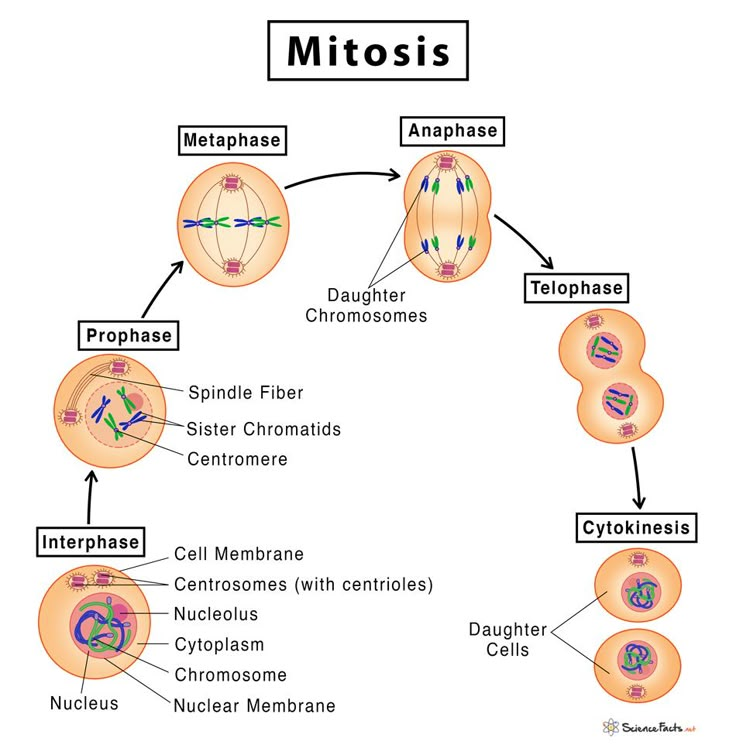
Cell Cycle: M Phase: Stages of Mitosis (Nuclear Division)
Stage 1: I____ (Pre-Mitosis)
Cytoplasmic Events: C____ c____ d____ and t___ c____ f___.
Nuclear Events: C____ are l___ p____ as c____ for r____; D__ d____ during __ phase.
Human Cell Chromosome Count: __ u____ c____, __ s____ c____
Stage 2: P____
Cytoplasmic Events: M____ g____ from c____ to a____ the m____ s____ as c____ m____ to o____ p____.
Nuclear Events: C____ c____ t____ into distinct d___-s____ c____; n____ d____; n____ e____ b____ d____.
Human Cell Chromosome Count: __ d____ c____, __ s____ c____
Stage 3: M____
Cytoplasmic Events: S____ a____ is f____ a____; s____ m____ a____ to the c____ of chromosomes
Nuclear Events: C____ a____ s____-f___ along the c____ e____ of the cell (metaphase plate).
Human Chromosome Count: __ d____ c____, __ s____ c____
Stage 4: A____
Cytoplasmic Events: M____ p____ and s____ f____ s____, p____ s____ c____ a____ toward o____ p____
Nuclear Events: S____ c____ s____ at their centromeres, becoming i____ d____ c____.
Human Cell Chromosome Count: __ s____-s____ c____, __ s____ c____
Stage 5: T____
Cytoplasmic Events: Cell c____ to e____; m____ s____ d____.
Nuclear Events: N____ m____ r__-f____ around c____ s___ at e___ p____; c____ u____ back into c____; n____ r____
Human Cell Chromosome Count: __ s____-s____ c____ p__ e____ d____ n____
interphase
cytoplasmic contents double, two centrosomes form
chromosomes, loosely packed, chromatin, replication, DNA duplicates, S
46 unduplicated chromosomes, 92 sister chromatids
prophase
microtubules grow, centrosome, assemble, mitotic spindle, centrosomes migrate, opposite poles
chromatin coils tightly, double-stranded chromosomes, nucleoli disappear, nuclear envelope breaks down
46 duplicated chromosomes, 92 sister chromatids
metaphase
spindle apparatus, fully assembled, spindle microtubules attach, centromeres
chromosomes align single-file, center equator
46 duplicated chromosomes, 92 sister chromatids
anaphase
motor proteins, spindle fibers shorten, pulling sister chromatids apart, opposite poles
sister chromatids separate, individual daughter chromosomes
92 single-stranded chromosomes
telophase
continue, elongate, mitotic spindle dissolves
nuclear membranes re form, chromosome sets, each pole, chromosomes uncoil, chromatin, nucleoli reappear
46 single stranded chromosomes per emerging daughter nucleus
Final Stages of Cell Division: Cytoplasmic Division (Cytokinesis)
C____ o____ with the t____ to d____ the c____ into t__ s____ c____.
cytokinesis overlaps, telophase, divide, cytoplasm, two separate cells.
Animal Cell Cytokinesis
Mechanism: F____ of c____ f____ by p____ i____
Process: M____ r____ c____ under the p____ m____, p____ the c___ s____ i____ until it s____ in two.
Constraint: F____ c___ m____ allows direct physical c____.
formation, cleavage furrow, pinching inward
microfilament ring contracts, plasma membrane, pulling, cell surface inward, splits
flexible cell membrane, constriction
Plant Cell Cytokinesis
Mechanism: O____ g____ of a d__-s____ c____ p____.
Key Structures: M____-b____ v____ containing c___ w___ m____.
Process: V____ f____ at the m____ p____ to form a c___ p____, g____ o___ until it j____ the p____ w____ to form two cells.
Constraint: R_____ o____ c___ w___ p____ p____, requiring i____ w____ a____.
outward growth, disk-shaped cell plate
membrane bound vesicles, cell wall material
vesicles fuse, metaphase plate, cell plate, growing outward, joins, parent wall
rigid outer cell wall prevents pinching, internal wall assembly
Sexual vs. Asexual Reproduction
A____ Reproduction: Generates g____ i____ o____ (c____) from a s____ p____.
S____ Reproduction: Mode of reproduction where o____ i____ g____ from t___ p____, resulting in u____ c____ of t____.
Site of Occurrence: M____ occurs specifically in s_____ e____ r____ c____ called g____ c____ located in g____ (ovaries and testes).
asexual genetically identical offspring, clones, single parent
sexual, offspring inherits genes, two parents, unique combinations, traits
meiosis, specialized eukaryotic reproductive cells, germ cells, gonads
Evolutionary Advantages of Sexual Reproduction
Sexual reproduction s____ e____ a____ from t___ p____ into n____ g____ c____.
In a____ populations, n___ t____ c____ r___ s____ on r____ g____ m____.
S____ reproduction generates n___ t____ c____ in f__ f____ g____ than m____ a____.
An a____ t___ s____ much more r____ through a s____ r____ population.
G____ d____ gives sexually reproducing populations a significantly b____ c____ of s____ e____ c____ compared to clonal populations
shuffles existing alleles, two parents, new genetic combinations
asexual, new trait combinations rely solely, rare genetic mutations
sexual, new trait combinations, far fewer generations, mutation alone
adaptive trait spread, rapidly, sexually reproducing
genetic diversity, better chance, surviving environmental changes
Somatic Cells vs. Gametes
Somatic cells / B____ cells are d____ (2n), containing t___ c____ s___ of h____ c____.
G____ (Sperm and Egg cells) are h____ (n), containing a s____ s___ of c____.
body, diploid, two complete sets, homologous chromosomes
gametes, haploid, single set, chromosomes
Human Chromosome Composition
Total chromosome count in body cells = __ chromosomes, representing __ h____ p____
Autosomes (Non-Sex Chromosomes): __ pairs of chromosomes that are m__ in s____, s____, and g____ c____.
Sex Chromosomes: __ pair (X and Y) that d____ b____ s____ and d____ in s____ and g____ c____.
46, 23 homologous pairs
22, matched, size, shape, genetic composition
1, determines biological sex, differs, size, genetic composition
Homologous Chromosomes, Loci, and Alleles
H____ c____ refer to a pair of chromosomes (one maternal, one paternal) matched in length, centromere position, and gene location.
G____ l____ refers to the specific location of a gene on a chromosome.
A____ refer to the alternative/different versions of the same gene found at the same locus on homologous chromosomes.
homologous chromosomes
gene locus
alleles
Homologous Chromosomes, Loci, and Alleles
Homologous Chromosomes: A p___ of chromosomes (one m____, one p____) matched in l____, c____ p____, and g____ l____.
Gene Locus: The s____ l____ of a g____ on a chromosome.
Alleles: A____ or d____ v____ of the s____ g____ found at the s____ l____ on h____ c____.
Key Principle: H____ chromosomes carry the s____ g____ in the s____ o____, but they may carry d____ v____ (a____) of those genes.
pair, maternal, paternal, length, centromere position, gene location
specific location, gene
alternative, different variations, same gene, same locus, homologous chromosome
homologous, same gene, same order, different versions, alleles
Sexual Life Cycles: Alternation of Generations (n and 2n)
Sexual life cycles c____ between h____ (n) and d____ (2n) phases:
M____: C____ d____ (2n = 46) g____ c____ in o____ and t____ into h____ (n = 23) g____.
F____: U____ of a h____ s____ (n = 23) and e___ (n = 23), r____ the d____ s____ in a z____ (2n = 46).
M____ & D____: The d____ z_____ undergoes r____ m____ d____ to g____ into a m____ d____ a____ (2n = 46).
cycle, haploid, diploid
meiosis, converts diploid germ cells, ovaries, testes, haploid gametes
fertilization, union, haploid sperm, egg, restoring, diploid state, zygote
mitosis, development, diploid zygote, repeated mitotic divisions, grow, multicellular diploid adult

Overview of Meiotic Divisions
Meiosis is p____ by a s____ r____ of c____ d____ during i_____ (__ phase), followed by t___ s____ n____ d____:
M____ __ (Reductional Division): P___ u___ and s____ h____ c____ p____, r____ chromosome number from 2n to n and yielding t__ h____ c___ with d____ c____.
M____ __ (Equational Division): S____ s____ c____ w____ i____ D__ r____, producing a total of f___ h____ d____ c____ with u____ c____.
preceded, single round, chromosome duplication, interphase S, two sequential nuclear divisions
meiosis I, pairs up, separates homologous chromosome pairs, reducing, two haploid cells, duplicated chromosomes
meiosis II, separates sister chromatids without interrupting DNA replication, four haploid daughter cells, unduplicated chromosomes
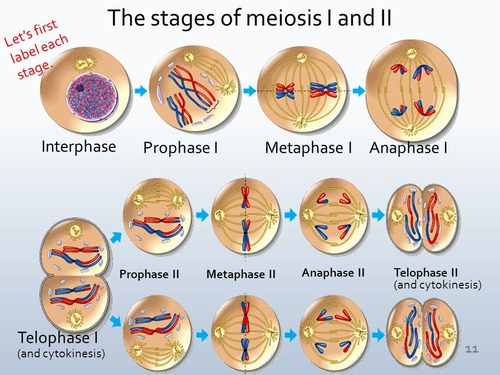
Detailed Step-by-Step Tour of Meiosis
Pre-Meiosis: I____
C____ r____ during the __ phase, c_____ s____-s____ c____ into d____ c____ with t___ s____ c____ held at the centromere.
Meiosis I: Homologous Chromosomes Separate
P____ I
C____ c____ and c____.
S____: H____ chromosomes c____ t_____ as physical p____.
T____ F____: E____ p____ s_____ consists of f____ c____ (two sister chromatids per homologous chromosome).
C____ O____: N_____ chromatids e____ c____ s____ at c____ s____ called c____.
N____ e____ f____ and s____ a____ b____ to a____.
Human Cell Counts: __ chromosomes, __ chromatids
M____ I
H____ pairs (t____) a____ in a d____-f___ a____ along the m____ p____ (cell equator).
S____ m____ a____ to k____ at the c____ of e____ h____ c____.
Human Cell Counts: __ chromosomes, __ chromatids
A____ I
H____ chromosome pairs s____ and m____ toward o____ p____ of the cell
S____ c____ r____ a____ at their c____ and m____ t____ as s____ u____
T____ I & C____
D____ c____ r____ the p____
A n____ e____ r__-f____ around each chromosome set in some species
C____ occurs, p____ the c____
Result: __ h____ d____ c___, each containing o__ s___ of d____ c____
Human Cell Counts: __ chromosomes, __ chromatids
Meiosis II: Sister Chromatids Separate (Occurs in both cells produced by Meiosis I, without any prior chromosome duplication)
P____ II
C____ c____ a____ in relaxed; n____ e____ b____ d____
S____ a____ f____ and m____ c____ toward the c___ m____
M____ II
D____ c____ a____ in a s____-f___ along the m____ p____ at the cell equator
A____ II
C____ s____; s____ c____ s____ and m____ toward o____ p____ as i____,u____ d____ c____.
T____ II & C____
C____ r____ o____ p____; n____ e____ r__-f____ around f____ n___ n____.
C____ d____ the c____.
Result: __ g____ u____ h____ d____ c____ with u____ c____
Human Cell Counts: __ chromosomes, __ chromatids
prophase I
chromosomes coil, condense
synapsis, homologous, come together, pairs
tetrad formation, each paired structure, four chromatids
crossing over, nonsister, exchange corresponding segments, contact sites, chiasmata
nuclear envelope fragments, spindle apparatus begins, assemble
46, 92
metaphase I
homologous tetrads align, double file arrangement, metaphase plate
spindle microtubules attach, kinetochores, centromeres, each homologous chromosome
46, 92
anaphase I
homologous, separate, move, opposite poles
sister chromatids remain attached, centromeres, move together, single units
telophase I, cytokinesis
duplicated chromosomes reach, poles
nuclear envelope re forms
cytokinesis, partitioning, cytoplasm
2 haploid daughter cells, one set, duplicated chromosomes
23, 46
prophase II
chromosomes condense again, nuclear envelope breaks down
spindle apparatus forms, moves chromosomes, cell middle
metaphase II
duplicated chromosomes align, single-file, metaphase plate
anaphase II
centromeres split, sister chromatids separate, move, opposite poles, individual, unduplicated daughter chromosomes
telophase II, cytokinesis
chromosomes reach opposite poles, nuclear envelopes re form, four new nuclei
cytokinesis divides, cytoplasm
4 genetically unique haploid daughter cells, unduplicated chromosomes
23, 0
How Meiosis Introduces Genetic Variation
T____ p____ m____ contribute to the g____ d____ seen in sexually reproducing species.
C____ O____ (P____ I)
Process: N____ c____ of p____ h____ c____ a____ t____, b____, and e____ c____ g____ s____ at p____ c____-o____ called c____.
Outcome: Produces r____c____ that combine m____ and p____ a____ into n____ p_____ not present in either parent.
Products: Out of 4 chromatids in a tetrad, __ r____ p____ c____ and __ becoomes r____ c____
I____ A____ (M____ I)
Process: E___ p____ of h____ chromosomes a____ r____ at the m____ p____, with e____ p____ that the m____ or p____ c____ f____ e____ p____.
Human Calculation: For humans (n = 23), 223 = 8 388 608 (8.3 million+) possible combinations of homologous chromosomes per gamete—-even without considering crossing over
R____ F____
A____ u____ s____ can fertilize a____ u____ e___
8.4 million x 8.4 million = ~70 trillion possible combinations
Two parents c____ produce g____ i____ o____ in s____ f____
three primary mechanisms, genetic diversity
crossing over prophase I
nonsister chromatids paired homologous chromosomes align tightly, break, exchange corresponding genetic segments, physical cross-overs, chiasmata
recombinant chromosomes, maternal, paternal alleles, novel pattern
2 remain parental chromosomes, 2 recombinant chromosomes
independent assortment, metaphase I
each pair, homologous, aligns randomly, metaphase plate, equal probability, maternal, paternal, faces either pole
random fertilization
any unique sperm, any unique egg
cannot, genetically identical offspring, separate fertilizations
Heredity
The transmission of traits from one generation to the next.
Genetics (mention its pioneer)
The scientific study of heredity, pioneered by Gregor Mendel.
Genes
Heritable factors passed from parents to offspring.
Alleles
Alternative versions of a gene that determines heritable traits.
Gene Locus
The specific physical location of a gene on a chromosome.
Homologous Chromosomes
Pairs of chromosomes in diploid (2n) cells that carry alleles of the same genes at the same loci.
Genotype
The particular set of alleles carried by an individual (e.g., PP, Pp, pp).
Phenotype
The observable physical or physiological traits of an individual (e.g., purple flowers, white flowers).
Dominant Allele
An allele expressed whenever present, masking the effect of a recessive allele.
Recessive Allele
An allele whose effect is masked in the presence of a dominant allele; the phenotype of a recessive allele is only expressed when an individual is homozygous recessive.
Homozygous
Having two identical alleles for a gene (AA or aa).
Heterozygous
Having two different alleles for a gene (Aa).
Hybrids
Heterozygous offspring resulting from a cross between true-breeding parents with different trait forms (e.g. AA x aa —> Aa).
P Generation
Parental generation (true-breeding parents).
F1 Generation
First filial generation (hybrids from P x P).
F2 Generation.
Second filial generation (offspring from F1 x F1).
Reasons Why Mendel Used Pea Plants in his Experiments
C____ M____
C____-f____ can be s____ c____ by r____ pollen-producing stamens from purple flowers and m____ t____ pollen to c____ (female reproductive organ of plants).
D____ C_____
C____, o____ t____ with t____ d____ f____.
S_____ G____ T____
Allows q____ o____ a_____ m____ g____.
L____ O____ N____
H____ s____ s____ yields more statistically r____ results.
controlled mating
cross-fertilization, strictly controlled, removing, manually transferring, carpels
distinct characteristics
clear, observable traits, two distinct forms
short generation time
quick observation across multiple generations
high sample size, reliable
Define Mendel’s Law of Segregation (Monohybrid Cross).
Pairs of alleles located on homologous chromosomes separate (segregate) during gamete formation in meiosis.
Each gamete receives only one allele per gene.
Monohybrid Cross
A genetic cross involving a single character (e.g., flower color).
Define Mendel’s Law of Independent Assortment (Dihybrid Cross).
Each pair of alleles segregates independently of other pairs of alleles during gamete formation in meiosis (specifically during Anaphase I).
Dihybrid Cross
A cross tracking two characters simultaneously (e.g., seed shape and seed color)
The Purpose of a Testcross.
To determine the unknown genotype of an individual displaying a dominant phenotype.
The Method of a Testcross.
Mate the individual of unknown genotype with a homozygous recessive individual.
Interpreting the Results of a Testcross.
If all offspring show the dominant phenotype, the unknown parent is homozygous dominant.
If offspring show a 1:1 ratio of dominant to recessive phenotypes, the unknown parent is heterozygous.
Incomplete Dominance
Neither allele is completely dominant.
Heterozygotes express an intermediate phenotype between the two parental traits.
Codominance
Both alleles are fully expressed in heterozygous individuals (no blending).
Multiple Alleles
A gene exists in more than two alleles form in a population.
Polygenetic Inheritance
A single phenotypic trait results from the additive effects or two or more genes.
Pleiotropy
A single gene influences multiple phenotypic characters.
Continuous vs. Discontinuous Variation: Genetic Control
CV is controlled by many genes while DV is controlled by only 1 or 2 genes.
Continuous vs. Discontinuous Variation: Environmental Effect
CV is significantly affected by the environment while DV is unaffected by the environment.
Continuous vs. Discontinuous Variation: Graphical Representation
CV is represented by a bell-shaped curve (continuous spectrum) while DV is represented by a bar graph (discrete categories).
Human Chromosomes
Human s____ (body) cells contain __ chromosomes organized into __ p___ of h____ chromosomes.
A____ (22 pairs / 44 chromosomes): Chromosomes that are i____ in l____, s____, and c____ l____ in b____ m____ and f____.
They c____ g____ for general bodily t____.
Sex Chromosomes (1 pair / 2 chromosomes): Determines the b____ s___ of an individual.
Female: __ (identical pair)
Male: __ (non-identical pair)
somatic, 46, 23 pairs, homologous
autosomes, identical, length, shape, centromere location, both males, females
carry genes, traits
biological sex
XX
XY
Definition of Genetic Abnormality
G____ a____ is a u____ v____ of an i____ t____ that d____ n___ c____ severe m____ or h____ p____ (e.g., polydactyly / extra digit).
genetic abnormality, uncommon variation, inherited trait, does not cause, medical, health problems
Definition of Genetic Disorder
A g____ d____ is an i____ c____ that e____ leads to m____ to s____ m____ p____ (e.g., Cystic Fibrosis, Huntington’s disease).
genetic disorder, inherited condition, eventually, mild, severe medical problems
Karyotyping
A l____ p____ used to v____ and a____ an individual’s c____ n____, s____, and s____.
laboratory procedure, visualize, analyze, chromosome number, size, structure
Step-by-Step Procedure of Karyotyping
Culture: C____ are h____ and placed in a g____ m____ that s____ c____ d____ (mitosis).
Isolation: Cells are i____ from the growth medium.
Spreading: Cells are p____ and s____ onto a glass m____ s____. 🔬
Staining: C____ are s____ using Giemsa stain to r____ distinct b____ p____.
Arrangement: C____ are p____ and a____ systematically by s___, l____, s____, and c____ p____ (autosomes 1-22, followed by sex chromosomes).
cells, harvested, growth medium, stimulates cell division
isolated
placed, spread, microscope slide
chromosomes, stained, reveal, band patterns
chromosomes, photographed, arranged, size, length, shape, centromere position
Pedigree
A p____ is a s____ c____ / diagram that t____ the p____ of i____ of a s____ t____ through m____ g____ of a family.
pedigree, standardized chart, tracks, pattern, inheritance, specific trait, multiple generations
Pedigree Deduction
A____ D____: Trait d____ n___ s____ generations; a____ c____ have at least one a____ p____.
Two unaffected parents (aa x aa) cannot produce an affected child.
A____ R____: Trait often s____ g____; a____ c____ can be born to u____ p____.
Two unaffected h____ c____ p____ (Aa x Aa) can have an affected child.
__-L____ R____: A____ m____ o____ a____ f____; trait passed from m____ to s___.
An affected mother (XaXa) will pass the trait to 100% of her sons.
autosomal dominant, does not skip, affected children, affected parent
autosomal recessive, skips generations, affected children, unaffected parents
heterozygous carrier parents
x-linked recessive, affected males outnumber affected females, mother, son
Autosomal Inheritance
A____ t____ are c____ by g____ located on a____ (chromosomes 1 to 22).
autosomal traits, controlled, genes, autosomes
Autosomal Inheritance Patterns: Autosomal Dominant Inheritance
A____ d____ i____ is defined as a g____ p____ where an a____ p____ has a ___ chance of p____ the t____ to offspring in each pregnancy.
Rule: The trait is e____ if a__ l____ o___ d____ a____ is p____.
Genotypes
A____: H____ d____ (AA) or h____ (Aa)
N____ (Unaffected): H____ r____ (aa)
Key Disorders
A_____: A form of d____ caused by impaired embryonic skeletal formation.
H____ D____: A progressive n____ disorder caused by brain cell death.
Onset: S____ typically appear between ___ to ___ years of age.
Symptoms: M____ a____, gait abnormalities, i____ j____ movements, and cognitive decline.
Progression: D____ usually occurs 15-20 years after diagnosis; n__ c____ t____ exists.
P____: Condition characterized by e___ f____ or t___.
H____: E____ c____ level in blood leading to p____ h____ d____.
autosomal dominant inheritance, genetic pattern, affected parent, 50%, passing, trait
expressed, at least one dominant allele, present
affected, homozygous dominant, heterozygous
normal, homozygous recessive
achondroplasia, dwarfism
huntington’s disease, neurological
symptoms, 30, 50
mood alterations, involuntary jerky
death, no curative treatment
polydactyly, extra fingers, toes
hypercholesterolemia, excess cholesterol, premature heart disease
Autosomal Inheritance Patterns: Autosomal Recessive Inheritance
A____ r____ i____ is a g____ p____ that occurs when a t____ is e____ o____ when t___ c____ of the r____ a____ are p____.
Genotypes
N____: H____ d____ (AA)
C____ (Normal Phenotype): H____; c____ the hidden r____ g____ (Aa)
A____: H____ r____ (aa)
Key Disorders
A____: D____ of m____ pigment production (affecting skin, hair, eyes) due to a d____ tyrosinase e____.
C____ F____ (CF): F____ transmembrane p____ disrupting cells that produce mucus, sweat, and digestive juices. Results in thick, sticky mucus accumulation in lungs and pancreas, leading to severe r____ i____ and d____ i____.
T___-S____ D____: A____ of an e____ responsible for breaking down fatty acids/lipids in brain tissue. Fatty deposits accumulate to toxic levels in brain cells, causing b____, severe m____ i____ and c____ d____.
Phenylketonuria (P___): Accumulation of phenylalanine in the blood, leading to developmental disabilities and reduced skin pigmentation.
S___-C___ D____: A____ h____ causing red blood cells to deform into a sickle shape, leading to clogged capillaries and tissue damage.
autosomal recessive inheritance, genetic pattern, trait expressed, only, two copies, recessive allele, present
normal, homozygous dominant
carrier, heterozygous, carries, recessive gene
affected, homozygous recessive
albinism, deficiency, melanin, defective, enzyme
cystic fibrosis, faulty, protein, respiratory infections, digestive issues
tay-sachs disease, absence, enzyme, blindness, mental impairment, childhood death
PKU
sickle cell disease, abnormal hemoglobin
Sex Determination Mechanism
F____ have t___ __ chromosomes (XX); m____ have one __ and one __ chromosome (XY).
The __ chromosome is significantly l____ than the __ chromosome and c____ m____ g____ u____ to s___.
The ___ g___ (S___-d____ R____ ___) on the ___ chromosome is the key t____ for m____ d____.
SRY P____: T____ t____ d____ ➜ produces t____ ➜ m___ p____
SRY A____: O____ form ➜ produces e____ ➜ f____ p____
females two X, males, X, Y
X, larger, Y, carries many genes unrelated, sex
SRY gene, sex-determining region Y, Y, trigger, male development
present, trigger testes formation, testosterone, male phenotype
absent, ovaries, estrogen, female phenotype
X-Linked Inheritance Patterns
G____ located on the __ chromosome are called ___-l____ (s___-l____) g____.
X-linked recessive disorders affect males more often because:
Males (XY) are H____: They possess o___ o___ __ chromosome.
A s____ r____ a____ on their s____ __ chromosome (XbY) results in e____ of the d____.
Females (XX) have t___ __ chromosomes, so they can be h____ c____ (XBXb) w____ showing s____.
F____-t__-S___ R____: A f_____ p____ his ___ chromosome to his s____, so a father c____ p____ an ___-l____ a____ to his s____.
Fathers pass their ___ chromosome o____ to d____.
genes, X, X-linked, sex-linked genes
hemizygous, only one X
single recessive allele, single X, expression, disorder
two X, heterozygous carriers without, symptoms
father-to-son rule, father passes, Y, son, cannot pass an X-linked allele, sons
X, only daughters
X-Linked Recessive Disorders
R___-G____ C____ B____: M____ g____ encoding light-receptor pigments on the ___ chromosome; individuals cannot distinguish between shades of red and green.
H____: A d____ of Factor VIII, a blood-clotting p____. Leads to excessive bleeding from minor injuries.
D____ M____ D____: A____ of p____ dystrophin, leading to progressive degeneration of muscle tissue.
red-green color blindness, mutated genes, X
hemophilia, deficiency, protein
duchenne muscular dystrophy, absence, protein
Changes in Chromosome Number
Chromosome b____ during m____ or m____ can lead to major s____ r____, resulting in g____ d____ or c____ in s____ (body) cells.
breakage, mitosis, meiosis, structural rearrangements, genetic disorders, cancer, somatic
Types of Chromosomal Structural Rearrangements
D____: The l____ of a chromosome s____.
D____: R____ of a chromosome s____.
I____: A chromosome s____ b____ o___, f____ u____ d____ (180°), and r____.
R____ T____: E____ of chromosome s____ between two n__-h____ chromosomes.
deletion, loss, segment
duplication, repetition, segment
inversion, segment break off, flips upside down, reattaches
reciprocal translocation, exchange, segments, non-homologous
Changes in Chromosome Number: Nondisjunction & Aneuploidy
N____ is the f____ of c____ to s____ p____ during c____ d____.
Nondisjunction in M____ __: H____ c____ p___ f____ to s____ ➜ ____ a____ g____ (n+1, n+1, n-1, n-1)
Nondisjunction in M____ __: S____ c____ f____ to s____ ➜ ____ a____ g____ (n+1, n-1) and ____ n____ g____ (n, n).
A____ refers to a c____ having an a____ c____ c____ (too many or too few copies of a specific chromosome).
T___ (2n + 1): Possessing __ c____ of a chromosome
M____ (2n - 1): Possessing only __ c____ of a chromosome
nondisjunction, failure, chromosomes, separate properly, cell division
meiosis I, homologous chromosome pair fail, separate, 100% abnormal gametes
meiosis II, sister chromatids fail, separate, 50% abnormal gametes, 50% normal gametes
aneuploidy, cell, abnormal chromosome count
trisomy, 3 copies
monosomy, 1 copy
Autosomal Aneuploidy: Down Syndrome
D____ s____ is also known as t____ __.
It is a g____ c____ caused by an e____ c____ of c____ __ (2n + 1 = 47).
Characteristics: D____ f____ f____, s____ stature, d____ d____/intellectual disability, h____ d____, increased disease susceptibility.
Risk Factor: M____ a___——the incidence of Down syndrome i____ significantly in mothers over ___ years old
down syndrome, trisomy 21
genetic condition, extra copy, chromosome 21
distinct facial features, short, delayed development, heart defects
maternal age, increases, 35
Sex Chromosome Aneuploidies
T____ S____
Chromosome Formula: ___
Total Chromosome Count: ___
Biological Sex: F____
Key Symptoms & Physical Features: S____ stature, w____ n____, u____ o____/breasts, s____, a_____ (absence of menstrual cycle), low hairline
K____ S____
Chromosome Formula: ___
Total Chromosome Count: ___
Biological Sex: M___
Key Symptoms & Physical Features: T____ stature, s____ t____ and p____, s____ / low sperm count, sparse body/facial hair, e____ e____
____ S____
Chromosome Formula: ___
Total Chromosome Count: ___
Biological Sex: M___
Key Symptoms & Physical Features: Often phenotypically n____, t____ than average, mild l____/mental i____; fertile
T____ ___ S____
Chromosome Formula: ___
Total Chromosome Count: ___
Biological Sex: F___
Key Symptoms & Physical Features: H____, fertile, t____, phenotypically indistinguishable from normal females
turner syndrome
XO
45
female
short, webbed neck, underdeveloped ovaries, sterile, amenorrhea
klinefelter syndrome
XXY
47
male
tall, small testes, prostate, sterile, elevated estrogen
XYY syndrome
XYY
47
male
normal, taller, learning, impairment
triple X syndrome
XXX
47
female
healthy, taller
Polyploidy
P____ is a genetic condition in which an o____ or c___ has t___ o__ m___ c____ s___ of c____ (> 2n; 3n, 4n etc.).
Mechanism: Occurs when c____ n____ produces u____ g____ (2n) that s___-f____ or c____ with o____ u____ g____ (2n + 2n → 4n).
It is c____ in p____, insects, fish, and amphibians.
It is a major mechanism in p____ e____ and s____ resulting in phenotypic v____ like larger flowers/fruits.
It is l____ in h____ and most m____.
polyploidy, organism, cell, three or more complete sets, chromosomes
complete nondisjunction, unreduced gametes, self-fertilize, combine, other unreduced gametes
common, plants
plant evolution, speciation, variation
lethal, humans, mammals
Definition of Biotechnology
B____ is the m____ of o____ or their c____ c____ to m____ u____ p____.
biotechnology, manipulation, organisms, cellular components, manufacture useful products
Gene Cloning
G____ c____ involves producing m____ i____ c____ of a g____-c____ p____ of D___.
R____ E____ (Restriction Endonucleases): B____ e____ that r____ s____ t____ D___ s____ (restriction sites) and c____ the s____-p____ b____.
S____ E___: Staggered cuts leave s____-s____, u____ o_____ that h____-b____ with c____ s____-s____ e___ of other f____.
D___ L____: Enzyme that c____ j___ (“pastes”) t___ c____ D___ f____ together by forming p____ b____, making recombinant DNA p____.
V____: D___ m____ used as v____ to c____ f____ g____ m____ into a____ c___.
H____ C____: O____ u____ to r____ the recombinant plasmid.
gene cloning, multiple identical copies, gene-carrying piece, DNA
restriction enzymes, bacterial enzymes, recognize specific target DNA sequences, cut, sugar-phosphate backbone
sticky ends, single-stranded, unpaired overhangs, hydrogen-bond, complementary single-stranded ends, fragments
DNA ligase, covalently joins, two complementary DNA fragments, phosphodiester bonds, permanent
vectors, DNA molecules, vehicles, carry foreign genetic material, another cell
host cell, organism used, replicate
8-Step Gene Cloning Procedure
Plasmid Isolation: B____ p____ D___ is i____ from h____ c____.
Target DNA Isolation: D___ c____ the g____ of i____ is i____ from s____ c____.
Plasmid Cleavage: P____ D___ is treated with a s____ r____ e____ to c___ o____ the circle at a s____ s___.
Target DNA Cleavage: T____ D___ is c___ with the s____ r____ e____ to generate c____ r____ f____.
Mixing: C___ p____ and t____ D___ f____ are m____ together to allow c____ s____ e___ to b___-p___.
Ligation: D___ l____ is added to p____ s___ the s___-p____ b____, producing r____ D___ p____.
Transformation: R____ p____ are i____ into h___ b____ c___.
Cell Multiplication & Selection: T___ b____ r____ to form a c___of i____ c____ c____ the r____ g____, allowing h____ of the g____ c____ or e____ p____ p____.
bacterial plasmid DNA, isolated, host cell
DNA containing, gene, interest, isolated, source cells
plasmid DNA, specific restriction enzyme, cut open, specific site
target DNA, cut, same restriction enzyme, compatible restriction fragments
cut plasmid, target DNA fragments, mixed, complementary sticky ends, base-pair
DNA ligase, permanently seal, sugar-phosphate backbone, recombinant DNA plasmids
recombinant plasmids, introduced, host bacterial cells
transformed bacteria reproduce, clone, identical cells carrying, recombinant gene, harvesting, gene copies, expressed protein products

Complementary DNA (cDNA) Synthesis
C____ e____ g___ d____ into p____ h___ presents c____ due to n__-c____ r____ (i____).
c___ solves this by generating i____-f___ D___ from m____ m___ t____.
cloning eukaryotic genes directly, prokaryotic hosts, challenges, non-coding regions (introns)
cDNA, intron-free DNA, mature mRNA templates
Advantages of cDNA
Produces eukaryotic g____ s____ that l____ i____, making the sequence s____, e____ to m____, and c____ of being e____ by b____ h____.
C____ o____ the g____ actively being t____ by a s____ c___ t____ at a g____ m____.
gene sequences, lack introns, shorter, easier, manipulate, capable, expressed, bacterial hosts
captures only, gene, transcribed, specific cell type, given moment
Genomic DNA Library
A D___ l____ is a s___ of c____ that h___ c____ D___ f____.
It contains d____ f____ of f____ D___ that r____ an o____ g____.
A g____ l____ collectively contains a___ D___ in a g____; it represents the e____ g____ of the organism.
Includes c____ s____, n___-c____ i___, and regulatory elements
Uses r____ e____ and D___ l____
DNA library, set, cells, host cloned DNA fragments
different fragments, foreign DNA, represent, organism’s genome
genomic library, all DNA, genome, entire genome
coding sequences, non-coding introns
restriction enzymes, DNA ligase
cDNA Library
The c___ l____ contains m____ m___ extracted from the c____.
It involves the enzymes r____ t____, D___ p____, and D___ l____.
It contains e____ of e____ c____ s_____ (no introns) and represents c___-s____ e____ g____ at the s____ t___.
cDNA library, mature mRNA, cytoplasm
reverse transcriptase, DNA polymerase, DNA ligase
exclusively, expressed coding sequences, cell-specific expressed genes, sampling time
Gene Identification via Nucleic Acid Hybridization
To find a s____ g___ c____ within a l____:
Probe Synthesis: A short, s____-s____ n____ a___ s____ (p____) c____ to the t____ g___ is c____ and l____ with a r____ or f____ t___.
Filter Replica: M___ c____ plates are t____ to f___ p___.
Cell Lysis & Denaturation: B____ on the filter are l____, and d____-s____ D___ is d____ into s____ s____.
Hybridization: L____ p____ are a____; they b___-p____ specifically with c____ t____ s____.
Detection: B____ p____ i____ the e____ c____ containing the g____ of i____.
specific gene clone, library
single-stranded nucleic acid strand, (probe), complementary, target gene, created, labeled, radioactive, fluorescent tracer
master colony, transferred, filter paper
bacteria, lysed, double-stranded DNA, denatured, single strands
labeled probes, added, base-pair, complementary target strands
bound pairs identify, exact colony, gene, interest
Polymerase Chain Reaction (PCR)
P____ C____ R____ (PCR) is an i___ v____ method used to rapidly a____ specific D___ s____ into billions of c____ within hours.
It r____ (must have):
D___ T____: S____ containing the t____ s____
P____: S___, s____ s____-s____ D___ s____ flanking the ___ ends of the t____ r____
D____ (dNTPs): A s____ of __, __, __, and __ building blocks
T___ P____: H___-s___ D___ p____ isolated from the thermophilic bacterium Thermus aquaticus.
B____ & T____ C____: M____ o___ p__ / salinity and a____ p____ t____ c____.
polymerase chain reaction, in vitro, amplify, DNA sequences, copies
requires
DNA template, sample, target sequence
primers, short, synthetic, single-stranded DNA strands, 3’, target region
deoxyribonucleotides, supply, A, T, C, G
taq polymerase, heat-stable DNA polymerase
buffer, thermal cycler, maintain optimum pH, automate precise thermal cycling
The 3 Steps of a PCR Cycle
D____ (___°C)
H___ t____ b____ h____ b____ between base pairs, u____ double-stranded DNA into single strands.
A____ (___ °C)
Temperature is l____ to allow s____ p____ to h____-b____ (hybridize) to c____ t____ f____ s____.
E____ (__°C)
T___ p____ s____ n___ c____ D___ strands s____ from p____ in the ___ → ___ direction using d___.
denaturation, 95
high temperature breaks hydrogen bonds, unwinding
annealing, 55
lowered, synthetic primers, hydrogen-bond, complementary target flank sequences
extension, 72
taq polymerase synthesizes new complementary DNA, starting, primers, 5’, 3’, dNTPs
Sanger DNA Sequencing (Chain Termination Method)
S____ s____ determines the p___ n___ b___ o___ of a D___ strand, using d____ (ddNTP) molecules.
ddNTP
Structure: N__ h____ (—OH) g____ on the 3’ carbon of the sugar ring; contains ___ instead
Mechanism: When incorporated into a growing DNA chain by DNA polymerase, n__ f____ p____ b____ can form, causing c___ t____
Labeling: E___ t____ (ddATP, ddTTP, ddGTP, ddCTP) is tagged with a d___ fluorescent d___ or r____.
sanger sequencing, precise nucleotide base order, DNA, dideoxynucleotide
no hydroxyl group, —H
no further phosphodiester bond, chain termination
each type, distinct, dye, radioisotope
Process Overview of Sanger DNA Sequencing
T___ D___ is a____ via P___ and d____ into s___ s____.
R____ are s___ u___ containing D___ t____, p____, D___ p____, d___, and s___ c____ of l___ d___.
R____ d___ i____ produces a m____ of v____-l____ D___ f____ t____ at e___ p____ b____ p____.
G___ / c____ e____ s____ f____ by l____ down to s___-n____ d____
F____ / radiation d____ r___ b____ o____ to a____ the c____ s____
target DNA, amplified, PCR, denatured, single strands
reactions, set up, DNA template, primer, DNA polymerase, dNTPs, small concentrations, labeled ddNTPs
random ddNTP incorporation, mixture, variable-length DNA fragments terminating, every possible base position
gel / capillary electrophoresis separates fragments, length, single-nucleotide differences
fluorescent, detectors read band order, assemble, complete sequence
Genomics & The Human Genome Project
G____ is the study of c____ g____, including gene structures, functions, and intergenic interactions.
C____ g____ compares genomes of d____ s____ to clarify e____ relationships (e.g., humans and chimpanzees share 96% DNA sequence identity).
Human Genome Project (HGP) Key Findings
Humans contain ~____ genes, spanning 3.2 billion base pairs
P____ / t___ / r___-c____ s____ make up only ___% of the human genome
The remaining ___% consists of n___-c____ r____:
1) R____ E___: P____ and e____
2) Unique n__-c___ D___
3) R____ D___: Highly r____ s____ at c____ and t____, and t____ e____ capable of m____ across l___
genomics, complete genomes
comparative genomics, different species, evolutionary
21 000
protein, tRNA, rRNA-coding sequences, 1.5
98.5, non-coding regions
regulatory elements, primers,
non-coding DNA
repetitive DNA, repeated sequences, centromeres, telomeres, transposable elements, moving, loci
DNA Profiling & Forensics
D___ p____ i____ i____ by analyzing v____ r____ of n__-c____ D___.
S____N____ P____ (SNP): A s___ b___-p____ v____ at a s____ g____ l____, detected using m____.
S___ T____ R____ (STRs): S___ n____ s____ (4-5 base pairs long) r___ in t___ (together); the n____ of r____ v____ widely between individuals
Forensic Analysis
D____ is i____ from the crime scene and suspects.
S____ core S___ l___ are a____ via P___.
Amplification products undergo g___ e____.
B____ p____ are m____.
DNA profiling identifies individuals, variable regions, non-coding DNA
single-nucleotide polymorphism, single base-pair variation, specific genomic location, microarrays
short tandem repeats, short nucleotide sequences, repeated, tandem, number, repeats varies
DNA, isolated
selected, STR loci, amplified, PCR
gel electrophoresis
band patterns, matched
Genetically Modified Organisms (GMOs) & Applications
A g____ m____ o____ (GMO) is an organism that has a____ o___ o__ m___ g____ through a____ g____ e____.
A t____ o____ is a G___ that contains a g___ t____ from an entirely d____ s___.
genetically modified organism, acquired one or more genes, artificial genetic engineering.
transgenic organism, GMO, genes transferred, different species
GMOs in the Agricultural Industry
V____: Agrobacterium tumefaciens carrying the T__ (t____-i____) p____ is used to t____ f____ r____ g____ into p____ g____.
B__ C___
E____ a t___ g___ from Bacillus thuringiensis that is t____ specifically to i___ l____, reducing chemical pesticide reliance.
Other Examples: Herbicide-resistant c____, salt-tolerant t____, low-lignin Aspen t____
vector: Ti (tumor-inducing) plasmid, transfer foreign recombinant genes, plant genomes
Bt corn
expressed, toxin gene, toxic, insect larvae
cotton, tomatoes, trees
GMOs in Medical and Pharmaceutical Industry
Recombinant H____ I____ (Humulin R): Human c____ for i____ is c____ into p____ and expressed in E. coli.
H____ G____ H____ (hGH; a protein)
Transgenic g____ secreting human blood proteins in milk
Transgenic r____
Transgenic c___
X____: T____ of l___ o___/t____ between s____ (e.g. pig organs transferred to humans)
human insulin, cDNA, insulin, cloned, plasmids
human growth hormone
goats
rabbits
cows
xenotransplantation, transplantation, living organs/tissues, species
Pros & Cons of GMOs
Advantages
I____ d____, p____, and d____ t____ in crops.
E____ f____ q____ and agricultural y____.
R____ p____ u____, manual l____, and post-harvest l____.
Allows s____, p____ production of human t____ d____.
Disadvantages & Risks
Potential l____ of natural b____.
H____ c____ of proprietary GM seeds.
Potential introduction of u____ f____ a_____ (monitored by FDA)
Risk of t____ e____ into wild relatives via p____ h____.
increases disease, pest, drought tolerance
enhances food quality, yield
reduces pesticide usage, labor, loss
scalable, pure, therapeutic drugs
loss, biodiversity
high cost
unknown food allergens
transgene escape, pollen hybridization
Foundations of Evolutionary Thought & Theories
Evolution: E____ is the g____ c____ in a p____ of o____ o____ t____.
Natural Selection: N____ S____ is the p____ m____ of e____ where e____ p____ s____ for i____ with f____, a____ t____, allowing them to s____ and r____ more s____.
4 Lines of Evidence Supporting Evolution: The f____ lines of e____ that s____ evolution are B____, F____, C____ A____ / M____, and E____.
evolution, genetic change, popular, organisms over time
natural selection, primary mechanism, evolution, environmental pressures select, individuals, favorable, adaptive traits, survive, reproduce, successfully
four, evidence, support, biogeography, fossils, comparative anatomy / morphology, embryology
Comparison of Early Evolutionary Theories
Georges C____
Proposed Theory / Mechanism: C____
→ Local n____ d____ caused e____ of species in a region, after which s____ s____ r____ the area.
Scientific Validity & Flaws: I____ ❌
→ D__ n__ a___ for g____ s____ c____ or c____ a____ over l____ g____ p____.
Jean-Baptiste L____
Proposed Theory / Mechanism: I____ of A____ C____
→ E____ p____ c____ an i____ n____ for p____ c____ during an individual’s l____, which are then p____ d____ to o____ (e.g., giraffes stretching necks to reach tall leaves 🦒).
Scientific Validity & Flaws: I____ ❌
→ Organisms c____ p____ somatic m____ acquired during their l____; mutations occur in g____ D__, not through p____ e____
Charles D____
Proposed Theory / Mechanism: D____ with M____ via N____ S____
→ Species c____ o___ t___, originate from pre-existing c____ a____, and a____ to e____ because individuals with a____ t___ leave m___ o____.Scientific Validity: C____ ✅
→ Confirmed by m____ g____, p____, b____, and m____ b_____.
Cuvier
catastrophism
natural disasters, extinctions, surviving species repopulated
incorrect
did not account, gradual species change common ancestry, long geographic periods
Lamarck
inheritance, acquired characteristics
environmental pressures create, internal need, physical changes, lifetime, passed down, offspring
incorrect
cannot pass, modification, lifetime, germline DNA, physical effort
Darwin
descent, modifications, natural selection
change over time, common ancestor, adapt, environments, advantageous traits, more offspring
correct
modern genetics, paleontology, biogeography, molecular biology
Darwin’s Mechanism of Natural Selection (“Survival of the Fittest”)
There are f____ m____ of n____ s____:
H____ V____: G____ v____ n____ e____ within any population.
E____ S____: E____ p____ (predators, food availability, climate) f____ s____ v____ p____ over others.
D____ S____ & R____: Individuals possessing a____ t____ are m___ l___ t__ s___ and r____ (“survival of the fittest”).
P____ S___: The f____ of the f____ a____ t___ i____ in s____ g____.
Examples: Galapagos finches 🕊, Rock pocket mice 🐭
four mechanisms, natural selection
heritable variation, genetic variation naturally exists
environmental selection, environmental pressures favor specific variation profiles
differential survival & reproduction, adaptive traits, more likely to survive, reproduce
population shift, frequency, favorable adaptive trait increases, subsequent generations
Biogeography
B____ is the s____ of g____ d____ of l____ o___ across the planet.
U____ or d____ r____ s____ in s____ b___ on s____ c____ develop s____ a____.
Example: Flightless birds (ostriches, rheas, emus) inhabit open grasslands at similar latitudes and share long muscular legs and flightlessness despite living on distant continents 🦤.
biogeography, study, geographic distance, living organisms
unrelated, distantly related species, same biomes, separate continents, similar adaptations
Geologic History of Continents
Continental Drift & Pangea
Around ___ million years ago, Earth’s landmasses formed a s____ s____ called P____.
Pangea later s____ in L____ (northern block) and G____ (southern block), eventually d____ into the __ m____ c____.
Plate Tectonics: P____ T____ refers to the theory of how Earth’s o____ c____ is f____ into r____ p____ that f____ and m____ over g____ t____, c____ or s____ a____.
Fossil Correlation: F____ C____ refer to how i____ f____ s____ are found on widely s____ c____ (e.g., South America and Africa) and provide d____ e____ that these l____ were o___ j____.
240, single supercontinent, Pangea
split, Laurasia, Gondwana, drifting, 7 modern continents
plate tectonics, outer crust, fractured, rigid plates, float, move, geological time, colliding, spreading apart
fossil correlation, identical fossil species, separate continents, direct evidence, landmasses, once joined
Fossil Formation & Principles
Paleontology: P____ is the scientific s____ of f____, and fossils are p____ r____ or traces of a____ l___.
Sedimentary Rock Formation: S____ R____ F____ refers to how most f____ f____ in s____ r___ l____ (strata) c____ and a____ m___ and s____ over m____ of y___.
Law of Superposition: The L___ o__ S____ refers to how d____ r___ l____ f____ f___ and are o____; s____ l____ formed more r____ and contain y____ f____.
paleontology, study, fossils, preserved remains, ancient life
sedimentary rock formation, fossils for, sedimentary rock layers created, accumulated mud, sand, millions, years
law of superposition. deeper rock layers formed first, older, surface layer, recently, younger fossils
Process of Fossilization
Organism Dies: Organism d____ n____ w____ or s____ d____ (e.g., stream, lake bed).
Rapid Burial: C____ is r____ b____ by s____ or v____ a___ b____ d____ or s____ occurs.
Mineralization (Petrification): W____ carrying d____ m____ i___ i____ o____ t____, gradually r____ h____ s____ (bones/shells) with s____ 🪨.
Exposure: G____ u____ and e____ eventually e____ the f____ r____ at the s____.
dies near water, sediment deposits
carcass, rapidly buried, sediments, volcanic ash before decompositions, scavenging
water, dissolved mineral ions infiltrate organic tissue, replacing hard structures, stone.
geological uplift, erosion, expose, fossilized remains, surface
Ideal Conditions for Fossilization
A____ environment (lack of oxygen)
R____ c____ by v____ a___ or fine m___
U____ b___ s___ f____ from d____ t____ a____
anaerobic
rapid coverage, volcanic ash, mud
undisturbed burial site free, destructive tectonic activity
Limitations of the Fossil Record
The f____ r____ is i____ and b____ due to specific c____:
S____ B___
S___-b____ organisms (e.g., jellyfish) r____ f____ compared to organisms with rigid skeletons or hard shells.
P____ L___
Organisms must d__ in s____ d____ e____ to e____ s____ and r___ d___.
Geological D____
Many fossils are d____ by e____, h___, or t____ p____ s____ over millions of years.
T____ Fossils
Important e____ b___ fossils exist.
fossil record, incomplete, biased, constraints
structural bias
soft-bodied, rarely fossilize
preservation luck
die, specific depositional environments, escape scavengers, rapid decay
destruction
destroyed, erosion, heat, tectonic plate subduction
transitional
evolutionary bridge
Radiometric Dating Principles
R____ D____ is an a____ d____ m____ that c____ the e____ a___ of r____ or f____ by measuring the r____ of r____ p____ i____ to s____ d____ p____.
Half-Life: H___-L___ is the f____ t___ required for ___% of the r____ p___ i____ in a sample to d____ into its d____ e____.
radiometric dating, absolute dating method, calculates, exact age, rocks, fossils, ratio, radioactive parent isotopes, stable daughter products
half-life, fixed time, 50%, radioactive parent isotope, decay, daughter element
Carbon-14 (14C) Dating Mechanism
L____ organisms c____ a____ s____ C____-__ (12C) and r____ C___-__ (14C) in a c____ r____ through food chains.
Upon d____, C____-__ (14C) i____ s____ and it d____ into N____-__ (14N) at a c____ r___; s____ C____-__ (12C) remain u____.
14C Half-Life: 5 730 years
living, continuously absorb stable carbon-12, radioactive carbon-14, constant ratio
death, carbon-14 intake stops, decays, nitrogen-14, constant rate, stable carbon-12, unchanged