Bio Topic 4.7- 4.16 Plant cells and fibres, their uses and conservation
 Call Kai
 Learn
 Practice Test
 Spaced Repetition
 Match
 Flashcards
 Knowt Play
1/100

Earn XP
Description and Tags
Keeley Y1
101 Terms
List the main organelles and ultrastructure of the plant cell that animal cells do not have. (8)
Cell walls
Chloroplasts
Amyloplasts
Vacuole
Tonoplast
Plasmodesmata
Pits
Middle lamella
Suggest the characteristic and function of the cell walls in plants. (2)
Made up of cellulose
For support and protection
Suggest the functions of the chloroplasts in plants. (2)
Contains chlorophyll
Site of photosynthesis
Suggest the functions of the amyloplasts in plants. (2)
Store starch granules
Act as a long term energy storage
Suggest the characteristics and functions of the vacuole in plants. (3)
A membrane bound organelle
Stores sap
Structural support
Suggest the characteristics and functions of the tonoplast in plants. (3)
Made up of phospholipid and proteins
Semi permeable layer that surrounds the vacuole
Controls movement of ions or waste in and out of the vacuole
Suggest the characteristic and function of the plasmodesmata in plants. (2)
It is the channel in cell wall
Link adjacent plant cells
Suggest the characteristics and functions of the pits in plants. (2)
They are specialised reigons and unthickened reigons in cell walls
Allow the changes of fluids- as a channel that transport water and nutrients between adjacent plant cells
Suggest the characteristics and functions of the middle lamella in plants. (4)
They are made up of pectate and calcium
They are the outermost layer of the cell wall
Adhesive and stick the cell walls together
Helps with stability
List the structures that plant cells and animal cells share. (8)
Nucleus
Cytoplasm
Cell Membrane
Mitochondria
Ribosomes
Golgi apparatus
Smooth Endoplasmic Reticulums
Rough Endoplasmic Reticulums
What are some features that only animal cells have? (4)
Lysosomes
Centrioles and Centrosomes
Cilia and Flagella
Small Vacuoles
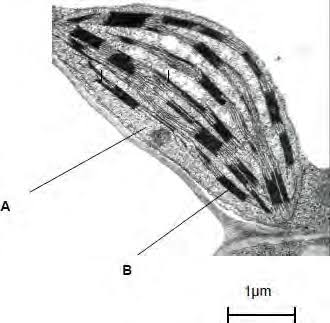
What kind of organelle is this?
Chloroplast
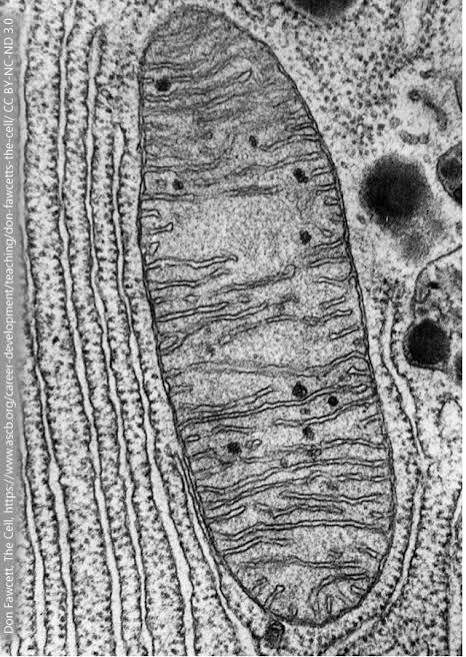
What kind of organelle is this?
Mitochondrion
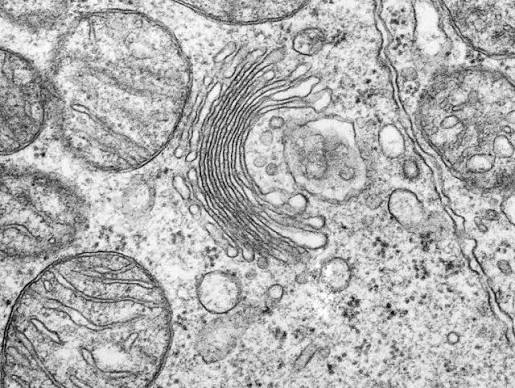
What kind of organelle is this?
Golgi Apparatus

What kind of organelle is this?
Endoplasmic reticulum

Name organelle A on the diagram.
Nucleus

Name organelle B on the diagram.
Nucleolus

Name organelle C on the diagram.
Mitochondria

Name organelle D on the diagram.
Chloroplast

Name organelle E on the diagram.
Vacuole
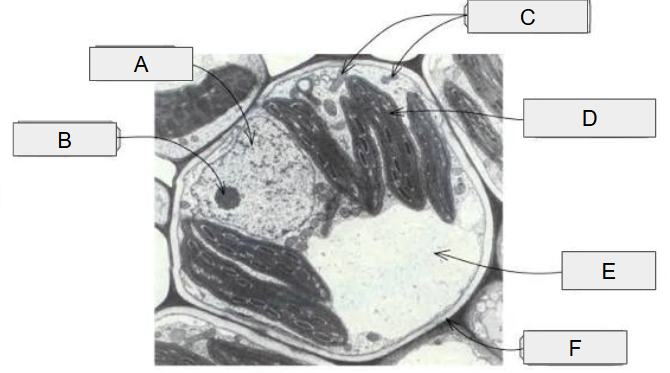
Name organelle F on the diagram.
Cell wall
What is the structure and function of the polysaccharides starch.(5)
It is made up of 2 alpha glucose
Joined by glycosidic bonds
By condensation reactions
Have unbranched amylose (1,4 glycosidic bonds) and branched amylopectin (1,6 glycosidic bonds)
Insoluble in water so it doesn’t cause osmotic changes
What are the different functions for amylose and amylopectin?
Unbranched amylose have a coiled shape which allows alrge amount of glucose to be stored into limited space inside plant cells
Branched amylopectin have many end points exposed to enzymes for rapid break down of glucose for energy
How is cellulose’s structures and functions different from starch? (3)
Cellulose is made up of beta glucose where they are bonded upside down to adjacent beta glucose
Cellulose only composed of unbranched 1,4 glycosidic bonds
Cellulose is a straight unbranched chain to form microfibrils instead of coiled up starch chains
How is hydrogen bonds in starch different to hydrogen bonds in cellulose ? (2)
In starch, hydrogen bonds form within individual polymers to maintain the compact, coiled, helical structure
While in cellulose, hydrogen bonds form between adjacent, parallel straight chains of beta glucose, cross- linking to form rigid microfibrils for strength
How are cellulose cell wall made up from beta glucose monomers?
Cellulose molecules are made from beta glucose monomers linked by 1,4 glycosidic bonds then forming chains of these molecules.
Many cellulose chains binds together and held by hydrogen bonds to form microfibrils
Microbibrils wind around each other to form macrofibrils then making cellulose fibrils
How is the plant cell wall made up of and what does it include?
It is built from layers of cellulose fibres embedded in other polysaccharides:
hemicellulose
lignin
pectins
Compare the different types of cell walls in terms of their structures and function.
Primary cell walls- where cellulose fibres lay in the same direction
it is thin and flexible
Secondary cell walls- where cellulose fibres lay at right angles
It is more thick and rigid
Define ground tissues.
The primary plant tissue system that makes up most of the interior mass of a plant, lying between the outer dermal tissue and the inner vascular tissue.
Give examples of some ground tissues. (3)
Parenchyma cells
Collenchyma cells
Sclerenchyma cells
Suggest the structures (3) and functions (3) of parenchyma cells.
Thin, primary, living cell wall
Needed for storage, photosynthesis and repairing( through cell division)
Suggest the structures (3) and functions (1) of collenchyma cells.
Thick, primary, living cell wall
Provide flexible support
Suggest the structures (4) and functions (3) of sclerenchyma cells.
Thick, secondary, dead cell wall
strengthened by lignin
Waterproof layer, rigin protection and support
What is the arrangement of the ground tissues?
Outermost layer is collenchyma (beneath epidermis)
Middle layer is schlerenchyma (around vascular bundle)
Inner layer is parenchyma (around the center)
Define vascular bundles.
Transport strands in plants containing xylem and phloem.
How are xylems and phloem cells arranged in plants?
Xylems are more towards the middle
Phloems are towards the outside
Suggest the structures and function for xylem?
Dead, hollow tubes
Transport water and minerals from roots to shoots
Suggest the structure and functions for phloem?
Living tissue
Transport sap (translocation)- nutrients from leaves to food storage
What are the physical properties that both schlerenchyma and xylem tissues have in common which can be exploited by humans?
They are both composed of dead hollow cells
and with secondary cell walls that are thickended by lignin
Human expolit their high tensil strength, rigidity and hollow structures to make ropes, textiles, paper and building materials
What are the equipments required for looking into plant stems in light microscope and why. (4)
Glycerol- Prevent plant fibres from dehydration
Methylene blue- Stains to make plant stems visible
Filter paper- to draw off extra stain
Mounted needles- to seperate individual fibre cells from big piece
Give the method to observe vascular tissues under light microscope. (4)
Place a small piece of rhubarb on a watch glass
Use forcepts to get a few strands of vascular tissues and place it on microscopic slide
Use mount needles to tease the fibre apart and add few drops of methylene blue
Use filter paper to remove extra stains and add few drops of glycerol
Place a coverslip over and place it under the light microscope to observe
Explain what you would see under the light microscope in terms of the arrangement of sclerenchyma, xylem and phloem cells.
Sclerenchyma is the outermost part, then phloem, inner part is xylem towards to center
Suggest the characteristics and functions of the components in xylem cells. (5)
Long hollow tube
Dead cells with no end walls help with transport
Cell walls are thickened by lignin which help with strength and waterproof
Have secondary structured wall for support
Have non lignified pits allowing water and mineral ions to pass through
Suggest the characteristics and functions of the components in phloem cells. (5)
Sieve tube have no nucleus/ other organelles and little cytoplasm for larger surface area
Made up of living seive plates that helps with support and they are end walls with holes which allow sap and amino acids to pass through
Have companion cells that provide energy for active transport for translocation
Companion cells have mitochondria (ATP), ribosomes and nucleus
Have plasmodesmata that attaches companion cell and sieve tubes - channels that transport ATP and pathway where companion cells push sucrose into sieve tubes
Describe the process of how water and mineral ions are transported inside xylem cells. (4)
Water and mineral ions enter plants from soil through root hair cells in roots using osmosis and active transport
Water and mineral ions moves through the xylem from roots through root hair cells.
Water move up the xylem by transpiration which is the evaporation of water
Water vapour leave plants through mesophyll then open stomata on leaf
Explain the importance of lignin for the transpiration of water.
To strengthen and support the xylem cells with the high pressure when transporting water.
Describe the 2 pathways of water and mineral ions moving from root hair cells to xylems.
Apoplast pathway- where water moves through cell walls
Symplast pathway- where water moves from cell to cell through plasmodesmata
Explain how water moves up the xylem using cohesion tension theory. (4)
Cohesion tension theory is the movement of water up the roots to the leaf against gravity driven by sticking and tension.
The tension is created by transpiration, as water is loss and diffuse out the plant, a negative pressure is created in the xylem vessles
Cohesion of water is when hydrogen bonds forms between water molecules, allow them to stick together
Adhesion of water is when hydrogen bonds forms between water molecules and cellulose xylem wall
Explain and describe how water moves from xylem out the leaves. (2)
Water moves from xylem tube to mesophyll (where photosynthesis happens)
Water vapours formed in transpiration leaves through opening stomata on the leaf
Explain how you can measure the rate of transpiration. (2)
Using a potometer
Where the distance moved by an air bubble can divide by the time it takes to be pulled up by a plant
What and why are the apparatus needed to measure the rate of transpiration? (4)
A plant with shoots cut off
A reservoir to push the air bubble back to the zero mark by with opening tube to push the water into capillary tube
Volume scale/ ruler to measure the distance travelled by air bubbles
A beaker of water is needed at the end of the capillary tube
What are the independent and dependent variables of potometer experiement? (2)
Independent- temperature from 10 to 50 degrees celcius
Dependent- distance moved
How can the independent vairable be changed/ controlled for the experiement? (2)
By using a water bath
Or changing the room’s temperature
What apparatus should be avoided for temperature change in the potometer experiment and why.
Using lamp for heat as light intensity should be controlled but it is involved as the other factor.
What are the controlled varaibles and how these factors affect the rate of transpiration? (4)
Humidity of air- (reduce concentration gradient of water vapour between surrounding and the inside of leaf)- decrease
Wind speed- (pull water vapour out)- increase
Temperature- (increase evaporation)- increase
Light- (open stomata)- increase
What is the control of the potometer experiment?
With no plant
What are the hazards and solutions in the potometer experiment?
Poisonous/ plant juice that cause allergy- wear gloves when handling
Broken glass of the apparatus- keep away from edge
Heat- careful when handling
Describe and explain the process of translocation. (7)
Sucrose is produced in the mesophyll cell of the leaf during photosynthesis
Then transported to the seive tube by companion cell using ATP in active transport
Sucrose is needed in sink cells of roots and soots for energy store and respiration so more will be sent downwards
This increase concentration of sucrose in the sieve tube draws water from adjacent xylem cells into the phloem by osmosis to balance the concentration
The flow of water cause hydrostatic pressure inside, causing sap to move up or down due to mass flow
Sucrose move out of the sieve tubes into the sink cells, where it convert into other molecules like starch/ back to glucose for respiration
When sucrose moves out of the seive tubes. water also moves out of the phloem back into the xylem by osmosis
Define mass flow.
The movement of fluids and dissolved substances in a single direction due to hydrostatic pressure gradient. (movement of high to low pressure)
Give me 2 evidence that proves the movement of sucrose/ translocation in phloems.
Aphid stylet- when the stylet of an aphid is inserted into the phloem of a plant, sap will continue to flow from the hole due to high pressure which proves mass flow instead of just diffusion in big plants
Ringing experiment is when the outer ring of the plant including the phloem is removed, sap builds up in the leftover phloem at the upper part as it cannot pass to the sink cells at the bottom.
Give me 3 reasons why water is important to plants.
For dissolving and transportation
For photosynthesis
For cooling
What are the 3 main inorganic mineral ions that plants need and name their chemical symbol?
Nitrate (NO3-)
Calcium (Ca2+)
Magnesium (Mg2+)
Why is nitrate important to plants? (4)
To make amino acids and proteins
To make nucleotides
To make ATP
To build chlorophyll
What could happen to the plants when there is nitrates deficiency? (2)
Stunt growth
yellow leaves
Why is calcium important to plants? (2)
To make pectin for cell walls
To make calcium pectate in middle lamella
What could happen to the plants when there is calcium deficiency? (2)
Stunt growth
Distorted young leaves
Why is magnesium important to plants? (1)
It is the central ion in chlorophyll molecule
What could happen to the plants when there is calcium deficiency? (1)
Yellowing between veins of older leaves
Explain the method needed to investigate mineral deficiencies in plants. (4)
The same specie of plants is grown in water/ hydroponically with essential ions involved (as a control)
Others lacking only one of the mineral ions
These 4 plants with different nutrients will be planted with a fixed period of time
Measure the height of the plant’s growth, colour of the leaves and root development
What are the controlled variables of the practicle to see the importance of each minerals in plants? (5)
Temperature
Light intensity
Time
Age
Specie
What are the independent (1) and dependent variables (5) in the practicle to see the importance of each minerals in plants?
Independent variable= type of mineral missing
Dpendents= shape, colour, height, root development and plant biomass
What are the apparatus needed in the experiment to measure tensil strengths of plant fibres in different plant species? (3)
Weight
Clamp stands
Plant fibres
What is the method to measure tensil strengths of plant fibres in different plant species? (6)
Tie each fibres to the clamp stand (same lengths of fibre for each species)
Slowly attach weights to the other end of the fibre
Carefully add weights until the fibre breaks
Record the weight at which the fibre breaks
Repeat experiment and calculate the mean for each type of species
Compare the mean tensil strengths of the species
What are the controlled variables for the experiment to measure tensil strengths of plant fibres in different plant species? (3)
Length of plant fibres
Way of tie plant fibres onto clamp stands
Rate and force of placing weights
What are the independent and dependent variables for the experiment to measure tensil strengths of plant fibres in different plant species?
Independent= type of plant fibre
Dependent= weight added until it breaks
How can we make the experiment for measuring tensil strengths in plant fibres more precise? (1)
Use smaller intevals of weight each time
What are the risks and solutions for the the experiment that measures tensil strengths in plant fibres? (3)
Plant specie may be poisionous or plannt juices cause allergy- wear gloves when handling
Weights falling- place a matt on where the weights are falling
Clamp tip over- place matt and the clamp facing front to make it more stable
What is an example of a historical clincal trail in the 18th century?
William Withering’s digitalis soup
What ingredient is invloved is William Withering’s soup and what is it thought to treated for?
Digitalian in Foxgloves, heart conditions
How did William Withering do his “clinical trail” on his patients? (3)
He gave some soup made from fox gloves to a patient with swollen limbs and irregular heartbeats
He then further tested it on his second patient with an increasing dosage but this time the patient vomit and had diarrhea
He then give different patients different dosage and record the reaction and findings
Why is William Withering’s method improved or different from the modern drug testing method?
Because although it was effective for his first patient, it was unethical as it could threaten patient’s life.
Describe and explain how William Withering’s method is improved or different from the modern drug testing method?
Moderm drug testing methods involves pre- clincial, three phased testings and the golden standards.
Pre- clinical: testing on culture cells to see general effects then test on animals
Three phased testings- 1) Small groups of healthy volunteer, 2) Small groups of volunteer patients, 3) Larger groups of patients that are selected randomly and split into 2 groups
Golden standards- 1) Placebo - when the pills looks exactly the same but some are not chemically active, 2) Double blind- neither the patients nor recorder know if it is placebo effect or standard treatment
What is the function of antimicrobials? (2)
Slow down the growth or kill bacterias
What are the 4 conditions for bacterias to grow and why?
Temperature- enzyme activity
pH- enzyme activity
Oxygen- aerobic respiration
Nutrients- respire and growth
What is a method of investigating the antimicrobial properties of plants? (6)
Using sterile pipette and spreader to spead liquid agar with bacteria on a petri dish and allow it to cool and set
Slightly open the lid to minimise air contamination and place a small piece filter paper (in the middle of the petri dish) that has been soaked in a plant extra where the plant powder is mixed with ethanol and filtered out
Close the lid and seal it
Let it incubate for a day at a fixed temperature (25 dc)
Observe the clear zone and calculate the area by pie r squared
Repeat for more than twice and calculate mean as well as other plants
How can the control for the experiment that investigating the antimicrobial properties of plants be made?
Filter paper soaked in ethanol or water
What are the controlled variables for the experiment that investigating the antimicrobial properties of plants? (4)
Size of filter paper
Amount of time soaked
Temperature
pH
What are the independent and dependent variables for the experiment that investigating the antimicrobial properties of plants?
Independent= Plant species
Dependent= Area of clear zone where bacterias are killed
What is the risk and solution in the the experiment that investigating the antimicrobial properties of plants?
Risk: When opening the lid of the petri dish with bacteria, there may be air contamination by the bacteria.
Solution: Open lid near a bunsen burner
What are the rules to follow when using bacterias in an experiment?
No eating or drinking inside labs
Keep window closed to prevent air movement
Clean surface and wash hands
Use sterile equipments
Always work near the bunsen burner
What is aseptic technique?
a set of strict clinical procedures and practices used to eliminate pathogens or prevention from harmful microorganisms.
Explain and describe the method for growing wanted bacterias. (8)
Sterlize a metal loop with blue flames of a bunsen burner
Let it cool down so it doesn’t the bacteria later
Remove the lid of the bottle with the bacterai near a bunsen burner and sweep the neck of the bottle to sterile.
Swept the metal loop in the bacteria culture
Sweep the bottle neck through the flame to sterilise again
Slightly lift the lid of the petri dish to glide the inoculated metal loop over the surface of the nutrient agar
Pass the metal lopp through the blue flame to sterile
Seal the petri dish and incubate at 25 dc for bacteria to grow
List and explain how plants used as resources. (6)
Food source
Composite materials like woods to build furnitures or houses
Biofuels- Derived from biomass of wastes, plants and algae
Bioplastics- made from plants or sugarcane that are biodegradable
Plant fibres for ropes, paper and baskets
Medicine
What are composite materials and why are woods a natural example?
Composite materials are 2 or more materials combining
Woods are made up of rigid lignin matrix and strong cellulose fibres
Evaluate the advantages and disadvantages of using plant fibres.
Advantages:
Sustainable
Renewable
Biodegradable
Less fossil fuels and easier and take less time than to extract oil
Disadvantages:
Bioplastics are less strong than oil- based plastics
Where can starch be found in plants and what are the resources (2) that can be made from starch?
Starch are extracted from seeds in plants
They can be used to make
Bioplastics
Bioethanols which are fuels used in vehicals
What are the major roles of zoos? (3)
Educate people on illegal trading, importance of biodiversity and captive breeding programms
Captive breeding programms that reduce extinction and release animals back to wide to maintain genetic diversity
Do research to control disease, study behaviours and find techniques to improve breeding
What are the disadvantages of zoos? (5)
Some animals are not endangered, they are just here to attract people
Animal welfare could be bad in certain zoos, treated in poor conditions
Some animals may not be bred with a diverse group or under controlled environments which could reduce genetic diversity
Some animals may not behave the same as they are in the wild
Animals may carry diseases when reintroduced to wild which spreads and kill others
Why are seed banks important and what are the factors needing to conserve plant species? (4)
Conserving plant species in case of habitat destruction
Climate change
natural disasters
over- harvesting
What are the steps of how a seed is selected and stored? (5)
Seeds are extracted from different plant species
Seeds are X-rayed to see if they can germinate
Seeds are dried
Seeds are stored in cold temperatures to prevent early germination
Seeds are checked for viability