1.1.2. Basic Tools in Nutrition
 Call Kai
 Learn
 Practice Test
 Spaced Repetition
 Match
 Flashcards
 Knowt Play
1/43

There's no tags or description
Looks like no tags are added yet.
44 Terms
A nutrient-based recommendation and a collective term that serves as the starting point of food-based dietary guides. It consists 4 reference values for nutrient intakes.
Estimated Average Requirement (EAR)
In evaluating an individual’s diet using the PDRI, which reference value should be used to assess whether nutrient intake is adequate?
Recommended Energy/Nutrient Intake (RENI)
In the PDRI, which reference value is used when planning or developing a meal plan?
55 - 75%
According to the PDRI, what is the Acceptable Macronutrient Distribution Range (AMDR) for carbohydrates among adults?
10 - 15%
According to the PDRI, what is the Acceptable Macronutrient Distribution Range (AMDR) for protein among adults?
15 - 30%
According to the PDRI, what is the Acceptable Macronutrient Distribution Range (AMDR) for fat among adults?
It aims to increase knowledge and educate the population on proper health and nutrition, which in turn, will motivate them to consume adequate and balanced diet, including the promotion of desirable food and nutrition practices in relation to health.
Message 1
Message 2
Message 3
Message 4
Message 5
Message 6
Message 7
Message 8
Message 9
Message 10
Daily Nutritional Guide Pyramid
Originally developed in 1996 and revised in 2005, the this ranslates the qualitative recommendations of the 2000 NGF into quantitative terms. This is based on the Filipino dietary pattern that consists of rice and a viand or “ulam”, which is a combination of vegetables and fish or other animal protein sources.
7
How many DNG Pyramids are there?
Base / Bottom Layer
Which part of the DNG Pyramid is the widest and represents the food group that should be eaten in the greatest amount, such as rice, corn, bread, and cereals?
Narrow / Top Layer
Which part of the DNG Pyramid is the narrowest and represents the food group that should be eaten the least, such as fats, oils, and sugary foods?
Pinggang Pinoy
What food guide, developed and introduced in 2016, illustrates a plate divided into four sections and promotes eating a variety of foods in the right proportions per meal?
5
How many versions of Pinggang Pinoy are there?
Children (3 - 12 years old)
Which age group is indicated by this specific color of the Pinggang Pinoy?

Adolescents (13 - 18 years old)
Which age group is indicated by this specific color of the Pinggang Pinoy?

Adults (19 - 59 years old)
Which age group is indicated by this specific color of the Pinggang Pinoy?

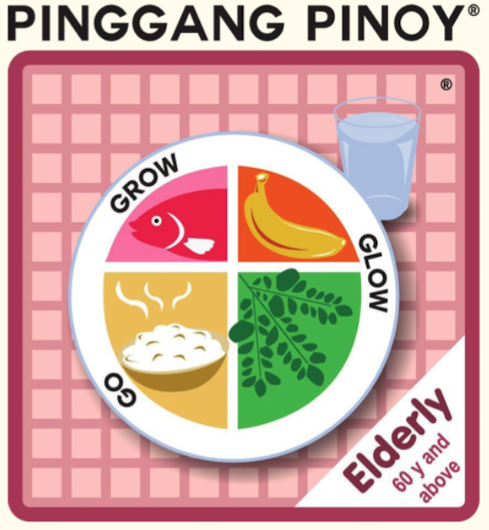
Elderly (>60 years old)
Which age group is indicated by this specific color of the Pinggang Pinoy?
Pregnant and Lactating Women
Which group is indicated by this specific color of the Pinggang Pinoy?

Orange
Which color in Pinggang Pinoy evokes energy, vitality, cheer, excitement, warmth, and adventure and is associated with healthy food and appetite stimulation?
Blue
Which color in Pinggang Pinoy represents strength, dependability, and coolness, reflecting favorable qualities associated with adolescents?
Brown
Which color in Pinggang Pinoy represents the original placemat color, resembling the woven buri and symbolizing the Filipino Malay race?
Red
Which color in Pinggang Pinoy symbolizes energy, power, and courage and may stimulate appetite, which is commonly lacking among the elderly?
Green
Which color in Pinggang Pinoy is associated with nature and health and symbolizes new life, growth, and fertility?
Food Exchange List
What tool is used for the quick estimation of carbohydrate, protein, fat, and energy values for normal and therapeutic diets, facilitates meal planning with prescribed energy and nutrients, and can also be used to teach patients the principles of basic nutrition?
7
How many food groups are included in the Food Exchange List (FEL)?
2019
When was the latest edition of the Food Exchange List (FEL) published?
4th
What is the edition number of the latest Food Exchange List (FEL)?
Philippine Food Composition Table (PhilFCT)
What reference provides information on the nutrient composition of foods per 100-gram edible portion and is used for food selection, nutrient calculation, and planning therapeutic diets?