Dystocia and Parturition Management in Cattle
 Call Kai
 Learn
 Practice Test
 Spaced Repetition
 Match
 Flashcards
 Knowt Play
1/142

Earn XP
Description and Tags
A set of 30 vocabulary flashcards covering the stages of bovine parturition, fetal presentations, positions, postures, obstetrical chain placement, and dystocia correction techniques.
143 Terms
Dystocia
A difficult birth requiring assistance, also referred to as calving difficulty, lambing difficulty, or farrowing difficulty, which can lead to a weakened or dead offspring or injury and death to the dam.
Factors that affect dystocia pre-parturition
1) Age of dam!!!;
2) Birth weight of sire/dam birthweight affects calf birth weight;
3) Breed of sire;
4) Breed of dam;
5) Pelvic area;
6) Gestation length;
7) Sex of calf;
8) Nutritional status of dam = Body condition score (BCS)
Factors that affect dystocia at parturition
1) Female is too small/pelvis is too small;
2) Female is not dilated;
3) Female is not contracting/fatigue;
4) Body condition score - female is too thin or fat;
5) Malpresentation/calf position;
6) Multiple births - Cattle only 1-2% of time and Small Ruminants 50 to 100% of time
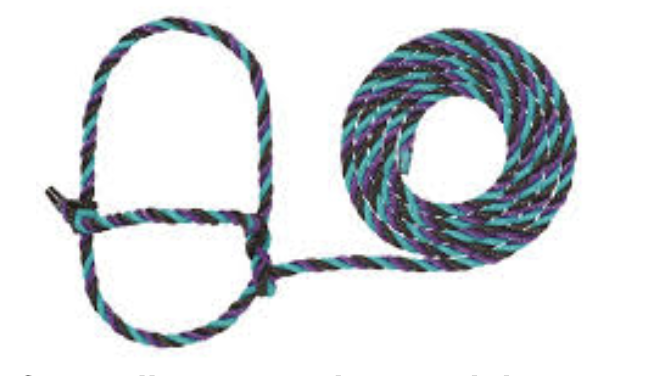
Halter
Cattle- used to lead or help constrain the animal (animal’s left side)
Disposable long-sleeve OB gloves and waterproof overalls
Keep you clean and prevent exposure to infectious agents

Povidone-iodine
Scrub to clean vulva prior to reaching in

Obstetrical lubricant
In a squeeze bottle to increase lubrication, decrease friction and reduce trauma to cow and calf when assisting with delivery

Stainless steel or plastic bucket
For wash water and/or plastic squeeze bottles for wash water

Clean OB chains and handles
Use double-loop placement (slip main loop of chain over calf leg just above fetlok or ankle, make a half-hitch twist and slide it down between the declaw and the hoof (pastern area), ensure the chain sits along the top of the foot / over the toes so the sharp hooves are pulled away from the dam's soft vaginal walls), pull two points in seesaw motion (one leg at a time) in rhythm with natural cow contraction, helps wide shoulder pass through birth canal

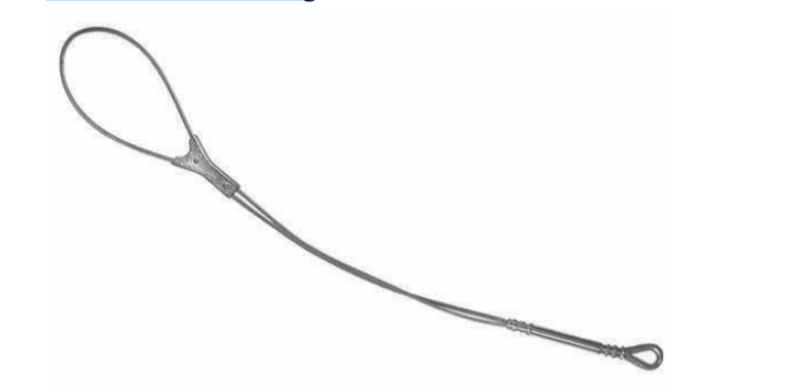
Calf head snare
Place in calf’s mouth and behind ear to bring head forward with front leg
Calf-puller
Used to with OB chains to apply outward and downward pressure to assist dam in delivering calf

Head lamp or flashlight
See the calf in the hole

Injectable lidocaine
Prescribed by your vet, and injected in epidural space to prevent straining

Injectable oxytocin
Prescribed by your vet, to promote uterine contraction

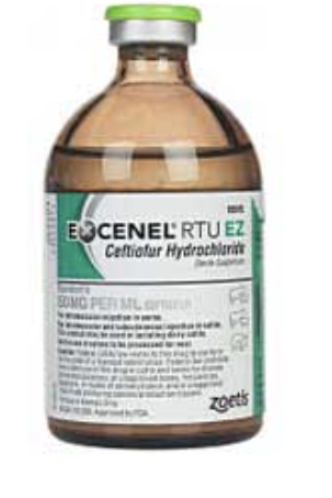
Injectable antibiotics
Prescribed by your vet, to treat infected uterus, calving pneuomia, etc.
Sterile syringes and needles
to administer epidural and oxytocin

Bottle and lamb nipple
for feeding a calf to feed colostrum if dairy calf or if beef calf not getting up to sock

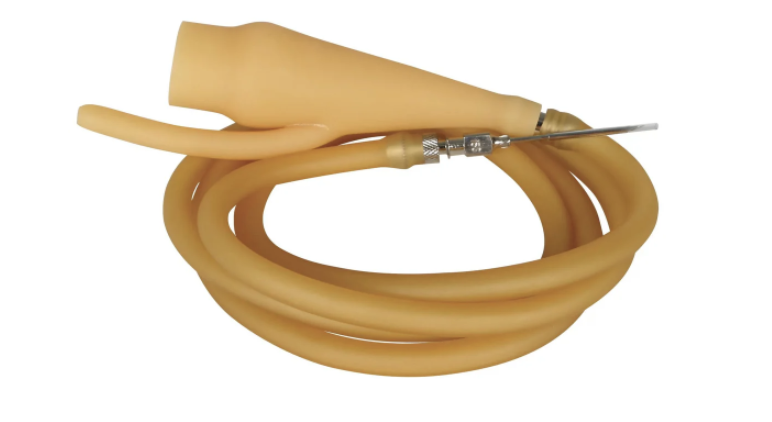
Stomach tube or esophageal feeder
For feeding a calf too weak to nurse

Frozen colostrum
from last year or a package of commercial colostrum

Electrolytes
For weak calves that develop scours

Toolbox
hold/carry and keep clean needed items in one handy place
Calf sled or cart
to bring newborn calf in from the field to the barn

Two thermometers
One for sick calves and one for checking newborn or young calves that get hypothermic (low body temp)
Large animal IV set
Treat cow as needed for hypocalcemia (milk fever) and dehydration
IV Calcium gluconate
prescribed by your veterinarian, for milk fever

Rice Pelvimeter
used to measure pelvis to aid in prediction of dystocia, comes with scale graduated in centimeters and charts showing the relationship of pelvic size to weight of calf in relationship to dystocia

Obstetric tools used by veterinarian to perform a fetotomy in cattle
Required to perform a fetomy (surgical procedure to remove a dead or malformed calf from the uterus when vaginal delivery is not possible)
1-fetotome
2-OB wire threader
3-OB wire
4-OB wire handles
5- Wire cutter pliers
6- OB chains
7- OB handles
8- Krey’s hook with chain (grabs spine)
9- OB wire guide

Stage I of Parturition
The preparatory stage of labor lasting 2 to 6 hours, characterized by relaxation of the pelvic ligaments, vulvar relaxation and lengthening, cervical dilation, dripping colostrum from teat, calf movement toward the birth canal, restless, and uterine contractions starting at 15-minute intervals, amniotic sac begins movement; can go unnoticed if animal is not carefully observed
"Bagging Up"
A visual indicator during Stage I of parturition where the dam's udder fills with milk, which may be accompanied by colostrum dripping from the teats.
Stage II of Parturition
The active expulsion stage of labor lasting 30 minutes to 1 hour (up to 2 to 4 hours), during which the dam segregates herself, the mucous plug and water bag protrude, the amniotic sac ruptures, and the cow pushes the calf through the birth canal; feet followed by the head appear first, and uterine contractions become stronger and closer together. Calf should be on the ground at end of this stage, delivery complete 1 hour after sac appear
Stage II Contraction Frequency
Uterine and abdominal contractions that occur at 2-minute intervals during active delivery of the calf, delivery complete 1 hour after sac appears
Soles Pointing Downward
The hoof sole orientation indicating that the presenting limbs are front feet when the fetus is in the normal dorsosacral position.
Soles Pointing Upward
The hoof sole orientation indicating that the presenting limbs are hind feet when the fetus is in the dorsosacral position.
Stage III of Parturition
The stage of labor defined by the shedding and expulsion of the fetal membranes, which normally occurs in less than 12 hours. If not cleaned in 12 hours, retained placenta
Retained Placenta
Failure to expel the fetal membranes within 12 hours postpartum; manual removal is contraindicated because it harms uterine health and conception rates, and the placenta will naturally slough in 4 to 7 days.
The 3 P's
The diagnostic triad used to assess fetal disposition during parturition: Presentation, Position, and Posture.
Fetal Presentation
The direction describing which end of the calf is entering the birth canal first relative to the dam (anterior, posterior, or transverse).
Anterior Presentation
The normal and most common presentation in cattle, where the head and front limbs enter the birth canal first.

Posterior Presentation
A presentation in which the calf's hind limbs and tail enter the birth canal first.

Transverse Presentation
The least common fetal presentation, where the calf is lying crosswise in the uterus with neither the head nor the hind limbs presenting, making delivery impossible without manual correction.

Fetal Position
The orientation of the calf's spine (back) relative to the pelvis of the dam (dorsosacral, dorsoiliac, or dorsopubic), basically rotation
Dorsosacral Position
The normal fetal position where the calf's back is oriented toward the dam's sacrum (top) in a back-to-back orientation.

Dorsoiliac Position
An abnormal, rotated fetal position where the calf's spine is turned toward the dam's right or left ilium (side of the pelvis).

Dorsopubic Position
An abnormal fetal position where the calf's back is oriented toward the dam's pubis or pelvic floor, placing the calf upside down.

Posture
The spatial relationship and placement of the calf's movable extremities—specifically the head, neck, and limbs—relative to its own body.
Anterior posture
Head/front limbs extended first
Posterior posture
Hindlimb/tail enter first
Extended Posture
A fetal posture in which a body extremity is straightened out and directed toward the birth canal.

Flexed Posture
A fetal posture in which a limb joint is bent rather than fully straightened toward the birth canal (BENT leg at the knee)

Retained Posture
An abnormal posture where a limb remains folded backward alongside or underneath the calf's body. (Held back leg)

Dwarfed posture
Head turned to side, limb still extended
Deviated Posture
An abnormal fetal posture in which the head or neck is turned away from its normal straight alignment, such as turned back along the body.


Normal Delivery (Bovine)
The normal delivery disposition consisting of an anterior presentation, dorsosacral position, and extended head, neck, and forelimbs.
Double Loop Technique
The recommended method of attaching obstetrical chains to a calf's limb using two loops to distribute pulling pressure evenly and reduce the risk of fracture or tissue injury.
Front Limb Obstetrical Chain Placement
Correct application of traction chains above the fetlock (pastern/cannon bone), ensuring chains are never placed directly over the hoof, dewclaws, or carpal joint.
Hind Limb Obstetrical Chain Placement
Place chain above hock, below bulb, or around pastern (not hoof), double loop
Calf Jack Traction Direction
The mechanical extractor technique of pulling outward and slightly downward toward the cow's hocks, applying traction slowly and steadily in synchronization with contractions.

Head Back Presentation
An anterior presentation dystocia posture where both forelimbs are extended into the pelvic canal but the head is deviated and turned back along the calf's body, requiring manual retrieval before traction can be applied.

Protecting the Uterine Wall from Hoof
An obstetrical correction maneuver where the practitioner cups the calf's hoof with their palm while extending the leg to prevent the hoof from puncturing or tearing the uterine wall.

Breech Presentation
A posterior presentation malposture where both hind limbs are flexed and retained under the body with only the tail and rump presenting at the pelvic inlet, requiring complete limb extension prior to delivery.
Head lock
Head stuck in tube, push on forehead

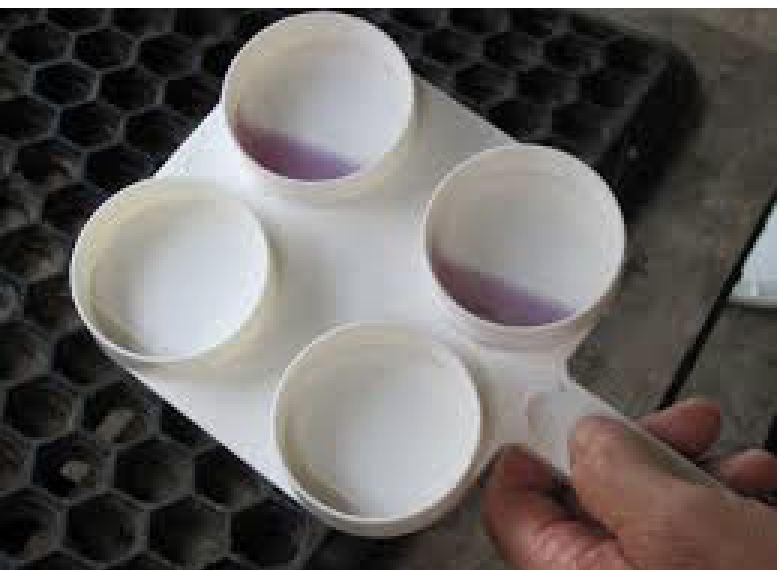
CMT Paddle and Reagent (California mastitis Test)
Simple indictor to see if a cow has mastitis/high somatic cell count. Each quarter is stripped out and reacts to the reagent if somatic cells are present (changes color and becomes gelatin if present); can be caused environmentally by Escherichia coli or Streptococcus uberis (wet/poor beeding and housing) with more somatic cells meaning higher chance of mastitis
DCC Cartridge (DeLaval Cell Counter
It is used to measure somatic cell count. To test, suck up a small amount of milk into cassette and insert. The DCC will show the results as cells/ml milk; multiply by 1,000 to find count; under 200,000 healthy, above indicates udder infection

Teat Dip Cup
This cup is used for pre-dip or post-dip. The dip is used prior to or after milking in order to clean the teats off.

Strip cup
This is used to detect mastitis. Squirt streams of milk from each teat into the cup. Inspect for flakes, lumps, or other signs of abnormal milk.

Refractometer
This tool can be used to measure IgG’s in colostrum by measuring the amount of sucrose in a solution. This will make sure calves are getting the proper quality colostrum

Dextrose
This fluid can be used to help treat cattle with ketosis. Provides an immediate source of energy.

Calcium Gluconate
For the use as an aid in the treatment of milk fever in cattle caused by calcium deficiency. Provides a rapid increase in blood calcium.

CMPK
A supplemental nutritive source of calcium, phosphorus, magnesium, and potassium deficiencies in cattle.

IV Catheter Tube – Usually used with a 14 gauge needle.
Used for IV administration of fluids and medications. Able to control the flow.

Transponder Tag / Cow Manager
Monitors herd 24/7 in any situation. Producers can track their cow’s fertility, health, and nutrition. The chip in this tag monitors temperature, activity, rumination, and eating time.


Magnet
Helps prevent hardware disease. The magnet is administered into reticulum and keeps foreign metallic objects from penetrating the reticulum and other organs.
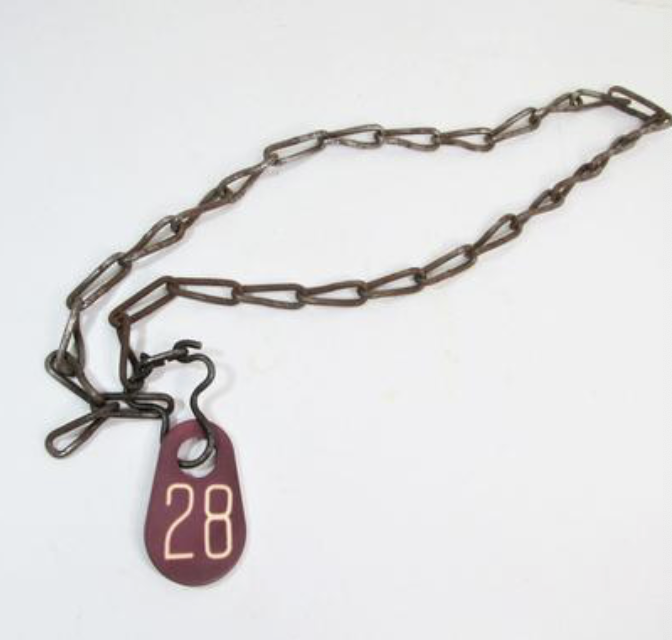
Neck Chain
Temp ID
Electric Dehorner
This is a way to dehorn cattle. Uses very high temperatures to burn the horn bud off. No blood or open wound.

Electric prod
A handheld device used to make cattle move. This device is not used very often.

Antibiotic Capsule
This can be placed over any bolus smaller bolus if needed. Can also put powder antibiotics in it and administer. Outer plastic cover disolves easily.

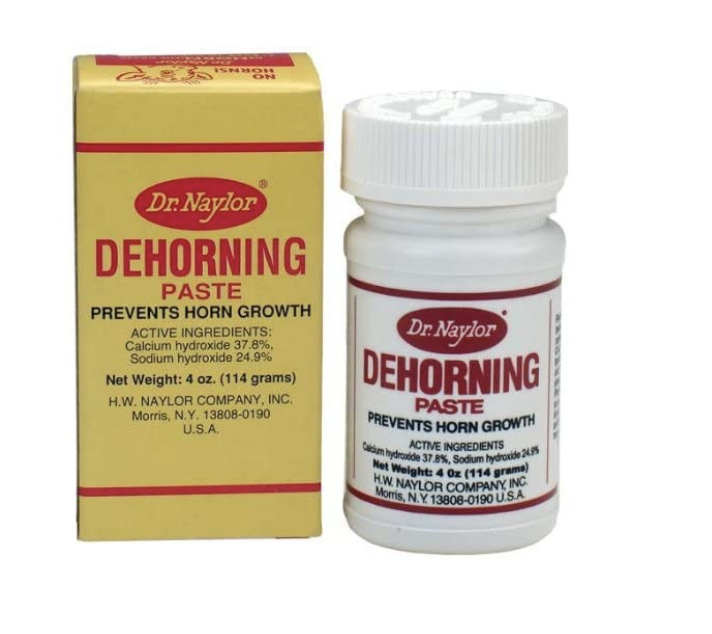
Dehorning Paste
This caustic paste is placed over horn buds and eventually cauterizes tissue and prevents horn growth.
Ketosis Stick / Strip Test
This test strip changes color in the presences of abnormally high concentrations of circulating ketone bodies, which indicates the presence of ketosis.

Bovikalc Bolus + Extra Large Balling Gun
An oral calcium supplement that provides fast support of blood calcium levels in freshening dairy cattle. Helps with milk fever. Needs a large balling gun due to the size of the bolus.

Dairy meds/vaccines
Spectramast, quartermast, today, tomorrow, pirsue, excede, LA 200, Cattle Master
Dairy BCS
1-5, 3 ideal, can tell by base of tail (1 thin, 3 normal, 5 squishy)
Mastitis
Infection of the mammary gland is most commonly caused by bacteria entering the teat via the teat canal. Detected by stripping quarter and observing for abnormal milk, using CMT paddle or measuring somatic cell count with Deleval Somatic Cell Counter.
Mastitis Infection cuase
Various species of streptococci (gram positive cocci), staphylococci (gram positive cocci), and gram negative rod bacteria commonly termed coliforms.
Clinical mastitis
Visible inflammatory response to infection causing abnormal milk with changes in udder including swelling, heat, pain and redness. More severely affected cows tend to have serous (watery) secretions from affected quarter; mild or moderate have only local signs, and severe has inflammatory response is severe include systemic fever, anorexia and shock and not sometimes death.
Subclinical mastitis
Presence of infection without local inflammation or systemic involvement with transient episodes of abnormal milk, once established may persist for entire lactation or life of cow, milk production lessens
Colostrum
first milk from mammary gland and it is thick and yellow and it's only produced for first 24 hrs. It provides the first nutrients for the calf, it is of great importance since it provides key antibodies to jump start immune system and determine whether the offspring survive or not.
Colostrum timing
intake is important because of the gut’s ability to absorb the antibodies. Within six hours after birth, the stomach can only absorb two thirds of the available antibodies. By 24 hours, the absorption capacity is reduced to 11 percent. Also, at 24 hours of age, digestive enzymes break down and digest all of the antibodies.
Colostrum amount
Within first hour of birth calf needs 5 to 6 pints of high quality colostrum and then again in within 12 hours.
Passive Transfer
The process by which newborn calves acquire maternal antibodies primarily immunoglobulin G (IgG) by drinking colostrum within the first few hours of life; successful if least 90 percent of calves one to seven days old testing > 5.2 g/dl
Feeding types in calves
Bottle feeding, tube feeding
Calf feeding timeline
Colostrum → day 2 and after fed twice a day with bottle/nipple (dairy calf fed milk replacer or pasteurized milk from bulk tank) → at 4 days introduce calf starter and fresh water (only offer 6 ounces first)→ gradual shift to solid feed and weaning by 4-10 weeks when eat 2-3 lbs of starter feed for at least 3 consecutive days
Hay with calves
HAY SHOULD NOT BE OFFERED UNTIL CALVES ARE WEANED FROM THE BOTTLE. FEEDING HAY DELAYS DEVELOPMENT OF RUMEN PAPILLA.
Disbudding (caustic)
Procedure to remove or destroy the undeveloped horn bud, Caustic paste is one acceptable method for disbudding calves. The best time for paste disbudding is from 2 to 7 days of age. This is the stage where the horn bud is just protruding enough to be felt.
Disbudding supplies (caustic)
The supplies needed for this method of disbudding include disposable gloves, calf halter or head restraint, hair clippers, petroleum jelly, cornual nerve block, syringes, needles, paste, vinegar, non-steroidal anti-inflammatory drugs to reduce inflammation and pain after the procedure, and possibly a calf balling gun to administer medication.
Disbudding (hot iron), uses electric dehorner
Used by dairy producers for calves over one week of age and up to 8 weeks of age; The supplies needed for this method of disbudding include a halter or other head restraint, disposable gloves, clippers, gas or electric hot iron, an extension cord and generator if not close enough to an electrical outlet (electric hot iron), butane/propane tank or cartridge (gas hot iron), cornual nerve block, syringes, needles, non-steroidal anti-inflammatory drugs, and possibly a calf balling gun to administer medication.
Dehorning
Do as early as possible, Larger horns may require mechanical removal. A protocol should be in place for managing wounds that are the result of using mechanical dehorning devices, which would include control of infection, pain and fl y control.
Mechanical dehorning supplies
Include Barnes Dehorner or Guillotine Dehorner, The supplies needed for this method of dehorning include a halter or other head restraint, disposable gloves, clippers, barnes or gullotine dehorner, cornual nerve block, syringes, needles, non-steroidal anti-inflammatory drugs, and possibly a calf balling gun to administer medication.
Dehorner jelps
Use of a local anesthetic mitigates the immediate pain associated with disbudding and dehorning and provides up to five hours of post procedural analgesia.
The use of non-steroidal anti-inflammatory drugs (NSAIDs) should be used to provide additional and longer lasting pain relief. The use of injectable, topical or oral NSAIDs are acceptable for pain mitigation in the immediate postoperative period.
Calf location
Pet pen → calf barn → heifer barn; dairy in hutch
disbud methods (seen in lab)
Shave area, lidocaine inject in nerve between horn and ear, give caustic paste, aluminum seal spray, tape to seal