Nervous System II: The Central Nervous System (CNS)
 Call Kai
 Learn
 Practice Test
 Spaced Repetition
 Match
 Flashcards
 Knowt Play
1/79

There's no tags or description
Looks like no tags are added yet.
80 Terms
What are the four basic parts of the brain?
(1) Cerebral hemispheres (cerebrum) (2) Diencephalon (3) Brain stem (4) Cerebellum

What internal structure of the brain is made mostly of cell bodies of neurons, some short unmyelinated axons and dendrites, and some neuroglia?
Gray Matter

What internal structure of the brain is made mostly of myelinated axons or neurons?
White Matter

What are the five ventricles of the brain called?
Lateral ventricles (x2), third ventricle, cerebral aqueduct, fourth ventricle, choroid plexus
What is the function of cerebrospinal fluid (CSF)?
Floating and cushioning the brain and spinal cord
What are the deepest grooves of the cerebrum (cerebral hemispheres), that separate major portions of the brain?
Fissures
What are the many grooves on the surface of the cerebrum called?
Sulci (sulcus = furrow)
What are the twisted ridges of brain tissue (“lumpy bumps”) of the cerebrum called?
Gyri (gyrus = twister)
What are the FIVE MAJOR LOBES of the cerebral hemisphere that are separated by sulci?
(1) Frontal (2) Temporal (3) Parietal (4) Occipital (5) Insular

What separates the frontal lobe from the parietal lobe?
The Central Sulcus

What separates the parietal lobe from the occipital lobe?
Parieto-occipital Sulcus

What separates the parietal AND frontal lobes from the temporal lobes?
Lateral Sulcus

What separates the occipital lobe from the temporal lobe?
Calcarine Sulcus

What is the site of conscious sensory perception, voluntary initiation of movements, and higher thought functions called?
Cerebral Cortex

What are the four motor areas of the cerebral cortex?
(1) Primary (1°) motor cortex, (2) Premotor cortex, (3) Frontal eye field, and (4) Broca’s area
Which motor area of the cerebral cortex signals motor neurons to bring about PRECISE or SKILLED VOLUNTARY movements?
Primary (1°) Motor Cortex

Which motor area of the cerebral cortex controls more COMPLEX MOVEMENTS than the primary cortex?
Premotor Cortex

Which motor area of the cerebral cortex controls VOLUNTARY MOVEMENTS of the EYES?
Frontal Eye Field

Which motor area of the cerebral cortex manages SPEECH PRODUCTION?
Broca’s Area

What is the “body map” on the motor cortex?
Motor Homunculus
Which sensory area of the cerebral cortex is involved with CONSCIOUS AWARENESS of GENERAL SOMATIC SENSES?
Primary (1°) Somatosensory Cortex

Which sensory area of the cerebral cortex INTEGRATES DIFFERENT SENSORY INPUTS into comprehensive understanding of WHAT IS BEING FELT?
Somatosensory Association Cortex/Area

Which visual sensory area of the cerebral cortex RECEIVES VISUAL INFO that ORIGINATES on the RETINA OF THE EYE?
1° Visual (Striate) Cortex

Which visual sensory area of the cerebral cortex COMMUNICATES WITH 1° VISUAL AREA and CONTINUES PROCESSING of VISUAL INFO by ANALYZING COLOR, FORM, AND MOVEMENT?
Visual Association Area

Which auditory area of the cerebral cortex focuses on CONSCIOUS AWARENESS OF SOUND?
1° Auditory Cortex

Which auditory area of the cerebral cortex PERMITS EVALUATION OF SOUND and is located in the center of Wernicke’s Area?
Auditory Association Area

Which sensory area of the cerebral cortex focuses on the CONSCIOUS AWARENESS OF TASTE stimuli?
Gustatory Cortex (gustation = taste)
Which sensory area of the cerebral cortex focuses on the CONSCIOUS AWARENESS of the SENSE OF BALANCE?
Vestibular (Equilibrium) Cortex
Which sensory area of the cerebral cortex focuses on the CONSCIOUS AWARENESS of SMELL?
Olfactory Cortex
Which association area INTEGRATES ALL TYPES OF SENSORY INFORMATION?
General Association Area
What are the five sections of the language area?
(1) Broca’s area, (2) Wernicke’s area, (3) Lateral prefrontal cortex, (4) most of the lateral and inferior part of the temporal lobe, and (5) parts of the insula
Right Hemisphere of brain acts in the _________ of words and in controlling _______ _________ of speech. The Right Hemisphere is NOT involved in the _______ of speech.
Interpretation; emotional overtones; mechanics
Which language area has a function that is not well understood but does contribute to the INITIATION of word articulation and the RECOGNITION of rhymes and sound sequences?
Insula
What are the fibers called that RUN BETWEEN THE TWO HEMISPHERES?
Commissures
What is the LARGEST commissure (fiber) you’ll find in the white matter of the cerebrum?
Corpus Callosum
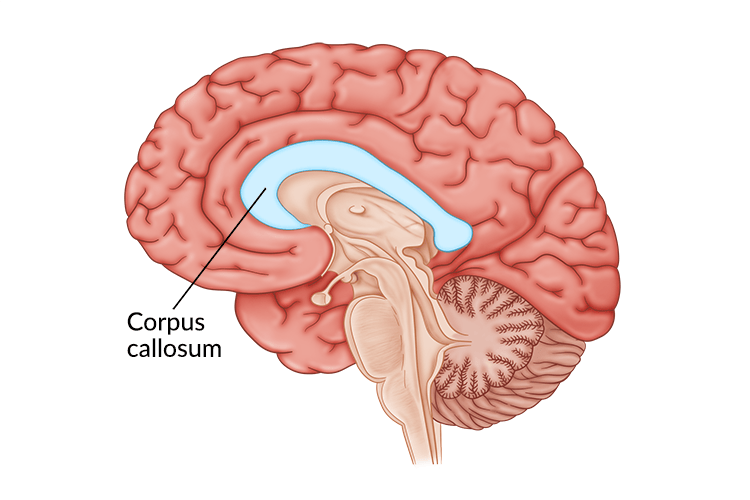
Association fibers run _____ while projection fibers run _____.
Horizontally; vertically
What are the two types of projection fiber bundles within the cerebral cortex?
(1) Internal Capsule and (2) Corona Radiata
Which part of the brain/CNS coordinates with the cerebral cortex to CONTROL COMPLEX MOVEMENTS?
Basal Ganglia (Basal Nuclei)

What are the three nuclear groups of the basal nuclei (basal ganglia)?
(1) Caudate nucleus, (2) amygdala/amygdaloid body, (3) claustrum
What are the three paired structures that enclose the 3rd ventricle and make up the DIENCEPHALON?
(1) Thalamus, (2) hypothalamus, and (3) epithalamus

Which of the three structures of the diencephalon is the most important VISCERAL CONTROL CENTER?
Hypothalamus
Which of the three structures of the diencephalon controls a variety of autonomic functions, such as sleep cycles, hunger, body temperature, secretion of the pituitary gland, and the autonomic nervous system?
Hypothalamus
What is the name of the structure that connects the hypothalamus to the pituitary gland?
Infundibulum
What is the name of the area that makes up the floor of the hypothalamus and contains the nuclei involved with the control of the pituitary gland function?
Tuberal Area
Which nuclei of the hypothalamus produces antidiuretic hormone (ADH), which restricts water loss at the kidneys?
Supraoptic Nucleus (SON)
Which nuclei of the hypothalamus produces oxytocin, which stimulates smooth muscle contractions in the uterus and prostate gland, and myoepithelial cells contractions in the mammary glands?
Paraventricular Nucleus (PVN)
Which area of the hypothalamus controls the physiological responses to changes in body temperature?
Preoptic Area
Which nucleus of the hypothalamus is the body’s “biological clock”, regulating the timing of many daily (circadian) rhythms?
Suprachiasmatic Nucleus (SCN)
Which structure of the diencephalon consists of one tiny group of nuclei and the PINEAL GLAND (pineal body)?
Epithalamus
What is the function of the pineal gland?
Secretes the hormone melatonin, which is involved in the regulation of day-night cycles. It signals the body to prepare for the nighttime stage of sleep-wake cycle.
Which structure of the CNS produces autonomic behaviors necessary for our survival, acts as a passageway for all fiber tracts running between the cerebrum and the spinal cord, and is heavily involved in the innervation of the face in head (10 of 12 cranial nerves attach to it?
The Brain Stem

What are the three brainstem regions from ROSTRAL (snout/head) to CAUDAL (towards tail)?
Midbrain - Pons - Medulla

Which brainstem region lies between the diencephalon and the pons?
Midbrain

Which part of the midbrain is made of a large group of nuclei that make up the tectum, which act in the “startle response”?
Corpora Quadrigemina

What is the name of the paired nuclei that act in VISUAL reflexes within the midbrain?
Superior Colliculi

What is the name of the paired nuclei that act in AUDITORY reflexed within the midbrain?
Inferior Colliculi
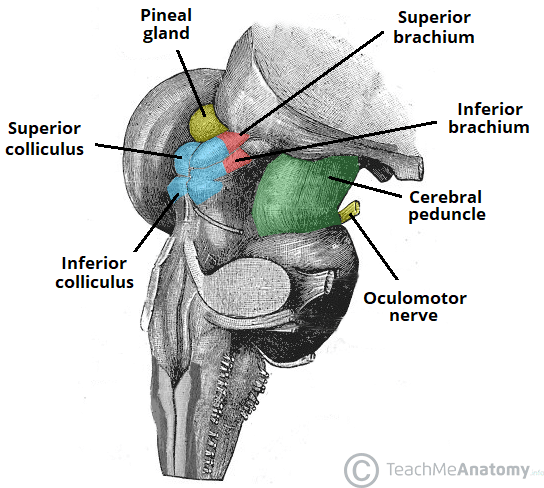
What is the name of the nucleus with abundant blood vessels, giving it a rich coloration and is concerned with maintenance of muscle tone and limb position?
Red Nucleus

Which part of the midbrain plays an important role in regulating motor output of the basal nuclei?
Substantia Nigra
Which part of the brain stem physically connects the brain with the spinal cord?
Medulla Oblongata

What is the name of the relay station that relays somatic sensory information to the thalamus, from the lower body?
Nucleus Gracilis
What is the name of the relay station that relays somatic sensory information to the thalamus from the upper body?
Nucleus Cuneatus
What are the two major centers that make up the autonomic nuclei within the medulla?
(1) Cardiovascular center and (2) Respiratory rhythmicity centers
Which autonomic nuclei center of the medulla adjusts heart rate, the strength of cardiac contractions, and the blood flow through peripheral tissues?
Cardiovascular center
Which autonomic nuclei center within the medulla sets the basic pace for respiratory movements and is regulated by inputs from the apneustic and pneumotaxic centers of the pons?
Respiratory rhythmicity centers
Which part of the brain functions to SMOOTH and COORDINATE BODY MOVEMENTS and HELP MAINTAIN POSTURE and EQUILIBRIUM?
Cerebellum

The gross structure of the cerebellum can be described as 2 cerebellar hemispheres connected by the _____.
Vermis

The cerebellum’s surface is folded into _____, which are separated by _____.
Folia; Fissures
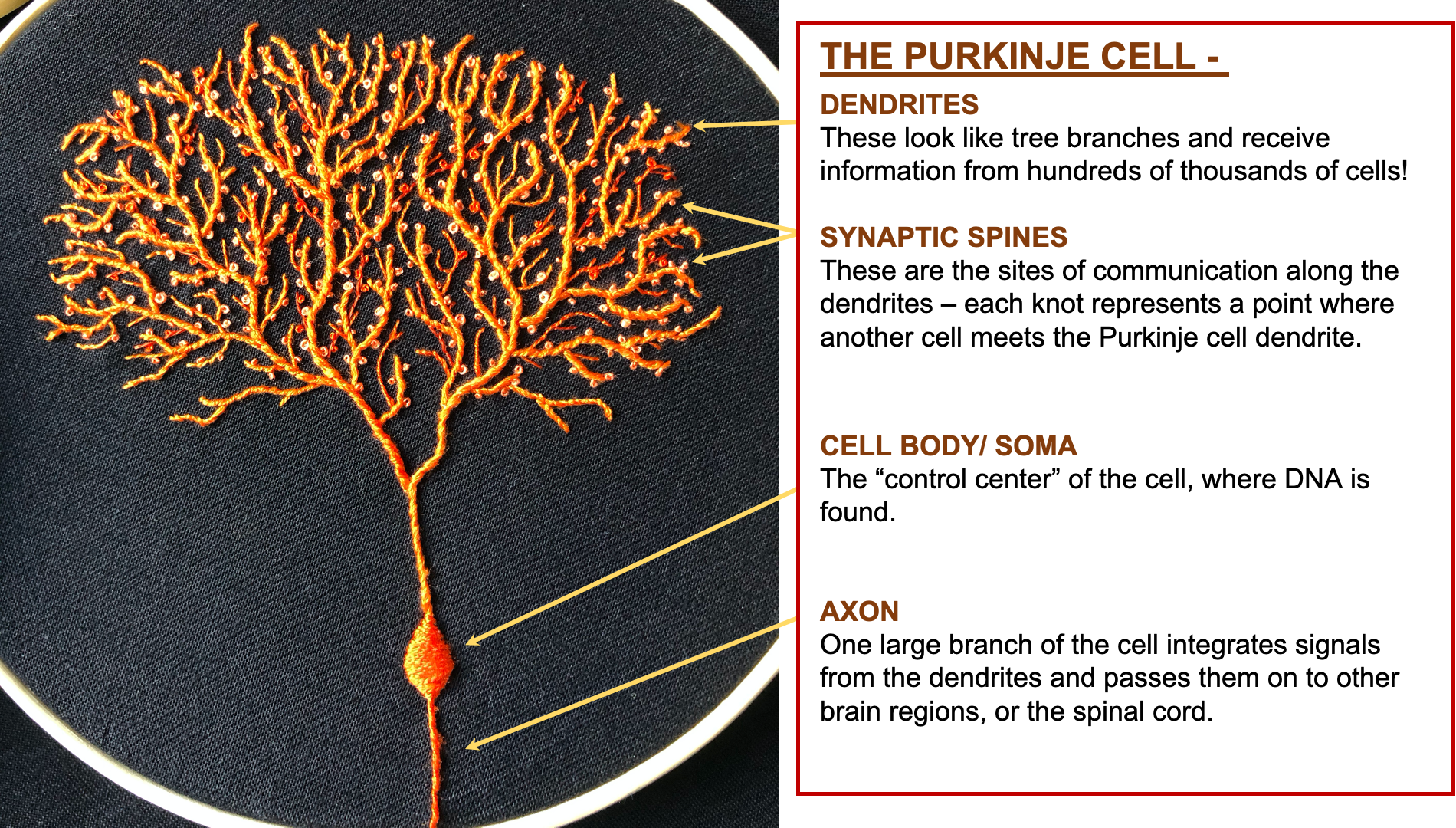
What are the cells within the cerebellum that are large and highly branched?
Purkinje cells
What is the internal white matter within the cerebellum that resembles a tree in a sectional view?
Arbor Vitae (“tree of life”)

What are the thick tracts of nerve fibers that connect the cerebellum to the brain stem?
Cerebellar Peduncles
Which type of peduncle is associated with the midbrain and the mesencephalon, and appear to “hold up” the forebrain of the cerebrum?
Cerebral Peduncles
Which type of peduncle is associated with the pons and the cerebellum, linking or bridging them together?
Cerebellar Peduncle
What is the name for the functional brain system that is also called the “emotional brain”?
The Limbic System
What are the four parts that make up the limbic system?
(1) Septal nuclei, (2) cingulate gyrus, (3) hippocampal formation, and (4) amygdaloid body
What are the prominent nuclei in the floor of the hypothalamus that are concerned with feeding reflexes and behaviors?
Mammillary bodies
What is the group of neurons that runs through the central core of the medulla, pons, and midbrain?
The Reticular Formation (RF)
What controls AROUSAL of the BRAIN as a whole due to the widespread connections of reticular neurons to other brain regions?
The Reticular Formation (RF)
What is the name of the branch of the reticular formation that maintains CONSCIOUSNESS and ALERTNESS?
The Reticular Activating System (RAS)
What is the name of the structure that functions to cover and protect the CNS, enclose and protect the blood vessels supplying the CNS, and contains cerebrospinal fluid (CSF)?
The Meninges

What are the three layers/membranes of connective tissue that make up the meninges?
(1) Dura Mater (most external), (2) Arachnoid Mater, and (3) Pia Mater (most internal)
