4 - Adaptive Immunity
 Call Kai
 Learn
 Practice Test
 Spaced Repetition
 Match
 Flashcards
 Knowt Play
1/10

There's no tags or description
Looks like no tags are added yet.
11 Terms
BCR cells for B cell immunity
B cells receptors (BCR) recognise surface structure on pathogens. (MEMORY)
BCR binds to pathogen —secretes receptor→ antibody or immunoglobulin stuck on pathogen
random BCR generated in each B cell to prevent future pathogens.
BCR (antibody) produced randomly from many gene regions and then replicated by transcription and translation

Antibody structure

Antibody/Antigen Binding
Many epitopes make up an antigen, many antigens make up a bacteria or wtv.

Different constant regions
IgM - first antibody produced in new immune response - can form multimers
IgG - Can cross the placenta - can form multimers
IgA - predominant antibody at mucosal sites
IgE - attaches mast cells to parasitic worms
IgD - function unknown
Antibody levels during an immune response
Lag phase - due to acute inflammation from innate response
Primary response - IgM more prominent because first antibody produced in new response

Functions of Antibodies

Use of antibodies in research and clinical applications
Immunoflourescence -
put a cell into a foreign body to create antibodies of that cell.

Role of T cells in adaptive immunity
Each T cell randomly generates a T cell receptor (TCR) that is membrane bound to that specific T cell.
T cells cannot see raw pathogens. Rely on specific MHC molecules to present specific peptides in order to activate.

Where do peptides come from to bind MHC

T cells functions
Helps B cells to produce antibody
Kill virally infected cells
Secrete cytokines to amplify inflammation
Suppress the immune response (regulatory T cell or Treg)
Assist macrophage phagocytosis
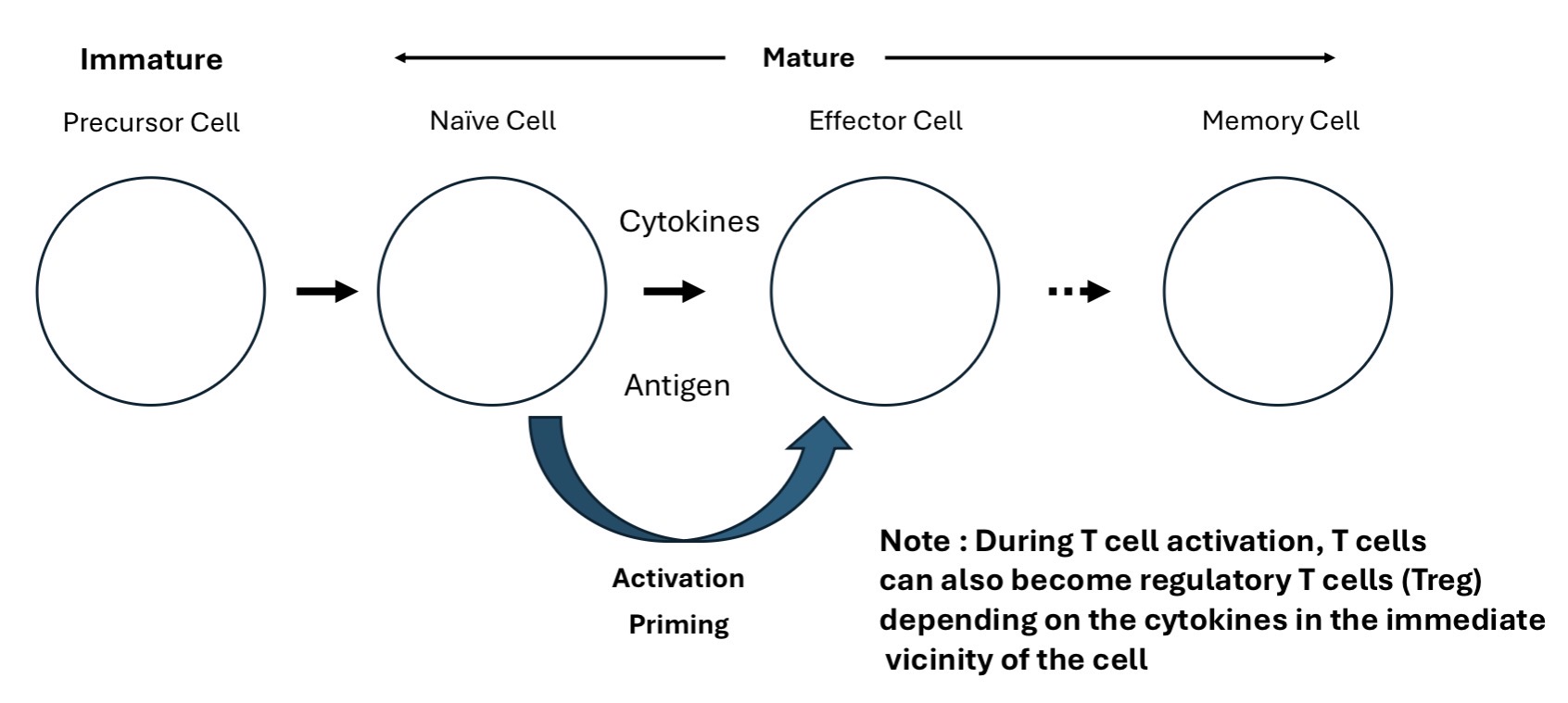
T and B cell differentiation