adaptive immunity - week 4

0.0(0)
Studied by 0 people
call kaiCall Kai
learnLearn
examPractice Test
spaced repetitionSpaced Repetition
heart puzzleMatch
flashcardsFlashcards
GameKnowt Play
Card Sorting

1/20

encourage image

There's no tags or description

Looks like no tags are added yet.

21 Terms

1
New cards

antigen

Any molecule recognized by an antibody or T cell receptor – usually a protein or polysaccharide on a microbe

  • One microbe carries many antigens, and each antigen has many epitopes – this is why adaptive responses can be so
    specific


2
New cards

epitope

The small part of an antigen that is actually bound – also called the antigenic determinant

3
New cards

immunogen

An antigen that can trigger an immune response on its own (not every antigen can)

4
New cards

adaptive immunity

a specific response against infection by a particular pathogen


adaptive immunity has two arms:

  • humeral immunity - mediated by antibodies secreted by B cells

  • cell-mediated immunity - carries out by T lymphocytes


<p>a specific response against infection by a particular pathogen</p><p></p><p>adaptive immunity has two arms:</p><ul><li><p><strong>humeral immunity -</strong> mediated by antibodies secreted <span>by B cells</span></p></li><li><p><span><strong>cell-mediated immunity - </strong>carries out by T lymphocytes</span></p></li></ul><p></p>
5
New cards

specificity and memory

  • Adaptive responses are highly specific – not only to a particular pathogen, but to individual parts of it.

  • A unique feature is immunological memory – a faster, stronger response on re-exposure.


<ul><li><p><span style="font-size: calc(var(--scale-factor)*18.02px);">Adaptive responses are highly specific – not only to a particular pathogen, but to individual parts of it.</span></p></li><li><p><span style="font-size: calc(var(--scale-factor)*18.02px);">A unique feature is immunological memory – a faster, </span><span style="font-size: calc(var(--scale-factor)*18.05px);">stronger response on re-exposure.</span></p></li></ul><p></p>
6
New cards

B cells and T cells

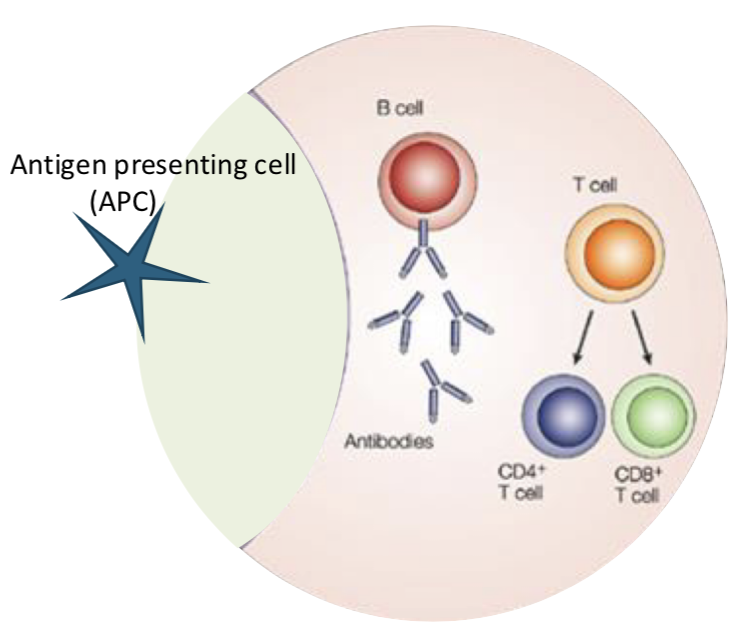
  • Adaptive immunity relies on two cell types: B lymphocytes (B cells) and T lymphocytes (T cells)

  • B cells mature in the bone marrow and produce antibodies (immunoglobulins) – humoral immunity.

  • T cells mature in the thymus and destroy cells infected with intracellular pathogens – cell-mediated immunity.

<ul><li><p><span style="font-size: calc(var(--scale-factor)*18.05px);">Adaptive immunity relies on two cell types: B lymphocytes </span><span style="font-size: calc(var(--scale-factor)*18.02px);">(B cells) and T lymphocytes (T cells)</span></p></li><li><p><span>B cells mature in the bone marrow and produce antibodies (immunoglobulins) – humoral immunity.</span></p></li><li><p><span style="font-size: calc(var(--scale-factor)*18.02px);">T cells mature in the thymus and destroy cells infected with intracellular pathogens – cell-mediated immunity.</span><br></p></li></ul><p></p>
7
New cards

antibodies (immunoglobulins)

  • Humoral immunity involves B cells and antibodies (immunoglobulins) – glycoproteins found in blood and tissue fluids.

  • Five classes: IgG, IgM, IgA, IgE and IgD, defined by the constant region of the heavy chain.

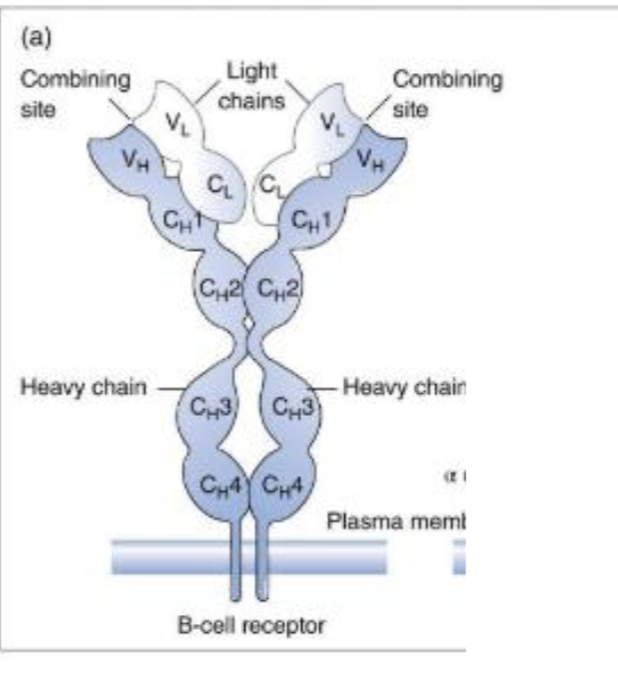
  • Structure: four chains – two identical heavy (H) and two identical light (L) – held together by disulphide bonds


<ul><li><p><span>Humoral immunity involves B cells and antibodies (immunoglobulins) – glycoproteins found in blood and tissue fluids.</span></p></li><li><p><span>Five classes: IgG, IgM, IgA, IgE and IgD, defined by the constant region of the heavy chain.</span></p></li><li><p><span>Structure: four chains – two identical heavy (H) and two identical light (L) – held together by disulphide bonds</span></p></li></ul><p></p>
8
New cards

what antibodies do: neutralisation

  • neutralisation

  • humoral immunity fights pathogens outside cells, in three mains ways

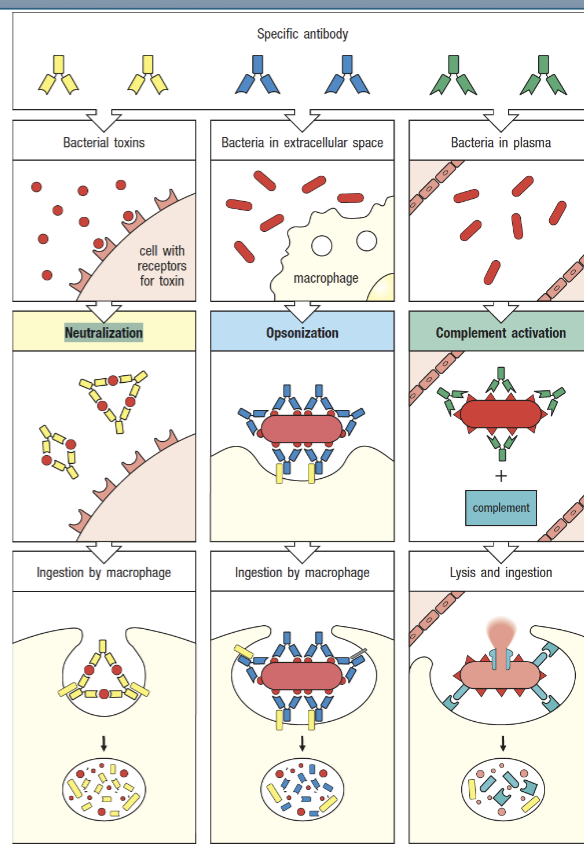
    • neutralisation: antibodies bind pathogens or toxins and stop them entering or acting on cells


<ul><li><p>neutralisation</p></li><li><p>humoral immunity fights pathogens outside cells, in three mains ways</p><ul><li><p>neutralisation: <span style="font-size: calc(var(--scale-factor)*18.02px);">antibodies bind pathogens or toxins and stop them entering or acting on cells</span></p></li></ul></li></ul><p></p>
9
New cards

What Antibodies Do: Opsonisation and Complement

  • Opsonisation: antibody Fab regions bind the pathogen; the Fc region binds receptors on neutrophils and macrophages, “tagging” it for phagocytosis

  • Complement activation: bound antibodies trigger the classical pathway – boosting opsonisation, recruiting phagocytes and forming the membrane-attack complex

<ul><li><p><span style="font-size: calc(var(--scale-factor)*18.05px);">Opsonisation: antibody Fab regions bind the pathogen; the Fc </span><span style="font-size: calc(var(--scale-factor)*18.02px);">region binds receptors on neutrophils and macrophages, “tagging” it for phagocytosis</span></p></li><li><p><span style="font-size: calc(var(--scale-factor)*18.05px);">Complement activation: bound antibodies trigger the classical </span><span style="font-size: calc(var(--scale-factor)*18.02px);">pathway – boosting opsonisation, recruiting phagocytes and forming the membrane-attack complex</span></p></li></ul><p></p>
10
New cards

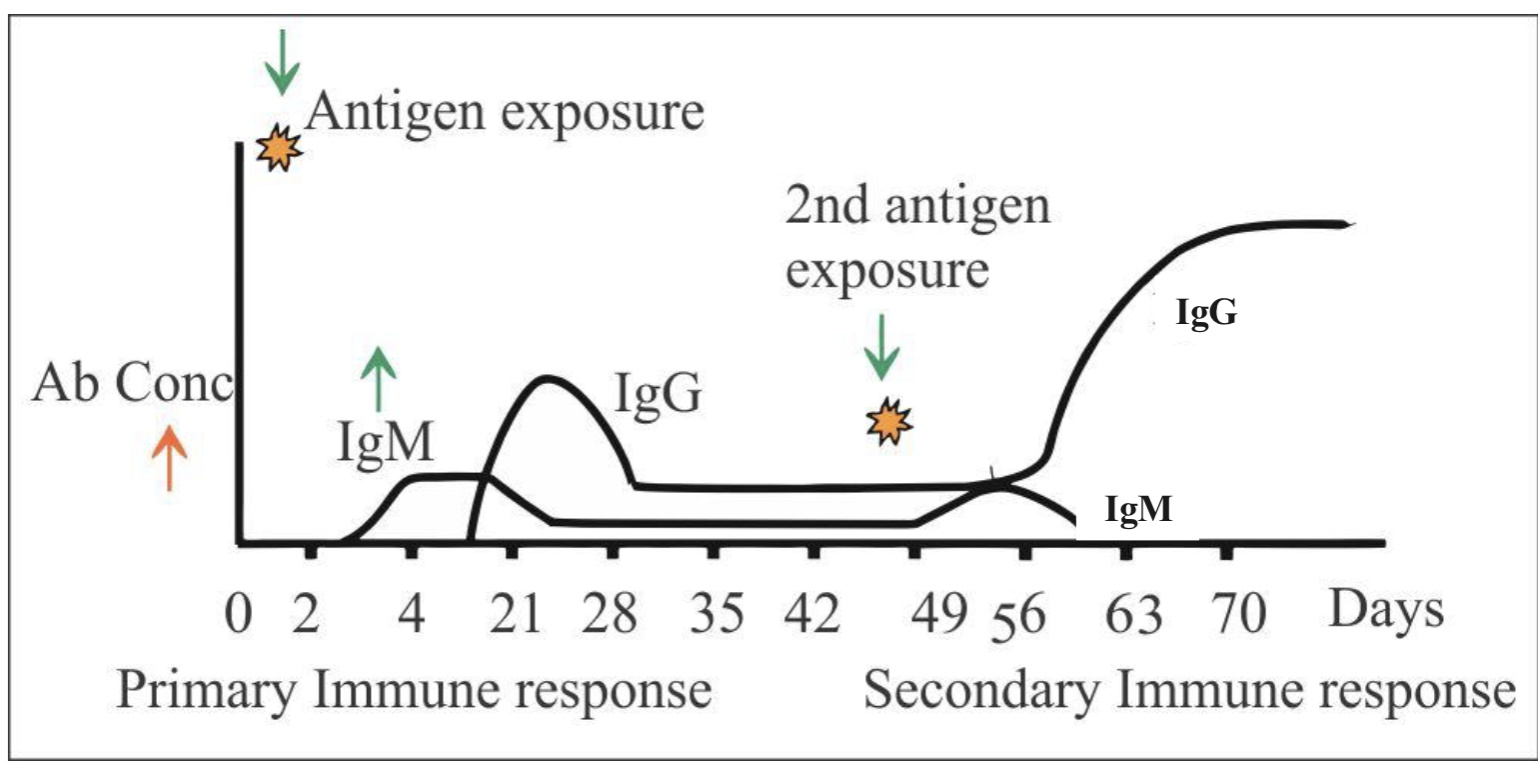
Primary and Secondary Antibody Responses
knowt flashcard image
11
New cards

B cell receptors

  • B cells express immunoglobulin molecules
    in their surface membrane

  • These surface immunoglobulins are the B
    cell receptors (BCRs) for antigen

  • Each has two identical antigen-binding
    sites, formed by the variable domains of
    one heavy and one light chain


<ul><li><p><span style="font-size: calc(var(--scale-factor)*18.02px);">B cells express immunoglobulin molecules</span><span><br></span><span style="font-size: calc(var(--scale-factor)*18.02px);">in their surface membrane</span></p></li><li><p><span style="font-size: calc(var(--scale-factor)*18.02px);">These surface immunoglobulins are the B</span><span><br></span><span style="font-size: calc(var(--scale-factor)*18.05px);">cell receptors (BCRs) for antigen</span></p></li><li><p><span style="font-size: calc(var(--scale-factor)*18.02px);">Each has two identical antigen-binding</span><span><br></span><span style="font-size: calc(var(--scale-factor)*18.02px);">sites, formed by the variable domains of</span><span><br></span><span style="font-size: calc(var(--scale-factor)*18.02px);">one heavy and one light chain</span></p></li></ul><p><br></p>
12
New cards

cell-mediated immunity

  • Pathogens that have entered host cells are largely protected from antibodies.

  • Cellular immunity targets and eliminates these intracellular pathogens through T lymphocytes.

  • T cells begin developing in the red bone marrow, then travel to the thymus to mature


<ul><li><p><span>Pathogens that have entered host cells are largely protected from antibodies.</span></p></li><li><p><span style="font-size: calc(var(--scale-factor)*18.02px);">Cellular immunity targets and eliminates these intracellular pathogens through T lymphocytes.</span></p></li><li><p><span>T cells begin developing in the red bone marrow, then travel to the thymus to mature</span></p></li></ul><p></p>
13
New cards

CD4 and CD8 T Cells

  • T cells express cluster of differentiation (CD) molecules – surface glycoproteins used to identify types of white blood cell.

  • CD4 is found on helper and regulatory T cells; CD8 is found on cytotoxic T cells.


<ul><li><p><span style="font-size: calc(var(--scale-factor)*18.05px);">T cells express cluster of differentiation (CD) molecules – </span><span style="font-size: calc(var(--scale-factor)*18.02px);">surface glycoproteins used to identify types of white blood cell.</span></p></li><li><p><span style="font-size: calc(var(--scale-factor)*18.02px);">CD4 is found on helper and regulatory T cells; CD8 is </span><span style="font-size: calc(var(--scale-factor)*18.05px);">found on cytotoxic T cells.</span></p></li></ul><p><br></p>
14
New cards

three classes of T cells

There are three main classes of T cells:

  • Helper (CD4+): activate macrophages,
    dendritic cells and B cells, and support
    cytotoxic T cells, by secreting cytokines

  • Cytotoxic (CD8+): kill infected host cells by
    inducing apoptosis (programmed cell death)

  • Regulatory (CD4+): suppress helper T cells,
    cytotoxic T cells and dendritic cells


<p><span>There are three main classes of T cells:</span></p><ul><li><p><span>Helper (CD4+): activate macrophages,<br>dendritic cells and B cells, and support<br>cytotoxic T cells, by secreting cytokines</span></p></li><li><p><span> Cytotoxic (CD8+): kill infected host cells by<br>inducing apoptosis (programmed cell death)</span></p></li><li><p><span>Regulatory (CD4+): suppress helper T cells,<br>cytotoxic T cells and dendritic cells</span></p></li></ul><p></p>
15
New cards

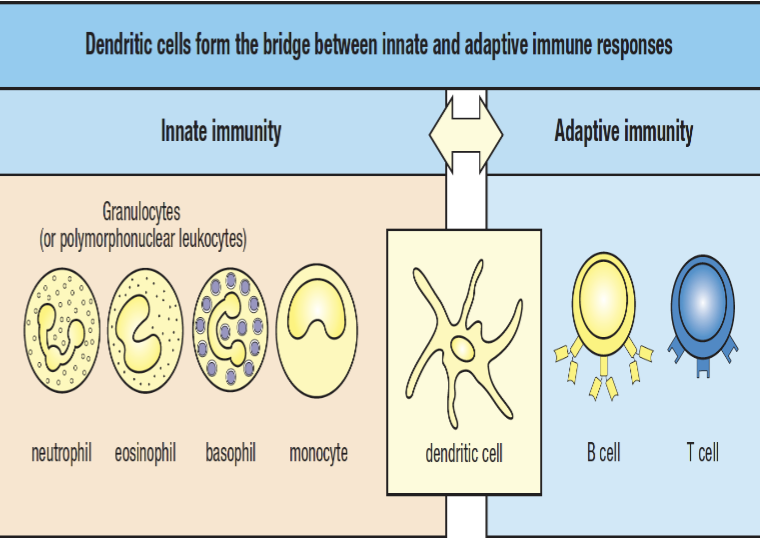
T Cell Activation: Antigen Presentation

How T cells are activated

  • T cells cannot recognise pathogens without help.

  • Antigen-presenting cells (APCs), such as dendritic cells and macrophages, engulf and digest pathogens into antigen fragments.

  • These fragments are displayed on the APC surface on MHC molecules

<p><span>How T cells are activated</span></p><ul><li><p><span>T cells cannot recognise pathogens without help.</span></p></li><li><p><span> Antigen-presenting cells (APCs), such as dendritic cells and macrophages, engulf and digest pathogens into antigen fragments.</span></p></li><li><p><span>These fragments are displayed on the APC surface on MHC molecules</span></p></li></ul><p></p>
16
New cards

The Major Histocompatibility Complex (MHC)

  • The major histocompatibility complex (MHC) is a cluster of genes whose products help the immune system tell self from non-self.

  • MHC molecules bind peptide antigens processed by APCs and present them to the T cell receptor


<ul><li><p><span>The major histocompatibility complex (MHC) is a cluster of genes whose products help the immune system tell self from non-self.</span></p></li><li><p><span>MHC molecules bind peptide antigens processed by APCs and present them to the T cell receptor</span></p></li></ul><p></p>
17
New cards

MHC Class I and Class II

  • Class I MHC: on nearly all nucleated cells; presents endogenous peptides (e.g. viral proteins made inside the cell) to CD8+ T cells.

  • Class II MHC: mainly on APCs (macrophages, dendritic cells, B cells); presents exogenous peptides (taken up from outside) to CD4+ T cells.


<ul><li><p><span style="font-size: calc(var(--scale-factor)*18.05px);">Class I MHC: on nearly all nucleated cells; presents </span><span style="font-size: calc(var(--scale-factor)*18.02px);">endogenous peptides (e.g. viral proteins made inside the cell) to CD8+ T cells.</span></p></li><li><p><span style="font-size: calc(var(--scale-factor)*18.02px);">Class II MHC: mainly on APCs (macrophages, dendritic cells, B cells); presents exogenous peptides (taken up from outside) to CD4+ T cells.</span></p></li></ul><p><br></p>
18
New cards

MHC Class I → CD8, MHC Class II → CD4

  • MHC class II molecules bind peptides that are
    recognised by CD4 T cells

  • MHC class I molecules bind peptides that are
    recognised by CD8 T cells


<ul><li><p><span style="font-size: calc(var(--scale-factor)*18.02px);">MHC class II molecules bind peptides that are</span><br><span style="font-size: calc(var(--scale-factor)*18.02px);">recognised by CD4 T cells</span></p></li><li><p><span style="font-size: calc(var(--scale-factor)*18.02px);">MHC class I molecules bind peptides that are</span><br><span style="font-size: calc(var(--scale-factor)*18.05px);">recognised by CD8 T cells</span></p></li></ul><p></p>
19
New cards

types of acquired immunity

knowt flashcard image
20
New cards

active vs passive

knowt flashcard image
21
New cards

innate vs adaptive immunity

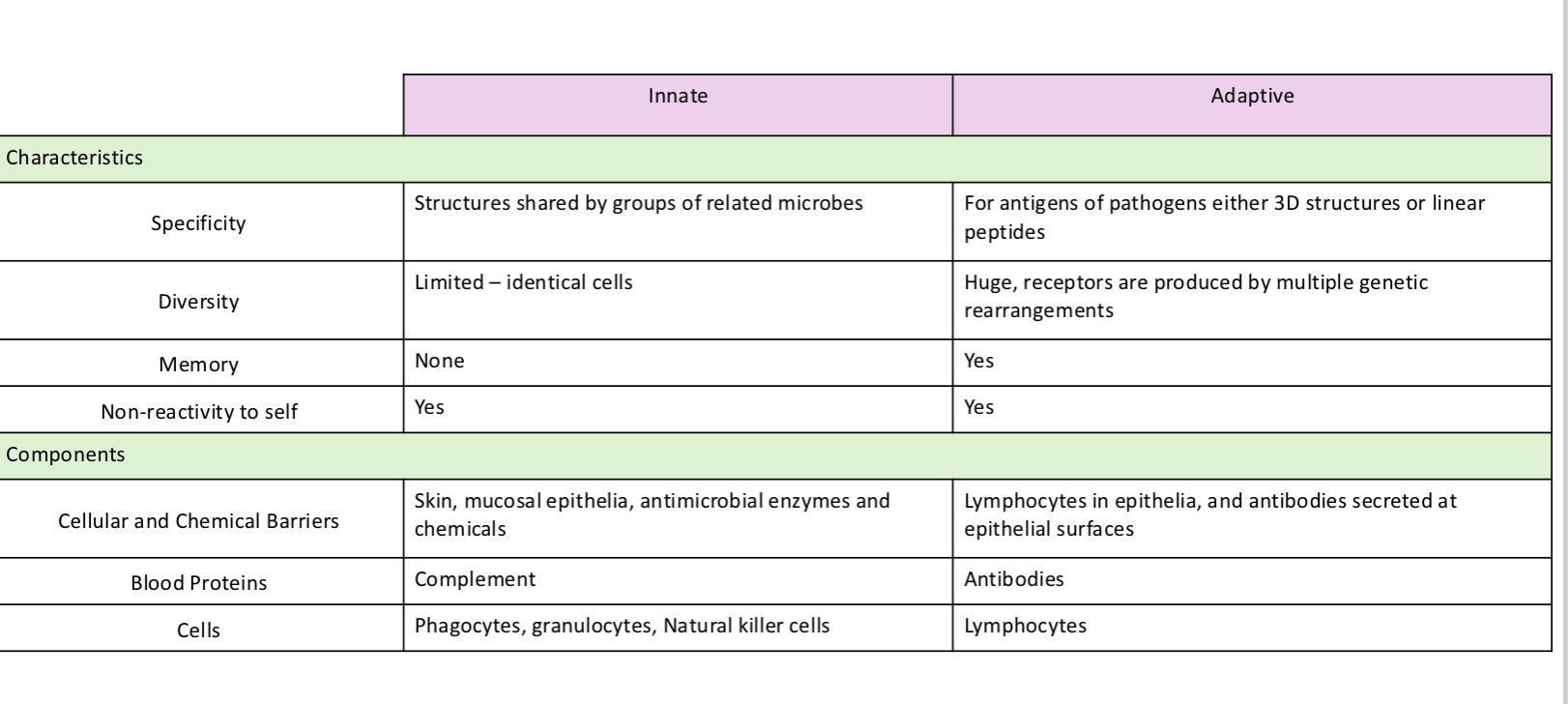
knowt flashcard image