W9 Visual Field Loss
 Call Kai
 Learn
 Practice Test
 Spaced Repetition
 Match
 Flashcards
 Knowt Play
1/31

There's no tags or description
Looks like no tags are added yet.
32 Terms
What are the 2 types of retinal detachment?
Macula-on retinal detachment and macula-off retinal detachment
What are features of macula-on retinal detachment?
Low IOP <10mmHg
Shafer’s sign
Pale, elevated fundus with NORMAL macula

What are features of macula-off retinal detachment?
Low IOP <10mmHg
Shafer’s sign
Pale elevated fundus with pale elevated MACULA
What are the 3 types of optic neuropathy?
Acute ON, progressive ON with disc swelling and headache and progressive ON with pale or normal disc
What are features of acute optic neuropathy?
Sudden onset
Unusual headaches
Blurred vision
Optic disc hyperaemic
Indistinct margins

What are features of progressive optic neuropathy with disc swelling and headache?
Gradual onset
Unusual headaches
Blurred vision
Optic disc hyperaemic
Indistinct margins

What are features of progressive optic neuropathy with pale or normal disc?
Gradual onset
Unusual headaches
Blurred vision
Optic disc pale (atrophy) or normal

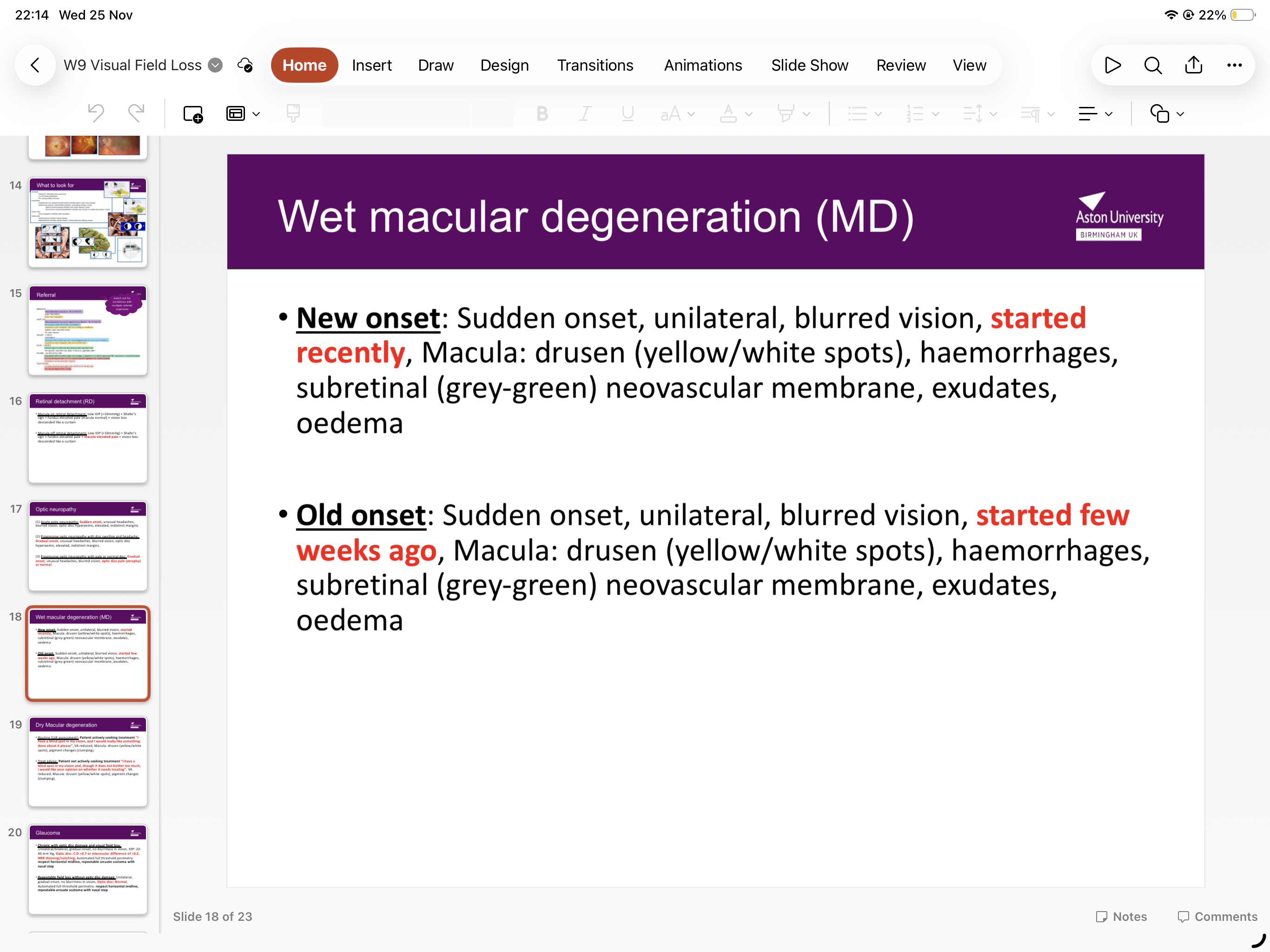
What are features of new onset wet AMD?
Sudden onset
Blurred vision
Unilateral
Started recently
Drusen
Haemorrhages
Oedema

What are features of old onset wet AMD?
Same as new wet AMD but it started a few weeks ago as opposed to recently
What are features of dry AMD for a routine action?
PX WILL ACTIVELY BE SEEKING TREATMENT
VA reduced
Drusen
Pigment changes (clumping)

What are features of dry AMD for advice/treatment?
Px not actively seeking treatment
Same for if it is routine check- just px wishes vary

What are features of chronic glaucoma with visual field loss and optic disc damage?
Unilateral/bilateral
Gradual onset
No blurriness in vision
IOP 22-40mmHg
Optic disc C:D >0.7
Arcuate scotoma with nasal step

What are features of repeatable field loss without optic disc damage?
Unilateral
Gradual onset
No blurriness in vision
NORMAL OPTIC DISC
Arcuate scotoma with nasal step
What are key features of brain disease?
Bilateral reduced/blurred vision during transient episodes
Unusual headaches which worsen when lying down
Flashes (photopsia)
Neurological symptoms
Bilateral spot in vision
Normal VA
Homonymous hemianopia/quadrantopia (vertical midline is respected)

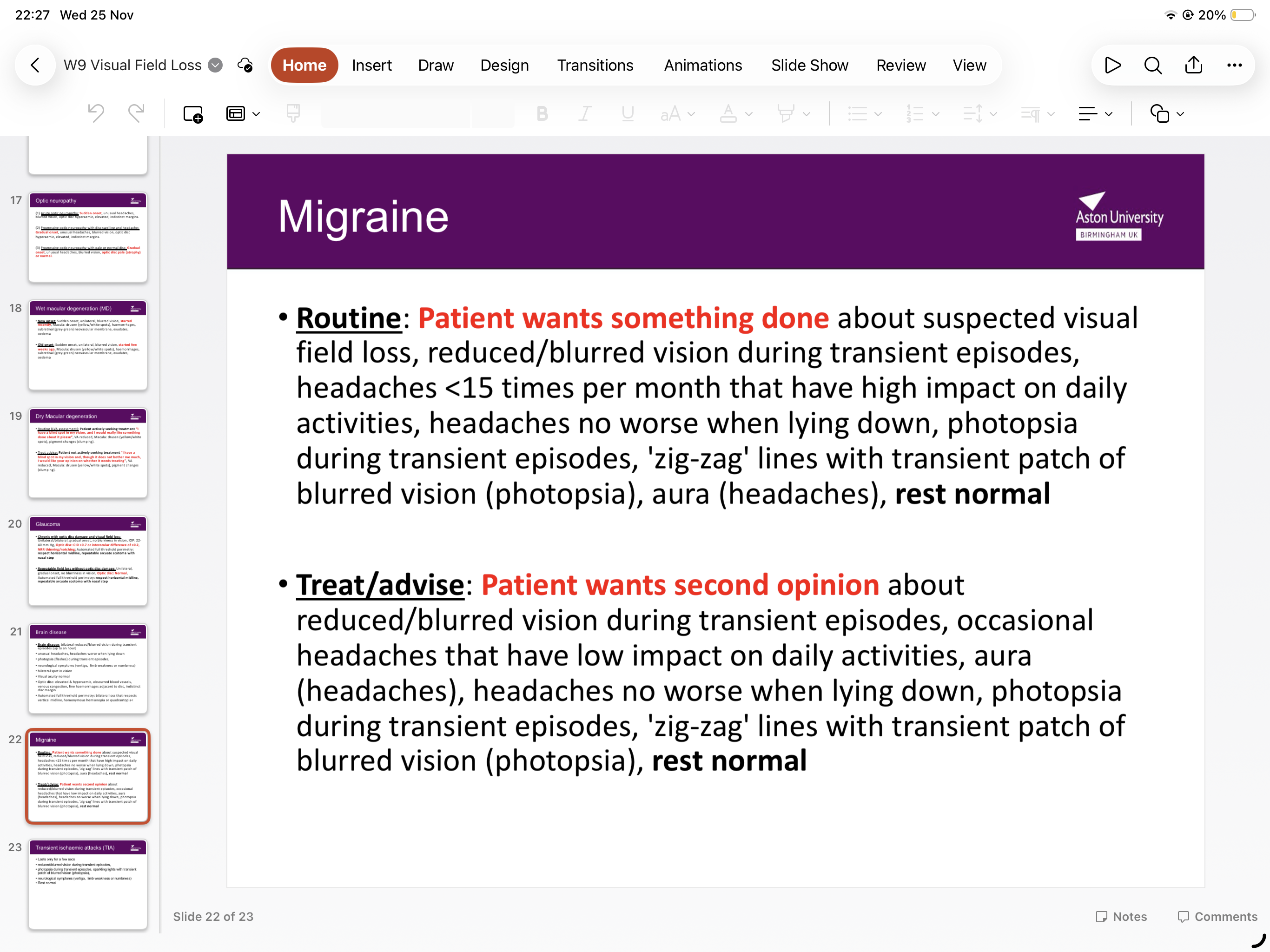
What are features of a routine migraine?
Px wants something done about visual field loss
Reduced/blurred vision during transient episodes
Headaches <15 times per month
Headaches no worse when lying down but they come with aura
Photopsia during transient episodes
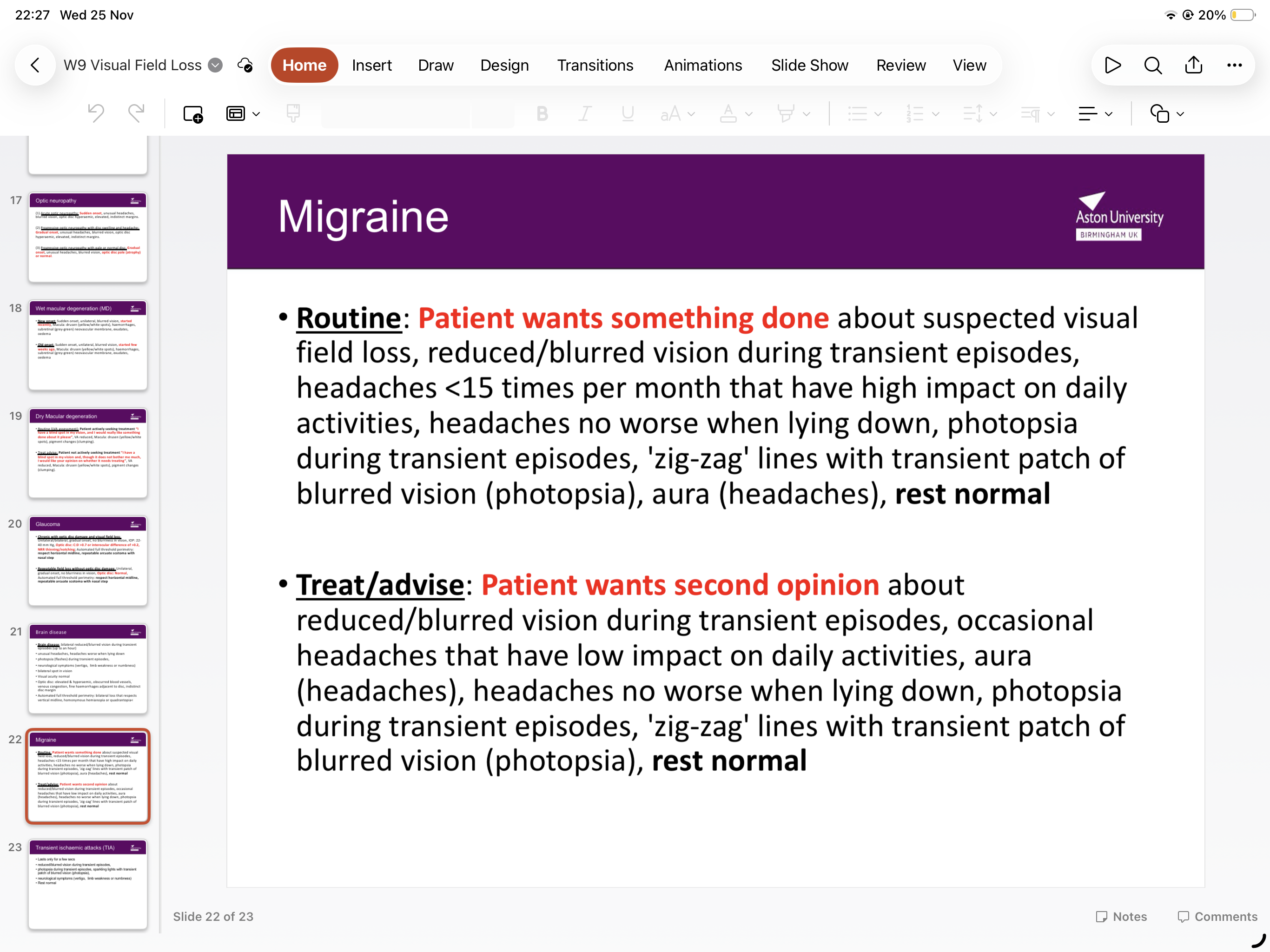
What are features of a migraine we advise/treat?
Occasional headaches that have low impact on activities
What are features of TIA (transient ischaemic attacks?)
Last only for a few secs
Reduced/blurred vision during transient episodes
Photopsia during episodes
Neurological symptoms

What do we ask for at the start?
Reason for visit
One or both eyes
Sudden or gradual
Recently or few weeks (only ask when considering AMD)
Transient episodes
Recurrence
What associated/secondary symptoms do we ask for?
Vision affected in centre, periphery or both
Headaches
Floaters, flashes
Increasing shadow/vision that descends like a curtain (retinal detachment)
Neurological symptoms
What ocular history do we ask for?
Strong glasses for short-sightedness
Eye surgery
What medical history do we ask for?
Smoke
Diabetes
High blood pressure
Heart problems
Migraine
What family history do we ask for?
Glaucoma
Retinal detachment
Age related MD
Migraine
What tests do we do?
VA
Pinhole (if VA reduced)
Motility (pain indicates optic neuropathy)
Pupil reactions
What external examinations do we do?
Slit lamp, anterior chamber check
Examine anterior chamber only
What internal examinations do we do?
Everything

What additional tests do we do?
Tonometry
Visual field
Amsler chart
Colour vision- desaturation indicates optic neuropathy
When do we refer immediately?
Macula-in retinal detachment (NIL by mouth)
Acute CRAO/BRAO
Acute optic neuropathy
When do we do same day referral?
Macula-off retinal detachment
Recent onset wet AMD
Progressive optic neuropathy with disc swelling and headache
Sudden onset visual brain defect
Brain disease, TIA
When do we do an urgent 1 week referral?
CRVO/BRVO
Old wet AMD
Progresive optic neuropathy with pale or normal disc
When do we do a soon 1 month referral?
Chronic glaucoma with visual field loss and optic disc damage
Non-specific visual field loss with no pattern
When do we do a routine referral?
Repeatable field loss without optic disc damage (chronic glaucoma)
Dry AMD
Moderate to severe persistent migraine
When do we simply advise/treat px?
Pharmaceutical options for mild to moderate migraine
Dry AMD (if early)