CFPC 2027 - Pneumo
 Call Kai
 Learn
 Practice Test
 Spaced Repetition
 Match
 Flashcards
 Knowt Play
1/56

There's no tags or description
Looks like no tags are added yet.
57 Terms
In a presentation of pharyngitis, look for _________
mono
Dangerous conditions with dysphagia
Submandibular space infections (Ludwig's angina - woody induration, crepitus)
Primary HIV (mucocutaneous ulcerations)
Peritonsillar abscess (trismus)
Epiglottitis (out of proportion to findings on exam)
Retropharyngeal space infection
CENTOR strep test

Strep throat tx

Seasonal influenza tx
oseltamivir (Tamiflu) 75mg PO BID x 5d
efficient if < 48h of illness
Bacterial sinusitis sx
• Symptômes persistants (de 10 à 14 jours) sans amélioration
• Aggravation des symptômes après 5 à 7 jours suivant une amélioration initiale (infection biphasique)
Bacterial sinusitis tx

Chronic rhinosinusitis def
Inflammation in paranasal sinuses and nasal passages >12 weeks despite medical treatment
Chronic rhinosinusitis tx
Prednisone 20mg PO BID x 5d, then 20mg daily x 5 days (total 10 days)
Amoxicillin-clavulanate 875mg PO BID or Clindamycin 450 mg PO TID
Topical glucocorticoid spray and intranasal saline irrigation or sprays
In pediatric patients with a persistent (or recurrent) cough, generate a broad differential diagnosis
gastroesophageal reflux disease [GERD], asthma, rhinitis, presence of a foreign body, pertussis
For chronic cough, if CXR N, no ACE-i, no exposure to irritants, what dx to consider
UACS (upper airway cough syndrome, aka post nasal drip)
Asthma
GERD
For chronic cough, if all failed what other management to consider
speech pathology treatment
Neuromodulating medication
Gabapentin (300-1800mg daily x 10w), Pregabalin 300mg PO daily x4w
CT scan if suspect lung cancer, bronchiectasis or ILD
Referral to specialty
In patients with a persistent (e.g., for weeks) cough, consider non-pulmonary causes
GERD, congestive heart failure, rhinitis
In patients presenting with an acute cough, include serious causes
pneumothorax, pulmonary embolism
Regardless of where you assess the patient who presents with shortness of breath (e.g., office, home visit) consider life-threatening conditions
pulmonary embolus, foreign body aspiration in a child, anaphylaxis, myocardial infarction
When a patient with a diagnosed cause of dyspnea presents with worsening symptoms or treatment failure, what factors to consider
new pets, environmental factors, medication technique/adherence, dietary changes
Asbestosis imagery findings
RXP: atteinte des bases, plaques pleurales.
CT thorax: honeycombing
Sarcoidose sx
fever, polyarthralgia, erythema nodosum, dry cough, dyspnoea, fatigue and weight loss
Sarcoidose tests (important one)
-Hypercalcémie
-RXP: bilateral hilar lymphadenopathy
-Bx: non caseating granuloma
-Lavage boncho-alveolaire: raised lymphocytes
Sarcoidosis tx
CS
Immunosuppressants
Agents biologiques
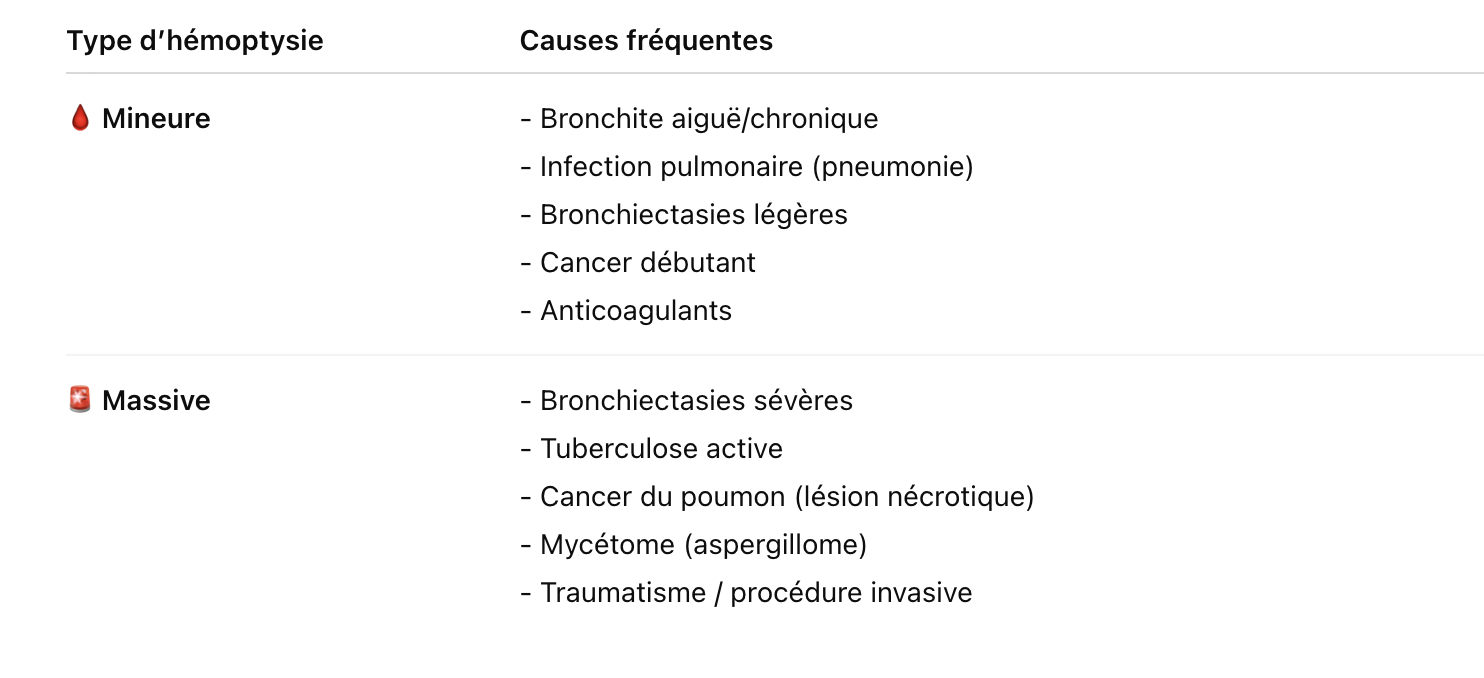
Ddx hemoptysie
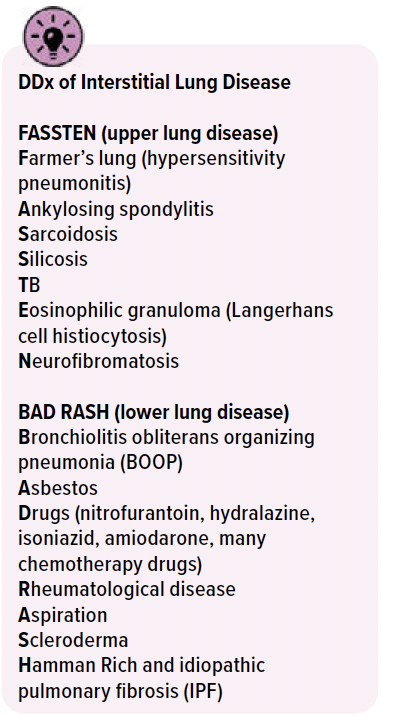
Maladie interstitielle pulmonaire étiologies
-FPI
-Pneumonite hypersensitivité (poumon du fermier)
-Sarcoidose (granulomes non caseux)
-Asbestosis
-Autres: infx, rx (amiodarone), radiotx, rhumato
SAHS (STOP BANG)
Snore
Tired
Observed stop breathing
HTA
BMI > 35
Age > 50
Neck circumference > 40
Gender (M)
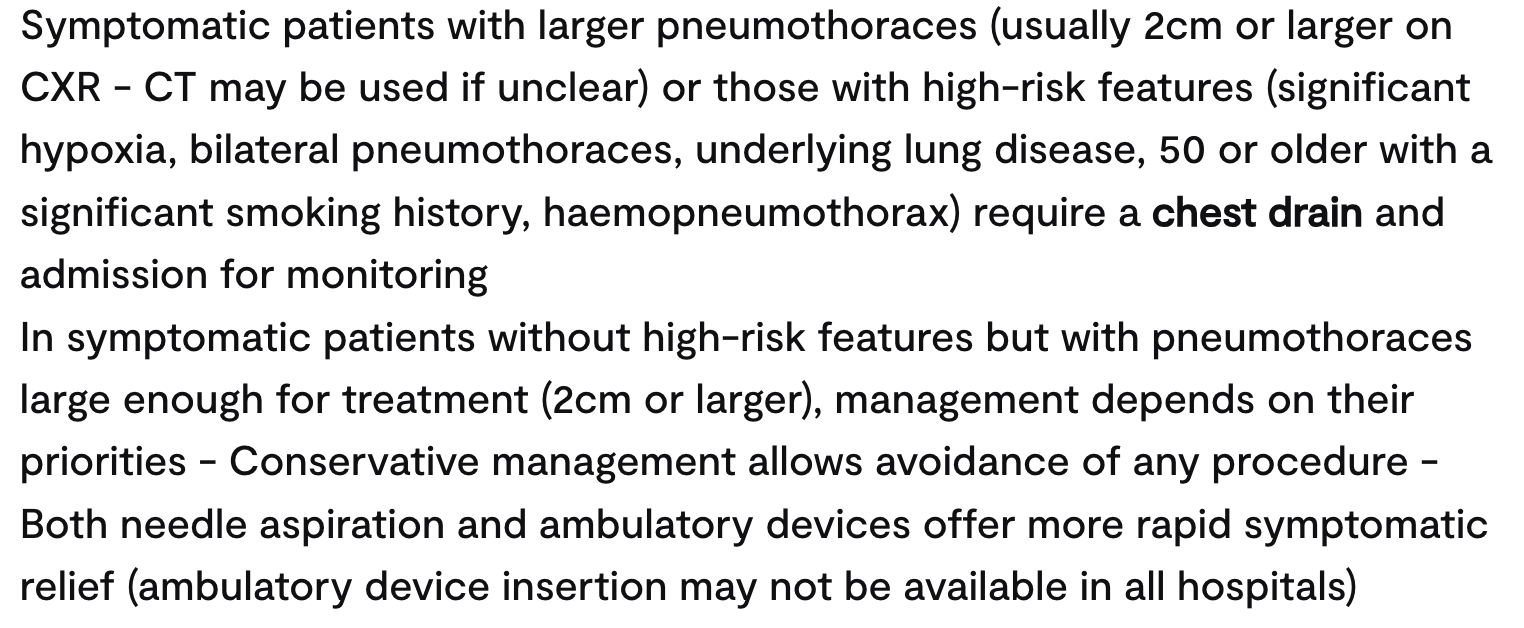
PNTX tx
Tension: décompression par aiguille ou drain.
Embolie pulmonaire tx
Anticoagulation (HBPM ou ACOD) + O2
Massive EP: thrombolyse (alteplase IV)
Long terme: x 3 mois (provoqué), > 3-6 mois (non provoqué)
HT pulmonaire def et test gold standard
Pulmonary arterial pressure over 25mmHg
GS: Right heart catheterisation
Sx cutané de tuberculose
Érythème noueux
qSOFA criteria
AMS (GCS <15)
RR >22
Hypotension (<100 systolic)
CURB-65 criteria
Confusion
Urea >7
Respiratory Rate >30
Blood pressure (<100 systolic / <60 diastolic)
>65 y.o.
Treatment for croup
Viral infx so nebulised corticosteroids
Barking cough in child dx?
Croup (viral infx)
LIGHT criteria for exsudate vs transsudate
⅔ indicates exsudat:
1- Pleural LDH/ serum LDH >0.6
2- Pleural/Serum protein >0.5
3- Pleural LDH> 2/3 higher normal value of Serum LDH
**bonus: si ph < 7.2 = infx
COPD dx
Spirometry FEV1/FVC <0.70 post-bronchodilator
Grade
Mild = FEV1>80% predicted
Moderate = 50-80%
Severe = 30 to <50%
Very Severe <30%
screen alpha-1 antitrypsin deficiency (1 x in life)
COPD treatments by group and classification
Group A: Low Sx and No hospitalisations → LABA or LAMA
B: High Sx but no Hospit → LABA + LAMA
E: Hospitalised ≥1 time → LABA + LAMA + ICS (if Eos>300, ≥ 2 COPDE/yr, asthma)
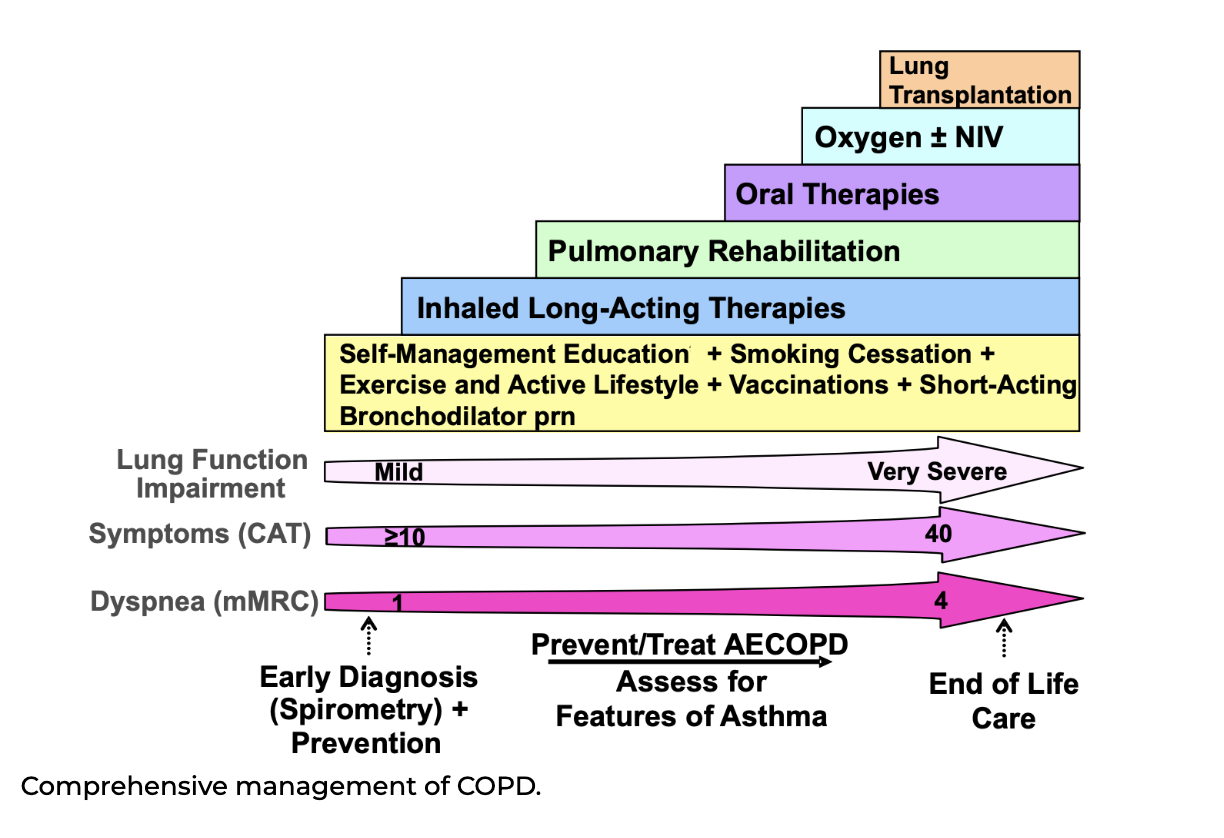
Non pharmaco COPD tx
Pulmonary rehab (refer respiratory technician or pulmonary rehabilitation personnel)
O2 therapy (PaO2 <55mmHg, SaO2<88%)
CPAP if chronic hypercapnia or OSA
Vaccine (flu + pneumocoque)
Action plan
Smoking cessation
COPDE tx
Non invasive ventilation
SABA (eg. 4-8 puffs inhaled q20mins up to 4h then q1-4h PRN) +/- LAMA
Atbx
Simple: azithro 500 day 1 then 250 × 4d (or amox 500 tid x 7d)
Complicated (> 3 COPDE/yr, comorbidities, etc): moxifoloxacin 400 × 5d
Pred 40 die x 5d
Severe: Magnesium sulfate 2g IV over 20 minutes
When treating patients with COPDE what is important to rule out?
MI, CHF, systemic infections, anemia
What is a secondary effect of amiodarone?
Pulmonary fibrosis
Asthma diagnosis in adults
FEV1/FVC (<0.75-0.8 in adults and <0.9 for children) AND Post-bronchodilator reversiblity increase in FEV1 >12% (minimum of 200mL in adults)
Asthma diagnosis in children (1-5)
Documentation of airflow obstruction (eg. wheezing or other symptom)
Documentation of reversibility of airflow obstruction (eg. improved with SABA ± oral corticosteroids)
No clinical evidence of an alternative diagnosis
Signs of poor asthma control
Daytime sx > 2/week
Night-time waking due to asthma
Reliever use >2/week
Activity limitation due to asthma
Uncontrolled if 3-4
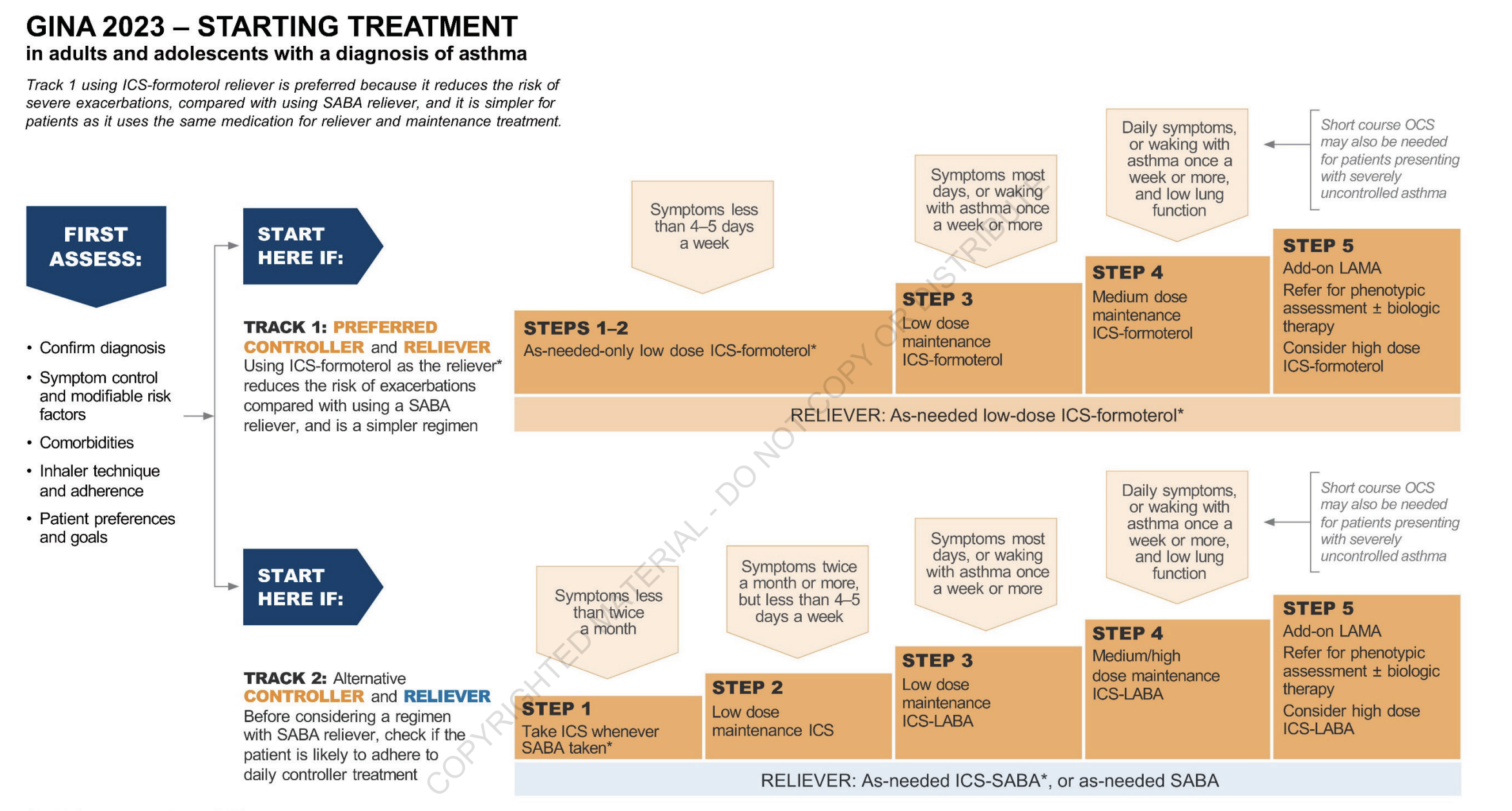
Treatments for Asthma in adults
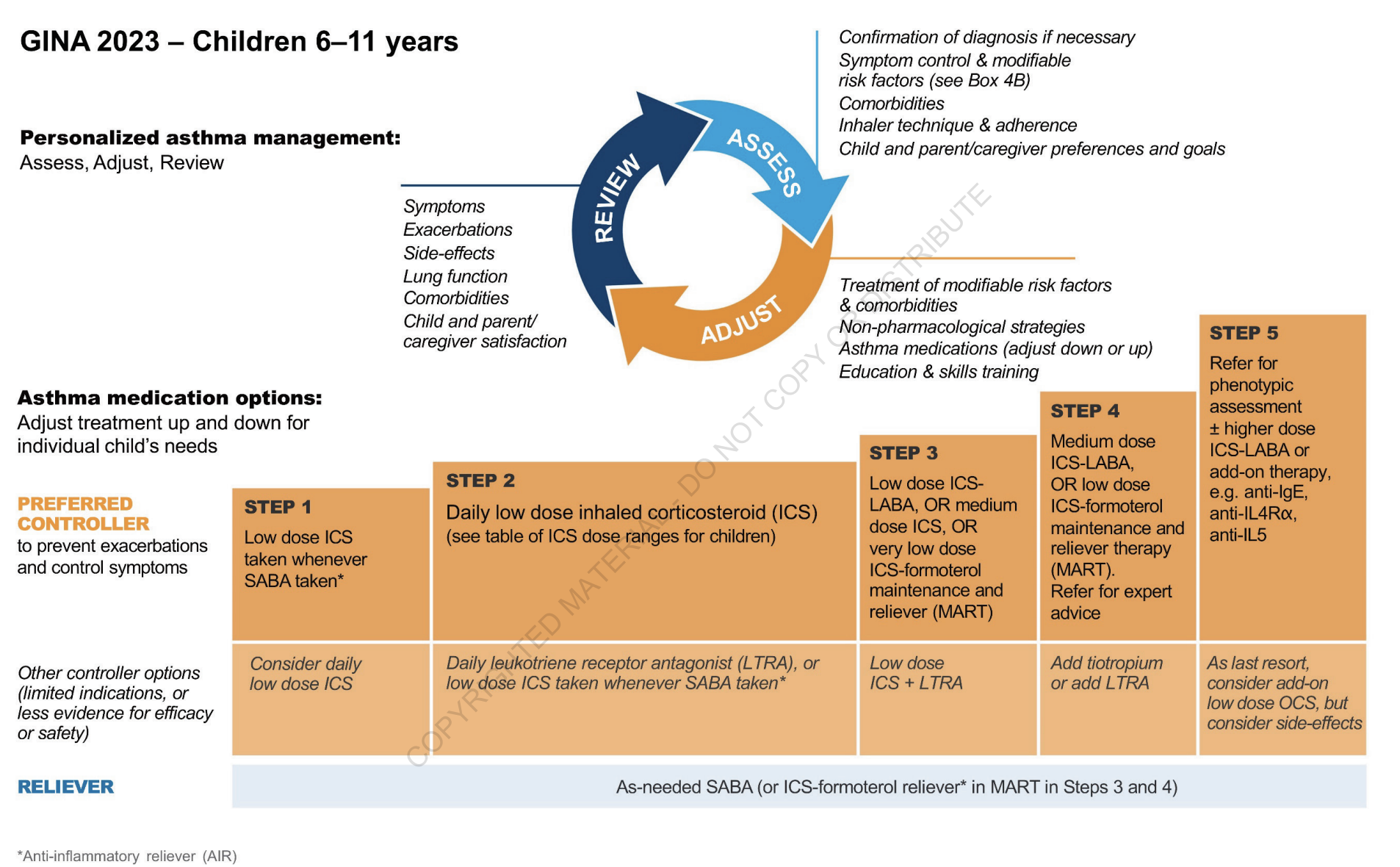
Tx of asthma in children < 12
Non pharmaco for asthma tx or control
Smoking cessation
Healthy diet
Weight reduction
Breathing exercises
Dealing with emotional stress
Swimming in young people with asthma
Vaccinations (influenza)
Avoid indoor/outdoor allergens
Avoid occupational exposures/allergens
Caution with medications that could worsen asthma (NSAIDs, BB)
Management asthma exacerbation in primary care

Treatments for Embolism/DVT
1- Observe → Si stable et PESI 0 → ACOD/warfarin et congé
2- If unstable → Oxygen >90% + HBPM SC > HNF > ACOD Xa
3- tPA si Embolie massive, peu fréquent
4- Anticoagulation long terme
Long term anticoagulation
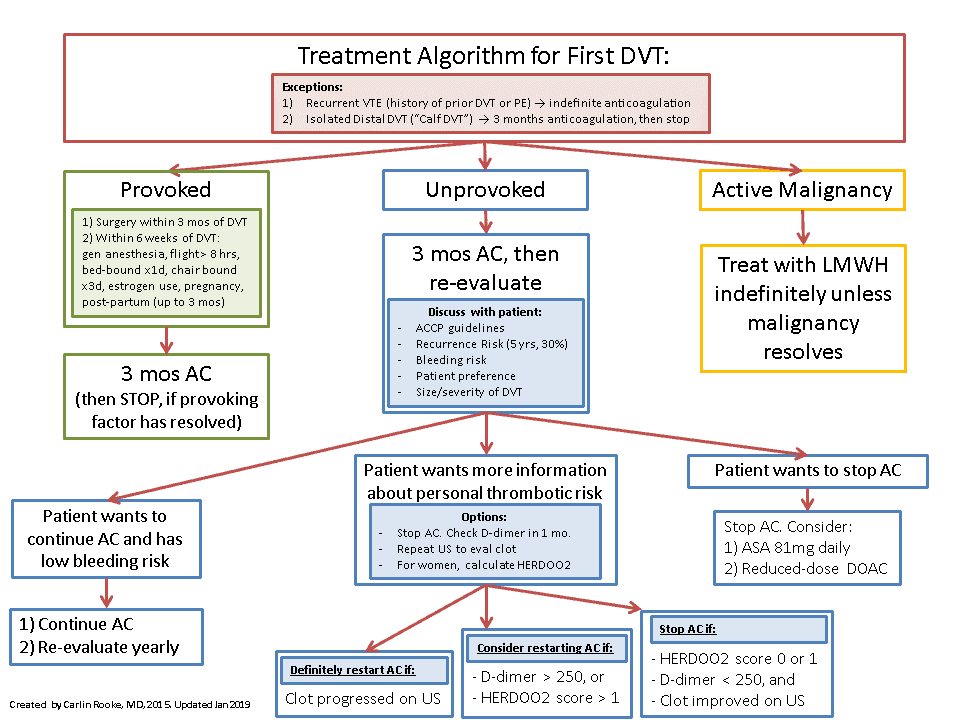
Latent TB tx
Three months of isoniazid, pyridoxine and rifampicin
Six months of isoniazid and pyridoxine
Pneumonia pathogens
PAC: s. pneumoniae, m. catarrhalis, h. influenza.
Atypique: legionella, mycoplasma pneumoniae.
Nosocomiale (>48 hours after admission): p. aeruginosa, s. aureus
What are unusual pneumonia infx risk factors?
history of tuberculosis, exposure to birds, travel, HIV infection, aspiration
What are significant findings for bacterial pneumonia?
Acute onset + age > 65
Ways to prevent pneumonia
flu vaccine, Pneumovax, ribavarine
Pneumonia tx
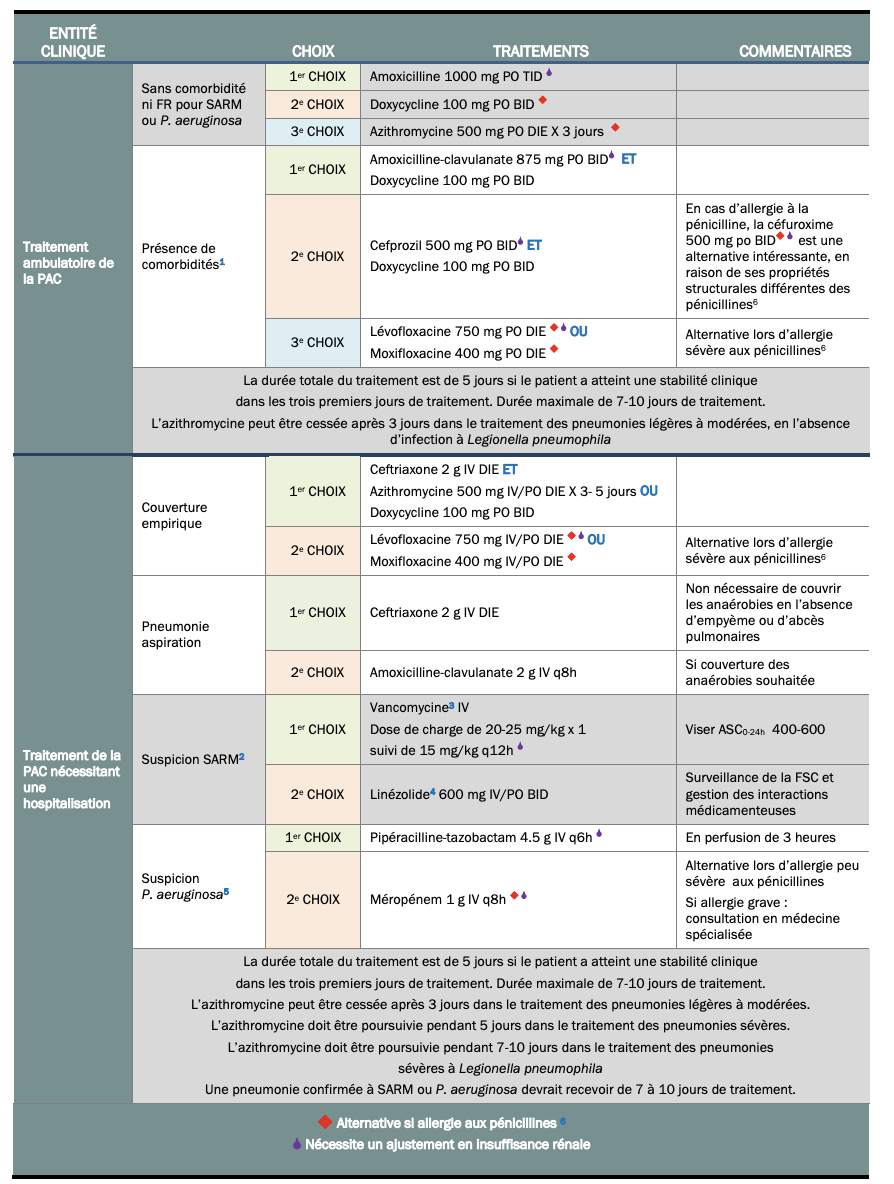
Pneumocystis Pneumonia (PCP) def
Fungal infx Pneumocystis Jirovecii that affects immunocompromised patients
PCP tests
Gaz arteriel (sévérité)
culture expecto: silver staining (mexican hat), r/o TB
FSC, CRP, VIH
RXP: infiltrats hilaires bilat.
CT PRN
LBA, broncho si culture -
PCP tx
TMP SMX ± CS si sévère (gr. A-a < 70)
DDx des maladies interstitielles?