Anatomy and Physiology I (Module 3)
 Call Kai
 Learn
 Practice Test
 Spaced Repetition
 Match
 Flashcards
 Knowt Play
1/123

There's no tags or description
Looks like no tags are added yet.
124 Terms
What are the functions of muscles?
movement (physically move, pee, digest)
stability (help maintain posture)
control openings
heat production
hormone secretion (secrete hormones for glucose synthesis)
glycemic control (helps regulate blood glucose)
What surrounds each muscle fiber?
endomysium
What surrounds fascicles?
perimysium
What surrounds the entire muscle?
epimysium

What muscle shape is this? And one example?
fusiform
(biceps brachii)

What muscle shape is this? And one example?
parallel
(rectus abdominis)

What muscle shape is this? And one example?
triangular
(pectoralis major)
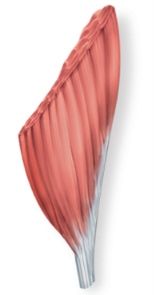
What muscle shape is this? And one example?
unipennate
(palmar interosseous)

What muscle shape is this? And one example?
bipennate
(rectus femoris)

What muscle shape is this? And one example?
multipennate
(deltoids)
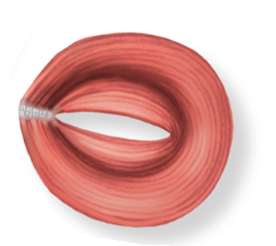
What muscle shape is this? And one example?
circular
(orbicularis oculi, all sphincters)
What are innervations?
the nerves that supply muscles
What is an indirect attatchment?
when a muscle ends short of the bone and is connected by a tendon
What does the primary mover do?
produces force during a particular joint action (the main thing doing the action!!)
What is a synergist?
muscles that help the prime mover
What is an antagonist?
the muscle that is stretched when the prime mover is working (yields to the prime mover)
Which muscle is multinucleated, voluntary, striated?
skeletal muscle
Which muscle is involuntary, striated, and has intercalated discs?
cardiac muscle
Which muscle is involuntary, not striated?
smooth muscle
Which muscle lines vessels and organs?
smooth muscle
What is the beginning of a muscle called?
origin
What is the end of a muscle called?
insertion
What does a fixator muscle do?
muscles that prevent bones from moving, stabilizes them
What are intrinsic muscles?
muscles that are contained within a certain area or compartment
What are extrinsic muscles?
muscles that are not contained in a certain area
What are these muscles named for?
oculi
oris
frontalis
mentalis
location
What are these muscles named for?
orbicularis
deltoid
trapezius
rhomboids
shape
What are these muscles named for?
gluteus maximus/medius/minimus
brevis
longus
size
What are these muscles named for?
adductors
pronators
supinators
flexors
action
What are these muscles named for?
biceps
triceps
quadriceps
number of origins
Do muscles push and pull?
no they only PULL
What are thick filaments made of?
myosin
What are thin filaments made out of?
actin
Which zone is only made of thick filaments?
H-zone
What zone is only made of thin filaments?
I-zone / I-band
What is the line in the middle of a sarcomere called?
M-line
What is one unit of muscle fiber called?
sarcomere
What is the area of a sarcomere where the thick and thin filaments overlap?
A-band
What are the borders of a sarcomere?
Z-discs
What do structural proteins do?
make sure everything stays attached and anchored to
Z-disc (like dystrophin)
Which are the contractile proteins?
myosin and actin (the ones that actually help muscles do contraction)
What do regulatory proteins do?
block myosin from always binding to actin (troponin and tropomyosin)
What is the sarcoplasmic reticulum?
the smooth ER of muscles, stores a lot of CALCIUM!
What is the sarcoplasm?
the cytoplasm of muscle cells
What is the sarcolemma?
the plasma membrane of the muscle cells
What is released from the neuromuscular junction?
acetylcholine
What does acetylcholine do?
causes ion channels for sodium to open
What is the release of sodium called?
action potential
What happens when sodium reaches the sarcoplasmic reticulum?
calcium channels open and it floods the region
What is the importance of calcium in regard to the filaments?
it binds to troponin, which lifts troponin and tropomyosin off of the actin. then, myosin can bind to actin and swivel to contract
What is needed to unbind myosin?
ATP needed for muscle relaxation
What is myoglobin?
source of oxygen for muscles
What does the somatic nervous system control?
skeletal muscle
What does the autonomic nervous system control?
cardiac and smooth muscle
What is the threshold
the minimum stimulation needed to get a muscle to contract
What is isometric contraction?
muscle doesn’t shorten
What is isotonic contraction?
muscle shortens, but doesn’t have change in tension
What is aerobic respiration?
uses oxygen from myoglobin
What is anaerobic respiration?
without oxygen, so it makes lactic acid
What is muscle fatigue?
your muscle gets tired after working, potassium and ADP accumulate
What is smooth muscle made out of?
dense bodies
What is peristalsis?
wave-like movement that smooth muscle does
What is resistance training?
workout to stimulate muscle growth (like weight lifting)
What is endurance training?
workout to improve oxygen delivery (like running)
Which is the lever, the fulcrum, and the effort? (out of muscles, bones, and joints)
lever - bone
fulcrum - joint
muscle - effort
What is the sliding filament theory?
filaments slide across the surface of each other when contracting

Which muscle is this?
occipitalis
helps lift eyebrows

Which muscle is this? (in green)
frontalis
helps lift eyebrows
What connects the occipitalis and frontalis?
galea aponeruotica

Which muscle is this? (in green)
orbicularis oris
purses lips closed and closes mouth

Which muscle is this? (in green)
orbicularis oculi
squeezes the eye shut

Which muscle is this? (in green)
buccinator (trumpeter muscle)
blows out the lips/cheek

Which muscle is this? (in green)
masseter
elevates mandible to close mouth

Which muscle is this? (in green)
temporalis
elevates mandible in closing mouth

Which muscle are these?
lateral pterygoids
helps open mouth and moves it side to side

Which muscle is this?
medial pterygoids
helps elevates mandible and move side to side

Which muscle is this? (in green)
sternocleidomastoid
helps movement of head and neck
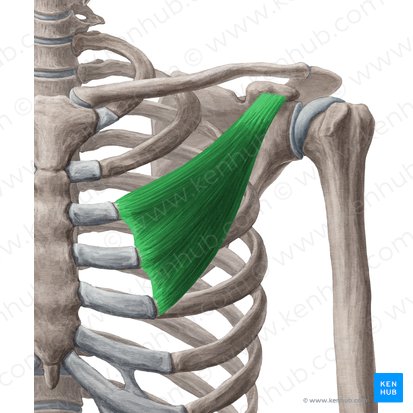
Which muscle is this? (in green)
the pectoralis minor
abducts scapula and rotates it downwards

Which muscle is this?
serratus anterior

Which muscle is this? (in green)
trapezius
adducts scapula, rotates upwards

Which muscle is this?
rectus abdominis
flexion of vertebral column, compresses abdomen

Which muscle is this?
internal obliques
tenses abdominal wall, compresses abdominal contents

Which muscle is this?
external oblique
compresses abdomen and flexes vertebral column

Which muscle is this?
transversus abdominis
tenses abdominal wall and compresses contents
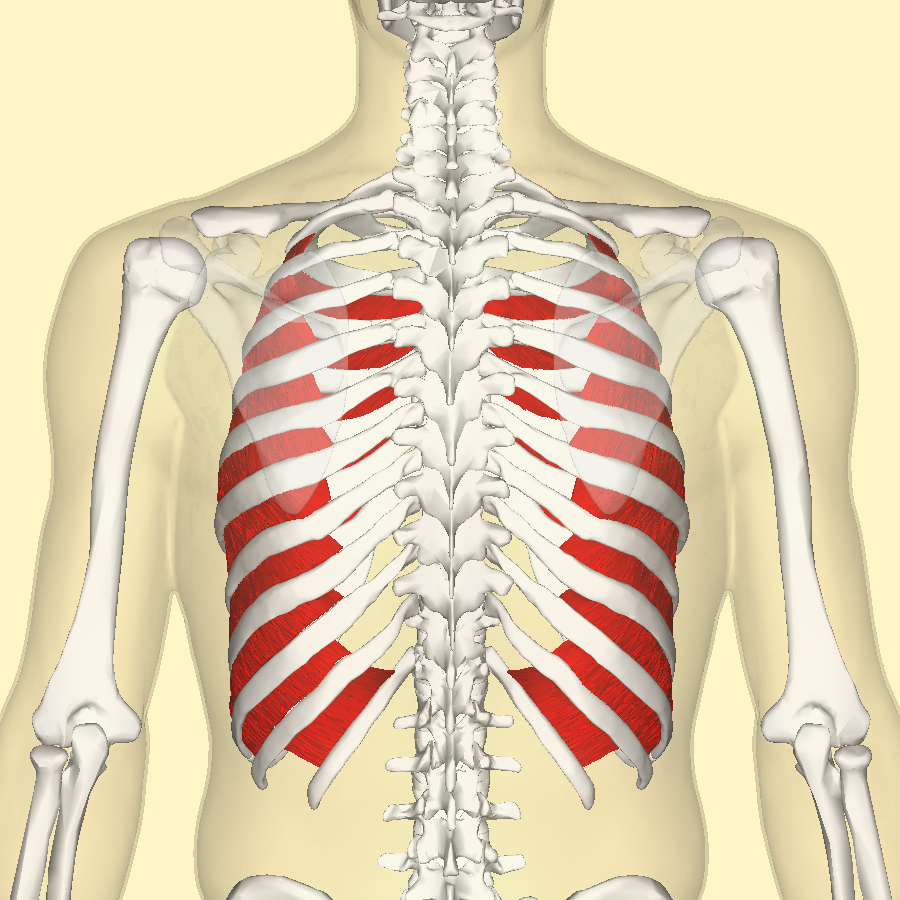
Which muscle is this? (on the inside)
internal intercostal
pulls ribcage down and in

Which muscle is this? (on the outside)
external intercostals
elevates the ribcage and pushes out

Which muscle is this?
the diaphragm
for normal quiet breathing
flexes when you inhale, and relaxes when you exhale

Which muscle is this?
pectoralis major
adducts and medially rotates arm

Which muscle is this?
latissimus dorsi
extends, adducts, medially rotates arm
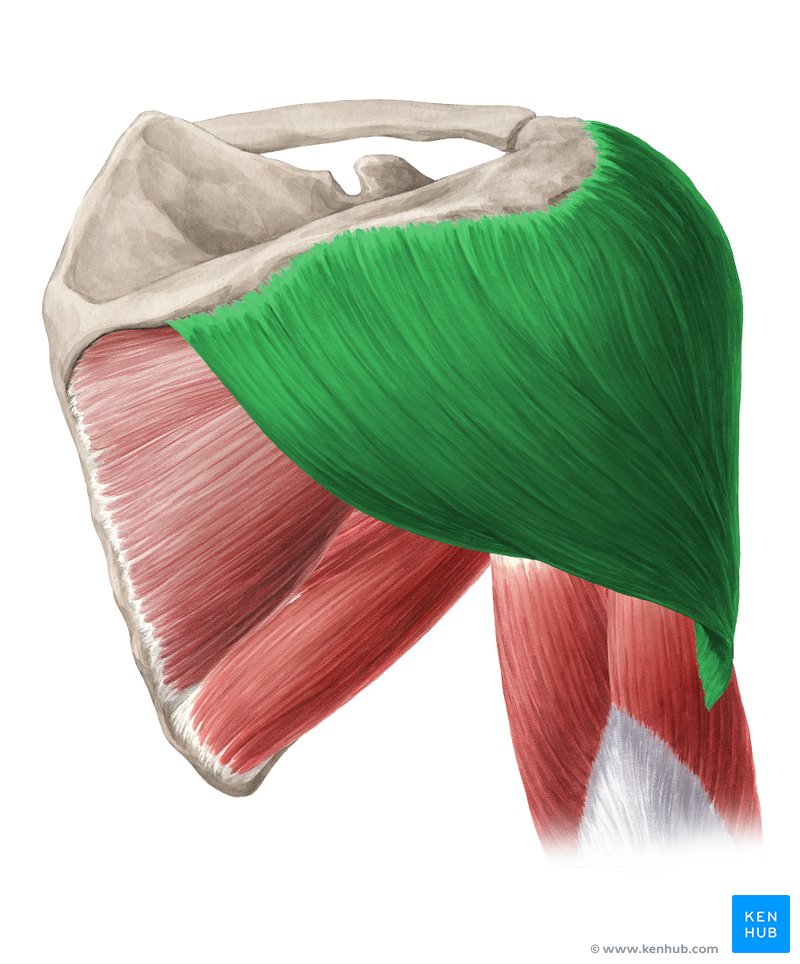
Which muscle is this? (in green)
deltoid
abducts arm

Which muscle is this? (in green)
coracobrachialis
flexes and adducts arm

Which muscle is this?
teres major
extends and adducts humerus, rotates arm medially

Which muscle is this?
teres minor
rotates arm laterally

Which muscle is this?
subscapularis
medially rotates arm
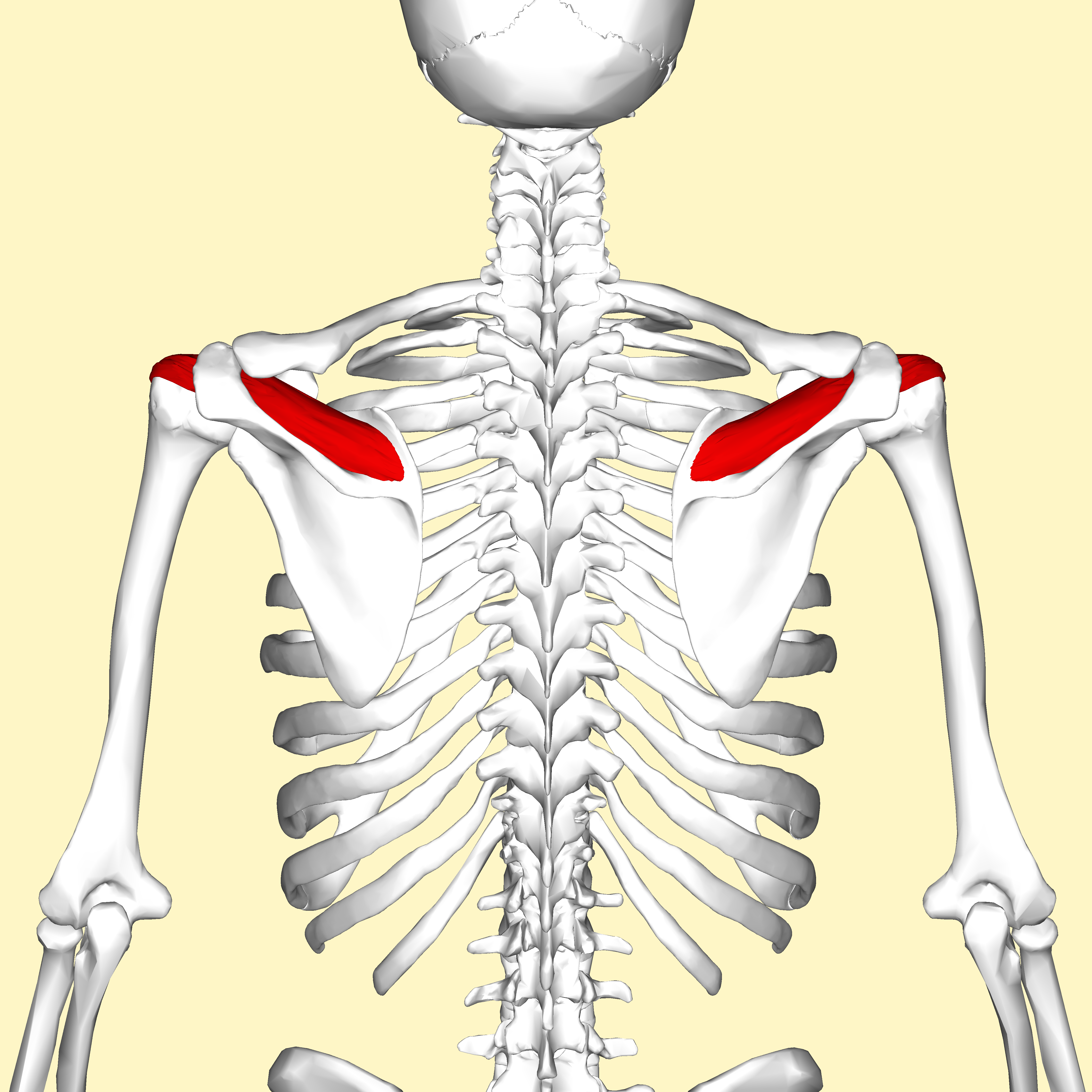
Which muscle is this?
supraspinatus
abducts the arm (helps the deltoid)
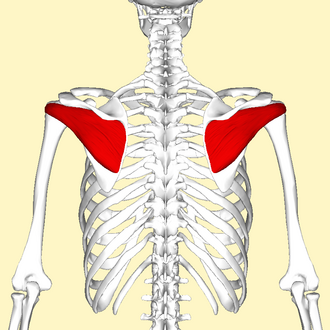
Which muscle is this?
infraspinatus
laterally rotates arm

Which muscle is this?
biceps brachii
synergists in forearm flexing

Which muscle is this? (green)
brachialis
flexes forearm

Which muscle is this? (posteriorly)
triceps brachii
extend the forearm

Which muscle is this? (in green)
pronator teres
pronantes forearm