Biochem Exam 3
 Call Kai
 Learn
 Practice Test
 Spaced Repetition
 Match
 Flashcards
 Knowt Play
1/86

There's no tags or description
Looks like no tags are added yet.
87 Terms
Monosaccharide
Simplest carbohydrate unit that cannot be broken down
Classified by functional group and number of carbons
Carbohydrate
Primary energy source for living organisms
Glucose
Primary energy source for cellular respiration and ATP production
Fructose
Found in fruits
Metabolized by the liver to provide quick energy
Galactose
Combines with glucose to form lactose
Converted to glucose for energy
Ribose
Structural backbone sugar of RNA and energy carriers like ATP
Sucrose
Glucose + fructose (table sugar)
Primary form plants use to transport carbs
Lactose
Glucose + galactose (milk sugar)
Maltose
Glucose + glucose (malt sugar)
Produced during starch breakdown (digestion)
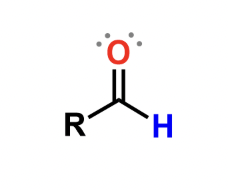
Aldoses
Contain aldehyde group
Ex. glucose, ribose
Ketoses
contain ketone group
Ex. fructose

Anomeric Carbon
Carbon that was the carbonyl carbon before the sugar formed its ring (usually C1 or C2)
Fisher Projection
Shows sugar as vertical chain
Horizontal: lines come toward you (hug)
Vertical: lines go away from you
Haworth projection
Shows sugar after it forms a ring
Classifying glycosidic bonds
alpha (α) or beta (β) and carbon numbers that connect two sugars
Ex. α(1→6) or β(1→4)
Alpha
anomeric OH points down (opposite CH2OH)
Beta
anomeric OH points up (same as CH2OH)
Structural polysaccharide
beta
Have strong, often straight chains that can pack together
Storage polysaccharide
alpha
Store glucose for energy
Can be broken down to release glucose
Plants
Starch and cellulose
Animals
Glycogen + chitin
Cellulose
Major component of cell walls, stems and branches
β(1→4) bonds
Chitin
Structural support in insect exoskeletons and fungal cell walls
β(1→4) bonds
Glycogen
Energy storage in animals: mainly liver and muscle
α(1→4) bonds in chains; frequent α(1→6) branches
Starch
Storage polysaccharide of plants
Alpha bonds
Amylopectin and amylose
Amylopectin
includes glucose α(1→4) bonds with α(1→6) branches every 24-30 molecules
makes up about 70% to 80%
Amylose
saliva contains enzyme that can cleave α(1→4) bonds
makes up roughly 20% to 25%
Glycosaminoglycans (GAGs)
Function: provide support and cushioning to tissues (cartilage, tendons, CT)
Structure: Unbranched chains of repeating disaccharides (uronic acid and amino sugar)
Proteoglycan
proteins + GAG’s (negative) in extracellular matrix
Shape helps function: bottle brush
Attracts water, absorbs shock
Peptidoglycan
Polysaccharides linked to small peptides found in cell walls of bacteria
NAG + NAM + peptide cross-links
Maintains cell shape, provides strength
Penicillin
binds to active site of enzyme, inhibits peptidoglycan synthesis
effective against gram + bacteria
N-linked glycosylation
sugar attaches to nitrogen (N) in the side chain of Asn
O-linked glycosylation
sugar attaches to oxygen (O) in the side chain of Ser or Thr
Catabolism
process of BREAKING DOWN complex molecules into simpler units
Anabolism
process of BUILDING UP complex macromolecules from smaller building blocks
Photoautotrophs
get most energy from sunlight and CO2
Chemoautotrophs
creates own organic food by oxidizing inorganic chemical compounds
Heterotrophs
need molecules from other organisms as source of energy
Aerobes: need oxygen
Anaerobes: don’t need oxygen
First law
Energy cannot be created or destroyed but can be transferred
Amount of matter in system is constant
Second law
Every energy transfer serves to increase overall entropy of universe
Universe is always moving from more ordered state → less ordered one
Free energy
System tends toward low enthalpy (-ΔH) and high entropy (+ΔS)
ΔG = ΔH - TΔS
At equilibrium: ΔGrxn = 0
More products [c][d]
Keq = + and ΔGrxn = +
(proceeds forward)
More reactants [a][b]
Keq = - and ΔGrxn = -
(proceeds reverse)
Near - equilibrium reactions (80%)
Reactions that are easily reversible and operate close to equilibrium
ΔG ~ 0
Reversible arrow
Far - Equilibrium Reactions (20%)
ONE DIRECTION: irreversible
Large -ΔG
One-way arrow
Control direction and rate of metabolic pathways
Electron Donor
gets oxidized, reducing agent
Electron Acceptor
gets reduced, oxidizing agent
Metabolic Flux
Flow of metabolites through metabolic pathways
How quickly cell converts substrates to products
Exists in steady state far from equilibrium (-ΔG)
Metabolic flux control mechanisms
Allosteric control of enzyme
Covalent modification
Substrates cycles
Genetic control
Work in biological systems
Mechanical work: changes in location
Concentration and electrical work: movement of molecules across membranes / against concentration gradients
Synthetic work: changes in chemical bonds
High energy compounds
Phosphorylated compounds (ATP)
Compounds that contain thioester bonds (coenzyme A)
Reduced coenzymes (NADH, NADPH)
Energy rich thioester compounds
Coenzyme A (CoA)
Forms high-energy bonds with molecules
Coupling
Endergonic processes are coupled to exergonic reactions
Energy released by exergonic reactions helps drive endergonic ones
Hexokinase
Energy investment
Cofactor: Mg2+
Uses 1 ATP
Purpose: adds a phosphate to glucose, creating G6P
Far-equilibrium reaction
Regulatory point
Phosphoglucose isomerase
Energy investment
No cofactor or ATP
Purpose: Converts glucose-6-phosphate into fructose-6-phosphate
Reversible (near eq) reaction
Phosphofructokinase
Energy investment
Cofactor: Mg2+
Uses 1 ATP
Purpose: Adds another phosphate to fructose-6-phosphate, creating fructose-1,6-bisphosphate Commits the sugar to glycolysis
Far-equilibrium reaction
Main rate-limiting and COMMITMENT step
Aldolase
Energy investment
No cofactor or ATP
Purpose: Splits fructose-1,6-bisphosphate into two 3-carbon molecules: G3P and DHAP
Reversible (near eq) reaction
Triose phosphate isomerase (TIM)
Energy investment
No cofactor or ATP
Purpose: Converts DHAP into G3P so both 3-carbon molecules can continue through glycolysis
Reversible (near eq) reaction
Glyceraldehyde-3-phosphate dehydrogenase (GAPDH)
Energy payoff
Cofactors: NAD⁺ and Pi
Produces 2 NADH per glucose
Purpose: Converts G3P into 1,3-BPG
1,3-BPG can be used to make ATP in next step
Reversible (near eq) reaction
Phosphoglycerate kinase
Energy payoff
Cofactors: Mg²⁺
Produces 2 ATP per glucose
Purpose: Transfers a phosphate from 1,3-BPG to ADP
producing 3-phosphoglycerate + ATP
Reversible (near eq) reaction
Phosphoglycerate mutase
Energy payoff
Cofactors: Mg²⁺
No ATP or NADH
Purpose: Moves the phosphate group from carbon 3 to carbon 2
creates 2-phosphoglycerate
Reversible (near eq) reaction
Enolase
Energy payoff
Cofactors: Mg²⁺
No ATP or NADH
Purpose: Removes water from 2-phosphoglycerate to create PEP
Reversible (near eq) reaction
Pyruvate kinase
Energy payoff
Cofactors: Mg²⁺ and K⁺
Produces 2 ATP per glucose
Purpose: Transfers a phosphate from PEP to ADP
Produces ATP and pyruvate
Far-equilibrium reaction (highly exergonic)
Important irreversible regulatory step
Irreversible steps of Glycolysis
Hexokinase (1)
Phosphofructokinase-1 (PFK-1) (3)
Pyruvate kinase (10)
Fates of Pyruvate
Acetyl-CoA (Aerobic conditions)
Lactate (Anaerobic conditions)
Ethanol (Fermentation)
Acetyl-CoA (Aerobic conditions)
oxygen is available
Pyruvate enters the mitochondria → into acetyl-CoA
Enters the Krebs cycle
Lactate (Anaerobic conditions)
Oxygen is limited
Pyruvate is converted into lactate by LDH
Regenerates NAD⁺
Allows glycolysis to continue producing ATP
Ethanol (Fermentation)
Occurs in yeast and some microorganisms
Pyruvate is converted into acetaldehyde → into ethanol
Regenerates NAD⁺ so glycolysis can continue
Slow Twitch Muscle
More and larger mitochondria
More myoglobin (darker color)
More aerobic respiration
Better for endurance running
Fast Twitch Muscle
Less mitochondria
Less myoglobin (lighter color)
Use stored glycogen & ATP
Better for powerlifting and sprinting
Hexoses funneled into glycolysis
Galactose → G6P
Mannose → F6P
Fructose (muscle) → F6P
Fructose (liver) → G3P
Purpose of the pentose phosphate pathway
Produce NADPH and ribose-5-phosphate
Does NOT directly produce ATP
Gluconeogenesis
process of using energy to make new glucose from non-carb sources
Gluconeogenesis starting materials
Lactate: produced by exercising muscles and rbc’s
Glycerol: comes from the breakdown of fats
Pyruvate
Gluconeogenesis bypass reactions
Glycolysis Gluconeogenesis
Hexokinase Glucose-6-phosphate
PFK-1 Fructose-1,6-bisphosphatase
Pyruvate kinase Pyruvate carboxylase + PEPCK
Oxaloacetate
Provides an alternative pathway around the irreversible pyruvate kinase step
Pyruvate → Oxaloacetate → PEP
FBPase-1 in Gluconeogenesis
removes a phosphate (hydrolysis)
fructose-1,6-bisphosphate → fructose-6-phosphate
PFK-1 in Glycolysis
adds a phosphate using ATP
F-2,6-BP
Activator or PFK-1
Inhibitor of FBPase
Insulin
increases F-2,6-BP, which promotes glycolysis
activates PFK-2
Glucagon
decreases F-2,6-BP, which promotes gluconeogenesis
activates FBPase-2
Phosphorolysis
breakdown of a molecule using inorganic phosphate (Pi) instead of water
Steps in glycogenolysis
Step 1: Glycogen phosphorylase
Step 2: Debranching enzyme
Transferase
α-1,6-glucosidase
Step 3: Phosphoglucomutase
Step 4: Glucose-6-phosphatase (mainly liver and kidney)
Phosphorylation
Phosphorylase a: Phosphorylated form; generally more active
Phosphorylase b: Unphosphorylated form; generally less active
Allosteric regulation
regulators bind to the enzyme and change its activity
AMP
Can activate unphosphorylated enzyme by shifting it from the T state to R state
allowing glycogen breakdown when energy is low
Glycogen phosphorylase
Enzyme is a dimer
regulated both by phosphorylation and allosteric regulation
degrades glycogen (takes them)