Frozen Shoulder/Adhesive Capsulitis
 Call Kai
 Learn
 Practice Test
 Spaced Repetition
 Match
 Flashcards
 Knowt Play
1/4

There's no tags or description
Looks like no tags are added yet.
5 Terms
frozen shoulder/adhesive capsulitis + treatment
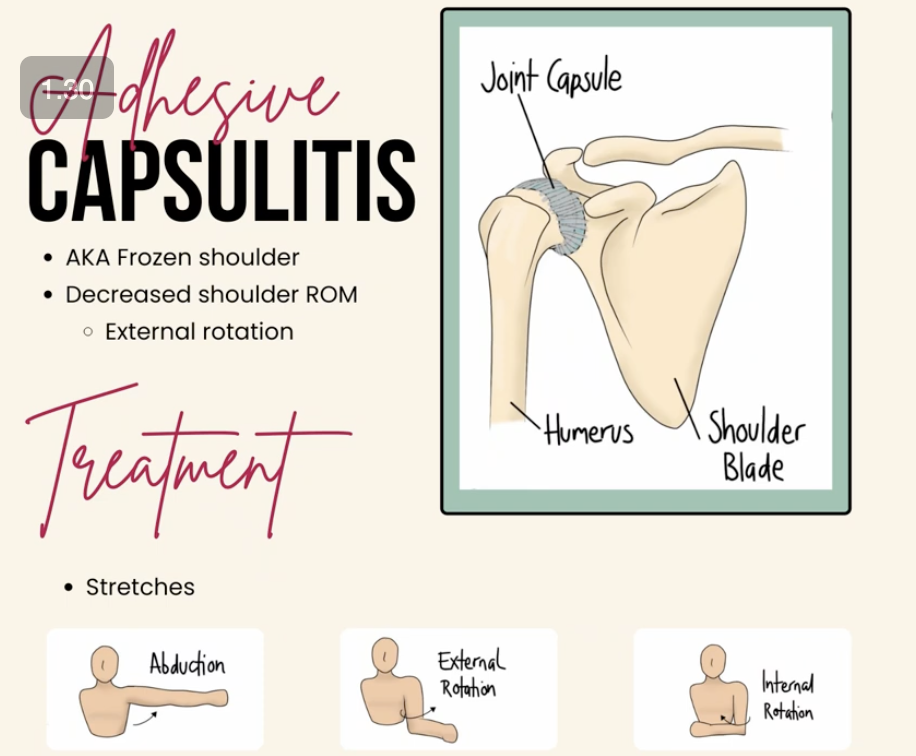
progressive loss of shoulder/glenohumeral ROM (especially external rotation, followed by abduction and internal rotation) 2/2 adhesion of the glenohumeral joint capsule and coracohumeral ligament
idiopathic (unknown cause) or secondary to trauma or surgery
treatment
primary treatment is compensatory strategy training and environmental modification; e.g.,
ADL modifications
AE for ADLs
workstation modifications
stretches (abduction, external/internal rotation)
take care not to cause inflammation with overstretching, especially during the freezing phase (you can make things worse)
encourage regular movement through comfortable range
encourage pain-free AROM and to work around it until it thaws on its own— i.e., naturally resolves
“if there’s an iceberg in your way, keep moving to stay warm and go round it”
operative: manipulation (under anesthesia) and arthroscopic release of the glenohumeral capsule ligaments
3 phases of frozen shoulder/adhesive capsulitis
in total up to 4 years
freezing
frozen
thawing
freezing phase
getting worse; losing more and more ROM; characterized by
shoulder pain interrupting sleep
pain with ADLs
pain at rest
ROM usually close to full, however, with pain often experienced before the end of motion
frozen phase
ROM stays where it’s at for a while; movement patterns demonstrated as individuals attempt to compensate for lack of glenohumeral mobility
pain typically occurs with stretching at end of motion
thawing phase
natural and gradual improvement + returning of ROM
lasts up to 26 months