ÔN THI TACN
 Call Kai
 Learn
 Practice Test
 Spaced Repetition
 Match
 Flashcards
 Knowt Play
1/120

There's no tags or description
Looks like no tags are added yet.
121 Terms
Management
The process used to accomplish organizational goals through planning, organizing, leading, and controlling people and other organizational resources
Manager
An individual who is in charge of a certain group of tasks, or a certain area or department of a business.
Chief Executive Officer
The most senior manager responsible for the overall performance and success of a company.
Planning
A management function that includes anticipating trends and determining the best strategies and tactics to achieve organizational goals and objectives.
Organizing
A management function that includes designing the structure of the organization and creating conditions and systems in which everyone and everything work together to achieve the organization’s goals and objectives.
Leading
Creating a vision for the organization and guiding, training, coaching, and motivating others to work effectively to achieve the organization’s goals and objectives.
Controlling
A management function that involves establishing clear standards to determine whether or not an organization is progressing toward its goals and objectives, rewarding people for doing a good job, and taking corrective action if they are not.
Motivation
factors that influence the behavior of workers towards achieving business goals. Motivation can be increased by:
a. monetary rewards: tiền thưởng
b. non-monetary rewards: promotion, employee of the month, public recognition,...
c. introducing ways to give job satisfaction
Job satisfaction
The enjoyment a worker gets from feeling that they have done a good job. There are three ways to motivate workers to be more committed to their jobs and work more effectively
Job rotation
swapping workers round and only doing a specific task for a limited time before swapping round again
Job enlargement
xtra tasks are added to the job to make it more interesting).
Wider in SCOPE
More variety
Job enrichment
adding tasks that require more skill and/or responsibility).
Wider in SKILL
More authority
More decision making
Theory X
The average person does not like work. Workers must be constantly supervised so they will work. Motivation is from external/extrinsic factors, e.g. pay schemes where the workers are paid more for increased output.
Theory Y
The average person is motivated by internal/intrinsic factors. To motivate workers, you need to find ways to help workers take an interest in their work, e.g. give rewards, incentives
Maslow's hierarchy (thứ bậc) of needs
A theory of motivation which states that five categories of human needs dictate an individual's behavior. Those needs are
Physiological needs: nhu cầu sinh lý - basic needs để tồn tại
( food, water, air, sleep )
Safety needs
( safety, protection )
Love and belonging needs
( social needs )
Esteem needs
( respect, status )
Self-actualization needs: phát triển bản thân
( self-development )
Frederick Herzberg’s motivation theory
Humans have two sets of needs: one is for the basic needs, which he called hygiene factors or needs, and the second is for a human being to be able to grow psychologically, which he called motivational needs or motivators.
Hygiene factors: Nhân tố duy trì
The factors that must be present in the workplace to prevent job dissatisfaction.
Glocalization
is a combination of the words "globalization" and "localization." The term is used to describe a product or service that is developed and distributed globally but is also adjusted to accommodate the user or consumer in a local market.
Culture
is defined as the complex system of values, traits, morals, and customs shared by a society.
Context
refers to the stimuli: các tính kích thích, environment, or ambience surrounding an event.
The Lewis Model
was developed by linguist and leading cross-cultural specialist Richard D. Lewis. The model divides humans into 3 clear categories, based not on nationality or religion but on BEHAVIOUR: Linear-active, Multi-active, Reactive
Linear-active = Universalists = Individualists
Organized + Rational
- Respecting rules
- One thing at a time
Multi-active=Collectivists=Particularists
- Flexible + Importance - emotions, feelings, intuitions
- Good at changing plan
- Do many things at the same time
High-context culture
is a culture by which the rules of communication are primarily and dominantly transmitted through the use of contextual elements. These include specific forms of body language, the social or familial status of an individual, and the tone of voice employed during speech. High-context cultures usually do not have rules that are explicitly written or stated.
Low-context culture
refers to a culture whereby most communications take place through verbal language and rules are directly written out or stated for all to view.
Power distance
is the distribution of power among individuals within a culture and how well unequal levels of power are accepted by those with less power.
The primary sector
extracts and uses the natural resources of Earth to produce raw materials used by other businesses.
The secondary sector
manufactures goods using the raw materials provided by the primary sector.
The tertiary sector
provides services to consumers and the other sectors of industry.
The quaternary sector
Provide knowledge - upgrade/optimize products + services
A mixed economy
has both a private sector and a public (state) sector.
Public sector
The sector of the economy in which organisations are owned and controlled by the state (government).
Private sector
The sector of the economy in which organisations are owned and controlled by individuals.
Privatisation
The sale of state-owned assets such as public corporations to the private sector.
Sole trader
A business owned and operated by one person.
Limited liability
the liability of shareholders in a company is limited to only the amount they invested
Unlimited liability
the owners of a business can be held responsible for the debts of the business they own. Their liability is not limited to the investment they made in the business.
Partnership
a form of business in which two or more people agree to jointly own a business.
Shareholders
The owners of a limited company. They buy shares which represent part-ownership of the company.
Private limited companies
businesses owned by shareholders but they cannot sell shares to the public.
Public limited companies
businesses owned by shareholders but they can sell shares to the public and their shares are tradeable on the Stock Exchange.
Franchising
Nhượng quyền thương mại ( Công ty A bán thương hiệu/ý tưởng cho công ty B )
Joint venture
Thành lập = 2+ công ty
Production
the process of converting inputs such as land, labour and capital into saleable goods, for example shoes and cell phones.
Inventories
the stock of raw materials, work-in-progress and finished goods held by a business.
Lean production
the production of goods and services with the minimum waste of resources.
Job production
the production of items one at a time.
Batch production
the production of goods in batches. Each batch passes through one stage of production before moving onto the next stage. ( Qua khâu 1 đợi các sản phẩm khác xong mới đến khâu 2… )
Flow production
the production of very large quantities of identical goods using a continuously moving process. ( Xong 1 sản phẩm luôn rồi đến sản phẩm T2 )
Just-in-time (JIT)
is a production method that involves reducing or virtually eliminating the need to hold inventories of raw materials or unsold inventories of the finished product.
Kaizen
continuous improvement ~ TQM
Logistics
the business activity that involves planning, implementing, and controlling the physical flow of materials, final goods, and related information from points of origin to points of consumption to meet customer requirements at a profit.
Inbound logistics
the area of logistics that involves bringing raw materials, packaging, other goods and services, and information from suppliers to producers.
Materials handling
the movement of goods within a warehouse, from warehouses to the factory floor, and from the factory floor to various workstations.
Outbound logistics
the area of logistics that involves managing the flow of finished products and information to business buyers and ultimate consumers (people like you and me).
Reverse logistics
the area of logistics that involves bringing goods back to the manufacturer because of defects or for recycling.
Pull strategy
Khách hàng tự tìm đến sản phẩm
Orders => Products
=> Minimizing waste
Push strategy
Mang sản phẩm đến khách hàng
Dựa trên forecasted demand
The Four Ps
Product, Price, Place, Promotion
Quality
to produce a good or a service which meets customer expectations.
Quality control ~ Detecting defects
the checking for quality at the end of the production process, whether it is the production of a product or service.
Quality assurance ~ Prevention defects
the checking for quality standards throughout the production process, whether it is the production of a product or service.
Total Quality Management (TQM)
the continuous improvement of products and processes by focusing on quality at each stage of production.
Leading indicator
Chỉ báo trước
Dự báo sự kiện trong tương lai
Lagging indicator
Chỉ báo trễ
Phản ánh kết quả trong quá khứ
ISO 9000
tiêu chuẩn quốc tế về hệ thống quản lý chất lượng ( Eliminating defects in manufacturing )
Nonconformance
Lỗi nhỏ ( When a requirement has not been met )
Six sigma
Phương pháp quản lý chất lượng và cải tiến quy trình dựa trên dữ liệu và thống kê
KPI ( Key Performance Indicator )
Chỉ số đánh giá hiệu quả công việc
Benchmarking
Đối sánh ( Công ty A so sánh, đánh giá hiệu suất, sản phẩm, dịch vụ,... với công ty B )
Market
the set of all actual and potential buyers of a good or service; the place where people buy and sell; the people who trade in a particular good; to make goods available to buyers and to encourage them to buy them.
Market leader: Dẫn đầu thị trường
the company with the largest market share. ( chiếm phần trăm cao về doanh thu trong 1 lĩnh vực )
Market challenger
The company which want to take down MARKET LEADER
Market followers
Follow footsteps of M.L (KO CẠNH TRANH vẫn giữ vị trí )
Market nicher
a small company that concentrates on one or more particular niches or small market segments.
Market research (GB) or marketing research (US)
the collection, analysis and reporting of data relevant to a specific marketing situation (e.g. a proposed new product).
Market segment
part of a market; a group of customers with specific needs, defined in terms of geography, age, sex, income, occupation, life-style, etc.
Market segmentation
the act of dividing a market into distinct groups of buyers who have different requirements or buying habits.
Market share
the sales of a company (or brand or product) expressed as a percentage of total sales in marketing - the process of identifying and satisfying consumers' needs and desires.
Marketing channel
the set of intermediaries: bên trung gian a company uses to get its goods to their end users.
Marketing mix
the set of all the various elements in a marketing programme, and the way a company integrates them.
Marketing strategy
A plan or principle designed to achieve marketing objectives.
Product life cycle
( Introduction => Growth => Maturity => Decline )
the standard pattern of sales of a product over the period that it is marketed.
Skimming strategy
Chiến thuật lướt ván thị trường
High price => Recover development costs
Market-penetration strategy
Chiến thuật xâm nhập thị trường
Low price => Large market share
Advertorial
A paid-for advertisement which includes editorial content; normally identified in a print magazine with the word "Advertisement" printed as a head across the top of the page to distinguish it from genuine (in theory unbiased) editorial content
Advertising agency
The organization that takes care of advertising for clients
Advertising campaign
A time-limited set of ads - campaigns may run across different media, and for one month or ten years, but can be categorized together as they are the execution of a central idea
Demographics
Describing an audience by age, gender, ethnicity, or location - i.e the facts about them
Focus Groups
Small, select groups representing a target audience who are paid to answer questions at the behest of a market research organization
Product Placement
The practice of paying for a branded product to be used by a character in a movie - e.g James Bond driving a BMW Z3
Product Positioning
Establishing the market niche of a product - which may not be as the brand leader - and advertising to the appropriate segment of the audience
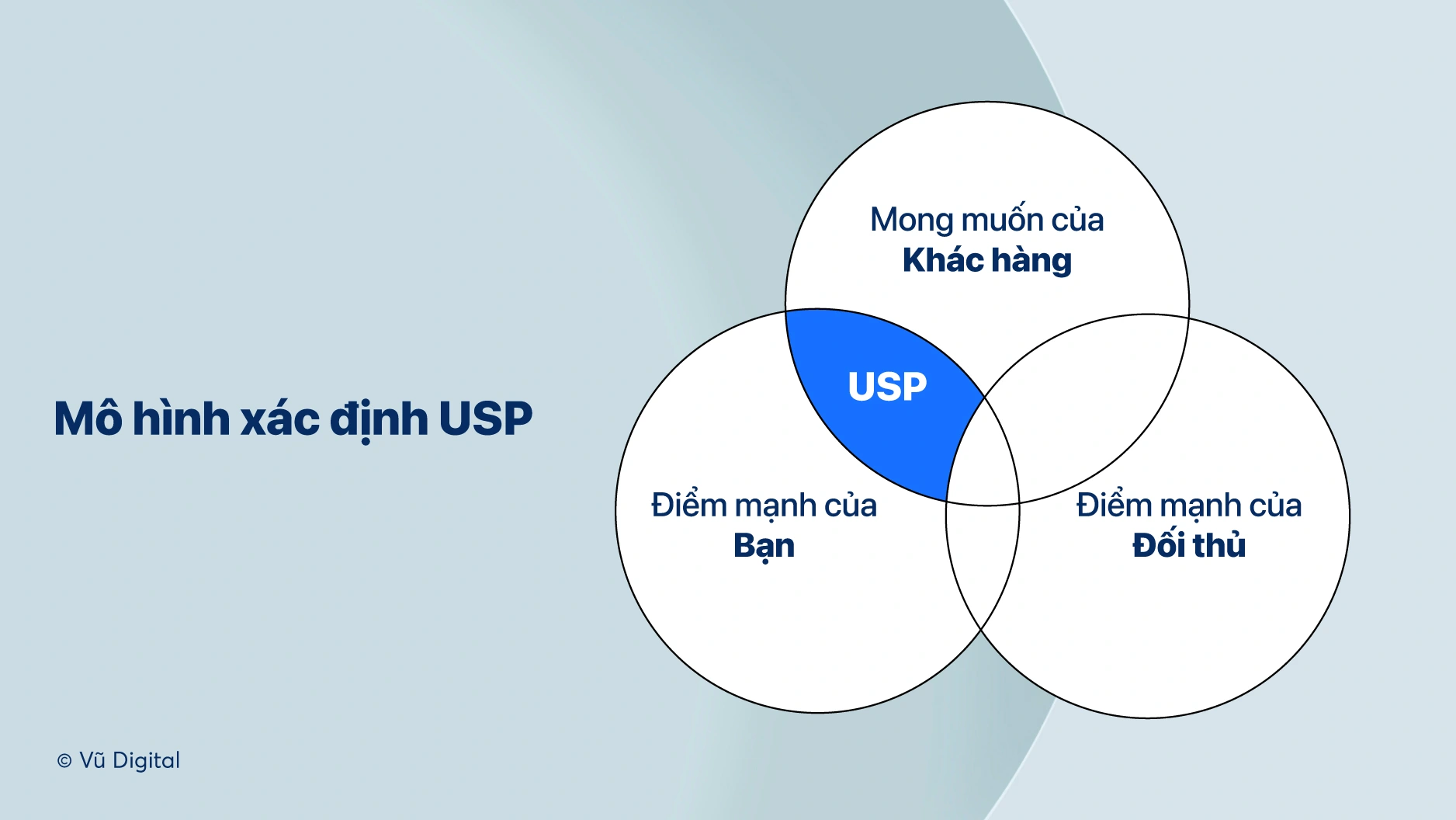
USP
Unique Selling Proposition/Point - a highlighted benefit of a product which makes it stand out from all rival brands
Comparative-party method
( Phương pháp cân bằng cạnh tranh )
Xác định ngân sách để
=> Spend as much as their competitors
Endorse
Advertise by a celebrity
Hoarding
( in British English ) = Billboard
Point-of-scale
Advertising done at the place - product is sold
Word-of-mouth advertising
Hear about a new product from a friend or relative
TV commercials
( Quảng cáo trên TV )
Brand switcher
A consumer who shows no loyalty to a particular brand, but changes among competing products