African Art History Midterm Study Guide
 Call Kai
 Learn
Learn Practice Test
 Spaced Repetition
 Match
Match Flashcards
 Knowt Play
1/27

There's no tags or description
Looks like no tags are added yet.
Name | Mastery | Learn | Test | Matching | Spaced | Call with Kai | Chat |
|---|
No analytics yet
Send a link to your students to track their progress
28 Terms
I. Slide ids. (1 point each, 11 points total):
Artist/Society, Location, Material, Uses/Content
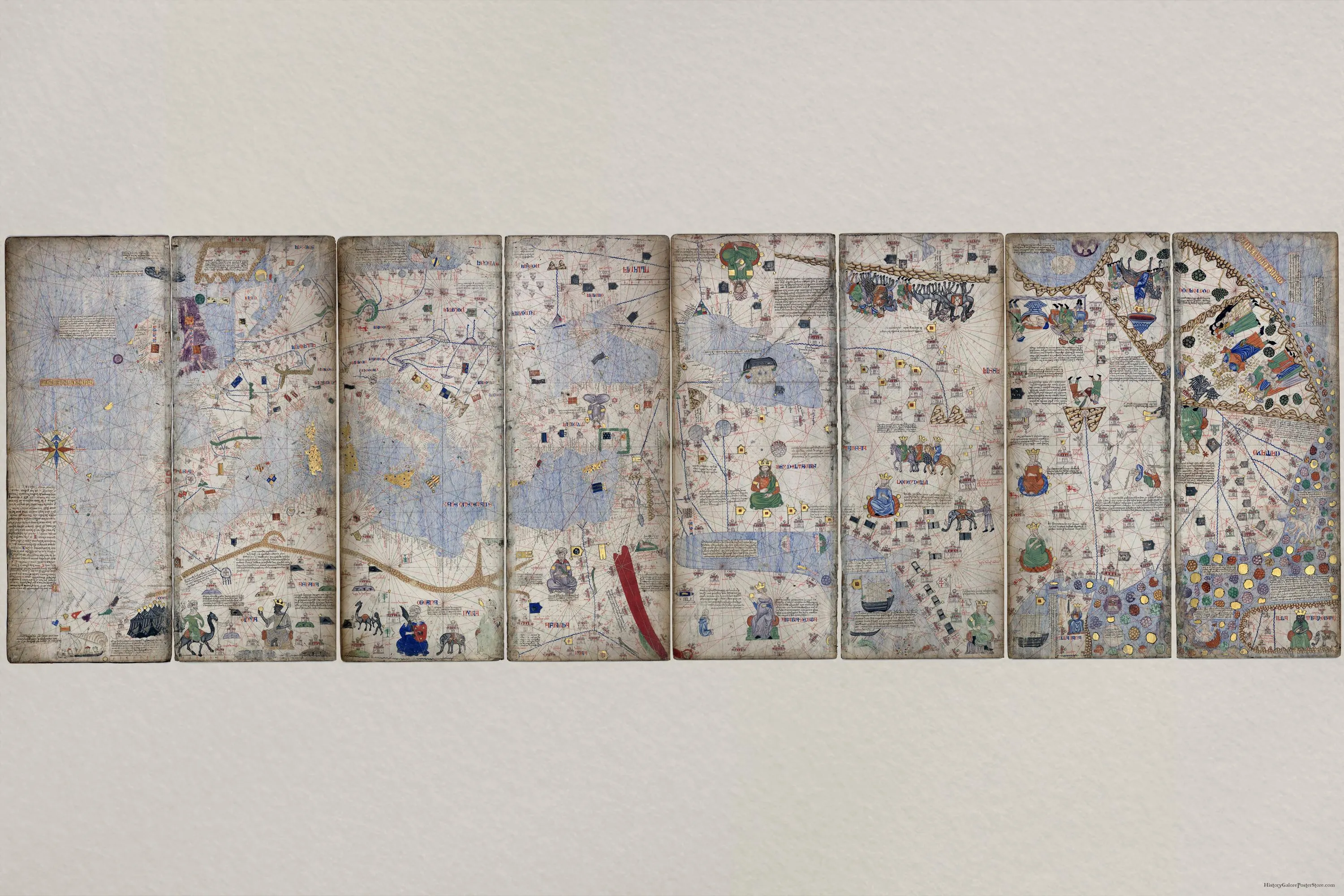
Catalan Atlas
Artists: Abraham and Jehuda Cresques
Location: Majorca
Material: Parchment
Uses/Content: Shows the then known world and main trade routes connecting European centers with the best-known ones outside the continent; Also shows notable rulers like Mansa Musa (Mali) and Organe (Yoruba)

Ngoni/Zulu spoon
A/S: Zulu carver
L: South Africa
M: Wood
U/C: Marked prestige & status while eating from a common bowl; reinforced ancestral and social connections with living and past family members

Luba Chief’s (Lupona) throne
A/S: The Buli Master (possibly Ngongo ya Chintu)
L: Democratic Republic of Congo
M: Wood and metal studs
U/C: Imbued with the power of the ancestral and living ruler; Luba are a matrilineal group meaning they trace rulership through women (the king’s mother’s lineage). The woman on this throne references this female ancestry.

Cross-wearing figure
A/S: Benin bronze-casting guild member (Igun Eronmwon)
L: Benin Kingdom, Nigeria
M: Bronze
U/C: Identified as Ewua court officials who woke the king each morning; Additional info lost due to 1897 colonial drive.

Yoruba/Benin aegis (shield)
A/S: Yoruba bronze casting guild member (Ogboni workshop)
L: Nigeria
M: Bronze
U/C: Plaque showing king with two priests; Beneath kin’s feet are two mudfish/lungfish - beings that aestivate and ‘retur'n’ to life with seasonal rainfall; Mudfish recall siren imagery from antiquity to present; Frogs also evoke ideas of transformation
(Aestivate essentially is hibernation during hot, dry months for creatures like mudfish and amphibians)
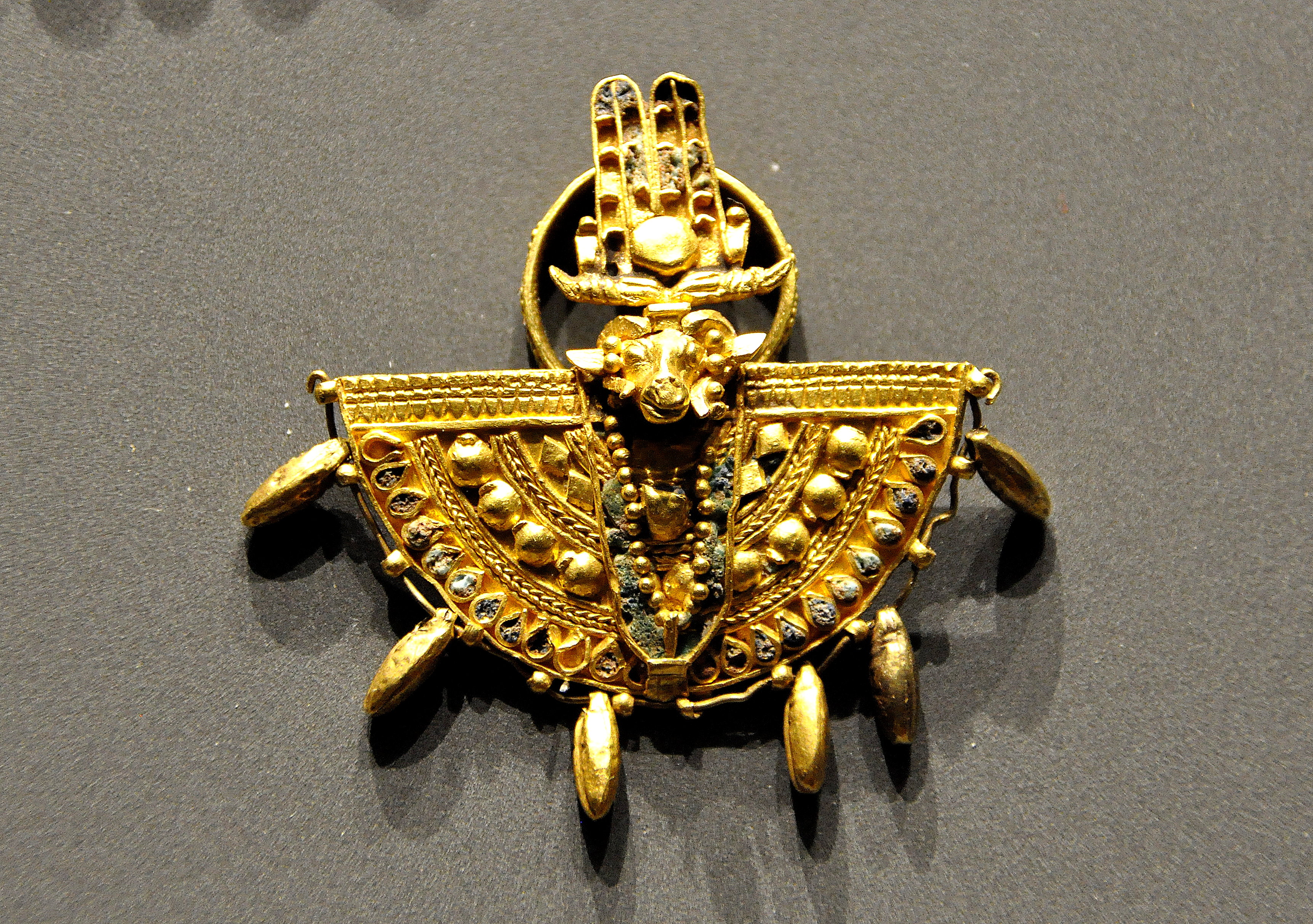
Meroe/Nubia gold shield
A/S: Nubian jeweller
L: Sudan
M: Gold with glass paste
U/C: Displays Amun’s ramn head with prominent inward-curving horns; From the tomb/treasury of Meroitic queen Amanishakheto (typically shown with the war goddess) Ram head portrayals evoke similar ideas of dynastic continuity and rain control.

Head-rest, Deir el Bersha
A/S: Egyptian ivory carver
L: Egypt
M: Ivory
U/C: No taller than 3-4 inches, allowed persons to rest their head/neck without negatively effecting their elaborate hairstyles at night; passed down in the family, therefore carry spirit-linked power of the ancestral line, providing religious support and power to living family members. Reminiscent of wooden works from East and Central Africa to West Africa today.

Baga D’mba mask headdress
A/S: Baga wood carver
L: Guinea
M: Wood and brass
U/C: Positioned on the ground when participating in harvest ceremonies or marriages; linear surface patterns reference agricultural rows that like the coiffure (hairstyle), recall the Baga peoples’ connections with the Mande further north. Reveals motherhood ideals, the name itself designating a woman who has given birth. Long, flat breasts identify this as a mother that has nursed many infants.

Fon bocio figure, Guinea Coast
A/S: Fon wood carver and bocio maker
L: Guinea Coast, Republic of Benin
M: Wood, fiber, and feather
U/C: Protective roles; served as a surrogate for living family members under threat, capturing harm within the figure. Bocio ‘empowered corspe’ sculptures serve as a kind of human ‘dummy’, incorporating wooden pegs, animal skeletal forms, chains or cord around a figure’s body. Pegs are inserted into orifices - a visual vocabualry of harm to enhance self-protection. The iron point at the base is inserted into the ground, potentially adding ancestral voices to the protection

Carved orchre tablet, Blombos Cave
A/S: Unknown ochre carver
L: Blombos Cave, Still Bay, South Africa
M: Ochre tablet
U/C: Ochre often serves as a cosmetic body and hair-coloring pigment for everyday occasions or ritual use (puberty ceremonies, initiations, royal investitures and funerals). Ochre also carries medicinal and symbolic value by evoking blood (life, birth, danger, power). Earliest known human drawing (78-72,000 BCE). Unknown if artistic enhancement or coded language.

Stone menhirs, Nabta Playa Calendar Circle
A/S: Pastoralist builders
L: Egypt
M: Stone menhirs
U/C: Shows engineering skill and astronomical interest; Nabta Playa Calendar Circle; Celestial movements and constellations, lunar calendars and regional ceremonies; One of earliest sites of monumental architecture and sometimes seen as important African precursor and model for later Pharaonic Egyptian forms.nn

Stepped Pyramid of Djoser
A/S: Egyptian builders
L: Saqqara, Egypt
M: Stone
U/C: Reflect the development of elevated political power. Monumental architecture, much of it in the form of funerary memorials and later temples, reflects the cycle of life- the Nile flooding and role of priests as deity intermediaries who undertook annual rituals at these sites, addressing these and other issues. In months without rain, large-scale ceremonies and celebrations used these structures as beautiful backdrops, though access to interiors was very limited

Painted relief of Queen Iti
A/S:
L:
M:
U/C:

Nok caryatid vessel stand, Nigeria
A/S:
L:
M:
U/C:

Painting of archaeologist Thurstan Shaw’s tomb reconstruction
A/S:
L:
M:
U/C:

Great Zimbabwe
A/S:
L:
M:
U/C:
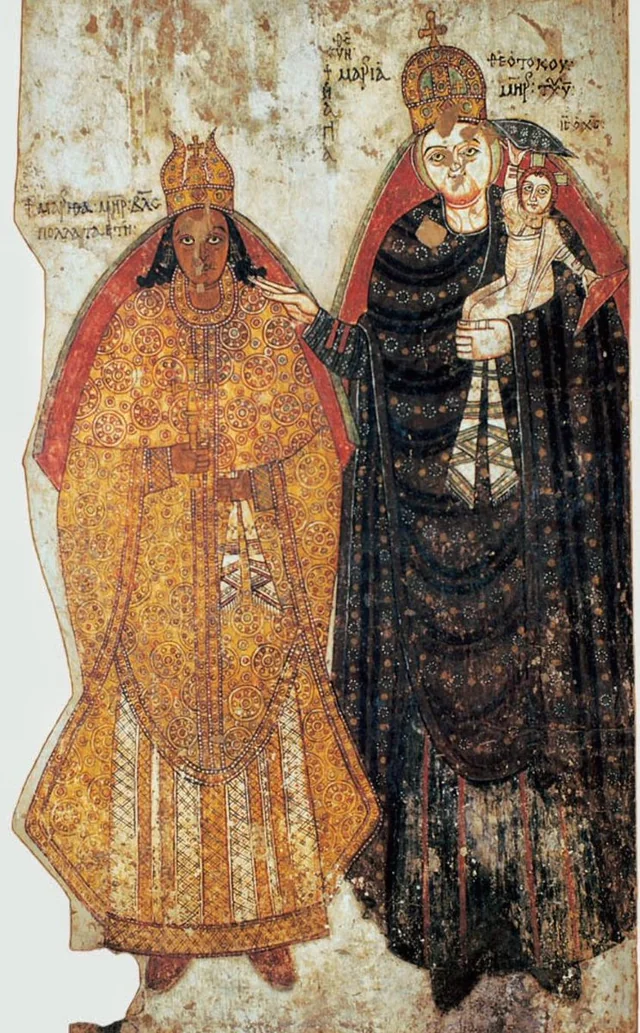
Queen Mother Martha protected by the Virgin holding Jesus
A/S:
L:
M:
U/C:
II. Short answer questions will be based on the following (4 points total):
Ngongo ya Chintu (The Buli Master)
Yoruba ram-head portrayals
Sande Sowei mask
Cross-River symbolic writing form, nsibidi
Equestrian figure, Djenne
Kilwa Great Mosque
III. Written Response (5 points):
Tada Ruler-Priest Figure, Yoruba, Nigeria
Kutubiyya Mosque minaret and exterior walls, Marrakesh