Chem unit 3
 Call Kai
 Learn
 Practice Test
 Spaced Repetition
 Match
 Flashcards
 Knowt Play
1/79

There's no tags or description
Looks like no tags are added yet.
80 Terms
Two types of attractive forces
intramolecular and intermolecular
What are intramolecular forces?
Forces that hold atoms together within a molecule
2 types of intramolecular forces
covalent and ionic bonds
What force is shown?
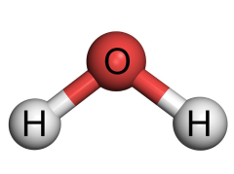
Intramolecular force
What are intermolecular forces (IMF)?
Forces that attract separate molecules to each other
4 types of IMFs in order of strongest to weakest?
Ion-dipole, hydrogen bonding, dipole-dipole, dispersion forces
What force is shown?

IMF
When water boils what force do you overcome?
intermolecular attractions between water molecules
Dispersion force explanation
found in all substances and arise from temporary polarization of electrons
What IMF is this?
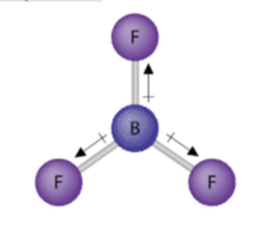
Dispersion
What force do non-polar molecules only have?
Dispersion
Dipole-dipole explanation
electrostatic force between partially positive end of one polar molecule and partially negative end of another
What IMF is this?

Dipole-dipole
Hydrogen bonding explanation
only can be formed by N-H, O-H, or F-H bonds due to having larger electronegativity values.
In hydrogen bonds rank the electronegativities from lowest to highest (HF, NH3, H2O)
NH3 H2O, HF
What IMF is this?

Hydrogen
Ion dipole explanation
occurs when salt dissolves in water causing its ions to strongly attract water molecules. In short they are attractions between ions and polar water molecules
What IMF is this?

ion-dipole
Boiling point definition
The temperature at which a liquid turns into gas
90iop;n Boiling point trend
Stronger IMFs = higher boiling point
Vapor pressure definition
the pressure exerted by vapor molecules above a liquid when evaporation and condensation occur at equal rates
Vapor pressure trend
stronger IMFs = lower vapor pressure
Rate of evaporation definition
how quickly a liquid turns into a gas at its surface
Rate of evaporation trend
Stronger IMFs = slower evaporation
Heat of vaporization definition
energy required to convert one mole of liquid into gas at its boiling point
Heat of vaporization trend
stronger IMFs = higher heat of vaporization
Surface tension definition
the tendency of a liquid surface to resist being stretched or broken because of attraction between its molecules
Surface tension trend
Stronger IMFs = higher surface tension
Capillary action definition
ability of a liquid to rise or fall in a narrow tube due to adhesion and cohesion
Viscosity definition
A liquid’s resistance to flowing
Viscosity trend
Stronger IMFs = higher viscosity
Which values have inverse relationship with IMF
Rate of evaporation, vapor pressure, gas ideality
Name 4 types of crystalline solids
Ionic solid, metallic solid, molecular solid, covalent networks
Ionic solid definition
Bond between metals and nonmetals
What are ionic solids held together by?
electrostatic attractions
Molecular solid definition
bond between nonmetals only
What are molecular solids held together by?
London dispersion forces, dipole-dipole, or hydrogen bonds
Covalent network (atomic solids) definition
bond between nonmetals only
What are covalent networks held together by?
sheets of hexagonal structure by covalent bonds held by weak London forces.
Metallic solids definition
metals only
What are metallic solids held by?
metallic bonds
Ideal gas law definition
PV=nRT
T/F do real gases deviate from ideal behavior?
True
Why do real gases deviate from ideal behavior?
They have a finite volume and intermolecular forces acting between the particles
At what conditions do real gases exhibit nearly ideal behavior?
high temperatures and low pressures
What is Van Der Waals equation?

Label blue and yellow sections

blue is metal, yellow is non metal
Random motion definition
Gases consist of a large number of molecules/atoms that are in continuous random motion
Negligible molecular volume definition
The combined volume of all the gas molecules is negligible relative to the total volume in which the gas is contained.
Elastic collision definition
Energy can be transferred between molecules during collision but as long as temperature remains constant the average kinetic energy of the molecules does not change with time
Average kinetic energy is proportional to temperature definition
the average kinetic energy of the molecule is proportional to the absolute temperature.
T/F at any given temperature do the molecules of all gases have the same average kinetic energy?
True
What does no IMF mean?
no attraction between particles
T/F in a sample of gas when all the molecules have same KE they all have the same speed
False
Maxwell-Boltzmann distribution
molecules in a substance move at different speeds and the distribution shows how many molecules have each amount of energy. As temperature increases molecules have more energy on average, so more can overcome intermolecular forces and escape a liquid.
What does the top of the curve mean

it the speed at the top of curve is called the most probably speed because the largest number of molecules have that speed.
What are the two equations of K.E?

What is k in the K.E equation?
k= Boltzman’s constant when you think about the energy of a single atom.
What are the avg velocity equations?

What is the combined equation for avg velocity of the particles?

What gases move slower?
slower gases
What does speed depend on?
molar mass and temperature
Diffusion definition
intermingling of gases due to their random motion
Effusion definition
escape of gas particles through a tiny hole
Graham’s law of effusion explanation
Lighter gases escape through a tiny hole haser than heavier gases. Rate of effusion is inversely proportional to the square root of the gas’s molar mass
Graham’s formula
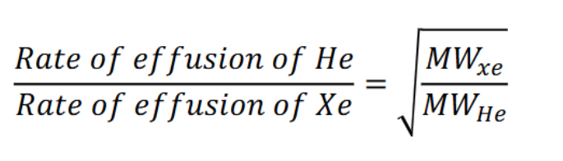
Boyle’s Law

Charles’s Law

Avogadro’s Law

Gay-Lussac’s Law

Combined Gas Law

Ideal Gas Law

Density and Gas Law

Density law

Mole formula
n=m/M
What makes IMF stronger?
larger size or higher force of IMF
What makes something less ideal?
being very large or having strong IMF
What does b mean in Van der Waals?
Volume occupied by molecules
What does a mean in Van der Waals equation?
attraction between molecules