ansc314 - proteins & AA
 Call Kai
 Learn
 Practice Test
 Spaced Repetition
 Match
 Flashcards
 Knowt Play
1/59

There's no tags or description
Looks like no tags are added yet.
60 Terms
proteins
functions
enzymes
signals
hormone synthesis
storage
protein composition
complex organic compounds of high molecular weight
carbon (51-55%)
hydrogen (6-7%)
oxygen (22-24%)
nitrogen (16%)
CP = % N x 100/16
crude protein = N x 6.25
most proteins have sulfur (0.5-2%)
others have some Fe, P, and Co
crude protein
measure it by mass of N x 6.25
little N in other things (DNA) but rumen bacteria can convert NPN → micorbial protein
protein structure
primary - order of AA
secondary - folding of polypeptide chain
tertiary - 3D structure of polypeptide chain
quaternary - protein macromolecule w/ subunits

primary protein
order of AA in polypeptide chain is unique & specific to a particular protein
altering single AA causes gene mutation → non-functioning protein

secondary protein
coiling/folding of polypeptide chain to give protein 3D shape
alpha helix & beta pleated sheets held together w/ H bonding

tertiary protein
comprehensive 3D structure of polypeptide chain
hydrophobic interactions determine folding & shape of protein
folding results in covalent bonding between R groups of cysteine AA
hydrophobic effect is driving force of self-assembly

quaternary protein
structure of protein macromolecule formed by interactions between multiple polypeptide chains
subunit - each polypeptide chain
held together by covalent bonding, weak bonds, & disulfide bridges

pyruvate dehydrogenase
process of turning pyruvate → acetylCoA
protein types
comprised up to 25 diff AA
simple
conjugated
simple proteins
yield only AA or their derivatives when hydrolyzed in acid (HCl)
primary structure of protein is defined by its AA sequence & AA composition

conjugated proteins
have non-protein moiety
glycoprotein - glycosylated w/ sugar
lipoproteins - w/ lipids
phosphoproteins - phosphoric acid
chromoproteins - pigment
metalloproteins
hemoglobin, cytochromes (Fe)
non-protein nitrogen
not all nitrogen in plants, feeds, bacteria & tissues is proteins
amides - urea, uric acid
alkaloids - many poisonous
nucleic acids - purines, pyrimidines (RNA, DNA)
ammonia (NH2)
NPN converted → microbial protein by ruminants
add urea to ↑ CP in diet
AA parts
over 200 AA but only 21 encoded in proteins
amino group + carboxylic acid group separated by 1 C (α-carbon)
most α-AA: —COOH & —NH2 group attached to same C
exceptions
proline (imino or —NH group)
taurine (amino but no carboxylic acid, not in protein)
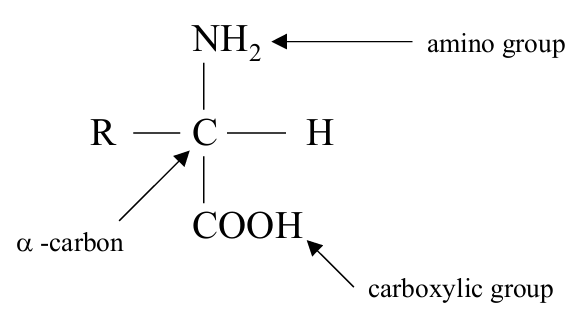
AA configurations
L-amino acids
D-amino acids
animals: enzymes to convert D- forms → L-forms
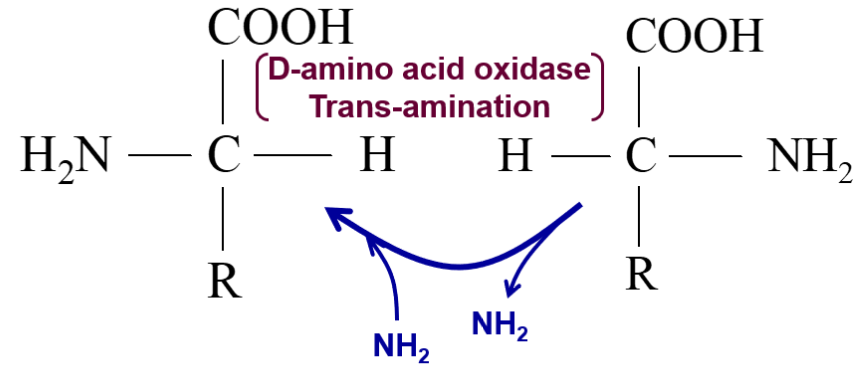
L-amino acids
naturally occurring
AA in left side w/ carbox. acid group top & bottom carbon chain
only L-form incorporated → animal proteins
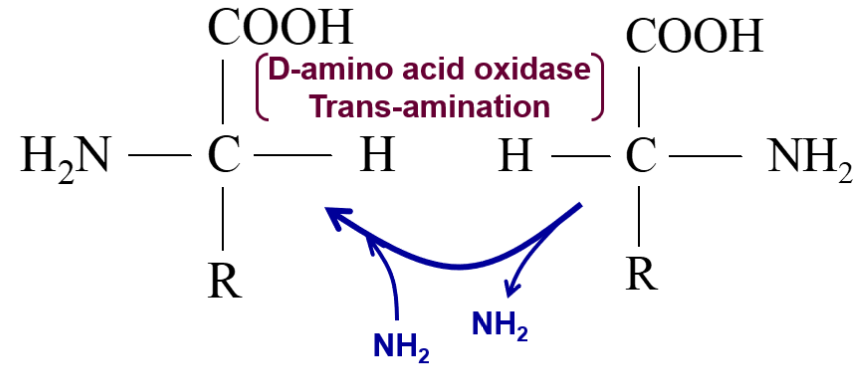
D-amino acids
AA in right side
some AA in bacterial walls
also produced during acid hydrolysis of proteins

21 common AA
essential - PVT TIM HALL T
Phenylalanine
Valine
Tryptophan
Threonine
Isoleucine
Methionine
Histidine
Lysine
Leucine
species
arginine (cats, birds, fish)
taurine (cats, infants)
semi-essential
glycine
glutamine
proline
non-essential
glycine (not birds & reptiles)
glutamate

bacterial & plants synthesize all AA
5-13 enzymes
protein & AA species chart
protein most costly aspect of feed

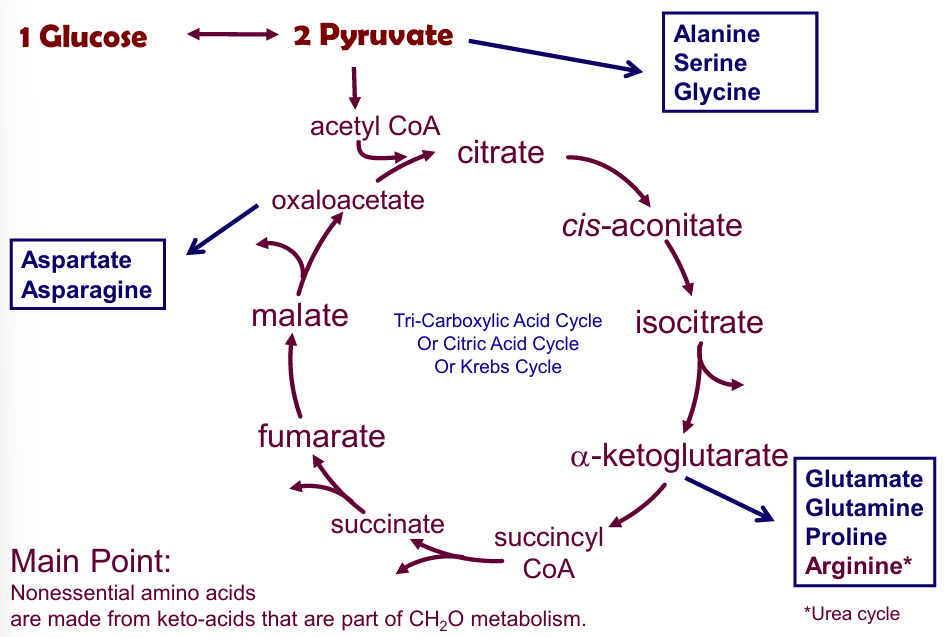
non-essential AA synthesis
nonessential AA made from keto-acids apart of CH2O metabolism
other AA formed from these
glutamate & glutamine use NH4+ others transaminate NH2 from AA → keto acid

arginine
only w/ ureotelic species
uses ammonia & aspartate & produces arginine or urea
only in ureotelic species

glycine
semi-essential in uricotelic species
no chiral center
no L or D form
made from serine (serine → glycine)
needed for uric acid synthesis

serine
semi-essential in uricotelic species
serine → glycine

branched chain AA (BCAA)
leucine, isoleucine, valine
BCAAs account for 35-40% dietary essential AA in body protein
14-18% total AA in muscle proteins
promotes protein synthesis
signals, regulates lipid metabolism aspects
leucine

isoleucine

valine

dicarboxylic AA
aspartate → asparagine
glutamate → glutamine

asparatate
→ asparagine (dicarboxylic AA)
made from oxaloacetate w/ NH2 from glutamate
amino group from glutamine

glutamate
→ glutamine (dicarboxylic AA)
made from NH4+ + 𝛼-ketoglutarate
amino group from NH4+
synthesis detoxifies & recycles NH4+
nonessential
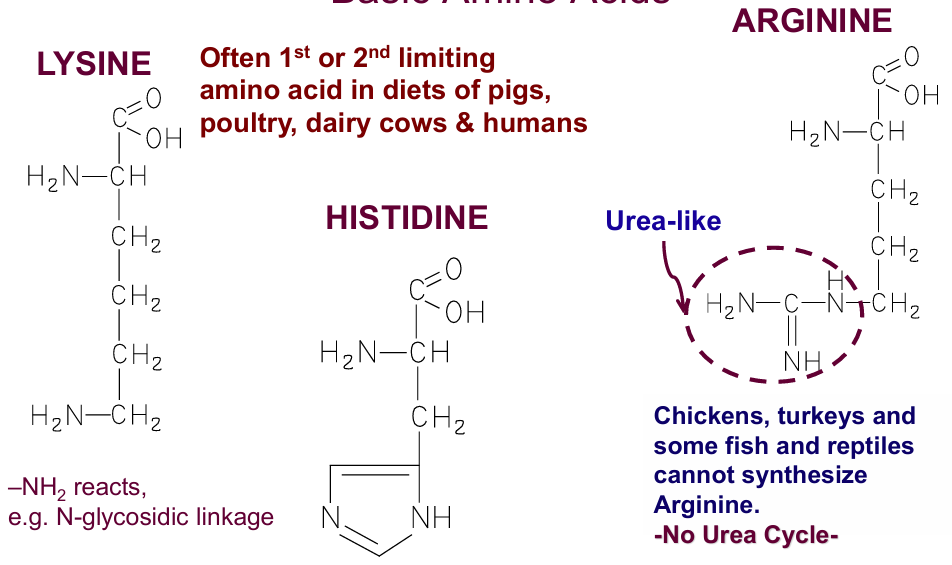
basic AA
basic side chains w/ neutral pH
lysine
histidine
arginine
side chains have N & resemble ammonia (base)
high pKa
limiting AA
if diet is inadequate in any essential AA, protein synthesis can’t proceed beyond rate at which AA is available
lysine
1st or 2nd limiting AA in pig diets, poultry, dairy cows, & humans
NH2 reacts (N-glycosidic linkage

histidine

arginine
chickens, turkeys, & some fish/reptiles can’t synthesize arginine
no urea cycle

sulfur-containing AA
methionine → cysteine:
→ cystine
→ taurine
cysteine
sulfur-containing AA
→ cystine
→ taurine
dietary requirement met by methionine

cystine
made from cysteine
contributes to structure of proteins
oxidized form

methionine
1st/2nd limiting AA in pig, poultry, human & dairy cow diet
→ cysteine

taurine
only essential in cats & infants
don’t make it naturally from methionine/cysteine
not part of protein, part of bile & CNS, eyesight

aromatic & heterocyclic AA
phenylalanine
tyrosine
tryptophan
proline (imino group)

phenylalanine
½ phenylalanine dietary requirement spared by adding tyrosine
phenyl → tyrosine
aerobic environment: accept OH

tyrosine
made from phenylalanine
aerobic environment: doesn’t accept H2

proline
non-essential
except laying hens

tryptophan
precursor of niacin (B vitamin)

selenocytsteine
latest AA to be discovered
made from cysteine & selenium on specialized tRNA
not freely present in cells
stronger reducing compound than cysteine
part antioxidant, reducing enzymes
protein digestion
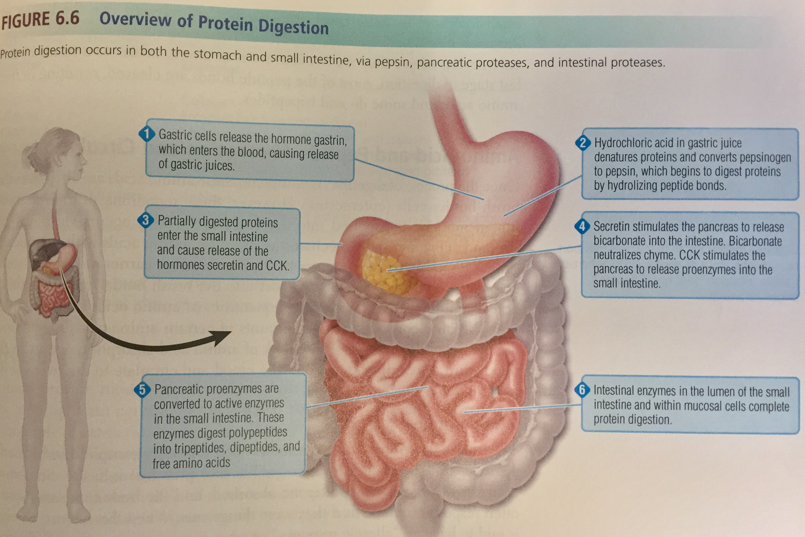
secretin
digestive hormone secreted by wall of upper part of small intestine (duodenum) - -
regulates gastric acid secretion & pH levels in duodenum
proventriculus protein digestion

gastric protein breakdown
chymosin - ruminant animals (prenatal to weaning)
milk-clotting / coagulation
prochymosin is precursor (pro-enzyme)
activity only 2% of pepsin
helps preserve colostrum & antibodies for absorption
pepsin activity low 1st 2 weeks of life
chymosin
pepsin equivalent in ruminants
acid/base AA
↑ NH2 → ↑ basic
↑ COOH → ↑ acidic
small intestine
duodenum & jejunum
enterokinase - cleaves trypsinogen → trypsin
trypsin - active form cleaves pronezymes → active enzymes
Food in stomach and SI ↑ secretin & cholesystoinin secretion
stimulates release of enzymes from pancreas
Pancreas secretes pro-enzymes
Trypsinogen is cleaved & activated by enterokinase secreted by intestinal mucosal cells
Trypsin then activates other pro-enzymes
Each cleaves at different residues
leaves peptides
are fully degraded by carboxypeptidases (carboxyl terminus) or aminopeptidases at amino terminus

AA absorpbtion

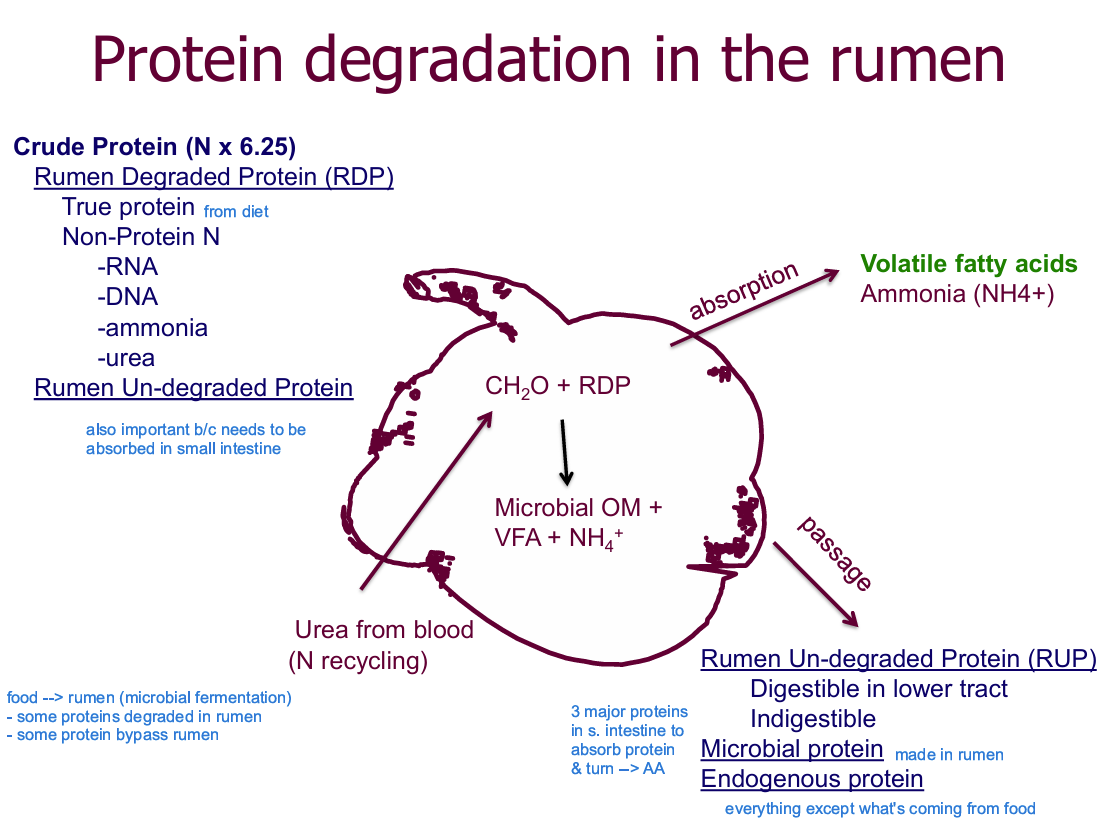
rumen protein degradation
food → rumen (microbial fermentation)
un-degraded protein important b/c needs to be absorbed in s. intestine
ruminant small intestine proteins
3 major proteins in s. intestine to absorb protein & turn → AA
rumen undegraded protein (RUP)
digestion in lower tract
indigestible
microbial protein - made in rumen
endogenous protein - everything except what’s coming from food
protein & energy metabolism
AA needed for protein synthesis
protein → build muscle
glycogen break down → energy
then lipids → energy
then proteins → AA → muscle protein → energy (emergency)
carbohydrates build fat

Maillard reaction
non-enzymatic browning
amino groups
sugars + heart → brown product (Maillard product)
e.g. steak
Maillard reaction
Between free amino groups & sugars
Lysine, Arginine
glycation - random non-enzymatic glycosylation
not reversible in animals
turns steak brown (seared) or burnt, toast
turns hay or silage brown & ↓ digestibility
↓ protein digestion in rumen
↓ protein & carbohydrate digestion in animal
products associated w/ cancer
occurs slowly in body, aging process
occurs faster in body w/ diabetes (glucose)
causes retinopathy, nerve damage
↑ A1C (HbA1c) (glycated hemoglobin - indicator of diabetes)