Material Selection Midterm 1
 Call Kai
 Learn
Learn Practice Test
 Spaced Repetition
 Match
Match Flashcards
 Knowt Play
1/99

There's no tags or description
Looks like no tags are added yet.
Name | Mastery | Learn | Test | Matching | Spaced | Call with Kai | Chat |
|---|
No analytics yet
Send a link to your students to track their progress
100 Terms
What is the starting material used to refine aluminum?
bauxite
Bauxite undergoes the ____ Process to get alumina
bayer
Alumina undergoes the _____-______ Process to get aluminum
hall-heroult
Aluminum has a ____ or _____ yield strength than most structural materials
similar or lower
Aluminum generally has ______ fracture toughness than most structural materials
lower
Aluminum generally has a _____ elastic modulus than most structural materials
lower
Aluminum has a significantly ____ density than most structural materials and thus _____ specific strength (strength-to-weight ratio)
lower, high
How much of all aluminum ever produced still in use today?
75%
When making steel, you need 2 raw materials: _____ and _____, you also add oxygen to reduce the carbon content to approximately ___%
iron and carbon, 0.04
Specialty stainless steels can only have ~__-__% Fe content
60-70
To produce elemental iron, you need iron in the form of ______, carbon in the form of ____, and calcium in the form of ____.
iron ore, coke, lime
When making iron in a blast furnace, you need ____ to melt the ore and ___ to remove impurities.
fuel, flux
Blast furnace reaction:
Fe_O_+3CO → __Fe + 3CO2
23, 2
What are the impurities that float to the top of molten iron in a blast furnace?
slag
What does a blast furnace produce?
pig iron
Why can’t you use pig iron?
4%C, too brittle
To refine pig iron and make steel, you add ___ in a basic ____ furnace. What does the carbon content reduce to?
oxygen, 0.04%
Compared to a BOF, an electric arc furnace can only use _____ _____ or ________.
scrap steel, direct reduced iron
Once steel is made, it undergoes a secondary refining to promote _____ and ____ homogenization and lower ____ levels.
temperature, composition, impurity
Austenitic steels (___ series) are non-magnetic, have excelllent corrosion resistance, and great formability. What is a common application?
300, kitchen appliances
ferritic steels (___ series) are magnetic, good corrosion resistance in mild environments, and are cost-effective. What are two common applications?
400, exhaust systems, architectural trim
martensitic steels are magnetic, have good wear resistance, and are easily hardenable. what is a common application?
cutting tools
What type of steel is most commonly used in aerospace parts?
precipitation hardened
Steel has a _____ elastic modulus than most structural metals
higher
During a uniaxial tensile test, the specimen is elongated in one direction at a fixed _____ rate
displacement
In a stress-strain curve, the slope in the elastic region represents a materials ___ ____.
elastic modulus
The ultimate tensile strength occurs at the onset of ____, or non-uniform deformation.
necking
What property quantitatively describes the energy required for fracture or, alternatively, the amount of energy that can be absorbed before fracture
fracture toughness
Combination of 2+ materials that have better properties than the individual components
composites
_____, or binder, surrounds the reinforcement to maintain positioning. It (is/is not) responsible for primary strengthening and stiffness.
matrix, is not
_____ provides improvements in material properties like stiffness and strength
reinforcement

In a fiber-reinforced composite, the fibers are _____
continuous (aligned)

in a fiber-reinforced composite, the fibers are _____
discontinuous (short)
In a polymer matrix, using ______ resins (epoxy, unsaturated polyester, and vinyl esters) results in brittle composites with relatively low strain to failure.
thermosetting
In a polymer matrix, using ______ resins need to be able to mold near RT and have a higher strain to failure.
thermoplastic
______ resins are infiltrated into preformed fiber with hardner and undergo chemical crosslinking in curing.
thermoset
______ resins are not crosslinked so their strength comes from the inherent properties of the chain.
thermoplastic
what are the 4 steps it takes to complete the material selection process?
translation, screening, ranking, documentation
What are the four things to keep in mind during the translating step of the material selection process?
function, constraints, objective, free variable
What are the three indices that combine to make an objective function?
functional requirements, geometric parameters, material properties
An Ashby plot is a plot of materials by ______ and _______
density, youngs modulus
What variable do you utilize to incorporate constraints into an objective function?
free variable
A material index shows up on an Ashby plot as a fixed _____.
slope
During the documentation part of material selection, you must research case studies and consider the ease/cost of ________ and environmental impact.
manufacturing
You use composites because they can be optimized to have ideal properties in certain _______ and are significantly ______ than traditional metals.
directions, lighter
What are the two types of structural composites?
Laminate (layers) and sandwich
When using metals as a matrix in a composite, it must be injected into the preform at ___ temperature without damaging the fibers (_____ casting). Low volume fractions of chopped fibers can be stirred into melt or fabricated using powder metallurgy.
high, squeeze
The usage of metals as a matrix in a composite results in a ______ stiffness increase over the base material compared to polymer matrix composites because unreinforced metals already possess a _____ baseline elastic modulus.
smaller, high
Metal-matrix composites have improved time-dependent properties like _____ and ________ by the addition of reinforcement.
creep, wear resistance
To calculate the mechanical properties of composites (focusing on continuous fibers), the properties will be bounded by isostrain (stress ____ to fiber alignment) and isostress (stress _____ to fiber alignment).
perpendicular, parallel
In a non-continuous fiber reinforced composite, you have to account for the _____ of the fiber.
length

In a non-continuous fiber reinforced composite, the black line indicates ____ stress while the red line indicates _____ stress.
tensile, shear
Metals used in composites tend to be _____ in comparison to bulk alloys.
ductile
In this step, the design requirements for a given component are transferred into a set of constraints, objectives, and free variables to enable desired functions
translation
This step applies the constraints developed during the Translation phase to remove materials that are unable to meet the lower-bound requirements for the components
screening
Screening provides a list of the materials that can do the job, but the role of this step is to quantitatively identify which materials are best for the job
ranking
This step often involves assessments of costs and suppliers, usage case studies, analysis of prior failures, evaluation of other considerations (e.g., corrosion)
documentation
Material indices (do/don’t) vary on the specifics of the component being designed
do
A single index line corresponds to a fixed value but its tangent lines can help create a ranking. If the material index is M = E/ p, then M = 2 has the same modulus with 10 times ___ density than M = 0.2!
less
Titanium can have ____ alloying fractions
large
Raw materials for titanium production include….
rutile and slag
Step 1 of titanium production: _____, uses raw materials for titanium and calcined ____ to produce crude titanium tetra_____
chlorination, coke, chloride
Step 2 of titanium production: _____
distillation
Step 3 of titanium production: ______ and vacuum separation, titanium tetrachloride is reduced by ______ to produce titanium _____
reduction, molten magnesium, sponge
the magnesium chloride produced in step 3 of titanium production can be separated into magnesium and chlorine by…
electrolysis
Separating MgCl into Mg and Cl using electrolysis is very energy efficient (T/F)
f
Ti has a higher specific strength than Al and steel at ___ temperatures
high
Repeating units of organic chain molecules are called ____, bonding between them is ______
mers, covalent
The number of covalent bonds that each mer can form = _____
functionality
Mers that have the same chemical formula but different structures
isomers
a polymer which consists of only one type of mer
homopolymer
a polymer which consists of two or more types of mers
copoylmer
As the crystallinity of a polymer increases, density ____ and thermal softening ____.
increases, reduces
_____ have no cross-linking and are held together by van der waals bonds. They can be reversibly softened and partially crystalline.
thermoplastics
_____ are formed by mixing two components, permanent hardening. Extensive cross-linking and almost always amorphous.
thermosets
_____ are almost-linear polymers with branched cross-links. Capable of extremely large elastic strains.
elastomers
In polymers, increasing temperature correlates to ____ elastic modulus, _____ strains at fracture, ____ in flow stress.
decrease, increased, decrease
Viscoelastic behavior is determined by rate of strain, _____ for rapidly applied stress and ____ for slowly applied stress
elastic, viscous
Ceramics are much stronger in ______ than they are in (compression/tension).
compression
Ceramics have ___ resistance to crack propagation.
low
Melting temperature, elastic modulus, and polymer strength depend on what
molecular weight
Features of the glassy plateau:
modulus is constant and at a _____
polymers behave in a ____ manner
Stiffness is based on the number of covalent bonds versus secondary bonds
Secondary transitions in the plateau could be due to limited mobility of side groups causing ____
maximum, brittle, relaxation
What is glass transition:
As the temperature increases, the _____ bonds connecting the polymer chains will start to melt
Segments can then start to “slip” relative to each other, causing the modulus to ____
Polymer also begins to expand, causing an increase in free volume (or decrease in density)
In this region, deformation is recovered by non-sliding regions “pulling” back on the polymer – time dependent!
secondary, decrease
What is the rubbery plateau:
Chance entanglements provide anchors → load and unwind, unload and rewind
Rubbery behavior more pronounced with small amount of cross-links: ____
However, if you have too many cross-links, unable to unwind and the rubbery behavior is limited → causes ____ in modulus and _____ temperature range of plateau
elastomers, increase, increase
What is viscous flow:
At increased temperature, approaching __Tg or so, the secondary bonds have completely melted
Entanglement points in linear polymers also slip; ____ don’t melt though – why?
This region is also called “rubbery flow”
1.4, crosslinks
A design requirement should not specify how the solution should be obtained
solution neutral
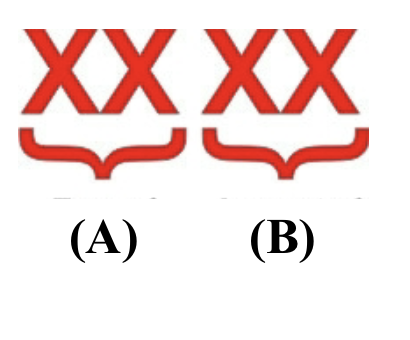
In steel designations, (A) = ________, (B) = ______
type of material, carbon content
Most technologically relevant Ti alloys end up in the _____-_____ regime, leading to the ability to create a wide range of microstructures
alpha-beta
Ti alloys can be used at ____ service temps than Al alloys, but not “_____” than steels
higher
Ti alloys (do/don’t) maintain high specific strength at high temps, whereas Al alloy strength ____ at high temps
do, drops
Nickel alloys are generally broken into two categories: ______ or _______
solid solution, precipitation hardened
Nickel alloys have a ____ range of possible strengths and generally have ___ fracture toughness values
large, high
Bonding between polymer chains is _____ or ______
secondary (H-bonds, van der waals, or dipole-dipole) or covalent crosslinking
What properties do the degree of crystallinity, molecular weight, and degree of crosslinking effect?
all

1) The glassy region: Below ___, where side groups may rotate and slightly ____ modulus
Tg, decrease
2) The glass transition region: Around Tg, where macromolecules move and break ____ bonds, sharply ____ the modulus
secondary, decreasing
3) The _____ region: Above Tg, polymers with long chains resist shape change due to entanglements
rubbery
4) The viscous region: >___ Tg, linear polymers are viscous liquids
1.4
(5) The decomposition region, where the breakdown of _____ _____ bonds begins
covalent backbone