C2C Quiz 2 Art
 Call Kai
 Learn
Learn Practice Test
 Spaced Repetition
 Match
Match Flashcards
 Knowt Play
1/53

There's no tags or description
Looks like no tags are added yet.
Name | Mastery | Learn | Test | Matching | Spaced | Call with Kai | Chat |
|---|
No analytics yet
Send a link to your students to track their progress
54 Terms

Amphora from Dipylon Cemetery
detail showing prothesis (lying in state;
Athenian funerary ritual) of female
deceased and mourners
height 5’1”, c. 750 BCE
National Archaeological Museum, Athens
Significance:

Man and Centaur
perhaps from Panhellenic sanctuary at Olympia
bronze, height 11 cm, c. 750 BCE
Metropolitan Museum of Art, New York
Significance:

Amphora showing Achilles and
Ajax playing dice, c. 540-530 BCE
Vatican Museums, Rome
Significance:
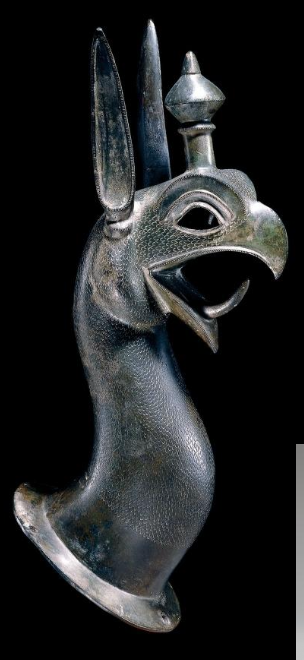
Griffin-headed protome from bronze-tripod cauldron,
from Rhodes, c. 650 BCE, British Museum, London
significance:

The Parthenon
447-432 BCE
(temple and

The temples of Hera I and Hera II at Paestum (Magna Graecia), Italy,
c. 550 and c. 460 BCE

Kore (maiden)
c. 630 BCE
Louvre, Paris

New York Kouros (youth)
Height 1.9 m, c. 600 BCE
Metropolitan Museum of
Art, NYC

Medusa with her children Pegasus and
Chrysaor between two feline creatures,
from west pediment of temple

The Treasury of the Siphnians at Delphi, c. 525 BCE

The east and west pediments of the Temple of Aphaia, Aegina
c. 500 – c. 480 BCE

Kritios Boy, attributed to the sculptor Kritios, c. 480 BCE
height 1.17 m, Akropolis Museum, Athens

Zeus, bronze, c. 460-450 BCE, National
Archaeological Museum, Athens

The so-called Riace Warriors, found in the sea
at Riace, Italy, probably initially part of a
victory monument, Museo Archaeològico
Nazionale, Reggio Calabria, Italy.

Doryphoros (spear-bearer), by Polykleitos
Roman marble copy after the original bronze of
c. 450 – 440 BCE
Museo Archaeològico Nazionale, Naples, Italy
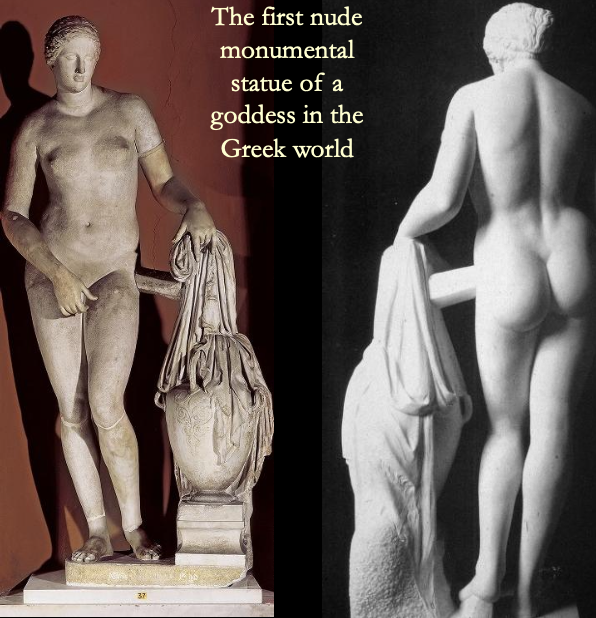
oryphoros (spear-bearer), by Polykleitos
Roman marble copy after the original bronze of
c. 450 – 440 BCE
Museo Archaeològico Nazionale, Naples, Italy

Three nude figures, marble,
c. 2500 BCE
represent a wealthy society; found in graces, made from local white marble. Extreme abstraction - in line with stylistic cannon

Harpist, marble, c. 2200 BCE
represent a wealthy society; found in graces, made from local white marble. Extreme abstraction - in line with stylistic cannon

Verso and recto side of a “frying pan” from Syos, terra cotta,
c. 2500 – c. 2200 BCE; National Archaeological Museum, Athens.
shape and functions are still unknown, perhaps functioned as palettes or mirror

Reconstruction of the
so-called “Palace” of
Minos
Knossos, Crete, c.1700 - c.1400 BCE
vast structure originally thought to be palace; not a palace probably
Light wells - series of interconnected rooms and courtyards designed to let light in

The so-called Grandstand Fresco, showing spectators
witnessing a ritual event, Knossos, Crete
c. 1500 BCE
central register depicting architectural feature, bull horn (ritualistic) women, and crowds represented by floating heads on red background

The so-called
Queen’s megaron (large room), with murals of dolphins
c.1700 - 1400
example of naturalism (dolphins)

bull-jumping mural – Toreador Fresco – from the
Palace of Minos, Knossos, Crete, c. 1500 BCE
interpretation unknown but possible representing a ritualistic activity/recreating aspects of real life
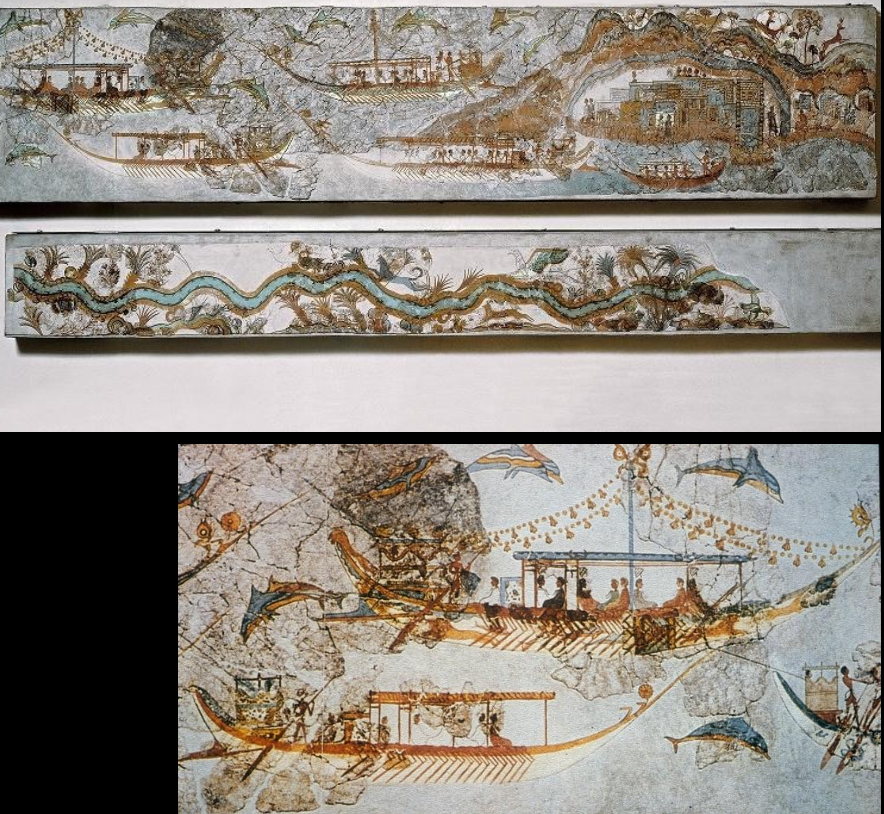
The so-called Flotilla Fresco, c. 1600-1500 BCE from Akrotiri, Thera
large scale depictions of sea and boats - represents either a historical event or ritual - more complex than previous

The so-called Spring Fresco Room, c. 1600 – c. 1500
BCE
Akrotiri, Thera
red blue and ochre covers entire walls in naturalistic depictions of flowers

Octopus Vase from Crete
c. 1500 BCE
Archaeological Museum,
Iráclion, Crete.
optical imagery

The “snake goddesses”
faience - fired san
Knossos, Crete, c. 1650 BCE
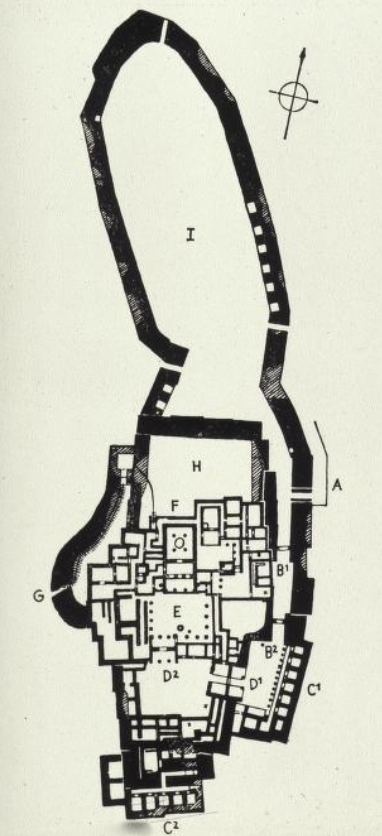
Site plan of Tiryns
c. 1400 - 1200
deep porch divided by columns - vestibule - audience hall
megaron - large room; power center of the citadel

the great Lion’s Gate
The great citadel: Mycenae, c. 1600 – c. 1200 BCE
Post-and-lintel
Relieving triangle - triangle above lintel
Heraldic pose - mirrored image facing each other
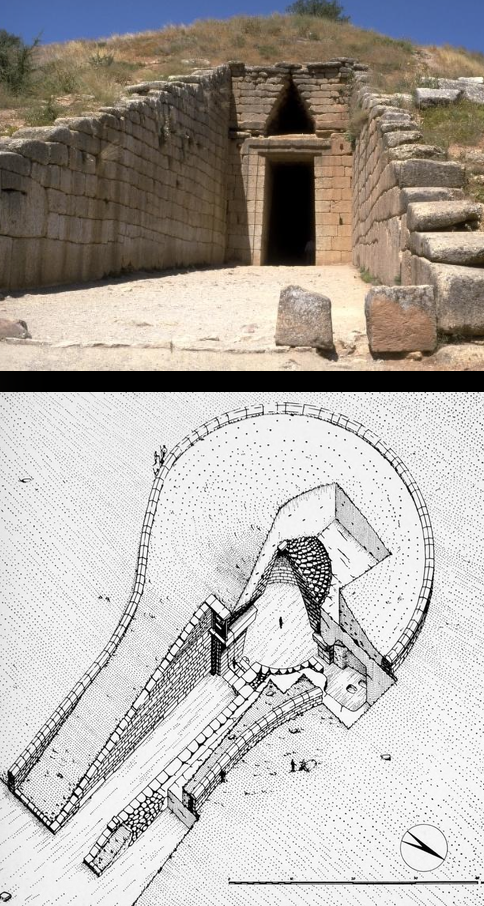
The “Treasury of
Atreus”, c. 1300 BCE
Tholos - great grave circle around tomb (beehive burial chamber)
dromos - entrance passage and portal
the largest unsupported covered
space built anywhere before the erection of the Pantheon in Rome
about a millenium and a half later.
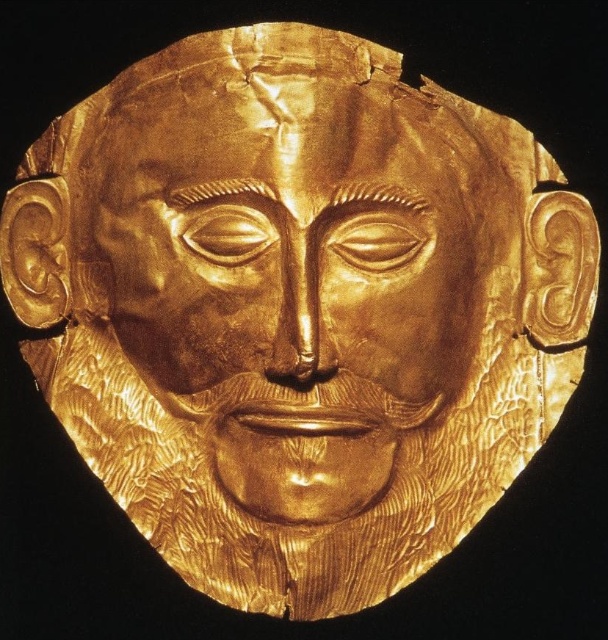
“face of Agamemnon”
All made from hammered sheet gold (repoussé technique)
Burial masks uncovered in the great Grave Circle at Mycenae,
c. 1600 – c. 1500 BCE

he so-called Vaphio Cups,
embossed gold
c. 1500 – c. 1450 BCE
all in National Archaeological
Museum, Athens
All made from hammered sheet gold (repoussé technique)

The so-called Dipylon Vase, 8th c. BCE
National Archaeological Museum,Athens
First art that emerged after the Bronze Age collapse

The Palette of King Narmer (from Hierakonpolis),
c. 3150-3125 BCE, Cairo, Egyptian Museum

The mortuary complex
of king Djoser (r. 2630-2611) at Saqqara,
c. 2681-2662 BCE
First named architect in history: Imhotep
From mastaba to stepped pyramid
Eternal city made out of permanent materials yet emulates impermanent materials

The three pyramids of king Sneferu, c. 2613 – 2589 BCE
1st one: stepped pyramid of meidum
2nd one: bent pyramid of dashur
3rd one: red pyramid of dasher
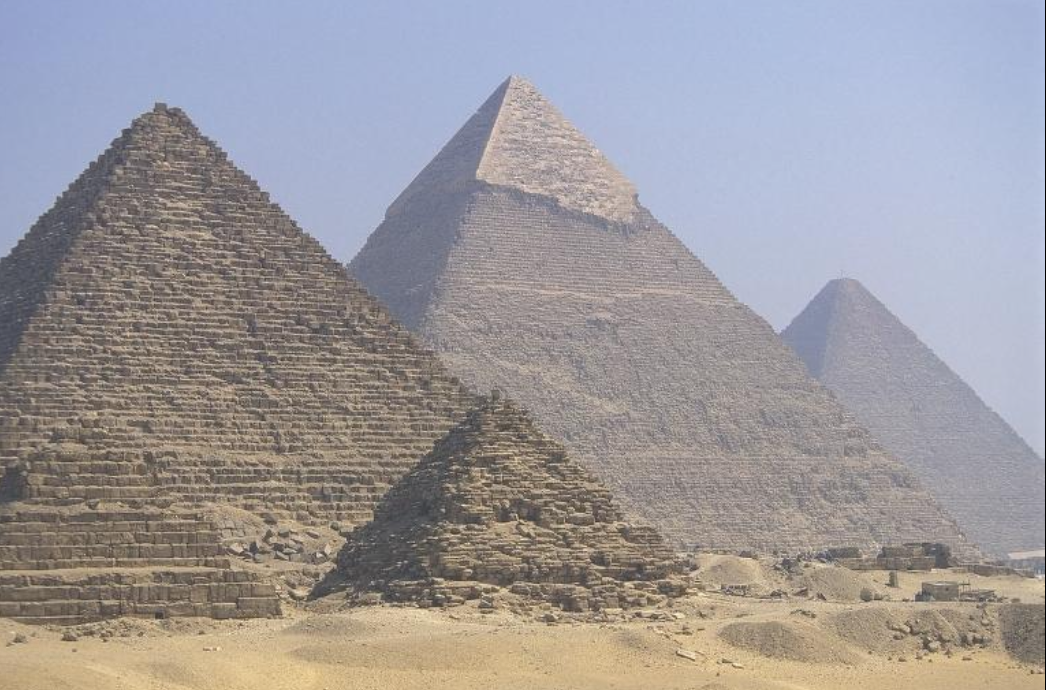
The pyramids of Giza, c. 2601-2515 BCE:
The only surviving Wonder of the Seven Wonders of the Ancient World

Khafre, c. 2500 BCE; both excavated at Giza, made from diorite, Egyptian Museum, Cairo
A sculpture that expressed qualities of kingship:
• king as earthly manifestation of the divine
• muscular form → power
• diorite as a medium → strength (fine stone
that lends itself to detail, high polish)
• smooth agelessness → eternal nature
• compact form → solidity, permanence
• intertwined plants in the lower portion -
indigenous to both Lower and Upper Egypt

Menkaure and his wife,
Queen Khamerernebty II
slate, c. 2515 BCE
Museum of Fine Arts, Boston

Kneeling Figure of King Hatshepsut at
Deir el-Bahri, c.1473-1458 BCE,
red granite, c. 8’6”
Metropolitan Museum of Art, New York
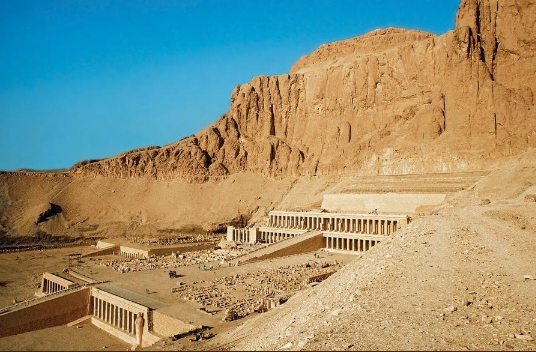
The funerary temple of Hatshepsut at Deir el-Bahri, c. 1478-1458 BCE
“With its clean contours, the royal structure imposes order on the less regularized forms of nature, just as the king’s role was to impose order on chaos.”

The Great Temple of Amun-Ra at Karnak, c. 2200 – 340 BCE
pylon - monumental gateway Pylons and pathways: sacred thresholds, sacred avenues for processions during the opet festival, the Feast of the Valley Processions centered on the statue of Amun and on his divine boat
The great hypostyle hall - super-basilica of ancient Egypt
Introducing the terms: aisle, entablature, drum, clerestory
sunken reliefs

Visual celebrations of royal power and patronage.
Left and center: Thutmose III (1458-1425 BCE) triumphing over the enemies of Egypt; top
right: the military campaigns of Seti I (1294-1279 BCE) against the Hittites and Syro-Palestinian
tribes.
Both images are executed in a technique known as “sunken relief”

The rock-cut temple of Ramsses II at Abu Simbel, Nubia, c. 1260 BCE
Monumental entrance with four giant figures of Ramses,
as “Sun of the Rulers”, “Ruler of the Two Lands”, “Ramses, Loved by Amun”,
“Ramses, Loved by Atun”
bottom left: statue of queen Tuya, mother of Ramses II; statue of sun-god Ra.

khenaten and Nefertiti playing with their three daughters
Amenhotep IV (“Amon is satisfied”)
becomes Akhenaten (“Splendor of Aten”)
c. 1352-1338 BCE

Busts of Nefertiti, both c. 1340 BCE

THE TOMB OF TUTANKHAMEN 1336-1327 BCE
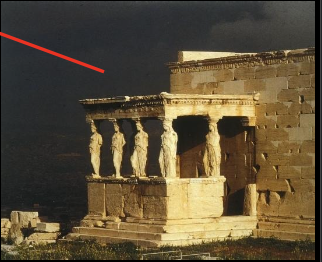
Erechtheion 421-405 BCE
encapsulates the spot where Poseidon and Athena competed for custody of Athens; rooms dedicated to both Athena, Poseidon, and King Erechtheus
Used for many different purposes
Caryatids - structural statues which supports

The parthenon 447-432 BCE
Architect: Iktinos and Kallikrates
used as a treasury and a temple
9×4 ratio used to determine the spacing between the columns (intercolumniation)
octastyle - 8 pillars in front
entasis - bulging of base and pillars intended to compensate for the illusion of concavity
Ionic + Doric
Inner ionian frieze depicts symbols, perhaps panathenaic procession (low relief)
Outer metope reliefs depict images of mythical battles of good v evil (high relief)
Pediment depicts Athena v. Poseidon and also birth of Athena (sculptures in round)
peristyle - a colonnade around a building or court

Temple of Athena Nike
427-424 BCE
best example of ionic order from this time period
first building you see when entering acropolis

The Temple of Apollo at Didyma,
Asia Minor (western Turkey), begun 313 BCE
Architects: Paionios of Ephesos and Daphnis of Miletos
emphasis on the ritualistic entrance of the temple due to stairwell design
Enscription of how the 9:4 ratio and entasis

Dying Gaul (trumpeter?), Roman marble copy after bronze original of c. 230-220 BCE from Pergamon; Museo Capitolino, Rome
privacy of an honorable death - example of dramatization of hellenistic period

The Pergamon Altar (c. 197 – 159 BCE)
ionic
prime example of the dynamic poses and dramatization of scenes from the hellenistic period