Drug properties & optimization I 03 (1/2)
 Call Kai
 Learn
 Practice Test
 Spaced Repetition
 Match
 Flashcards
 Knowt Play
1/20

There's no tags or description
Looks like no tags are added yet.
21 Terms
Drugs & biological targets
- D's prod their effects by interacting w biolo T's
- Binding deps. on chem structure of D & T
- Binding via noncovalent int's
↳ Pattern of int's gives selectivity
- D binding can alter T activity & prod a biolo resp.
Drugs bind to targets via noncovalent interactions (NCI's)
1. Electrostatic int's
2. H-bonding
3. Dipole-dipole
4. van der Waals
Electrostatic interactions
Relatively strong non-directional forces that occur btwn oppo charged groups

Strength of electrostatic interactions
- Deps on enviro
- Int's can be stronger when buried away from water (hydrophobic pocket)
- Weak int. when exposed to solvent
Hydrogen bonds
- Moderately strong compared to van der Waals
- Directional: strength deps. on geometry btwn donor & acceptor
- Strength deps. on enviro: can be stronger in hydrophobic enviro
- Requires H-bond donor+acceptor (atom's functional group determines role)
Hydrogen bond donors
- Provide H involved in the H bond
- Contain an appropriate X-H bond
↳ Ex: O-H, N-H

Hydrogen bond acceptors
- Provide a LP of electrons
- Ex: O and N w available LP's

Dipole-dipole interactions
- Moderate strength NCI
- Occurs btwn polar groups w permanent partial charges
- Oppo partial charges attract: δ+ --- δ-
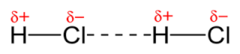
Strength of dipole-dipole interactions
- Deps on distance, orientation & enviro
- Can be stronger in a less polar/hydrophobic enviro
- Ex: Carbonyl groups have strong dipoles
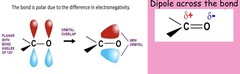
van der Waals (dispersion) interactions
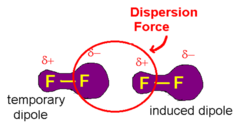
- Relatively weak individually
- Arise from temporary fluctuations in e- distribution
- Occur when atoms r in close contact
- Strength ↑ w amount of surface contact

When do van der Waals become significant?
- Many weak int's can make important contribution to D-T binding
- Important when D fits closely within a binding pocket
Desolvation during drug binding
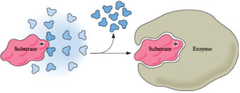
- Drugs in sln r surrounded in H2O
- Binding sites may also contain H2O, which must be displaced during binding
- Removing these int's has an energetic cost
- D binding reflects a balance btwn int's w H2O & the target
- Pic on desktop
Assays
- Labo test used to measure D activity, provide:
↳ Qualitative info: whether effect occurs
↳ Quantitative info: magnitude of effect
- Selected dep. on question asked
- Diff assays measure D activity at diff lvl's
In vitro vs. in vivo (measuring drug activity)
- In vitro: performed outside a whole living organism
- In vivo: performed in a living organism
Types of assays
1. Biochem assays: purified T or biolo components
2. Cell-based assays: measure responses in intact cells
3. Tissue-based assays: measure responses in complex biolo sys's 4. In vivo studies: measure effects in whole organism
High-throughput screening (HTS)
- Highly automated labo method that rapidly tests tons of compounds to identify potential hits
- Uses 1 or few concen's


HTS & Quantitative follow-up
- Tests a range of concen's
- Measures concen-response relationships
- Allows potency comparisons
Potency
- Drug amount or concen needed to prod a specified effect
- Lower concen/dose needed = greater potency
- Can be compared using concen-response data
- Diff from maximum effect (efficacy)

Structure-activity relationships (SAR)
1. Start w an active compound
2. Make a structural modification
3. Measure biolo activity
4. Compare w related compounds
5. Determine how structural change affected activity
Structure-Property Relationships (SPR)
- Structural changes can affect a molecule's drug properties & alter physiochem + biological/pharmacokinetic properties
↳ Influence if a compound is suitable for further development
- SAR and SPR r optimized together
A "drug-like" molecule
- Molecular properties that make a compound suitable for D development
1. Sufficient biolo activity: potency
2. Appropriate selectivity: preferential activity
3. Suitable physicochem properties: solubility, permeability, stability
4. Suitable biolo properties: metabolic stability, reach T
5. Practical to develop: synth & formulation