ANTH 102A Quiz 1 - The Skull
 Call Kai
 Learn
 Practice Test
 Spaced Repetition
 Match
 Flashcards
 Knowt Play
1/116

There's no tags or description
Looks like no tags are added yet.
117 Terms

Skull
The entire bony framework of the head including the lower jaw

Mandible
The lower jaw

Cranium
The skull without the mandible

Calvaria
The cranium without the face
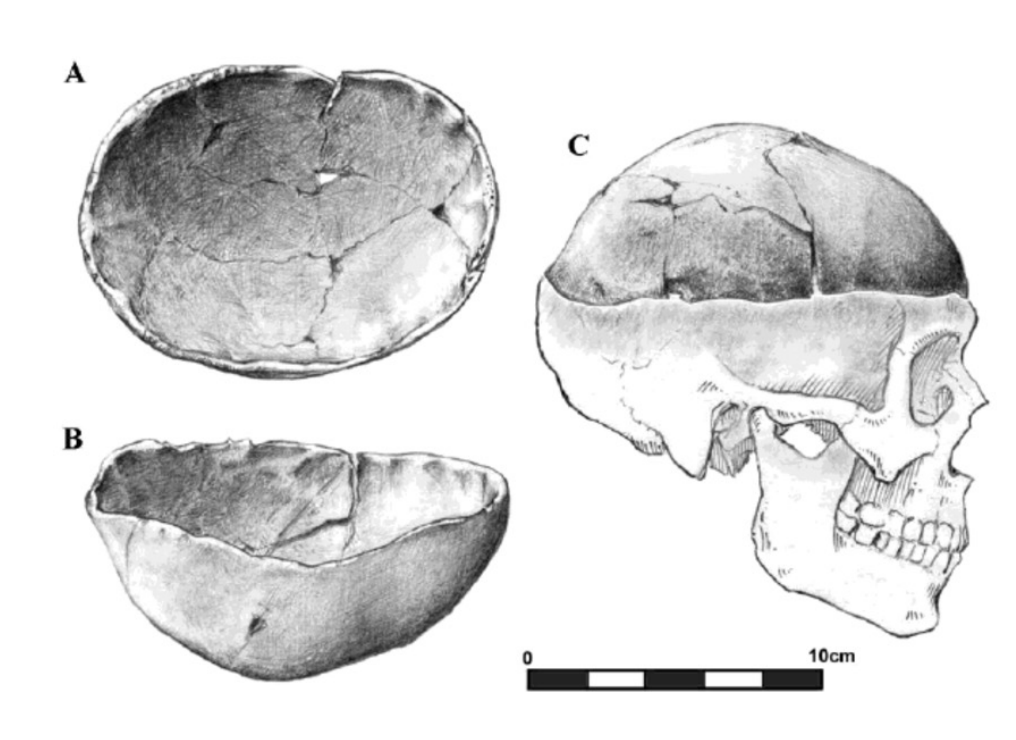
Calotte
The calvaria without the base

Splanchnocranium
The facial skeleton

Neurocranium
The braincase
Frontal
Top of the forehead to the top of the eye orbits

Frontal bosses
Feature of the Frontal Bone.

Frontal Squama
The forehead. Feature of the Frontal Bone.

Horizontal Portion
Tops of the eye orbits. Feature of the Frontal Bone.


Temporal line
Where the temporal muscle attaches. Attachment on Frontal and Parietal bones. Feature of the Frontal Bone.

Supraciliary Arches
The “Brow” ridge. Area of bone over the eye orbit. Feature of the Frontal Bone.
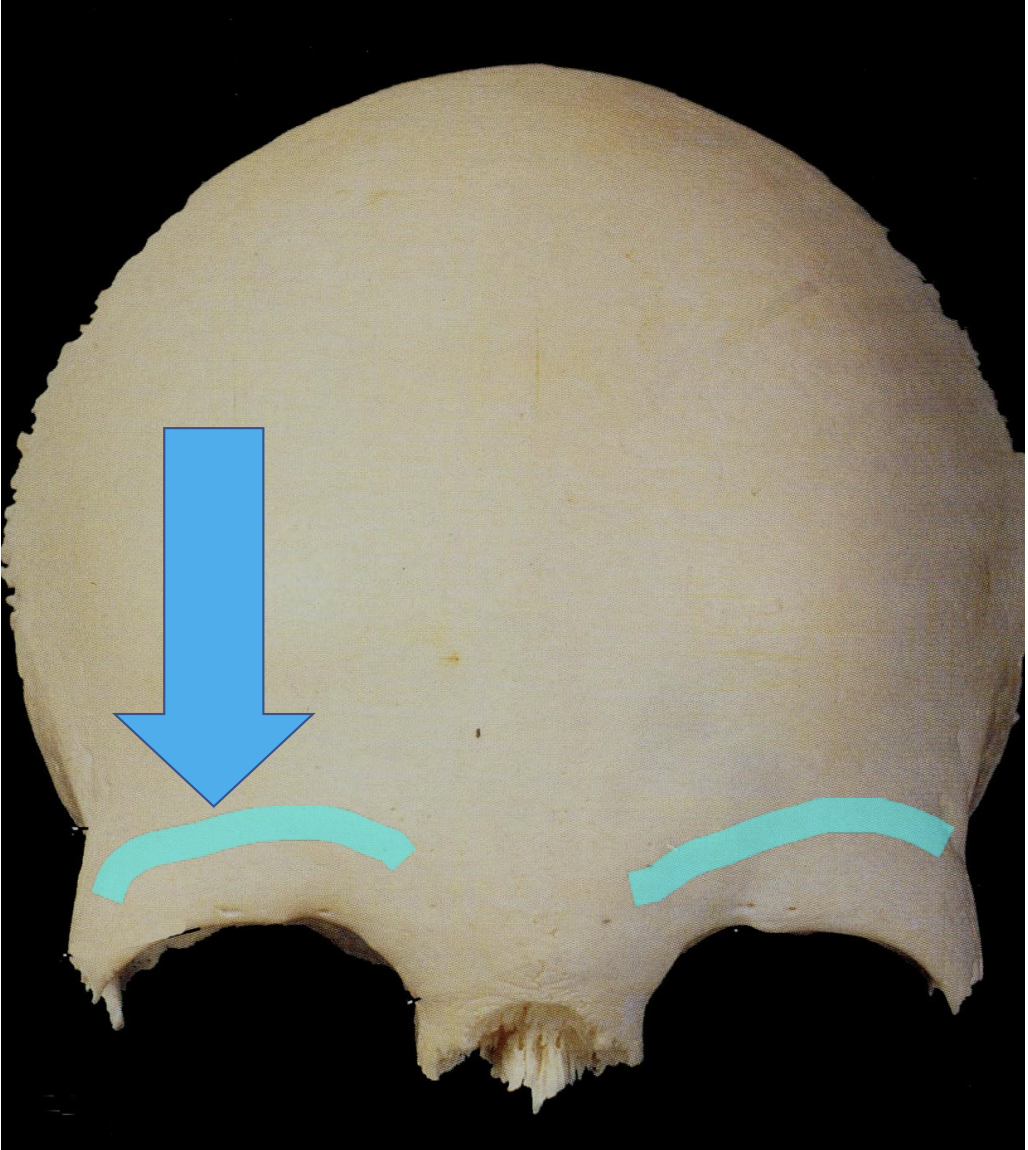
Supraorbital margin
Feature of the Frontal Bone.


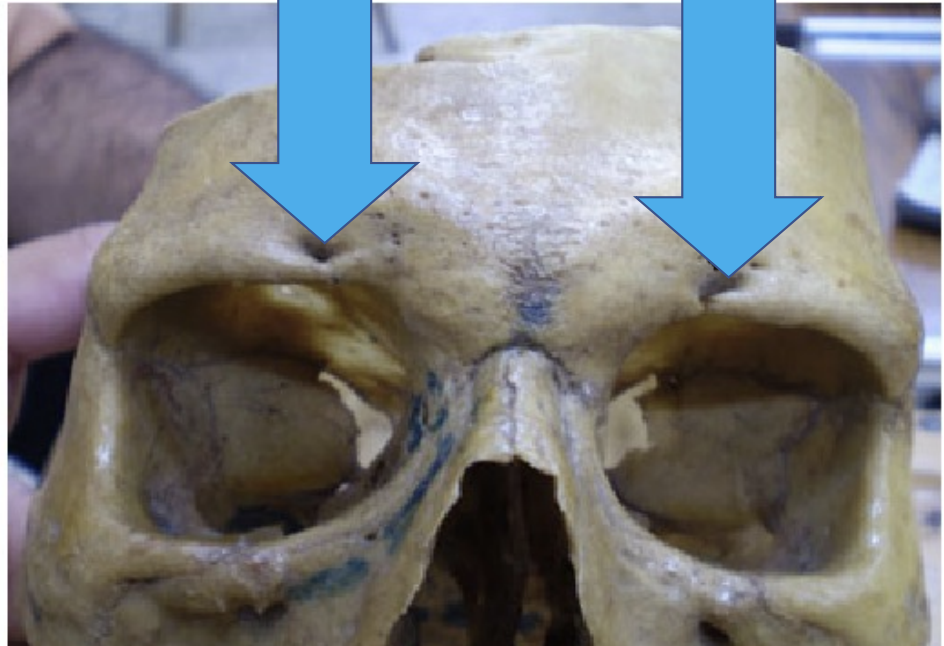
Supraorbital Foramen or Notch
Can have a hole or just a notch. Feature of the Frontal Bone.
Metopic Suture
Bones articulate along interlocking joints called sutures. Only retained in some individuals. Feature of the Frontal Bone.

Sagittal Sulcus
On the inside of the braincase. Feature of the Frontal Bone.


Frontal Crest
Helps hold the brain in place. On the inside of the braincase, closest to the forehead. Feature of the Frontal Bone.

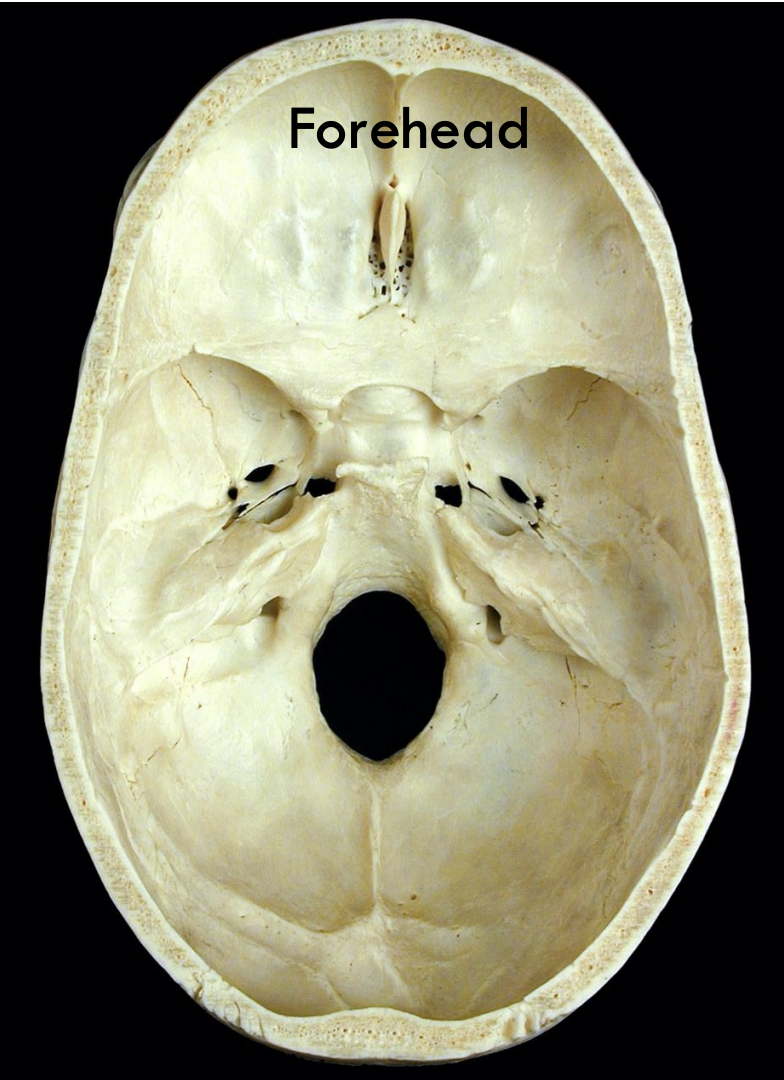
Foramen Cecum
A hole always present on the Frontal Crest. Feature of the Frontal Bone.


Frontal Sinus
Can only see if the skull is cut in half down the middle. Feature of the Frontal Bone.

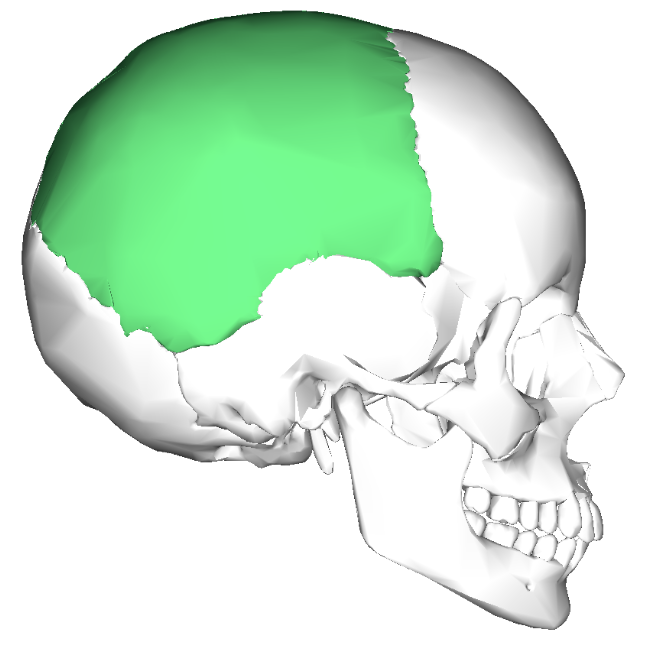
Parietal
There is a left and a right, which make up the upper braincase.
Frontal Angle
Towards the forehead. The most 90 degree angle on the Parietal. Feature of the Parietal Bones.

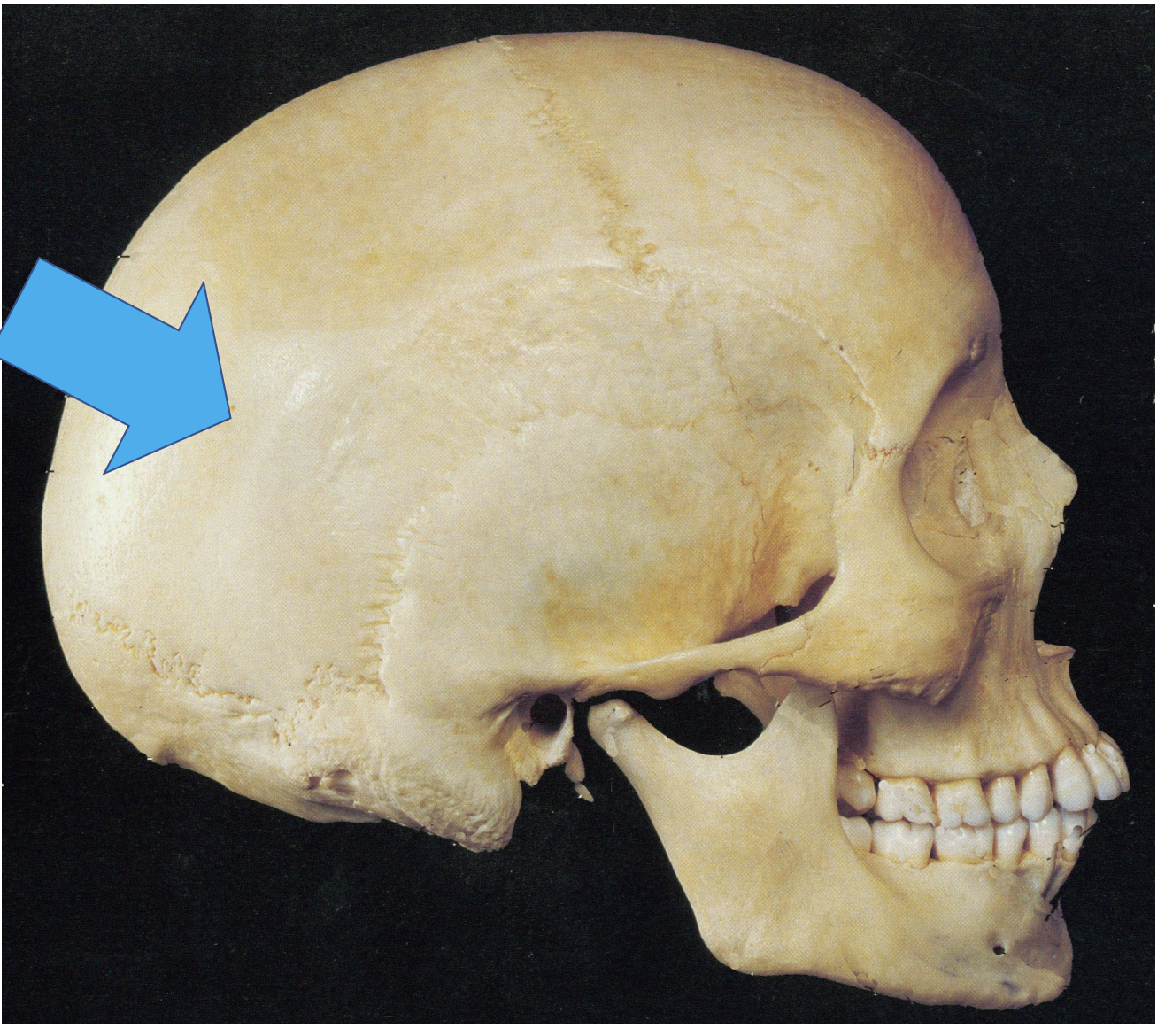
Parietal Bosses
A growth point. Pointy, and in the center of the Parietal. Feature of the Parietal Bones.
Parietal Foramen
Feature of the Parietal Bones.

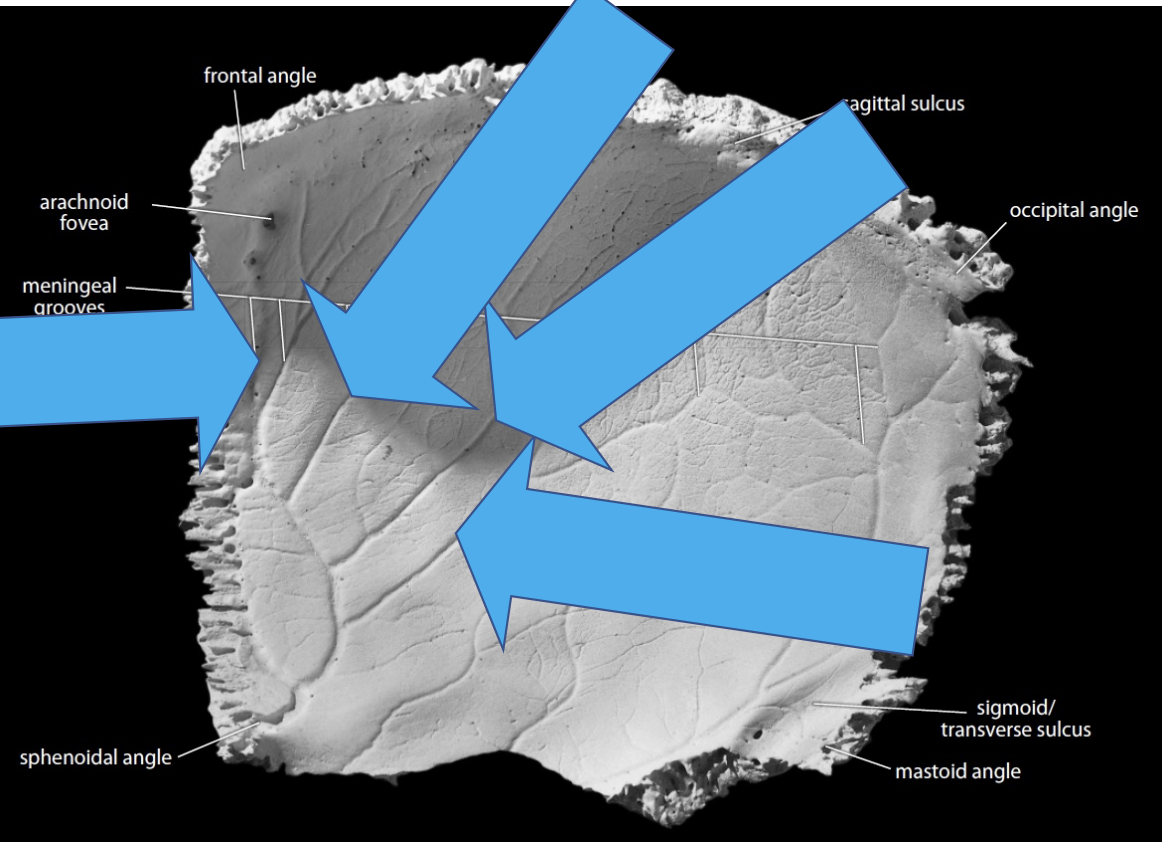
Middle meningeal grooves
All grooves point towards the back of the head, and somewhat the Frontal Angle. Feature of the Parietal Bones.
Arachnoid foveae
A notch. Feature of the Parietal Bones.


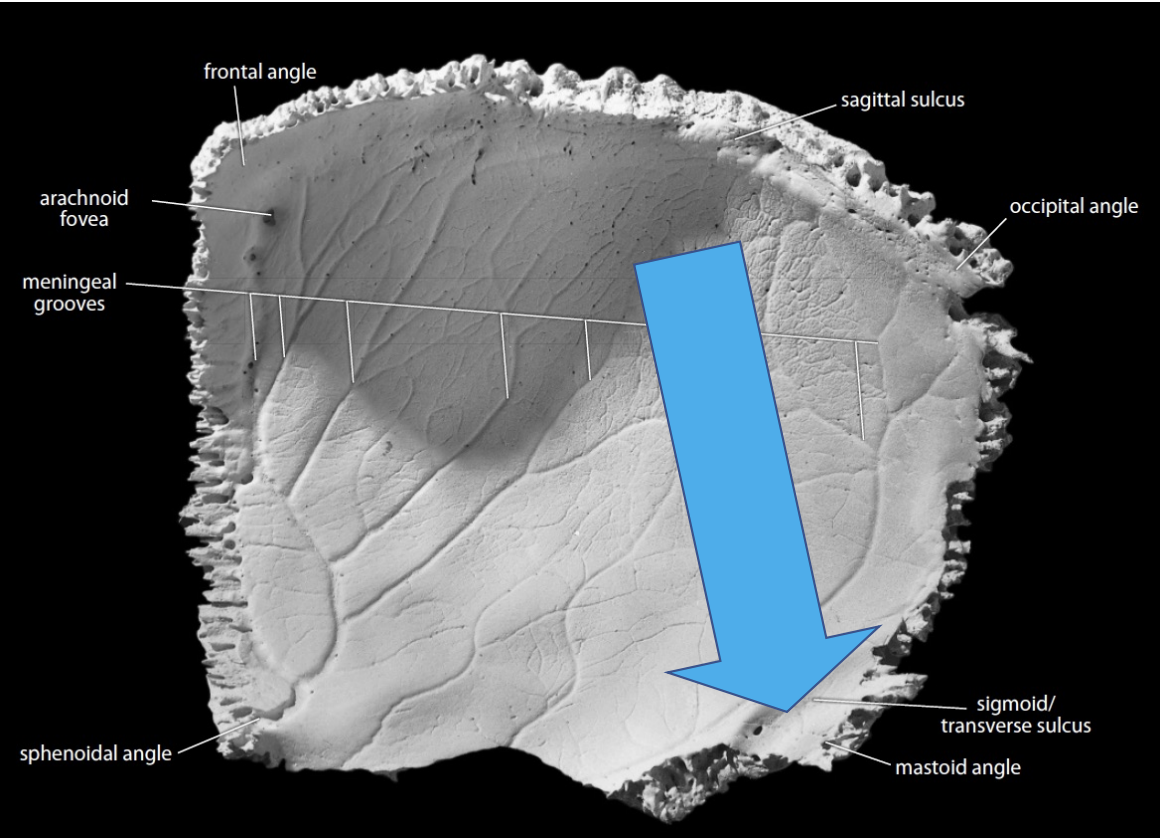
Sigmoid Sulcus
Directly diagonal from the Frontal Angle. The majority of it is on the temporal bone. Feature of the Parietal Bones.
Temporal
The bottom sides of the braincase, including the ear.

Squama
Feature of the Temporal Bone.

Petrous Portion
Feature of the Temporal Bone.

External Auditory Meatus
The “Ear Hole.” Feature of the Temporal Bone.

Internal Auditory Canal
Feature of the Temporal Bone.

Suprameatal crest
Right above the meatus. Feature of the Temporal Bone.
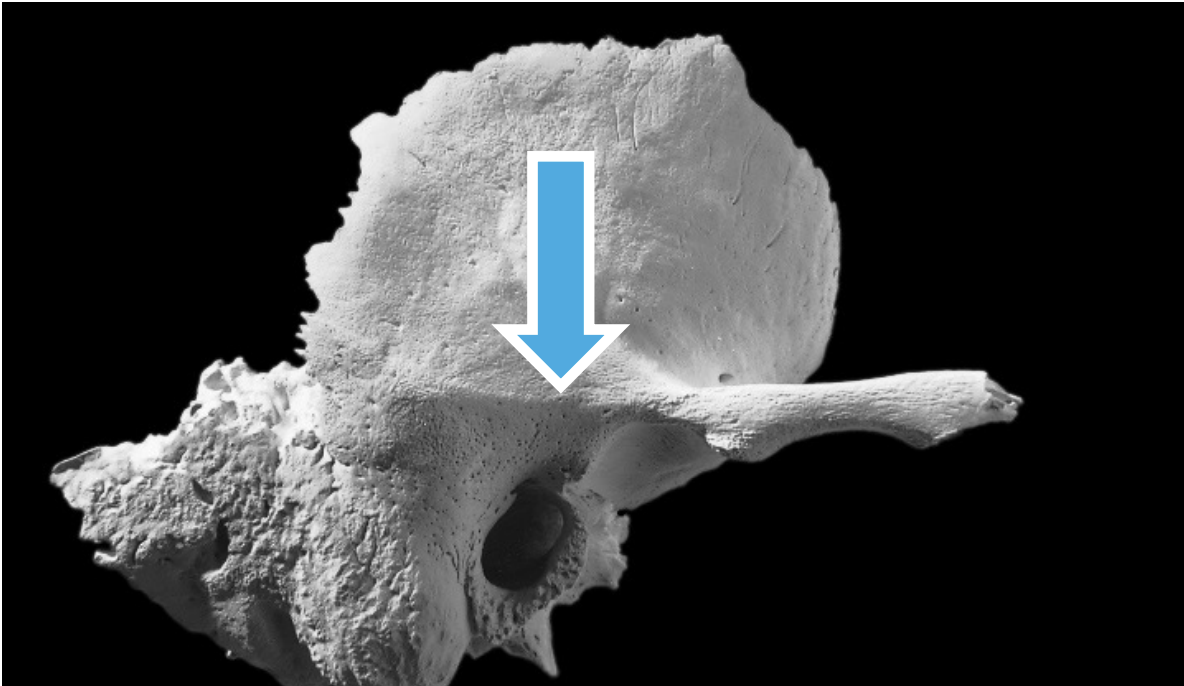
Supra-mastoid Crest
Right above the mastoid process. Feature of the Temporal Bone.

Parietal Notch
Feature of the Temporal Bone.

Mastoid Process
Feature of the Temporal Bone.

Styloid Process
Feature of the Temporal Bone.
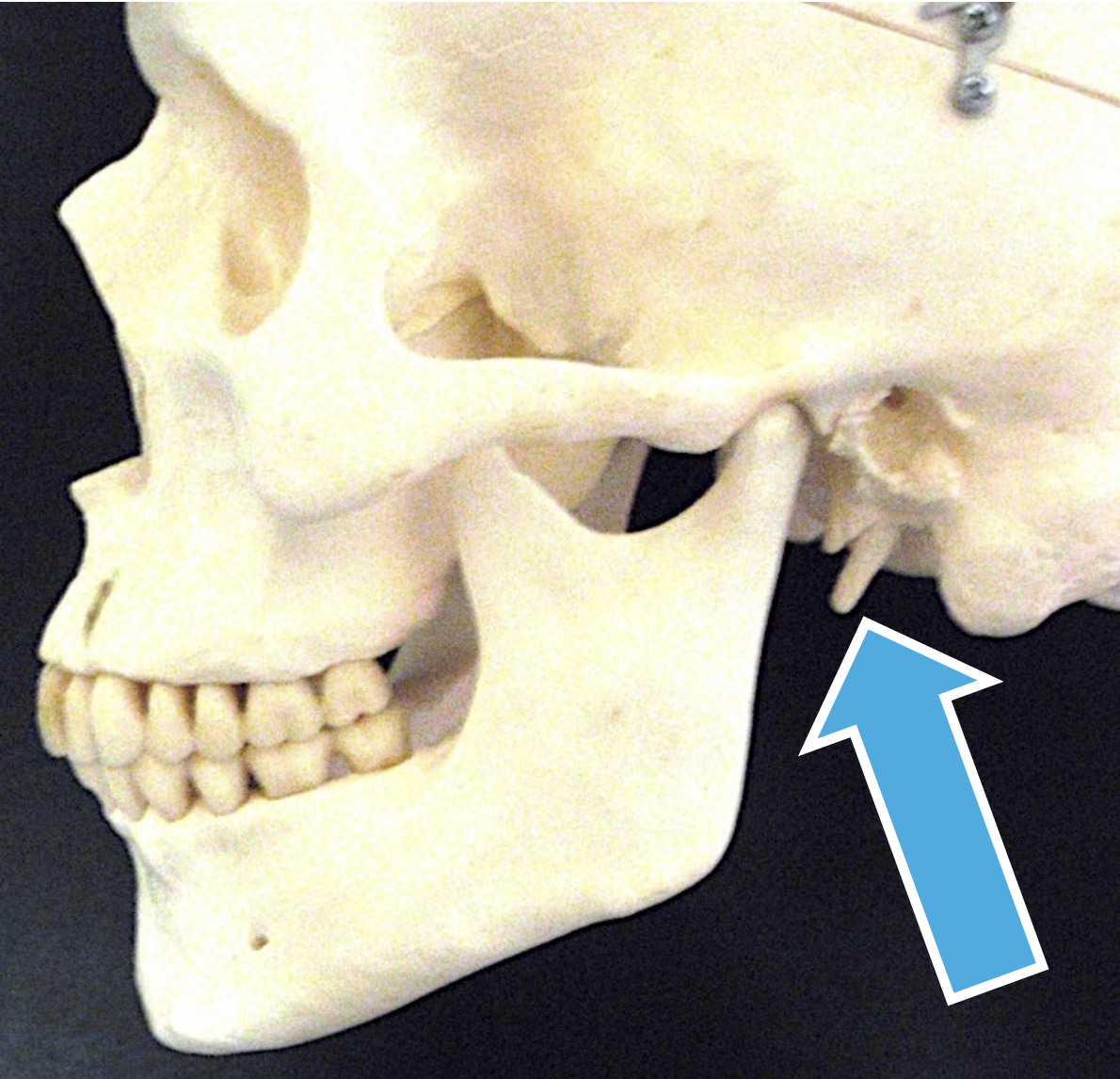
Stylo-mastoid Foramen
Feature of the Temporal Bone.

Jugular Fossa
“Divet.” Feature of the Temporal Bone.

Carotid Canal
Feature of the Temporal Bone.

Zygomatic Process
Feature of the Temporal Bone.

Mandibular Fossa
Connects the Temporomandibular Joint of the lower jaw. Feature of the Temporal Bone.

Occipital

Foramen magnum
Feature of the Occipital Bone.

Squamous Portion
Cranial vault. Feature of the Occipital Bone.


External Occipital Protuberance
Feature of the Occipital Bone.

External occipital crest
Feature of the Occipital Bone.

Basilar portion
Feature of the Occipital Bone.

Condyles
Feature of the Occipital Bone.

Condylar fossa
Divots next to the condyles. Feature of the Occipital Bone.
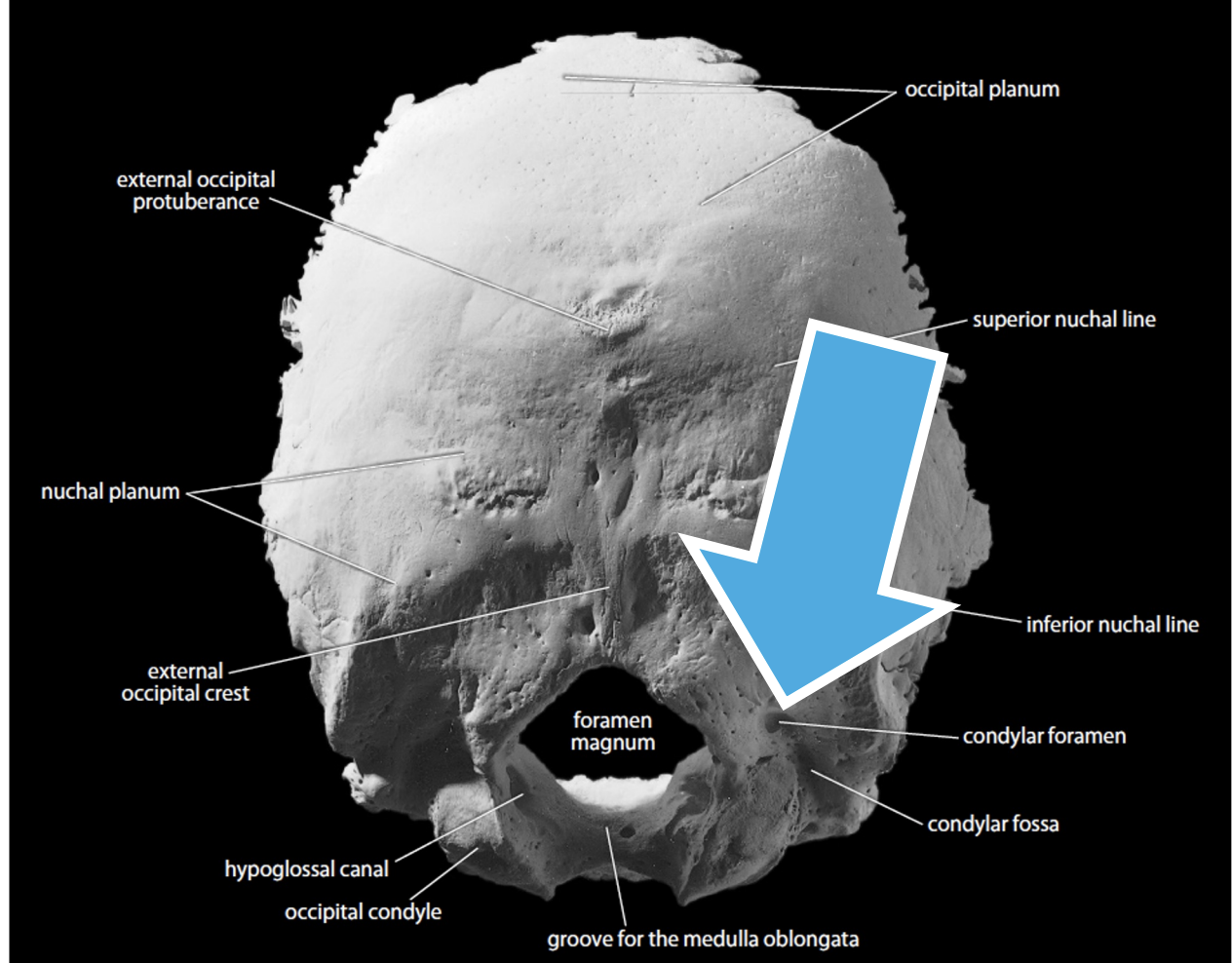
Condylar foramen
Inside Condylar Fossa. Feature of the Occipital Bone.
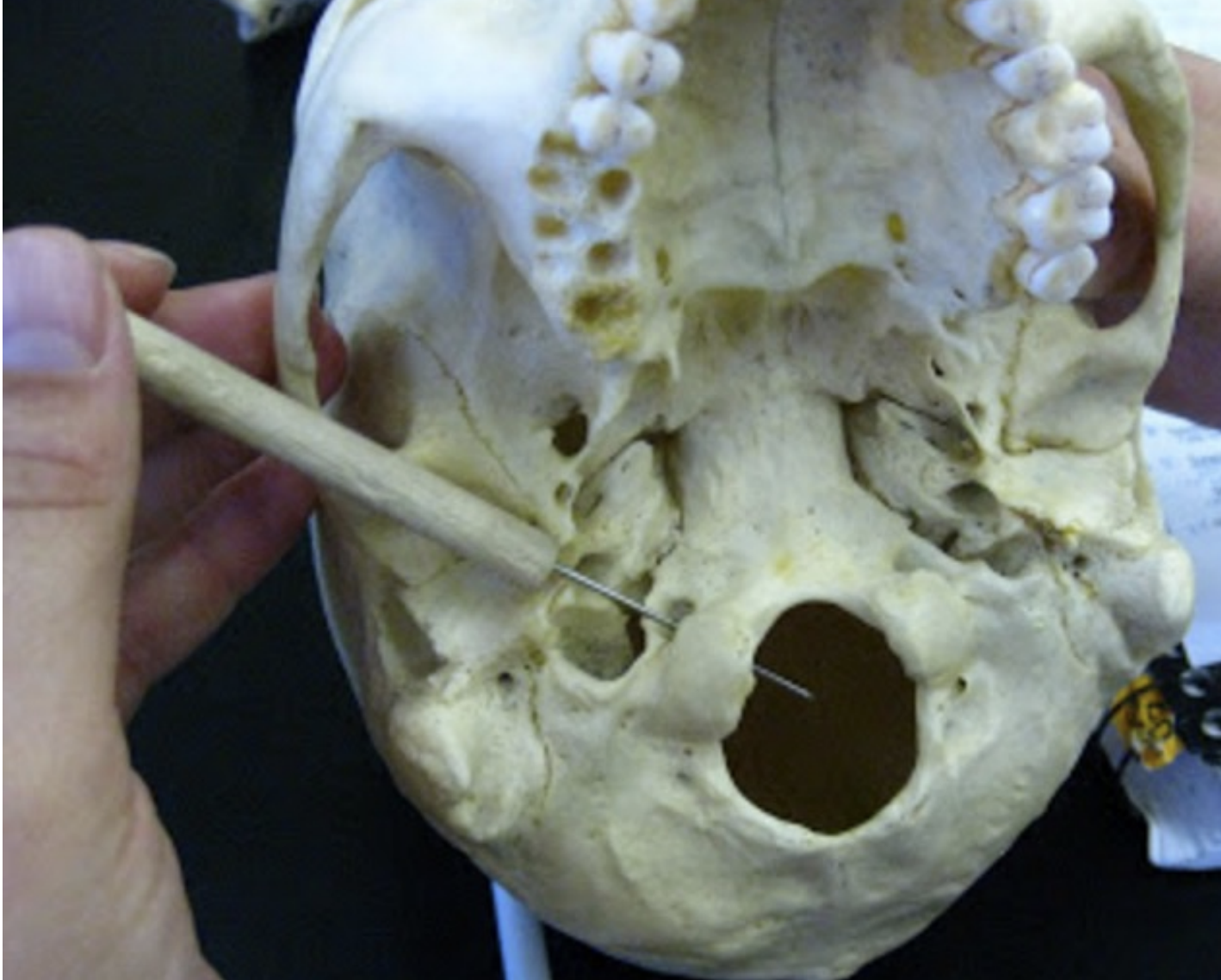
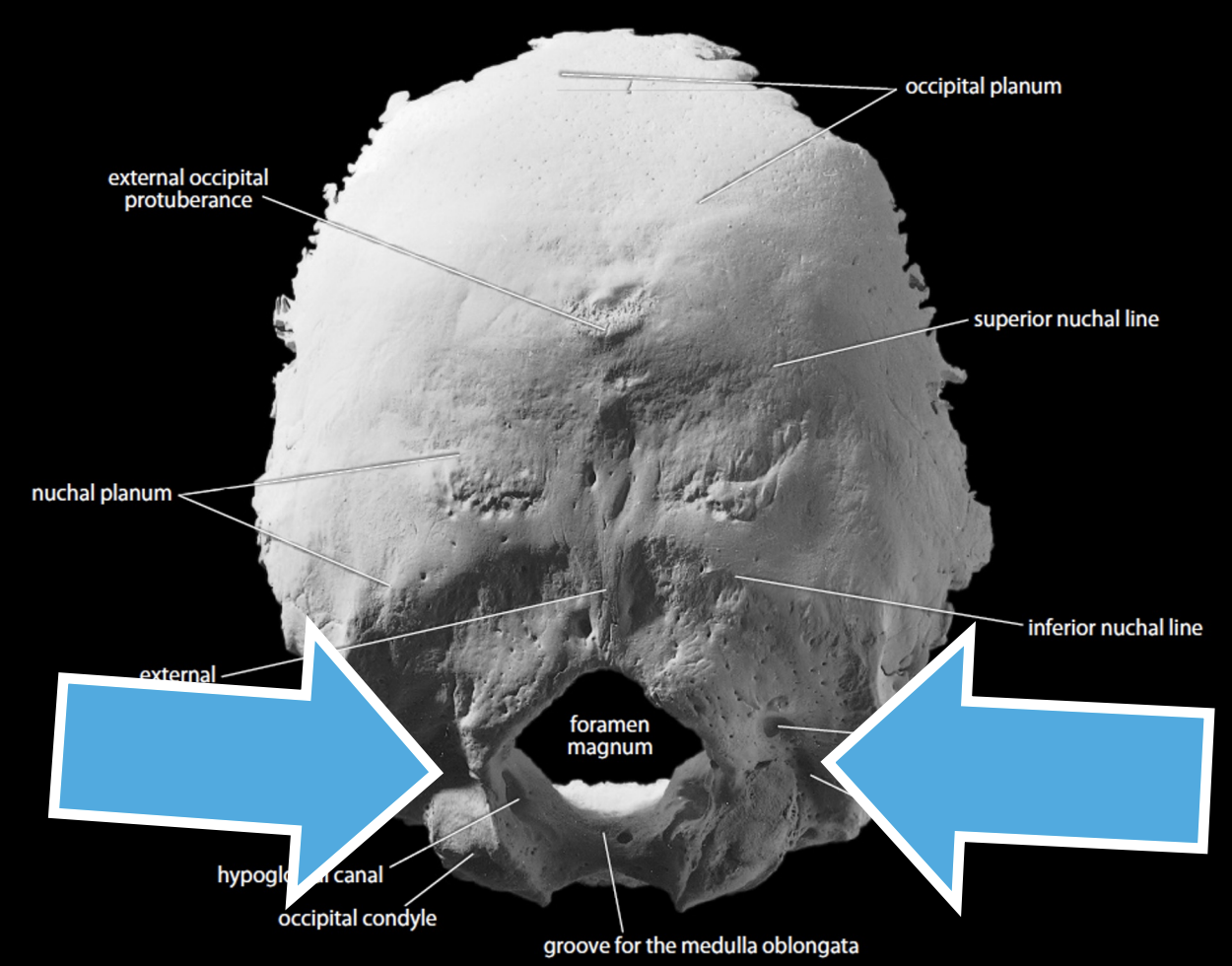
Hypoglossal canal
Hole under condyles. Feature of the Occipital Bone.

Jugular notch
Feature of the Occipital Bone.

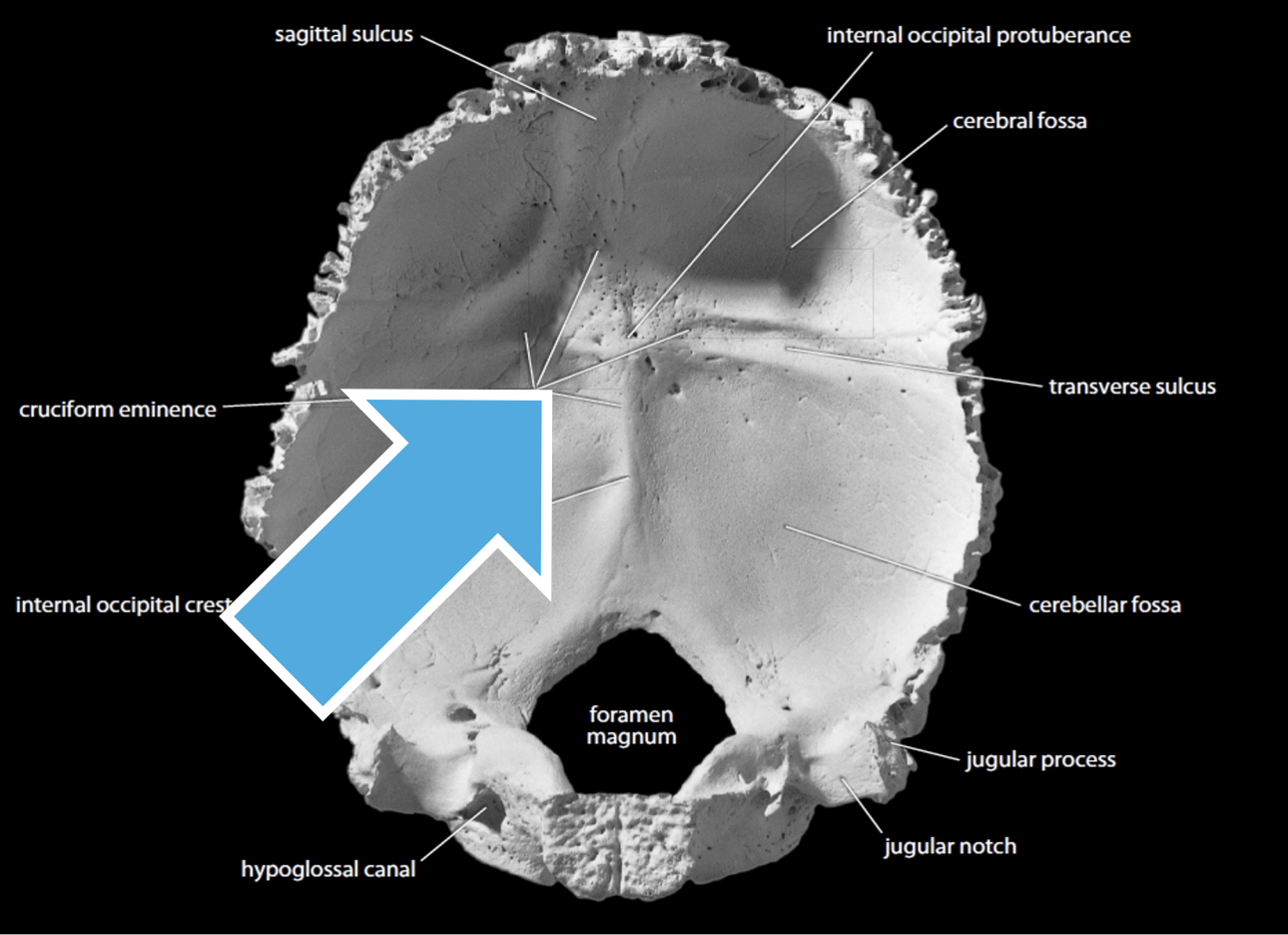
Cruciform Eminence
Feature of the Occipital Bone.
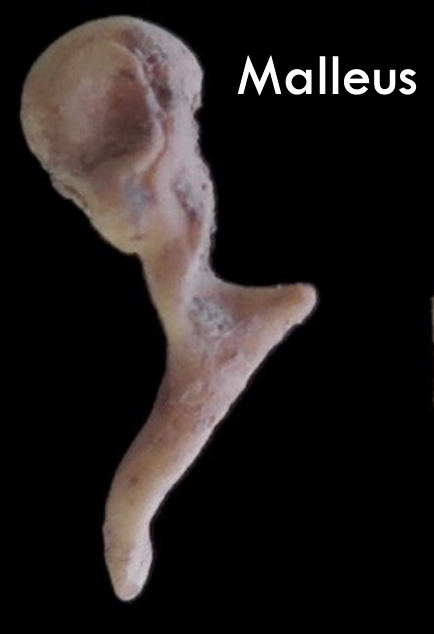
Malleus
“Hammer” one of three ear ossicles
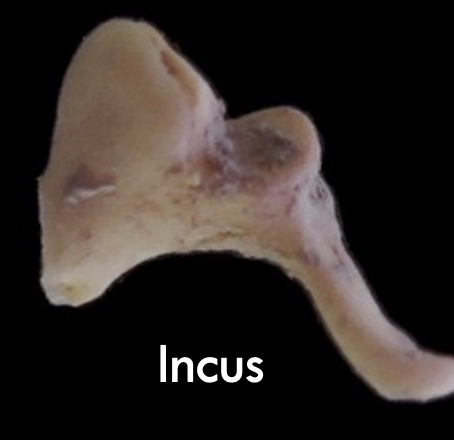
Incus
“Anvil” one of three ear ossicles
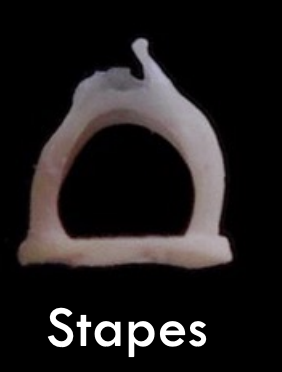
Stapes
“Stirrup” one of three ear ossicles
Maxilla
Facial skeleton

Alveolar process
Area of the maxilla that holds the teeth. Feature of the Maxilla Bone.

Zygomatic process
Area of the maxilla that articulates with the zygomatic bone. Feature of the Maxilla Bone.

Infraorbital foramen
Feature of the Maxilla Bone.

Anterior Nasal Spine
Feature of the Maxilla Bone.

Maxillary Sinus
Feature of the Maxilla Bone.

Frontal Process
Feature of the Maxilla Bone.

Palatine Process
Feature of the Maxilla Bone.
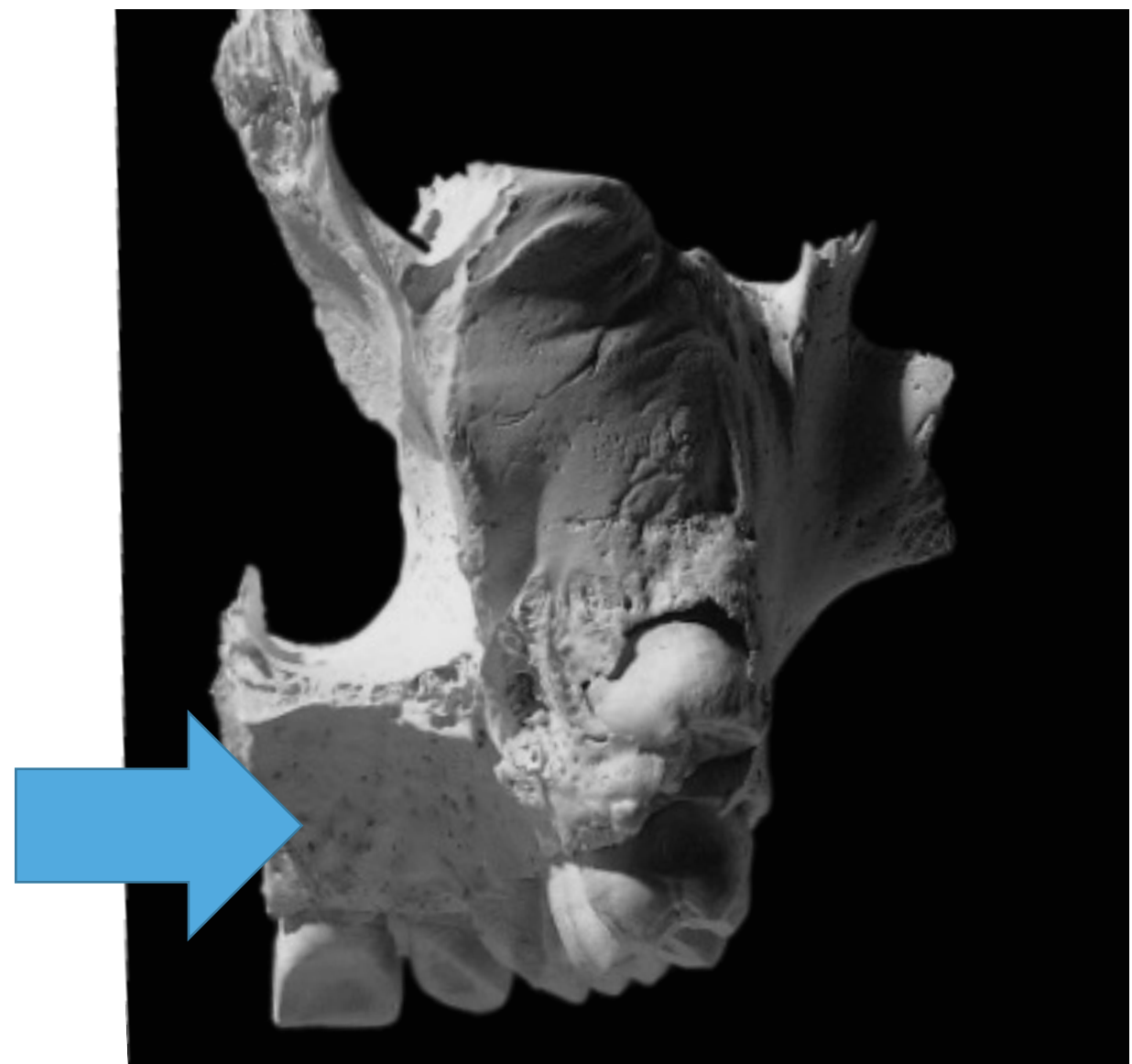
Incisive Foramen
Feature of the Maxilla Bone.

Palatine

Horizontal Process
Attaches to the palette. Feature of the Palatine Bone.

Greater Palatine Foramen
Feature of the Palatine Bone.

Lesser Palatine Foramen
Feature of the Palatine Bone.

Posterior Nasal Spine
Feature of the Palatine Bone.

Vomer

Wing
Feature of the Vomer

Perpendicular plate
Feature of the Vomer

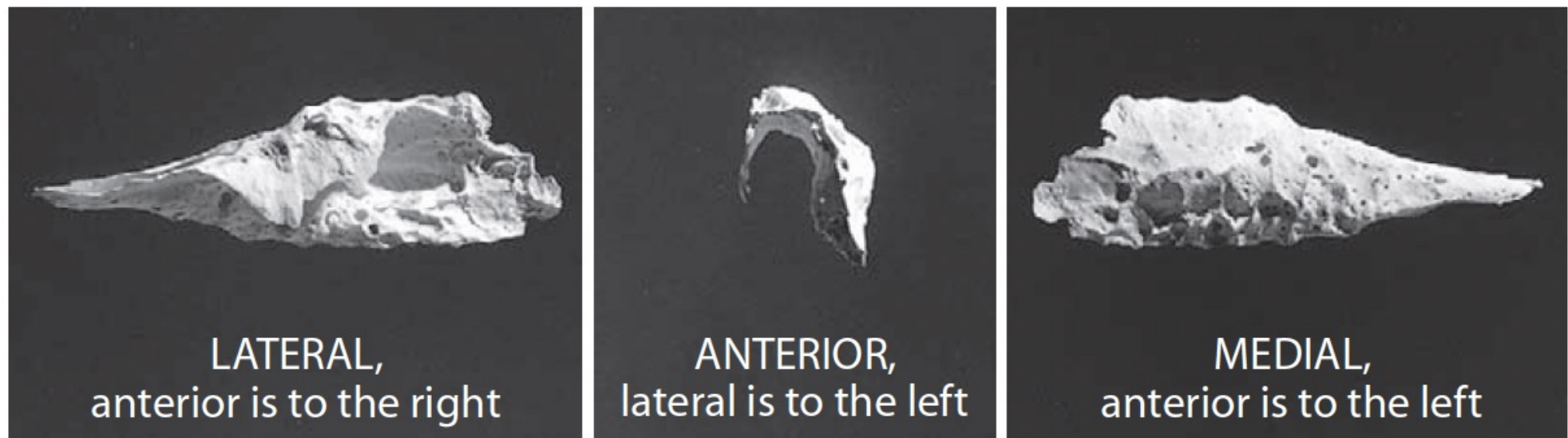
Inferior Nasal Concha

Ethmoid

Cribriform Plate
Feature of the Ethmoid Bone

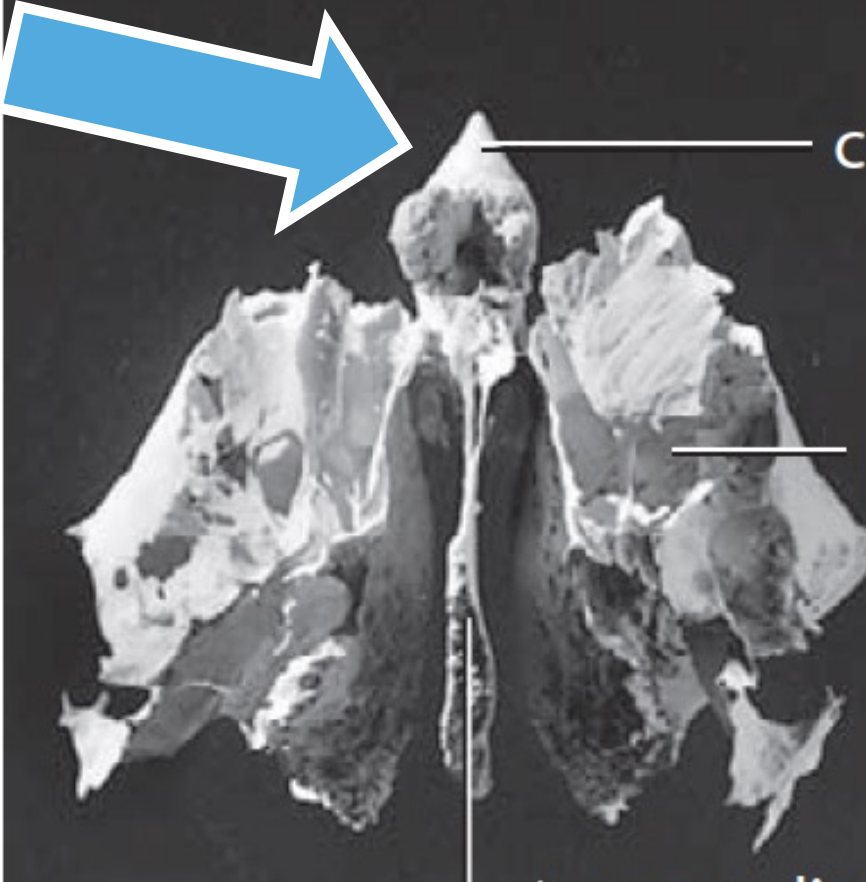
Crista Galli
Feature of the Ethmoid Bone
Lacrimal
Bone the tear duct is connected to

Posterior Lacrimal Crest
Feature of the Lacrimal Bone

Nasals

Nasal Foramen
Feature of the Nasal Bones

Zygomatic

Frontal Process
Looks like an anchor. Feature of the Zygomatic bone.
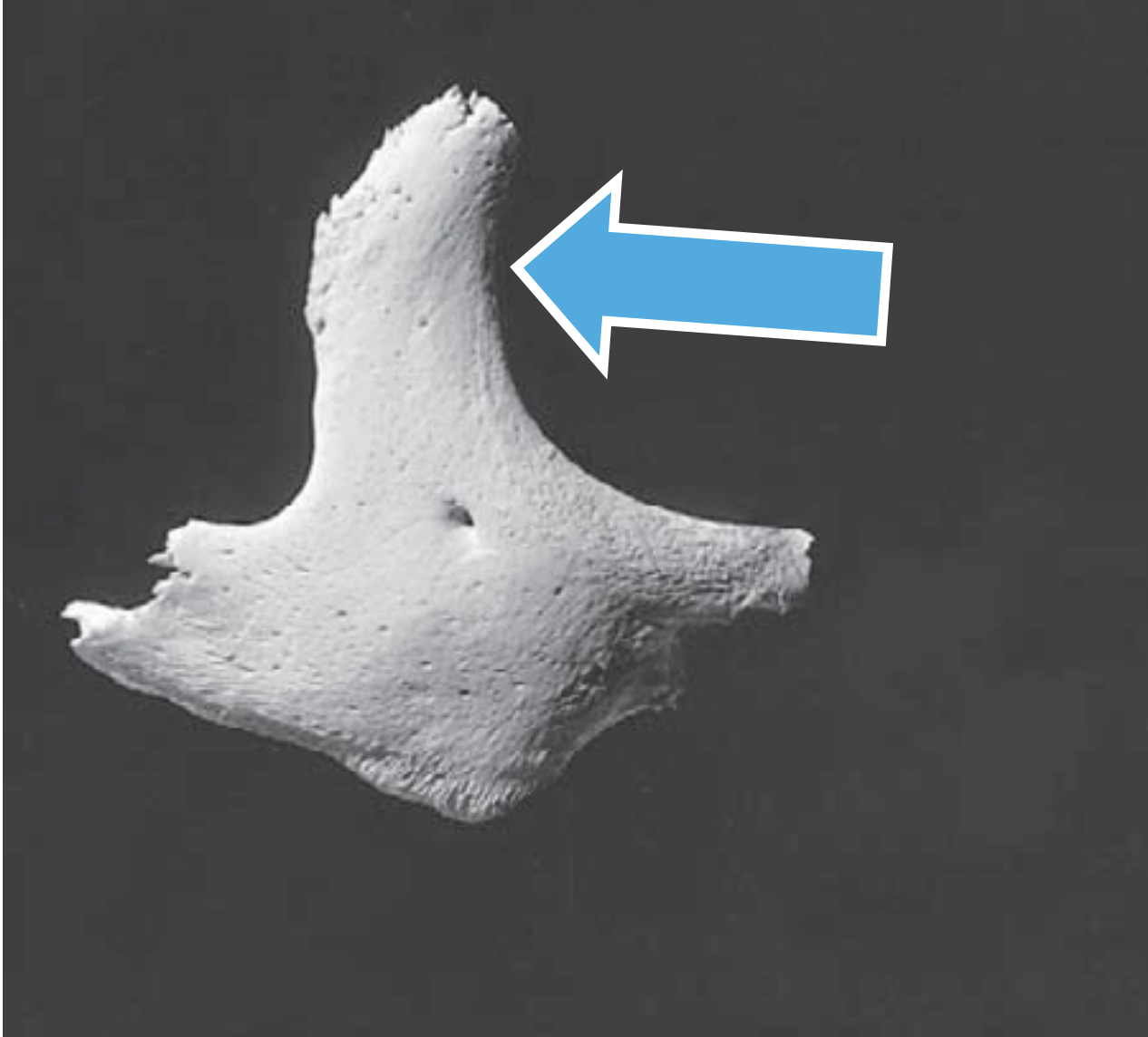
Temporal Process
Feature of the Zygomatic Bone.

Maxillary Process
Feature of the Zygomatic Bone.
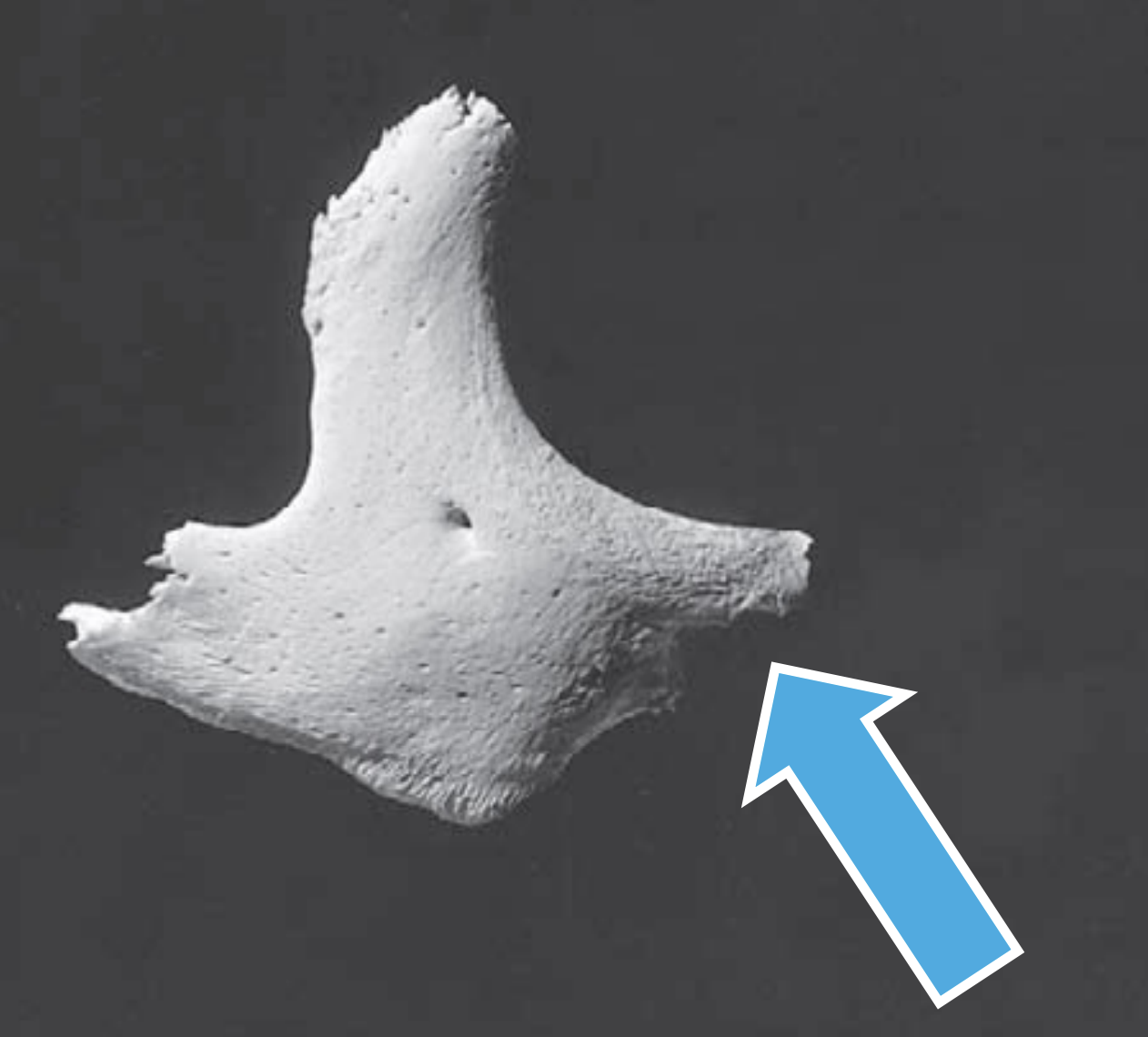
Zygomaticofacial Foramen
Feature of the Zygomatic Bone.

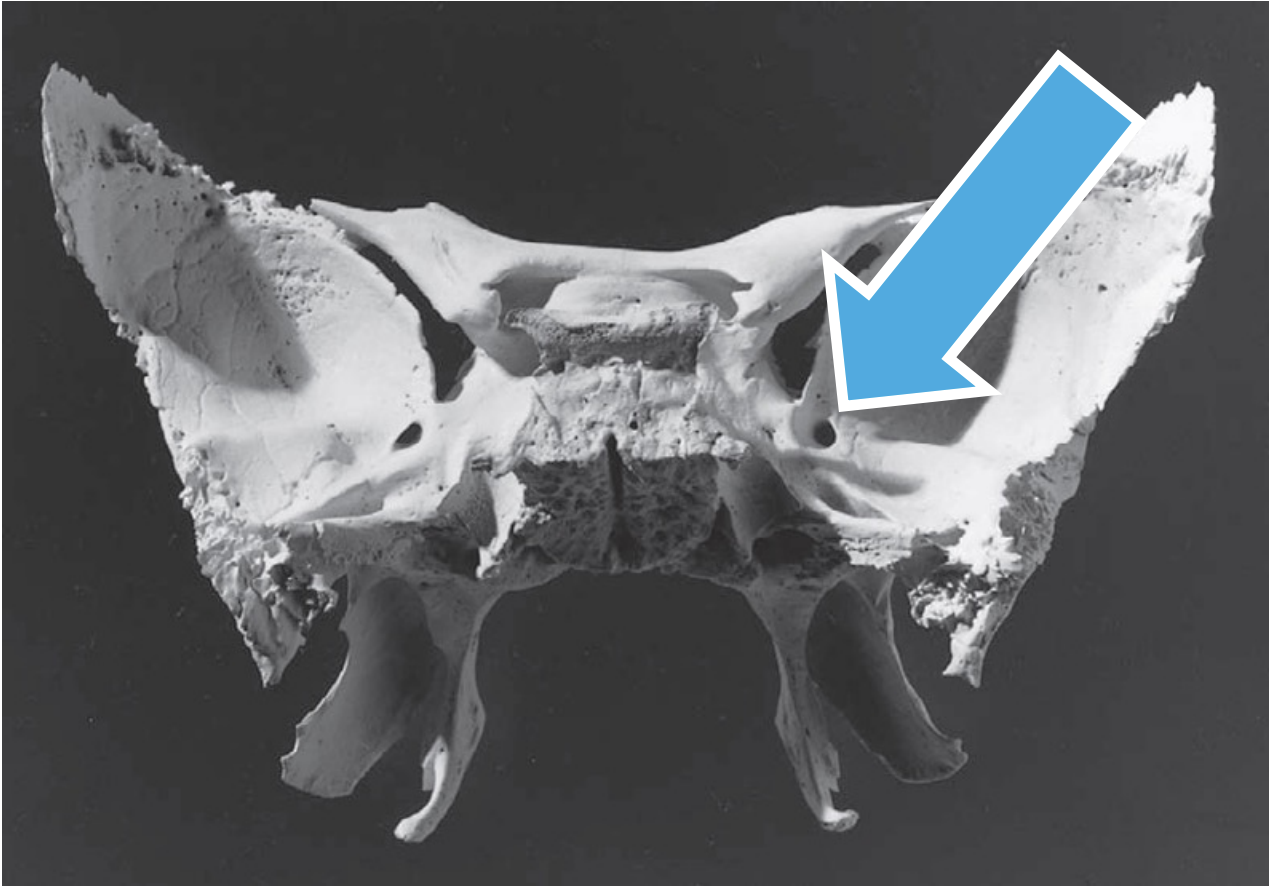
Sphenoid

Optic Canal
Feature of the Sphenoid Bone.

Sella turcica
Feature of the Sphenoid Bone.
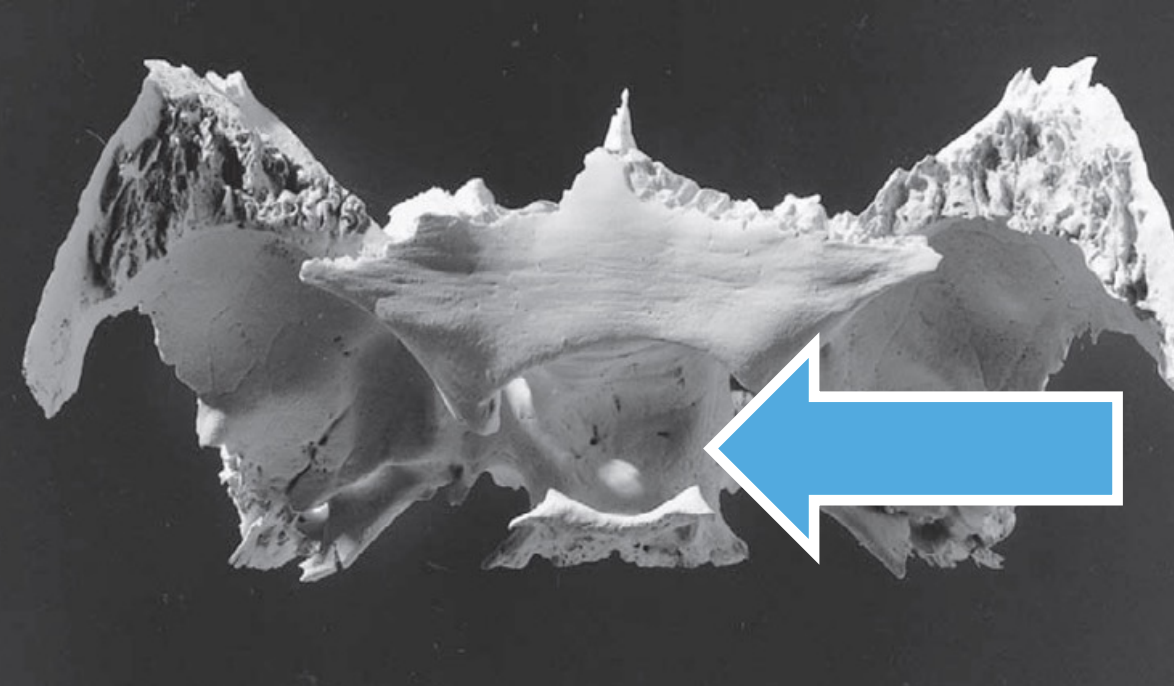
Greater Wings
Feature of the Sphenoid Bone.

Superior Orbital Fissure
In the eye orbital. Feature of the Sphenoid Bone.

Pterygoid Processes
Feature of the Sphenoid Bone.

Lesser Wings
In between Optic Canal and Superior Orbital Fissure. Feature of the Sphenoid Bone.

Foramen ovale
Feature of the Sphenoid Bone.

Foramen spinosum
Feature of the Sphenoid Bone.
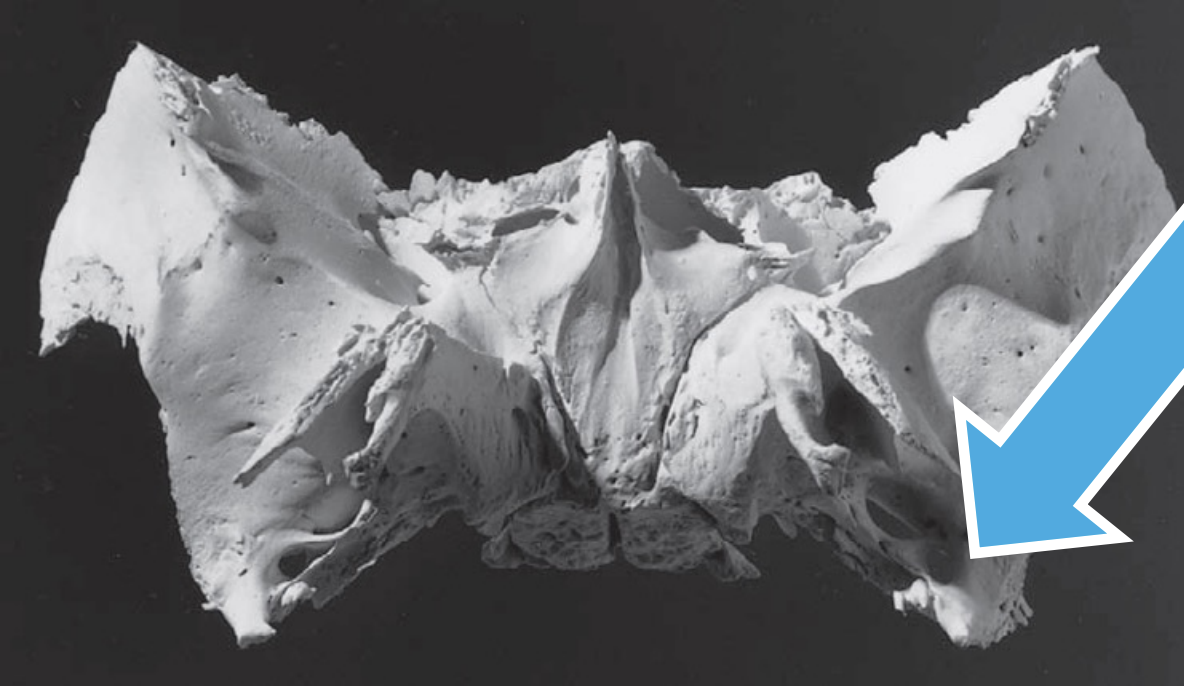
Foramen rotundum
Feature of the Sphenoid Bone.
Frontal
Bone labeled in Red
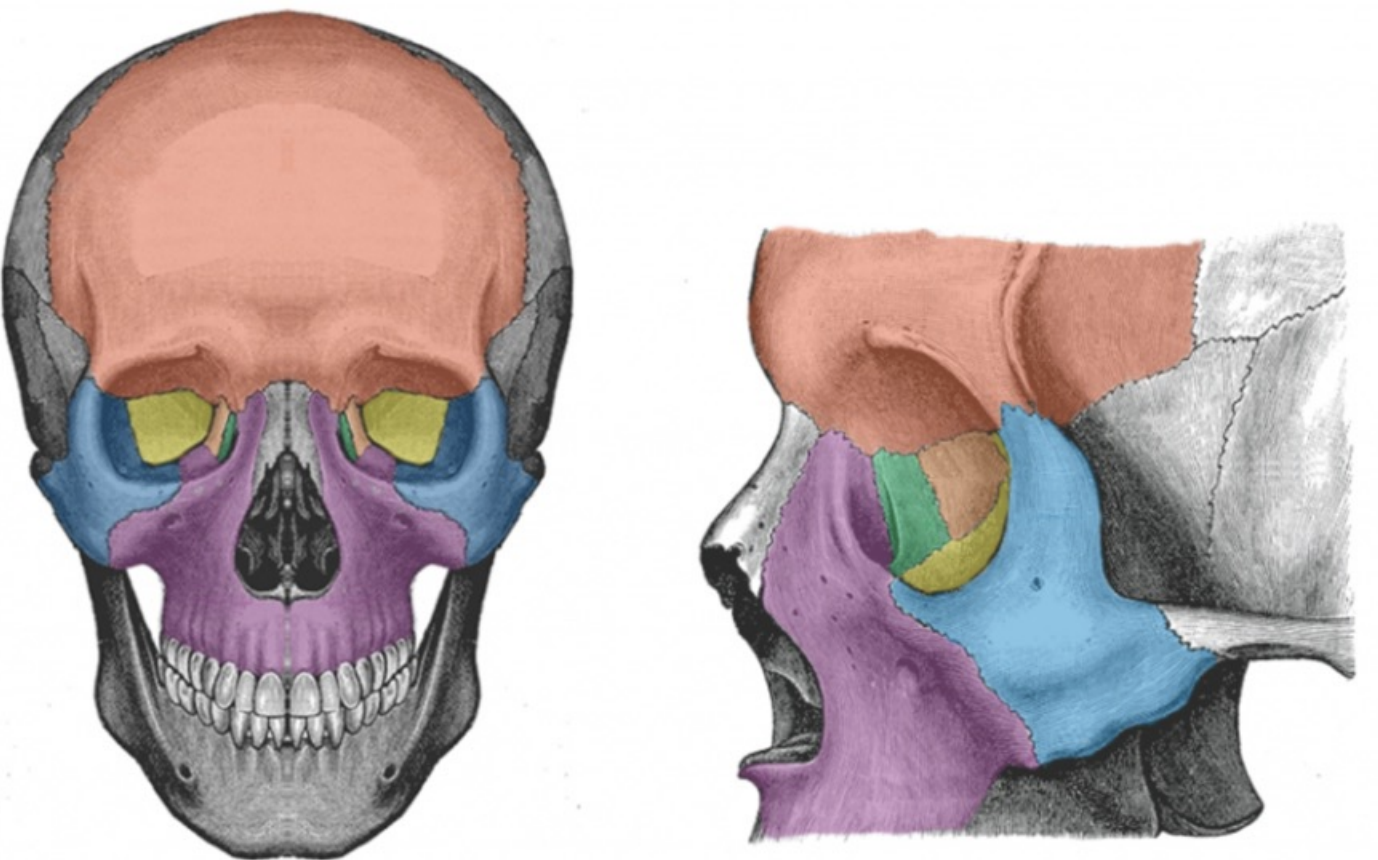
Sphenoid
Bone labeled in Yellow

Lacrimal
Bone labeled in Green
