Bio Exam 2
 Call Kai
 Learn
 Practice Test
 Spaced Repetition
 Match
 Flashcards
 Knowt Play
1/109

Earn XP
Description and Tags
End of My Life
Name | Mastery | Learn | Test | Matching | Spaced | Call with Kai | Chat |
|---|
No analytics yet
Send a link to your students to track their progress
110 Terms
Platelets
They result from the fragmentation of large cells, called megakaryocytes, in the red bone marrow
About 200 billion platelets are made per day
They function in blood clotting
Blood proteins called thrombin and fibrinogen create clots by forming fribrin threads that catch RBCs
How do platelets clot blood
Blood vessel is punctured
platelets congregrate and form a plug
platelets and damaged tissues cells released prothrombin activator, which initiates a cascade of enzymatic reactions
Fibrin threads form and trap red blood cells
Red Blood Cell Functions
Contain hemogloblin and prevents fluctutation in ph
Transports oxygen O2 from your lungs to your bodys tissues and carry carbon dioxide CO2 from body tissues back to the lungs so it can leave the body
White Blood Cells Functions
Protect your body from infections, illnesses, and foreign invaders, like bacteria, viruses, and fungi
What terminology can help you understand ABO blood typing
Antigen - A foreign substance, often a polysaccharide or a protein, that stimulates an immune response
Antibody - a protein made in response to an antigen in the body which binds specifically to that antigen
Blood Transfusion - The transfer of blood from one individual into another individual
Type A blood what they give/recieve
A+ | A+, AB+ | A+, A-, O+, O- |
A- | A+, A-, AB+, AB- | A-, O- |
Type B blood what they give/ receive
B- | B+, B-, AB+, AB- | B-, O- |
B+ | B+, AB+ | B+, B-, O+, O- |
Type AB blood what they give/recieve
AB- | AB+, AB- | AB-, A-, B-, O- |
AB+ | AB+ only | Everyone (Universal Recipient) |
Type O blood what they give/recieve
O- | Everyone (Universal Donor) | O- |
O+ | O+, A+, B+, AB+ | O+, O- |
How can you determine is blood types are compatible
First consider the antigens found on the blood transfusion donors RBC
Second, consider the antibodies found in the recipients blood
If the antibodies in recipients blood can recognize the antigens on the donors RBCs, then the blood will agglutinate-clump-and cause rejection
Where are the antigens of ABO blood
On the red blood cell membrane
Where are the antibodies for ABO blood?
Antibodies are present in the plasma
Rh Factor
An inherited protein found on the surface of red blood cells, determines whether your blood is positive or negative
What happens if an RH- mother has a RH+ baby?
Can result in hemolytic disease of the fetus, blood mixing can occur and the destruction of red blood cells causes low blood count and oxygen delivery issues

What are the main functions of the digestive system?
Ingestion - Intake of the food via mouth
Digestion - Mechanically (chewing food or churning in stomach ) or chemically (stomach acids, and enzymes) to break down food
Movement - food must be moved along the GI tract in order to fulfill all functions
Absorbtion - Movement of nutrients across the GI tract wall to be delivered to cells via the blood
Elimination - Removal of indigestible molecules

The 4 Layers that make up the GI tract (elementary tract)
Mucosa - Innermost layer that produces mucus to protect the lining and also produces mucus to protect the lining and also produces digestive enzymes
Submucosa - 2nd layer of loose connective tissue that contains blood vessels, lymphatic vessels, and nerves
Muscularis Extona- 3rd layer made of 2 layers of smooth muscle that move good along the GI tract
Serosa - Outer lining that is part of the peritone
Where does Carbohydrate digestion begin?
In the mouth
Where does Protein digestion begin?
In the stomach
Where does Lipid digestion begin?
In the small intestine
Accessory Organs (Not include in the digestive system)
Salivary Glands - Secrete saliva which contains digestive enzyme for carbohydrates
Liver - Major metabolic organ: processess and stores nutrients: produces bile for emulsification of fats
Galbladder - Stores bile from the liver: sends it to the small intestine
Pancreas - Produces pancreatic juice: contains digestive enzymes, and sends it to the small intestine: produces insulin and secretes it into the blood after eating
Digestive Tract Organs
Mouth - Teeth chew food: tongue tastes and pushes food for chewing and swallowing
Pharynx - Passageway where food is swallowed
Esophagus - Passageway where peristalis pushes food to the stomach
Stomach - Secretes acid and digestive enzymes for protein: churns, mixing food with secretions: and sends chyme to small intestine
Small intestine - Mixes chyme with digestive enzymes for final breakdown: absorbs nutrient molecules into the body: secretes digestive hormones into the blood. Largest part of elementary track, and where all absorbtion takes place
Large intestine - Absorbs water and salt to form feces
Rectum - Stores and regulates elimination of feces
Anus
What is the pathway that food follows?
mouth → pharynx → esophogus → stomach → small intestine → large intestine → rectum → anus

Mouth
Three pairs that salivary glands, are the Parotid, Sublingual, Submandibular. It secretes salivary amylase that begins carbohydrate digestion.
Tonsils at the back of the mouth are lymphatic tissues, important in fighting disease.
The mouth contains teeth that begins the mechanical breakdown of food.
The tongue is covered in taste buds and also assists in the mechanical breakdown and movement of food.
The tongue forms a bolus (mass of chewed food) and moves it towards the pharynx
The Pharynx and Esophagus
Pharynx - Is a cavity between the mouth and esophagus that serves as a passageway for food (and air)
Esophagus - Is a long, muscular tube that carries food to the stomach
How do we swallow food?
Voluntary Phase - When food is being swallowed from the mouth into the pharynx, this is a voluntary act
Involuntary Phase - Once the food is in the pharynx, swallowing becomes a reflex. The epiglottis covers the voice box to make sure the food is routed into the esophagus. Food moves down the esophagus through peristalsis (rhythmic contraction)

Stomach
Functions to store food, start digestion of proteins, and control movement of chyme into the small intestine
The stomach is J-shaped organ with a thick wall.
There are 3 layers of muscle in the muscularis and layer of the stomach wall to help in mechanical digestion and allow it to stretch.
The mucosa layer has deep folds calle rugae, and gastric pits that into gastric glands that secrete gastric juice.

The small intestine
Averages 6m (18 ft) in length.
Enzymes are secreted by the pancreas into the small intestine digest carbohydrates, proteins, fats, and nucleic acids.
Biles (produced in the liver) is secreted by the gallbladder into the small intestine to emulsify fats.
The absorption of digested food depends on the large surface area created by numerous villi (finger-like projections) and microvilli
Amino acids and sugars enter the capillaries while fatty acids and glycerol enter the lacteal (small lymph vessels)
Caecum and Appendix
Caecum - A large, pouch-like blind sac that forms the very first segment of the large intestine. Receives chyme and mixes with bacteria to begin feces formation
Appendix - A thin, worm-like, blind-ended tube that hangs directly off the base of the cecum.Acts as a "safe house" for beneficial gut bacteria to reboot the digestive tract after illness, and aids in mucosal immunity.

Carbohydrate Digestion
Begins in mouth
Polysaccharides, simple sugars
Carbohydrate→pancreatic amylase → Maltase (disaccharides) → Glucose (monosaccharides)→blood capillary
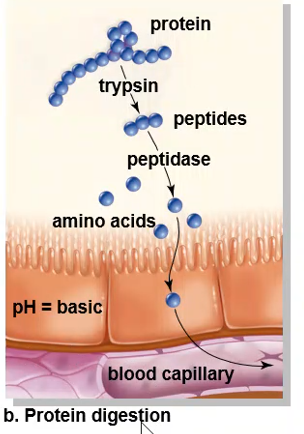
Protein Digestion
Begins in stomach (Pepsin)
Made up of a long polypeptide chain
Protein →Trypsin→peptides→peptidase→amino acids→ blood capillary
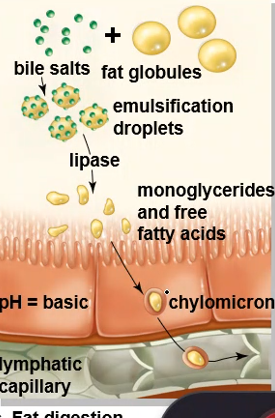
Fat Digestion
Begins in the small intestine
Bile salts + fat globule → emulsification droplets →lipase → monoglycerides and free fatty acids → chylomicron→ lymphatic capillary
Carbohydrate Digestion Results In
Salivary Amylase = Starch + H2O → Maltose
Pancreatic Amylase = Starch +H2O → Maltose
Maltase = Maltose + H2O → glucose + glucose
Lactase = Lactose + H2O → glucose + galactose
Protein Digestion Results In
Peptidases = Peptide + H2O → amino acids
Pepsin = Protein + H2O → Peptides
Trypsin = Protein +H2O → Peptides
Nucleic Acid Digestion Results In
Nuclease = RNA and DNA + H2O → nucleotides
Nucleosidases = Nucelotide + H2O → base + sugar + phosphate
What do triglycerides result in
Monoglycerides and free fatty acids

Lacteal
A lymphatic capillary located in the center of each villus in the small intestine that absorb dietary lipids and fat-soluble vitamins

What structure prevents the entry of food into the windpipe
The epiglottis is the leaf-shaped flap of elastic cartilage that prevents food and liquids from entering the windpipe
Remains upright while at rest to allow breath into the lungs,
As you swallow, your larynx moves upward and forward, and the base of your tongue pushes the epiglottis backward
This movement forces the epiglottis to fold down like a lid over the entrance of the larynx (the glottis), safely directing food and liquids backward into the esophagus and stomach instead of the airway.

Rugae
A series of anatomical folds, ridges, or wrinkles in the mucous membranes of internal organs that allow for expansion, flexibility, and increased surface area.

Plicae
A fold in the membrane that protects your knee joint
Pancreas
Fish shaped spongy organ behind the stomach
Functions of the pancreas
1. Secretes enzymes into the small intestine. Trypsin digests proteins, Lipase digests fats, and Pancreatic Amylase digests carbohydrates
2. Secretes bicarbonate into the small intestine to neutralize stomach acids
3. Secretes insulin into the blood to keep the blood sugar levels under control

The Liver
Is a large metabolic organ that lies under the diaphragm and is made of 100,000 lobules.
It filters blood from the GI tract, thus acting to remove poisons and detoxify the blood.
The liver removes iron, vitamins A,D,E,K and B12 from the blood and stores them
It stores glucose as glycogen and breaks it down to help retain blood glucose levels.
Makes plasma proteins and helps regulate cholesterol levels by making bile salts

Liver and Gallbladder
Liver creates bile that is then stores in the gallbladder to be secreted into the small intestine to emulsify fats.
The liver also breaks down hemogloblin

The large intestine
Includes the cecum, colon, rectum, and anal canal
It is larger in diameter but shorter than the small intestine, the cecum has a projection known as the appendix that may play a role in fighting infections
Functions to: absorb water to prevent dehydration. absorb vitamin (B complex and K) produced by the intestinal flora.
Form and rid the body of feces through anus
Bolus
The small, rounded mass of chewed food mixed with saliva that you swallow from your mouth down the esophagus.
Chyme
The thick, soupy, semi-fluid mixture of food and stomach acids created after the stomach breaks it down.
Chyle
The milky fluid formed in the small intestine when chyme mixes with bile and digestive juices to absorb fats.
Feces
The leftover waste product that passes through the large intestine and exits the body.
The 4 Macro Molecules
Carbohydrates
Lipids
Proteins
Nucleic Acids
What is the readily avaible source of energy for us?
Glucose, is a form of glycogen broken down
Cellulose
a complex carbohydrate and organic polymer that provides structural support to plant walls
functions as an insoluble dietary fiber that aids digestion

Carbohydrates
Are sugars or polysaccharides that are digested into the simple sugars which are and important energy source.
Refined grains should be minimized in the diet because fiber and vitamins are removed (i.e. white bread, cake, and cookies.)
Complex carbohydrates are recommended as a good source of vitamins and minerals (i.e. beans, whole-grain products, nuts, and fruits)
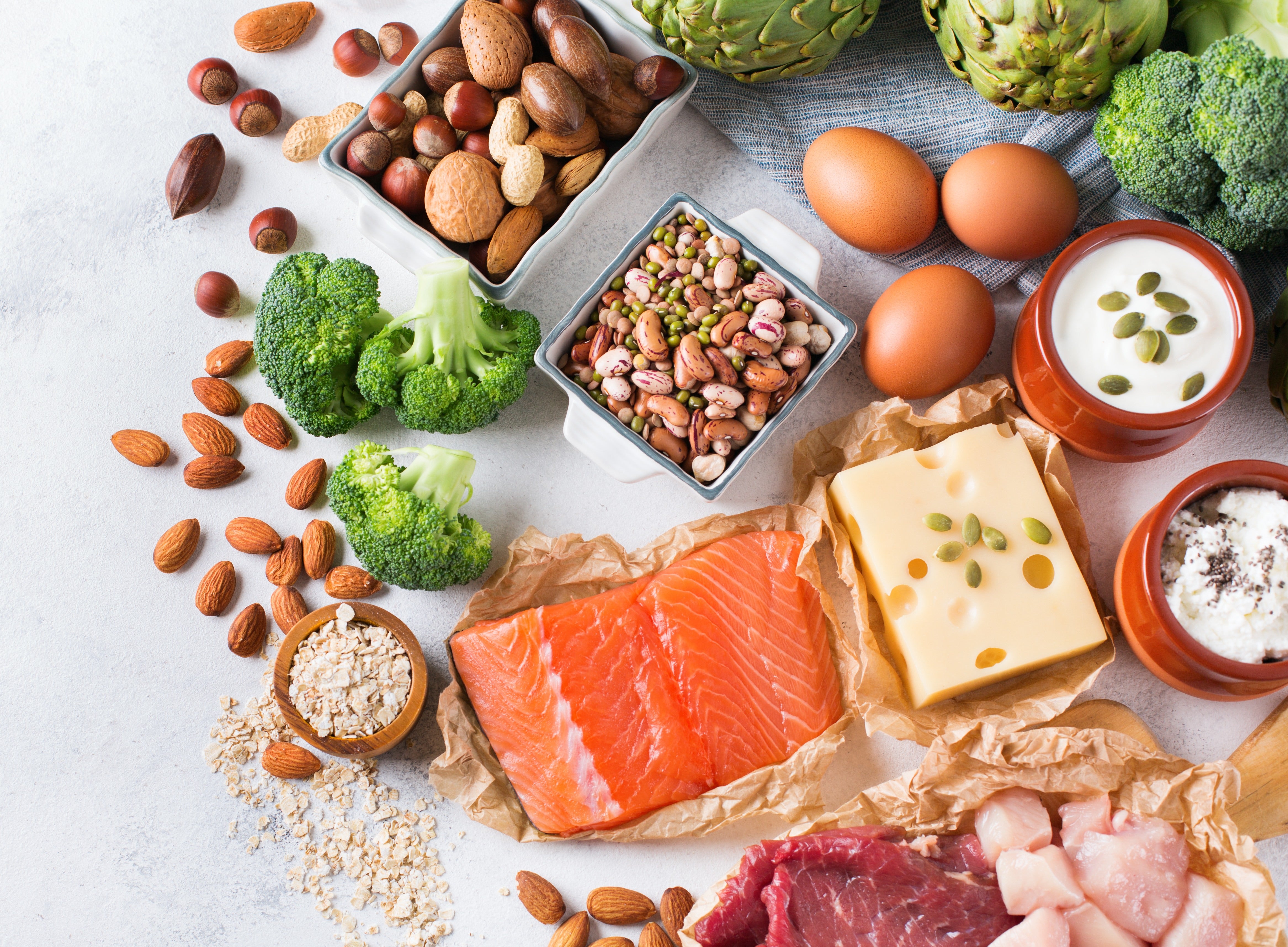
Proteins
Digested into 20 different amino acids which are used to produce cellular proteins
Essential amino acids are the 8 amino acids that must be attained through the diet
Complete proteins that have all essential amino acids are usually derived from animals such as meat and dairy.
Nonanimal sources of complete proteins are tofu, soymilk, and other processed foods from soybeans
What happens when someone is protein deficiant?
Your body begins to break down skeletal muscle, and muscle tissue to source needed amino acids

Lipids
Include fats, oil, and cholesterol.
Saturated fat (usually of animal origin) are usually solid at room temp. While unsaturated fats are usually liquid at room temp.
Essential fatty acids are ones that must be ingested; they include linoleic acid and linolenic acid (these can only be found in polyunsaturated oils such as corn and safflower)

Minerals
The body contains > 5g of each major mineral and < 5g of each trace mineral
Major minerals make up components of cells, body fluids, and tissues (i.e. calcium)
Minor minerals are components of larger molecules (i.e. iron in hemogloblin)
A varied and complete diet usually provides necessary minerals

Calcium
Needed to make bone, nerve, and impulse conduction, and muscle contraction.
1,000 mg/day are recommended to keep bones healthy early in life and 1,300 mg/day after menopausal age.
Vitamin D is needed with calcium to prevent bone loss (Osteoporosis)

Sodium
Sodium is needed for regulating water balance.
500 mg/day is the recommended amount (On average each American takes in 4,000-4,700 mg/day)
Sodium can increase hypertension in people who already have it
Fat soluable vitamins
Vitamins A, D, E, K
Good sources of Vitamin A, and D
Vitamin A - Deep yellow/orange and leafy green veggies, fruits, cheese, whole milk, butter, eggs
Vitamin D - Milk fortified with vitamin D, fish liver oil, also made in the skin when exposed to the sun
Good source of Vitamin B, and C
Vitamin B - Whole grain cereals, bananas, beans, poultry, nuts, leafy green veggies
Vitamin C- Citrus fruits, leafy green veggies, tomatoes, potatoes, cabbage
Water Soluable Vitamins
C, and B
Vitamin A, and D deficiancy
Vitamin A - Night blindess, impaired growth of bones and teeth
Vitamin D - Rickets, decalcification and weakening of the bones
Vitamin B, and C deficiancy
Vitamin B - Rarely, convlusions, vomiting, seborrhea, and muscular weakness
Vitamin C - Scurvy, delayed wound healing, infection
Vitamin E, and K deficiancy
Vitamin E - Diarrhea, nausea, headaches, fatigue, muscle weakness
Vitamin K - Easy bruising, and bleeding
Good Cholesterol
High Density Lipoprotein (HDL) also known as the good cholesterol because it carries cholesterol to the liver where it is converted into bile salts.
Trans-fatty acids are made by hydrogenation of unsaturated fatty acids for commerical products and may reduce the ability to clear cholesterol from the bloodstream
Bad Cholesterol
CVD is often a result of arteries blocked by plaque made of cholesterol and unsaturated fats
Low Density Lipoprotein (LDL) also known as bad cholesterol because it carries cholesterol from the liver to the cells
LDL is increased by saturated fats and decreased by unsaturated fats
When an area on an artery wall weakens and begins to expand like a balloon due to blood pressure
An aneurysm
What is the number one killer disease of man kind?
Heart disease (specifically ischaemic heart disease or coronary artery disease)

Arteries
Carry blood away from the heart, to the tissues, and their walls have three layers
Blood pressure is defined as the force of blood pushing against the walls of your arteries
Blood Pressure is highest
Arteries branch out to form arterioles
Tunica Interna - Thick inner epithelium
Tunica Media - Thick smooth muscle layer
Tunica Externa - Outer connective tissue

Arterioles
Are small arteries that regulate blood pressure
They branch out
They regulate the blood pressure and control how much blood is supplied to any organ
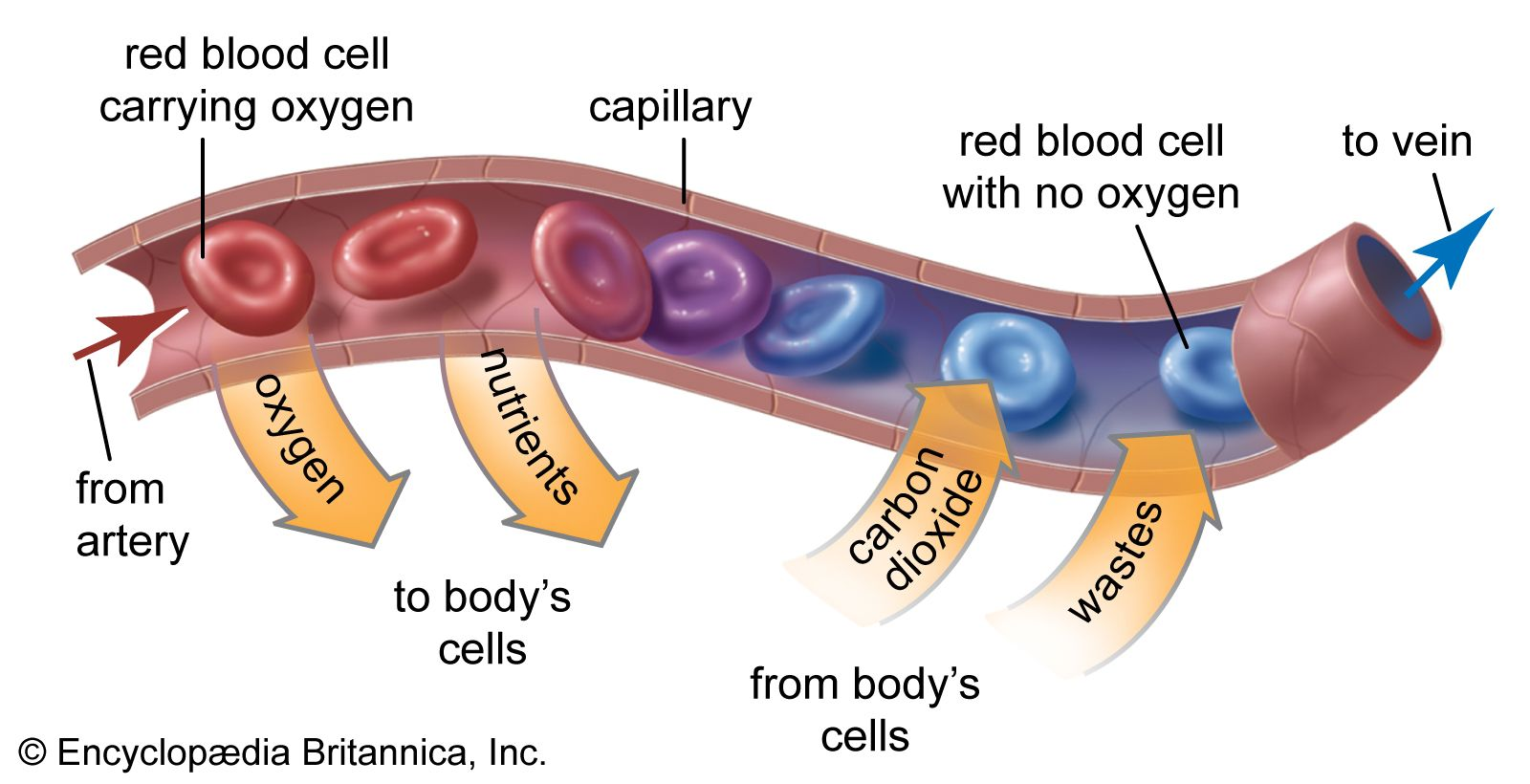
Capillaries
Microscopic vessels between aterioles and venules and connect them together
Made of one layer of epithial tissue
Form capillarie beds of vessels where exchange with body cells occurs
Combined large surface area

Veins
Branches of venules come to form veins
Carry blood away from the heart
The lumin is much larger
Veins that carry blood against gravity have valves to keep blood flowing towards the heart
Ensure the blood only flows one way
Most veins carry deoxygenated blood
Have a much thinner smooth muscle layer
Have valves
Lowest blood pressure

Venules
Venules are small veins that receive blood from the capallaries

Anatomy of the Heart
Large, muscular organ consisting of mostly cardiac tissue and the myocardium
Surrounded by a sac called the pericardium
Consists of 2 sides, right and left, seperated by a septum
Consists of 4 chambers - 2 atria and 2 ventricles
2 sets of valves - semilunar valves and atrioventricular valves (AV)
Valves produce the lub, dub sounds of the heartbeat

Blood vessels that bring blood to the heart
Superior Vena Cava - Brings oxygen-poor blood from the the upper body, head, neck, arms, and chest to the heart
Inferior Vena Cava - Brings oxygen-poor blood from the lower body, trunk, and legs, to the heart
Pulmonary veins - Bring oxygen-rich blood from your lungs into your left atrium

Internal Anatomy of the Heart
The Upper chambers are called: Atria
The Lower chambers are called: Ventricles
Right Atrium - Receives deoxygenated blood, and then goes through the atrioventricular (tricuspid) valve into the right ventricle
Left Atrium - Recieves oxygenated blood, and then atrioventricular (bicuspid) valve and then into the left ventricle
Both recieve blood from the pulmonary veins
When the ventricles contract, that is when the valves close
Pulmonary Trunk
From the left ventricle goes into the pulmonary trunk, into the semilunar valves, from there the blood is distributed into through the pulmonary veins

Aorta
The main largest artery in the human body
Aortic root - The base attached to the left ventricle of the heart, housing the aortic valve and cornory artery openings.
Ascending arorta - The segment curving upward from the heart
Aortic Arch - The cane-like bend at the top that branches into vessels supplying the head, neck, and arms
How does blood flow through the heart? (Conduction system)
Inferior and superior vena cava (1) dump blood into the right atrium (2)
Right ventricle (3)
2 pulmonary arteries (4) that leads to lungs (5) where blood becomes oxygenated
pulmonary veins (6) bring blood from the lungs to the left atrium (7)
Left ventricle (8) is large and muscular to pump blood into the aorta (9) and to the rest of the body (10)
Eventually blood will be pumped back to each vena cava (1)
What is the main pathway of blood in the body?
Heart→arteries→arterioles→capillaires→venules→veins→ back to the heart
How is the heart beat controlled?
Internal Control
The SA node in the right atrium initiates the heartbeat and causes the atria to contract.
This impulse reaches the AV node, also in the right atrium, to send a signal down the AV bundle and Purkinje fibers that causes ventricular contraction.
These impulses travel between gap junctions at intercalated disks

Left and Right Bundle Branches
The left and right bundle branches are specialized heart fibers that carry electrical signals down the interventricular septum to make the ventricles contract

Purkinje Fibers
Specialized cardiac muscles that form the final branch of the heart’s electrical conduction system

Lymphatic Capillaries
Tiny blind ended microvessels in the spaces between cells that collect excess fluid (leaked fluid from the capillaries) and turn it into lymph
Lymph is formed from blood plasma that leaks out of tiny blood capillaries into the surrounding body tissues, becoming interstitial fluid, which is then absorbed by lymphatic capillaries
Oxygen Transport
Moves from the lungs into the blood and is delivered by two methods
Binding to Hemogloblin - (97%-98%) = Binds to the iron rich protein called hemogloblin forming oxyhemogloblin, each hemogloblin can carry up to four oxygen molecules, Most prominent method
Dissolved in Plasma (1-3%) = A small amount of oxygen dissolves directly into the blood plasma, which establishes the partial pressure of oxygen that drives diffusion into tissues
Carbon Dioxide Transport
68% as a bicarbonate ion in the plasma (This conversion takes place in RBCs)
25% bound to hemogloblin in red blood cells
7% as carbon dioxide in the plasma - dissolves in plasma
CO2 is constantly generated by cells in the body, cannot contain it too much or it will cause acidosis, transported from the cells to the lungs, and then eliminate to the from the body
5 Types of White Blood Cells
Granulocytes
Neutrophils
Eosinphils
Basophils
Agranulocytes
Lymphocytes
Monocytes

Neutrophils
Phagocytize pathogens and celluar debris, make up 70% of WBC, have a multilobal nucelus, most abundant

Eosinphils
Use granule contents to digest large pathogens, such as worms, or parasites, and reduces inflammation, 2-3% of WBC, have bilo bed nucleus

Basophils
Promote blood flow to injured tissues and inflammatory response, least abundant, have a U shaped or lobed nucelus

Lymphocytes
Responsible for specific immunity— B-cells produce antibodies and T-cells destroy cancer and virus-infected cells, 25-27% of WBC, large nucelus that takes up most of the cytoplasm

Monocytes
Become macrophages that phagocytize pathogens and celluar debris, Largest with a horse shoe shaped nucleus
Amino Acids
There are 20 different amino acids which are used to produce cellular proteins
There are 8 essential amino acids that must be attained through the diet
Complete proteins that have all essential amino acids are usually derived from animals such as meat and dairy.
How do platelets clot blood
Blood vessel is punctured
platelets congregrate and form a plug
platelets and damaged tissues cells released prothrombin activator, which initiates a cascade of enzymatic reactions
Fibrin threads form and trap red blood cells

3 Major Types of Plasma Proteins
Albumin - Most abundant and important for plasmas osmotic pressure as well as transport
Globulins - Also important in transport
Fibrinogen - Important for the formation of blood clots

Production of red blood cells
All generate in the red bone marrow
Lifespan of about 90 to 120 days
Erythropoiten EPO -a hormone- is secreted by the kidney cells and moves to red bone marrow when oxygen levels are low

Macrophages, What type of WBC convert into those
Are large specialized white blood cells of the innate immune system that engulf and digest pathogens, cellular debris, and foreign substances
Originate from monocytes
What are the essential Fatty Acids
Linoleic Acids
Linolenic Acid
Both are found in corn and polyunsaturated oils
The Products of Fat Digestion
Monoglycerides and free fatty acids, along with small amounts of glycerol and diglycerides
What is Obesity? What is BMI?
When an indivdual is grossly overweight and has a BMI > 30 he or she is considered obese
BMI is a general guide to estimate how much of a person’s weight is due to adipose tissue