Week 2 MA 120 In Person Quiz
 Call Kai
 Learn
 Practice Test
 Spaced Repetition
 Match
 Flashcards
 Knowt Play
1/17

There's no tags or description
Looks like no tags are added yet.
18 Terms
phlebotomy
performing a surgical incision into the vein
3 overarching considerations of venipuncture
safety- includes the safety of everyone involved
patient experience- doing everything possible to create a comfortable and supportive experience for the patient
specimen viability- blood samples must be collected, handled and processed correctly in order to ensure they are able to be used for laboratory testing
before the procedure
clinical provider orders a diagnostic lab test
medical system creates the lab order or requisition by putting it in the EMR system
test is then looked up to make sure collection goes smoothly
in the venipuncture tray
multi-sample straight needle
tube holder
tourniquet
70% isopropyl alcohol wipes
cotton or gauze
tape
blood collection tube (vacutainer)
required PPE
clean, nonsterile, non-latex gloves\
face mask
face shield
long-sleeved lab coat
how are needles measured?
length and gauge
length of a needle
measured from hub to tip
gauge of needle
diameter of lumen (open space inside needle)
physical parts of the needle
tip
bevel (slanted opening)
shaft
hub
safety guard

3 essential steps at first contact with patient
identify yourself
confirm the patient (2 pieces of identification)
cleanse - the area and your hands
tying a tourniquet
3-4 inches above antecubital space
tied without rolling
not too tight
tucked portion should be small for easy removal later
not left on for longer than 60 seconds - lead to hemoconcentration
order of draw preference
median cubital vein
cephalic vein (lateral side)
basilic vein (medial side)

venipuncture sites not to choose
inflammation, bruising, wounds, recent phlebotomy site, burns, rashes, any damage
covered by tattoo (unless no other choice, ask first)
vein on side that has been affected by lymph node removal, mastectomy
patient doesn’t want you to
palpating veins
the act of using your fingers to feel, move, and sense structures in the body
finding veins suitable for drawing blood
how to palpate veins
use tops of the finger pads
start by moving tips along areas of the skin where anatomically, the veins should be
push down, slowly pull up
push and pull around
how veins feel
elastic
strong, but not rigid
can be pushed out of position, but will resist and regain position once pressure is removed
no pulse
the 3 D’s
depth
diameter
direction
final preparation
release the tourniquet
cleanse the site
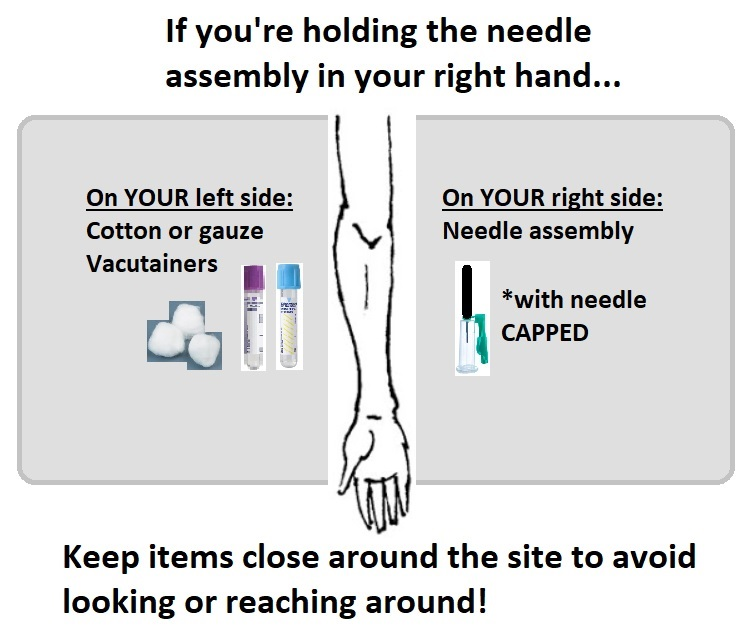
stage equipment
don gloves
confirm alcohol is dry