Local Anesthetics
 Call Kai
 Learn
 Practice Test
 Spaced Repetition
 Match
 Flashcards
 Knowt Play
1/7

There's no tags or description
Looks like no tags are added yet.
8 Terms
Define and identify the differences between analgesia and anesthesia.
Analgesia: reduction of pain with no other effects
No sensory/motor effects or loss of consciousness
Anesthesia: reduction of pain that may include other effects and/or loss of consciousness
Local anesthetics: block all sensory and motor nerve transmission in a localized area where drug is administered
Identify the types of nerves local anesthetics act on.

NotebookLM
Local anesthetics block transmission across both sensory and motor nerves in the local tissue region.
At toxic systemic concentrations, local anesthetics can also affect non-target cells that rely on Na+ channels for action potential generation, including central brain neurons, cardiac cells, and motor neurons controlling respiration
Identify the MOA and drug class, including structural classes, of local anesthetics.
MOA:
Molecular: Sodium channel blockers
Cellular: Reversibly block Action Potential conduction
Clinical: Block all sensation and motor activity
Drugs:
Lidocaine (topical: Lidoderm, LMX), amide
Bupivacaine, amide
Benzocaine, ester
Recognize the drug properties and toxicities of local anesthetics.
DOA is generally short: 30 min - 4hrs → add vasoconstrictor to prolong
Toxicity:
HIGH systemic levels affect cells that use the Na+ channel for AP generation
Neurons (brain → convulsions and death)
Cardiac cells (MI)
Motor neurons (respiratory paralysis)
Available in diverse preparations including creams, gels, intradermal injections, jellies, lotions, ointments, oral topical solutions (e.g., 2% viscous lidocaine), patches, sprays, and lozenges
Genetic Variability: Individuals with red hair carrying mutations in the Melanocortin-1 receptor gene (MC1R) exhibit reduced sensitivity to local anesthetics
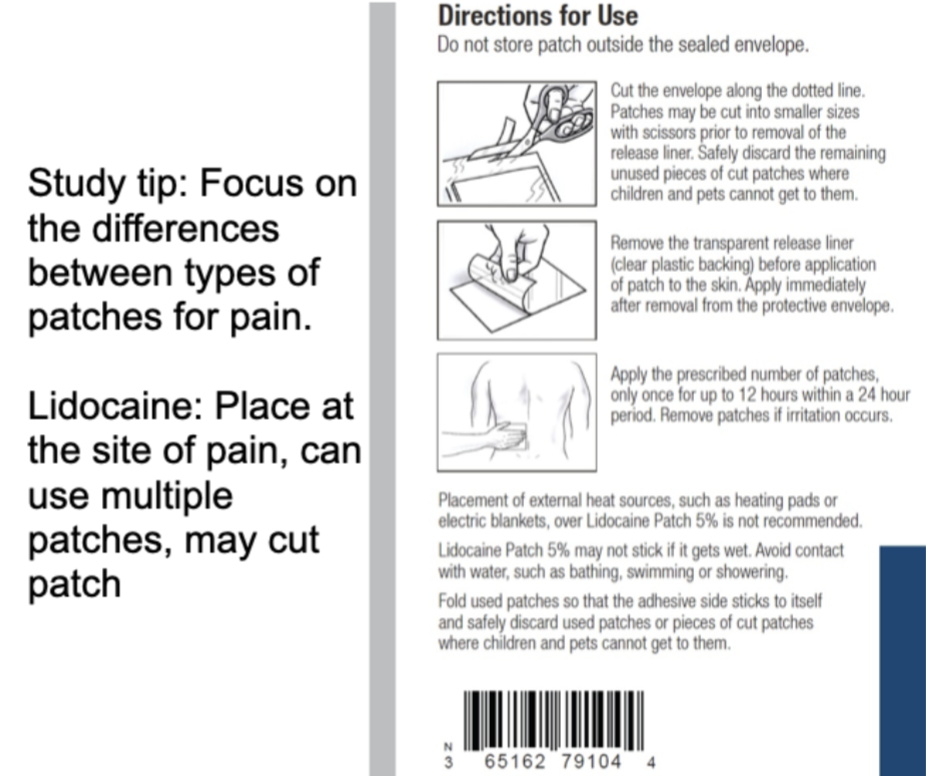
Topical Lidocaine
Caution: Tachyphylaxis may occur with continuous use. Requires a 12-hour break between the patch changes
Opportunities:
Available in multiple formulations
Though 5% prescription patch is not often covered by insurance, a 4% patch is available OTC at a low price.

Benzocaine
Not recommended for use in teething
Option for adults with canker sores and other minor oral injuries
Also commonly found in topical sprays, hemorrhoid creams, and throat sprays/lozenges

Explain the reasons we use vasoconstrictors with some local anesthetics.
NE/EPI Vasoconstrictors lengthen DOA
Local vasoconstriction keeps the anesthetic in direct contact with the target nerve longer and reduces drug degradation
Reduce degradation
Reduce systemic toxicity: Slows systemic vascular absorption into the bloodstream, lowering peak plasma concentrations
Describe the properties of the amide and ester local anesthetic classes.

